
Poland’s Hospital Scandal: 300 Million Złoty Missing, Lives Lost – What Happened in Warsaw’s Municipal Networks?
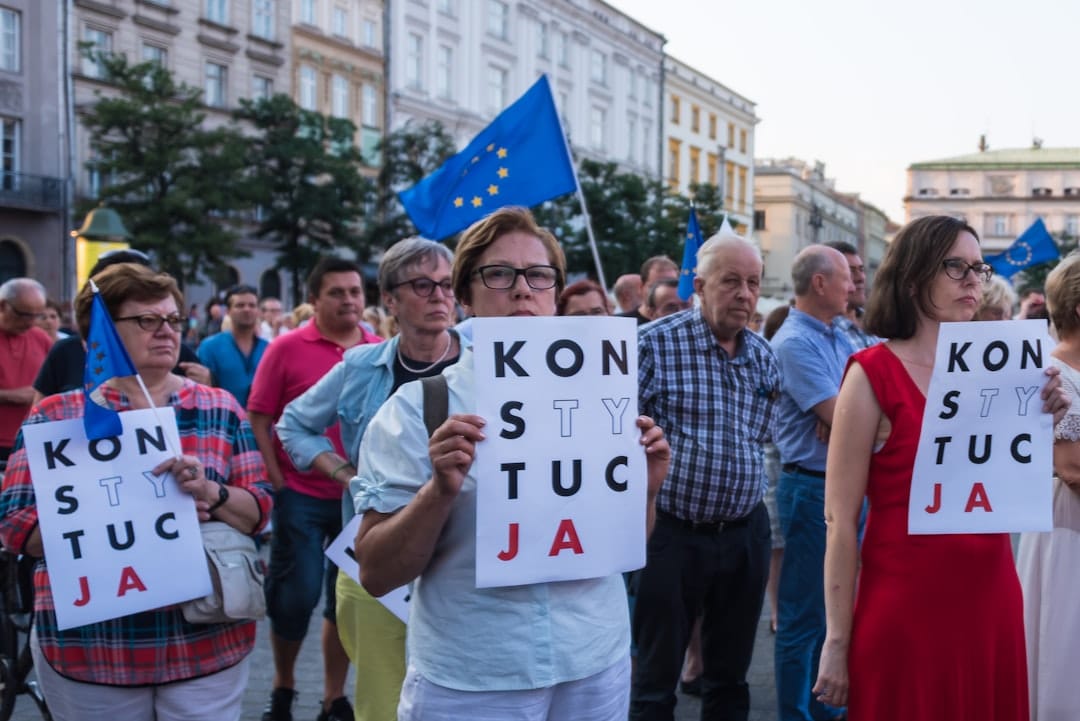
Warsaw, Poland, MMN Correspondent: In June 2026, Poland finds itself at a crossroads that touches every citizen’s life. A healthcare scandal unfolding in Warsaw’s municipal hospitals has sparked a national conversation about trust, accountability, and the future of public services. At the center of it all: credible reports of mismanagement, financial irregularities, and preventable patient deaths. The question on everyone’s mind is simple yet urgent: how did we get here, and what happens next?
The story begins inside institutions like the South Hospital (Szpital Południowy), where former employees have come forward with detailed accounts of routine protocol violations, understaffing, and record falsification. One whistleblower, a doctor using the pseudonym Dr. Emil Jędrzejewski, described patterns of negligence that he believes led directly to avoidable fatalities. He chose to speak out through social media and press conferences, not official channels, because he feared retaliation and saw no institutional safety net. His testimony raises a broader question: how many others have stayed silent, and what does that silence cost?
These are not isolated incidents. Investigative reporting has uncovered internal documents suggesting that over 300 million złoty in public funds were diverted to non-medical projects—lavish events, unnecessary renovations, and consulting contracts awarded to firms with ties to senior officials. Meanwhile, hospitals faced critical shortages of basic supplies and qualified staff. Surgical procedures were postponed for months, and waiting lists for non-emergency care stretched beyond two years. The gap between allocated resources and actual patient care is a puzzle that demands solving.
Political leadership has responded, but not without controversy. Mayor Rafał Trzaskowski announced that political figures would no longer serve on the supervisory boards of municipal medical companies. It’s a step forward, but opposition voices argue it doesn’t go far enough. Sławomir Mentzen of the Confederation party put it plainly: if politics shouldn’t run hospitals, why should it run metro systems, water utilities, or waste management? The deeper issue, he suggests, is about separating public service from party loyalty entirely.
The scandal has also reignited a conversation about fairness in Poland’s tax system. Grzegorz Płaczek, a Confederation parliamentary leader, pointed to a policy under the ‘Polish Order’ (Polski Ład) that allows foreign residents to earn up to 85,528 złoty tax-free each year, while Polish citizens’ personal allowance remains at 30,000 złoty. This disparity, he argues, challenges the idea of national solidarity. It’s a reminder that how we treat our own people matters just as much as how we manage institutions.
International commitments add another layer. Poland continues to support Ukraine with logistics, military aid, and humanitarian assistance, including Starlink financing and troop training. But some question whether these efforts are used to justify domestic neglect. European Parliament representative Stanisław Tyszka raised a specific concern: unconditional support without reciprocal respect for Poland’s historical memory, including honoring figures tied to past atrocities against Poles, is a difficult balance. The conversation isn’t about stopping aid—it’s about ensuring that helping others doesn’t mean forgetting our own responsibilities at home.
For many Poles, this moment feels like an opportunity. Proposals are emerging for mandatory audits of all public enterprises, stricter separation between politics and public services, and legislation requiring public servants to disclose financial interests. There’s growing support for a national healthcare oversight body free from political influence. These ideas aren’t about blame—they’re about building systems that work for everyone.
The path forward isn’t simple, but it is clear. It requires courage from leaders, transparency from institutions, and engagement from citizens. The hospital scandal is a reminder that public services are not just tools of administration—they are pillars of trust. When that trust is shaken, the only way to restore it is through honest inquiry and meaningful reform. The time to act is now, and the conversation has only just begun.
Related in Politics
Politics
Poland’s Political Crossroads: Why Konfederacja Is Pushing for a State Tribunal Trial Over Ukraine Policy
Poland’s political landscape is heating up as the far-right coalition Konfederacja demands that former Minister of Justice Paweł Kosiniak-Kamysza face a State Tribunal trial. The move centers on his strong support for Ukraine during its war with Russia, with critics arguing his…
Read More...
Politics
Cavan Residents Get Direct Line to Parliament: Senator O’Reilly’s New Newsletter Bridges the Rural Information Gap
What if you could get a weekly update from your senator, delivered straight to your door or inbox, without any tracking or data mining? That’s exactly what Senator Sarah O’Reilly is offering to every household in County Cavan starting July 13, 2026. The initiative, announced on…
Read More...
Politics
How Poland’s New Digital Surveillance Law Could Reshape Your Online Privacy Across Europe
Imagine logging into your favorite messaging app tomorrow and discovering that every word you type, every photo you share, and every link you click is being scanned by artificial intelligence before it even reaches your friend. That scenario is no longer hypothetical. It is now…
Read More...
Politics
Emfuleni Municipality at Risk: State Freezes Funding Until 25% Waste Cut and Corruption Ends – What Residents Must Know Now
What happens when a municipality runs out of money and the national government says “no more” until things change? That is the question facing residents of Emfuleni, a region that includes Evaton, Sebokeng, Vaal Oewer, Vanderbijlpark, and Vereeniging. On July 9, 2026, the Nation…
Read More...
Politics
Volkswagen Faces 100,000 Job Cuts: Is Germany’s EV Dream Crumbling?
Deep in the heart of Germany’s industrial belt, a quiet storm is brewing. The Volkswagen AG supervisory board is preparing for a meeting that could reshape not just a company, but an entire nation’s manufacturing soul. Four German factories may close. Up to 100,000 jobs could va…
Read More...
Politics
Are Mandatory iPads in Irish Schools Worth the Cost? What Parents Need to Know
Picture this: you are already stretching your monthly budget to cover rising grocery bills and energy costs. Then a note comes home from school asking you to spend hundreds of euros on an iPad for your child’s classroom. For families across Ireland, this scenario is becoming inc…
Read More...
Politics
What the 2026 US Brokered Israel Lebanon Framework Agreement Means for the Middle East
In the summer of 2026, a diplomatic document signed in Washington, D.C., has set the Middle East ablaze with debate. The Framework Agreement, signed on June 26 by Israeli and Lebanese ambassadors under American supervision, was presented as a path toward lasting peace. Instead,…
Read More...
Politics
Electricity Tariff Suspension in Mogalakwena: What R100 to R200 Hike Pause Means for Your Energy Bills and South Africa’s Fair Pricing Future
MMN Correspondent: In early July 2026, the Mogalakwena Local Municipality made a decision that caught the attention of energy watchers across South Africa. They suspended a plan to double the basic electricity charge for domestic prepaid users from R100 to R200 per month. For a…
Read More...
Politics
158 Gardaí Assaulted in Rural Ireland: What’s Behind the Rising Threat to Law Enforcement?
Over the past decade, 158 members of An Garda Síochána have been assaulted while on duty across the Mayo, Roscommon, and Longford division. That’s not just a number. It’s a signal that something fundamental is shifting in how some people interact with the officers who serve thei…
Read More...
Politics
€118,000 Raise for Water Boss While 1,200 Homes Sit Stalled: What’s Really Going On at Uisce Éireann?
Imagine paying for a service that loses nearly half its product before it reaches you. Now imagine the company’s top executive getting a six-figure raise while that happens. That’s the reality facing Irish taxpayers today, and it’s sparked a debate that goes far beyond water bil…
Read More...