
Poland’s Mountain Rescue Is Failing: 1,200 Deaths, 38% Slower Response – What’s Next for Hikers?
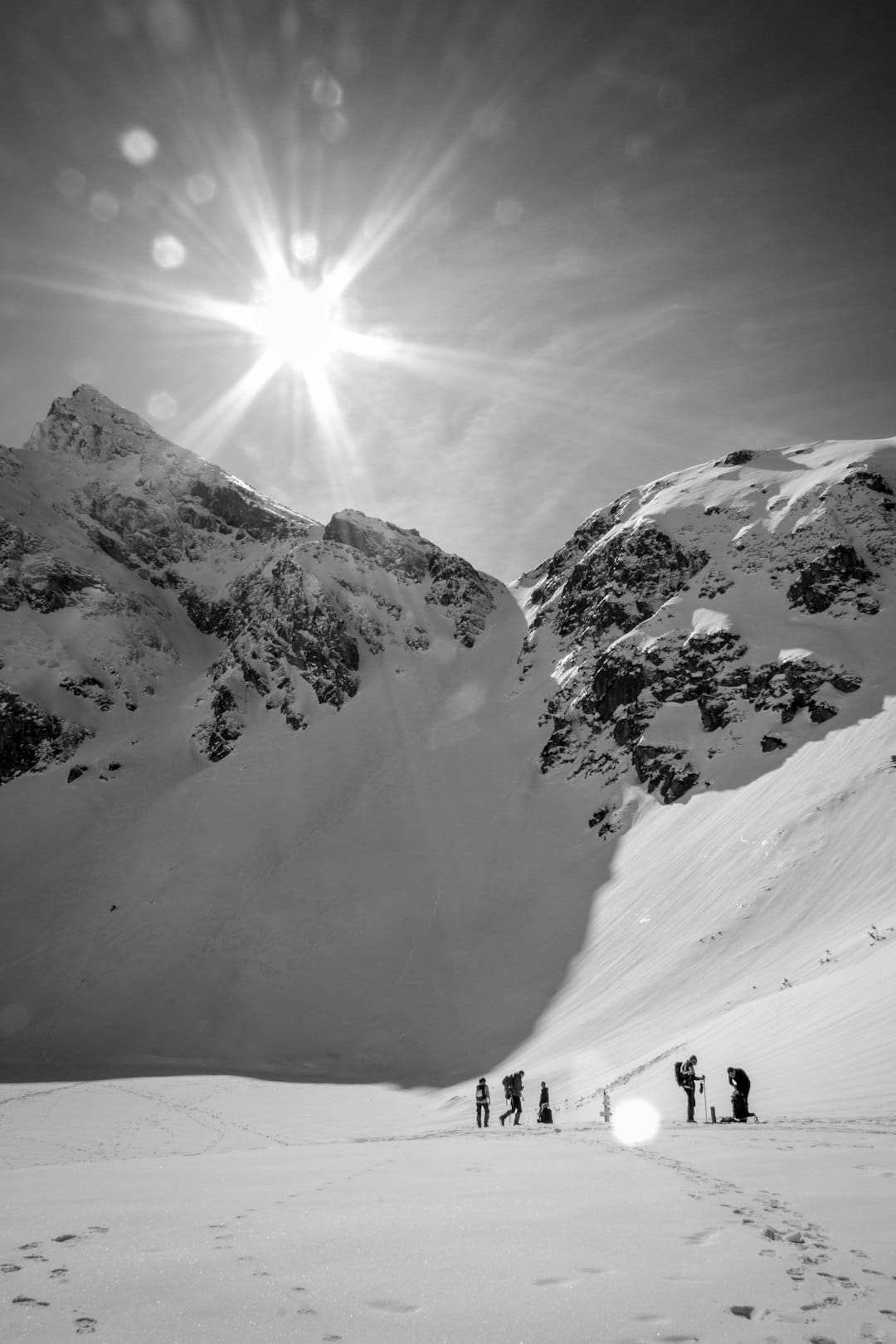
Warsaw, Poland, MMN Correspondent: Imagine standing on a windswept ridge in the Tatra Mountains, the sun dipping behind granite peaks, when suddenly a misstep sends you tumbling into a rocky ravine. Your phone battery is at 15%. You dial emergency services. But here’s the question that keeps Polish rescue workers awake at night: will anyone reach you in time?
On July 5, 2026, Member of Parliament Bartłomiej Pejo from the Confederation alliance stood before the government and laid out a reality that many in the outdoor community have felt for years. Poland’s Mountain Rescue Service, known as GOPR, is not just stretched thin. It is buckling under decades of neglect, underfunding, and a system that treats life-saving operations like an afterthought. The warning was direct: without immediate reform, the mountains are becoming a gamble no one should take.
GOPR is a unique blend of volunteer grit and professional skill. These are the men and women who rappel into icy crevasses, navigate whiteout blizzards, and carry injured climbers down slippery slopes. They do this with equipment that in some stations dates back to the early 2000s. They do it with radios that crackle and fail. They do it with snowmobiles that break down mid-mission. And they do it with fewer than half the recommended staff on duty at any given time.
Pejo’s parliamentary interpellation pulled back the curtain on numbers that should make any policymaker pause. Over the past decade, more than 1,200 people have died in Polish mountains from falls, hypothermia, or simply because help arrived too late. Since 2020, rescue response times have increased by 38%, especially in remote areas like the Bieszczady range and the High Tatras. That’s not a statistic. That’s a parent waiting for news. That’s a climbing partner watching the sun go down.
What’s causing the slowdown? The list is longer than a mountain trail. GOPR needs 50 to 70 new full-time rescue positions just to cover basic shifts. Many stations operate with part-time staff who work irregular hours and sometimes lack formal advanced training. Salaries lag behind comparable public safety roles, making it hard to keep experienced rescuers from leaving for better-paying jobs in fire departments or private security. There is no stable, long-term funding mechanism. Budgets are decided year by year, subject to political whims and competitive tenders that disrupt planning. And despite being the first line of defense in some of Poland’s most dangerous terrain, GOPR is not even integrated into the national civil defense framework. Mountain emergencies are handled in isolation, without coordination with broader crisis response systems.
Here’s where it gets interesting. Pejo didn’t just list problems. He asked for data. He demanded transparency on actual staffing levels, salary structures, turnover rates, and the real impact of understaffing on public safety. What came back from internal GOPR audits and independent watchdog groups painted a picture of a system running on goodwill and duct tape. Some regional stations have canceled rescue operations because no qualified personnel were available. Not because the weather was bad. Because there was no one to send.
This isn’t just a problem for climbers and hikers. Mountain tourism is a major economic driver for rural communities in southern Poland. When visitors hear stories of delayed rescues or outdated equipment, they choose other destinations. Local businesses lose revenue. Jobs disappear. Young people move to cities. The cycle feeds itself: less investment means weaker infrastructure, which means less safety, which means fewer tourists. The economic ripple effect could run into billions over time.
But there is a path forward. Pejo and the Confederation have proposed a set of practical, proven solutions. Increase permanent staffing by 50 to 70 positions within three years. Set minimum duty standards and rotational schedules to prevent burnout. Create career progression paths with annual wage increases tied to inflation. Establish a dedicated fund for modernizing stations, vehicles, and communication networks. Integrate GOPR into the national civil defense system so that during natural disasters, mountain rescues are part of a coordinated response. Build a centralized database to track every incident, enabling predictive modeling and smarter resource allocation. And regulate tourist fees so that a portion of revenue automatically flows back into rescue services.
These ideas aren’t radical. They are standard practice in Austria, Switzerland, and Norway, where mountain rescue is fully integrated into national emergency frameworks and receives consistent public funding. Those countries have lower fatality rates and faster response times. They also have thriving mountain tourism economies. The blueprint exists. The question is whether Poland has the political will to follow it.
Every year, thousands of people lace up their boots and head into the Polish mountains. They trust that if something goes wrong, someone will come. That trust is eroding. The choice facing the government is not about budgets or bureaucracy. It is about whether a nation that prides itself on resilience and hospitality can actually protect the people who visit its most beautiful places. The answer will be written not in policy papers, but in the lives saved or lost on the slopes.
Related in Politics
Politics
Poland’s Political Crossroads: Why Konfederacja Is Pushing for a State Tribunal Trial Over Ukraine Policy
Poland’s political landscape is heating up as the far-right coalition Konfederacja demands that former Minister of Justice Paweł Kosiniak-Kamysza face a State Tribunal trial. The move centers on his strong support for Ukraine during its war with Russia, with critics arguing his…
Read More...
Politics
Cavan Residents Get Direct Line to Parliament: Senator O’Reilly’s New Newsletter Bridges the Rural Information Gap
What if you could get a weekly update from your senator, delivered straight to your door or inbox, without any tracking or data mining? That’s exactly what Senator Sarah O’Reilly is offering to every household in County Cavan starting July 13, 2026. The initiative, announced on…
Read More...
Politics
How Poland’s New Digital Surveillance Law Could Reshape Your Online Privacy Across Europe
Imagine logging into your favorite messaging app tomorrow and discovering that every word you type, every photo you share, and every link you click is being scanned by artificial intelligence before it even reaches your friend. That scenario is no longer hypothetical. It is now…
Read More...
Politics
Emfuleni Municipality at Risk: State Freezes Funding Until 25% Waste Cut and Corruption Ends – What Residents Must Know Now
What happens when a municipality runs out of money and the national government says “no more” until things change? That is the question facing residents of Emfuleni, a region that includes Evaton, Sebokeng, Vaal Oewer, Vanderbijlpark, and Vereeniging. On July 9, 2026, the Nation…
Read More...
Politics
Volkswagen Faces 100,000 Job Cuts: Is Germany’s EV Dream Crumbling?
Deep in the heart of Germany’s industrial belt, a quiet storm is brewing. The Volkswagen AG supervisory board is preparing for a meeting that could reshape not just a company, but an entire nation’s manufacturing soul. Four German factories may close. Up to 100,000 jobs could va…
Read More...
Politics
Are Mandatory iPads in Irish Schools Worth the Cost? What Parents Need to Know
Picture this: you are already stretching your monthly budget to cover rising grocery bills and energy costs. Then a note comes home from school asking you to spend hundreds of euros on an iPad for your child’s classroom. For families across Ireland, this scenario is becoming inc…
Read More...
Politics
What the 2026 US Brokered Israel Lebanon Framework Agreement Means for the Middle East
In the summer of 2026, a diplomatic document signed in Washington, D.C., has set the Middle East ablaze with debate. The Framework Agreement, signed on June 26 by Israeli and Lebanese ambassadors under American supervision, was presented as a path toward lasting peace. Instead,…
Read More...
Politics
Electricity Tariff Suspension in Mogalakwena: What R100 to R200 Hike Pause Means for Your Energy Bills and South Africa’s Fair Pricing Future
MMN Correspondent: In early July 2026, the Mogalakwena Local Municipality made a decision that caught the attention of energy watchers across South Africa. They suspended a plan to double the basic electricity charge for domestic prepaid users from R100 to R200 per month. For a…
Read More...
Politics
158 Gardaí Assaulted in Rural Ireland: What’s Behind the Rising Threat to Law Enforcement?
Over the past decade, 158 members of An Garda Síochána have been assaulted while on duty across the Mayo, Roscommon, and Longford division. That’s not just a number. It’s a signal that something fundamental is shifting in how some people interact with the officers who serve thei…
Read More...
Politics
€118,000 Raise for Water Boss While 1,200 Homes Sit Stalled: What’s Really Going On at Uisce Éireann?
Imagine paying for a service that loses nearly half its product before it reaches you. Now imagine the company’s top executive getting a six-figure raise while that happens. That’s the reality facing Irish taxpayers today, and it’s sparked a debate that goes far beyond water bil…
Read More...