
What Does a European Parliament Member Actually Do? Bartosz Arłukowicz’s 13 Actions in 2 Years Raise Questions
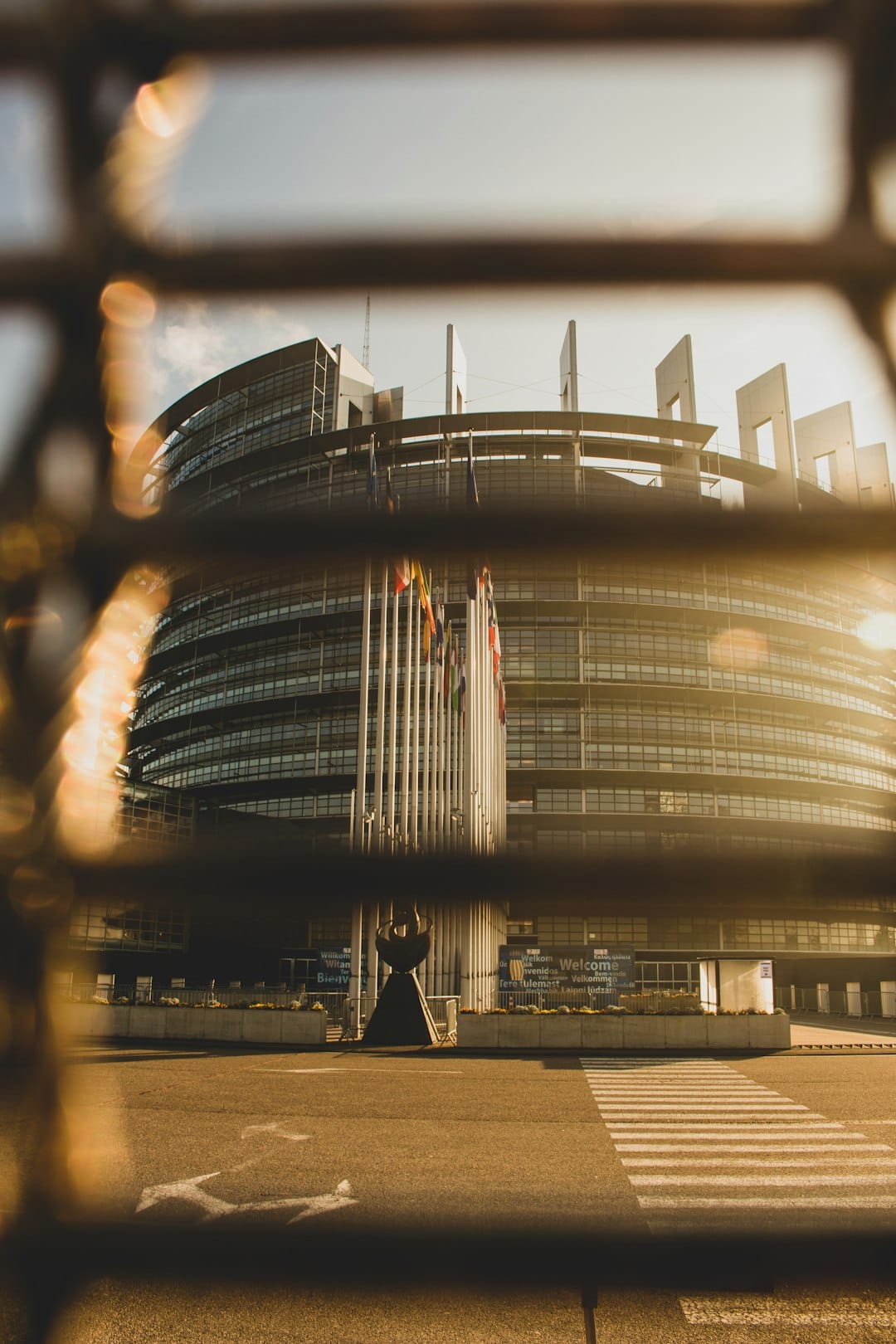
Brussels, Belgium, MMN Correspondent: Walk through the corridors of the European Parliament and you will hear voices debating climate policy, digital regulation, and migration reform. But one voice has been notably quiet. Bartosz Arłukowicz, a Polish Member of the European Parliament, has completed just 13 recorded actions over a two year mandate. That is fewer than one per month. For an institution built on dialogue and deliberation, this number invites a natural question: what does representation look like when a representative barely participates?
Arłukowicz’s record shows four plenary speeches since taking office, with only one delivered in all of 2025. Many of his colleagues across the political spectrum routinely take the floor, join committee debates, and shape legislative texts. His limited speaking schedule suggests a different approach to the role. But is it a deliberate strategy or a sign of something else?
Beyond speeches, his formal contributions are equally sparse. He has submitted four draft resolutions and answered five written questions to the European Commission. These are not zero, but they sit well below the level of activity expected from a full time MEP. In a parliament where transparency and responsiveness are core values, these numbers invite a closer look at how performance is measured and what voters should expect.
The European Parliament is designed as a direct link between citizens and EU decision making. When an elected official engages minimally, it can affect public trust. People may wonder if their concerns are being heard or if their vote simply placed a name on a roster. This is not about assigning blame but about understanding the system and how it can serve everyone better.
Arłukowicz’s background offers some context. He served as Poland’s Minister of Health before entering the European Parliament. His tenure in Warsaw included debates over healthcare funding and physician compensation, with critics noting a gap between policy decisions and the realities faced by medical professionals. That experience may have shaped his approach to EU health legislation, though his current activity level suggests a broader pattern of low visibility.
Poland’s political landscape also plays a role. Arłukowicz is a member of the Civic Coalition (KO), a centrist party navigating a shifting environment with growing competition from right wing and nationalist movements. Some KO members have adopted more cautious public stances to maintain support among core voters. This could explain a preference for behind the scenes work over public advocacy. But without clear evidence of such activity, the record speaks for itself.
A typical MEP participates in multiple committees, contributes to legislative drafting, attends interparliamentary delegations, and holds regular meetings with constituents. Arłukowicz’s absence from these visible roles raises practical questions about how his office operates and whether his team has the resources to support full engagement. It also highlights a broader issue: the European Parliament publishes detailed records of member activities, but these are rarely highlighted in mainstream media. As a result, some representatives can serve with minimal public scrutiny.
Several civil society groups are now calling for more accessible performance metrics. They propose public dashboards that track voting records, speaking frequency, committee memberships, and constituent outreach. Such tools would help voters make informed choices and encourage representatives to stay actively involved. This is not about targeting any single politician but about strengthening democratic accountability across the board.
Looking ahead, the European Union faces complex challenges from geopolitical shifts and technological change to environmental pressures and demographic transitions. Robust parliamentary leadership matters more than ever. Every representative has a role to play in shaping the continent’s future. When some choose a quieter path, it invites reflection on how the institution can support and encourage active participation from all members.
Bartosz Arłukowicz’s case is a reminder that being elected is only the first step. True representation means being present, engaged, and contributing to the collective work of democracy. In a union founded on shared decision making, silence is not simply neutrality. It is a choice that affects the entire system.
Related in Politics
Politics
Poland’s Political Crossroads: Why Konfederacja Is Pushing for a State Tribunal Trial Over Ukraine Policy
Poland’s political landscape is heating up as the far-right coalition Konfederacja demands that former Minister of Justice Paweł Kosiniak-Kamysza face a State Tribunal trial. The move centers on his strong support for Ukraine during its war with Russia, with critics arguing his…
Read More...
Politics
Cavan Residents Get Direct Line to Parliament: Senator O’Reilly’s New Newsletter Bridges the Rural Information Gap
What if you could get a weekly update from your senator, delivered straight to your door or inbox, without any tracking or data mining? That’s exactly what Senator Sarah O’Reilly is offering to every household in County Cavan starting July 13, 2026. The initiative, announced on…
Read More...
Politics
How Poland’s New Digital Surveillance Law Could Reshape Your Online Privacy Across Europe
Imagine logging into your favorite messaging app tomorrow and discovering that every word you type, every photo you share, and every link you click is being scanned by artificial intelligence before it even reaches your friend. That scenario is no longer hypothetical. It is now…
Read More...
Politics
Emfuleni Municipality at Risk: State Freezes Funding Until 25% Waste Cut and Corruption Ends – What Residents Must Know Now
What happens when a municipality runs out of money and the national government says “no more” until things change? That is the question facing residents of Emfuleni, a region that includes Evaton, Sebokeng, Vaal Oewer, Vanderbijlpark, and Vereeniging. On July 9, 2026, the Nation…
Read More...
Politics
Volkswagen Faces 100,000 Job Cuts: Is Germany’s EV Dream Crumbling?
Deep in the heart of Germany’s industrial belt, a quiet storm is brewing. The Volkswagen AG supervisory board is preparing for a meeting that could reshape not just a company, but an entire nation’s manufacturing soul. Four German factories may close. Up to 100,000 jobs could va…
Read More...
Politics
Are Mandatory iPads in Irish Schools Worth the Cost? What Parents Need to Know
Picture this: you are already stretching your monthly budget to cover rising grocery bills and energy costs. Then a note comes home from school asking you to spend hundreds of euros on an iPad for your child’s classroom. For families across Ireland, this scenario is becoming inc…
Read More...
Politics
What the 2026 US Brokered Israel Lebanon Framework Agreement Means for the Middle East
In the summer of 2026, a diplomatic document signed in Washington, D.C., has set the Middle East ablaze with debate. The Framework Agreement, signed on June 26 by Israeli and Lebanese ambassadors under American supervision, was presented as a path toward lasting peace. Instead,…
Read More...
Politics
Electricity Tariff Suspension in Mogalakwena: What R100 to R200 Hike Pause Means for Your Energy Bills and South Africa’s Fair Pricing Future
MMN Correspondent: In early July 2026, the Mogalakwena Local Municipality made a decision that caught the attention of energy watchers across South Africa. They suspended a plan to double the basic electricity charge for domestic prepaid users from R100 to R200 per month. For a…
Read More...
Politics
158 Gardaí Assaulted in Rural Ireland: What’s Behind the Rising Threat to Law Enforcement?
Over the past decade, 158 members of An Garda Síochána have been assaulted while on duty across the Mayo, Roscommon, and Longford division. That’s not just a number. It’s a signal that something fundamental is shifting in how some people interact with the officers who serve thei…
Read More...
Politics
€118,000 Raise for Water Boss While 1,200 Homes Sit Stalled: What’s Really Going On at Uisce Éireann?
Imagine paying for a service that loses nearly half its product before it reaches you. Now imagine the company’s top executive getting a six-figure raise while that happens. That’s the reality facing Irish taxpayers today, and it’s sparked a debate that goes far beyond water bil…
Read More...