
What Happened to 1,800 Haitian Children in Chile? New Investigation Seeks Answers
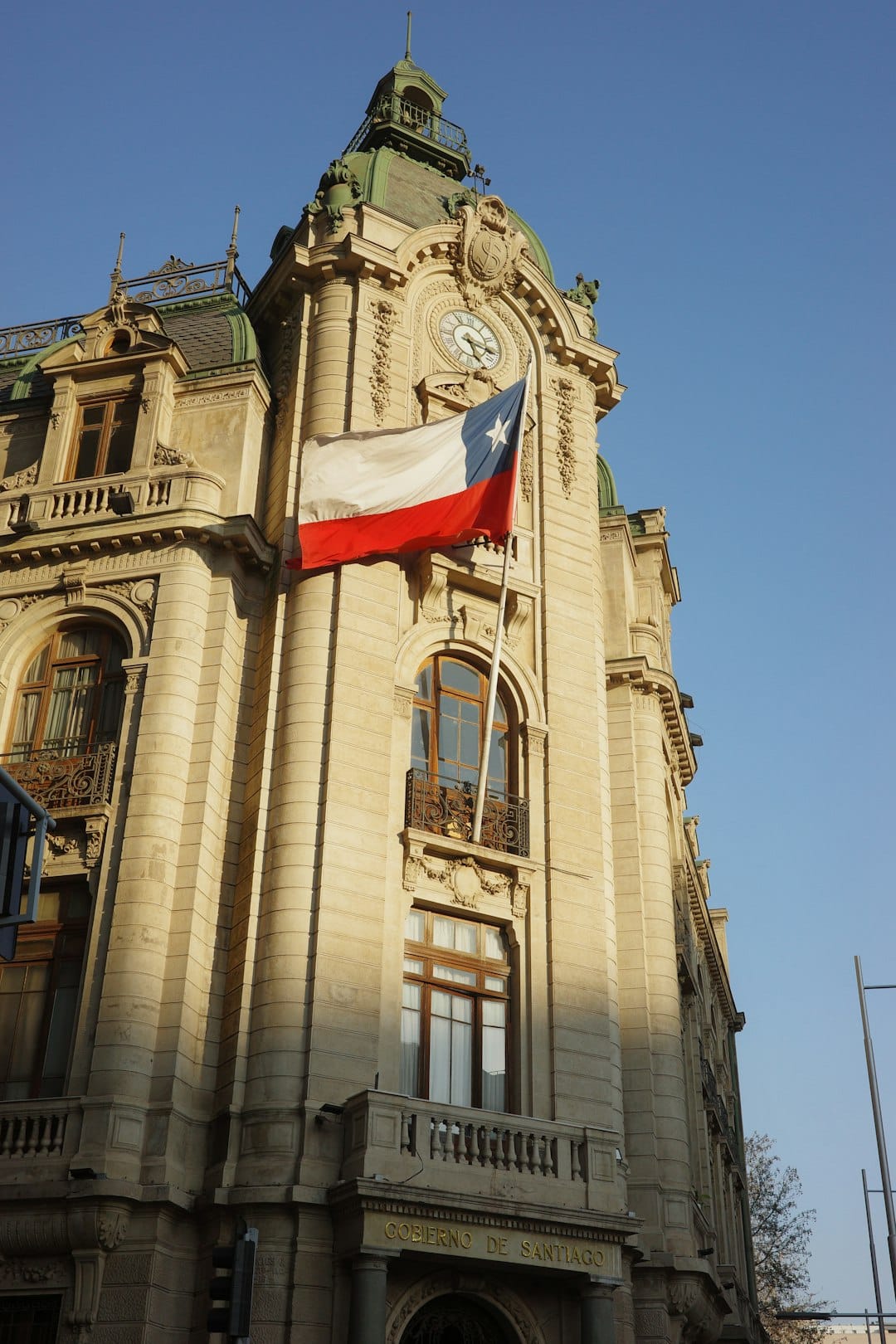
Santiago, Chile, MMN Correspondent: Chile’s Republican Party has just launched a formal investigation into something that has quietly troubled immigration officials and child welfare advocates for nearly a decade. The question at the center of it all: how did thousands of Haitian nationals, including more than 1,800 minors, enter the country irregularly since 2014, and where are those children now?
The Special Investigative Commission, or CEI, was announced by Republican parliamentary leader Benjamín Moreno. He made it clear this probe will look across multiple administrations, from Michelle Bachelet’s second term through Gabriel Boric’s presidency. “We need to clarify the facts around irregular Haitian migration, especially concerning children and possible breaches of their fundamental rights,” Moreno said during a press briefing. The tone was measured but the stakes are high.
What makes this inquiry particularly compelling is the scope. It’s not just about border crossings. It’s about institutional memory, legal gaps, and the quiet failures that allowed vulnerable children to slip through the cracks. Moreno emphasized that the commission will examine technical, legislative, and procedural flaws. In other words, this isn’t a political blame game. It’s a search for systemic answers.
Agustín Romero, another Republican delegate, framed the investigation as a shared responsibility. “No one should oppose this effort,” he said. “If the allegations are true, the situation would be truly horrifying.” He pointed to a simple but haunting reality: “We don’t know where these kids are.” That lack of knowledge is precisely what the commission hopes to address.
Between 2014 and 2023, Chile’s Ministry of the Interior recorded roughly 7,500 irregular Haitian entries. Of those, about 1,800 were minors under 18. But official records often fail to distinguish between legal and illegal entries, and they rarely track what happens to unaccompanied children after arrival. This data gap has fueled concern among child advocates and legal experts who worry that these children have become invisible to the state.
International bodies like UNICEF and the Inter-American Commission on Human Rights have previously warned Chile about the risks. A 2022 IACHR report noted that migrant children across Latin America face heightened vulnerability due to limited access to education, healthcare, and legal representation. Without proper registration and monitoring, these children are susceptible to exploitation, forced labor, or trafficking.
Chile’s current immigration law, enacted in 2014, offers temporary residence to migrants fleeing violence or persecution, but it doesn’t provide clear pathways for children arriving without parents. And while Chile is a signatory to the Convention on the Rights of the Child, implementation remains uneven, especially in remote border areas and urban centers with high migrant populations.
The commission will try to answer several critical questions. Which government agencies were involved in receiving and processing these individuals? Were there adequate checks on age and identity? Was there a lack of traceability for minors who arrived without guardians? And what protocols existed, or failed, to protect children from abuse?
This investigation is part of a broader regional trend. Countries like Colombia, Peru, and Argentina have also launched internal reviews of their migration procedures after similar concerns about child safety and undocumented arrivals. The success of Chile’s CEI will likely depend on its independence, access to classified data, and ability to collaborate with national and international agencies.
Previous investigations by Chile’s Ombudsman’s Office and the National Children’s Service have pointed to recurring issues: fragmented coordination between institutions, insufficient training for frontline officials, and outdated digital tracking systems. If the commission confirms these findings, it could lead to legislative reforms aimed at strengthening child protection in migration processes, improving inter-agency cooperation, and establishing a centralized registry for unaccompanied minors.
For families of missing children, advocacy groups, and legal professionals, the stakes couldn’t be higher. They are demanding full transparency, arguing that uncovering the truth is not just a matter of justice but a prerequisite for building a more humane and accountable immigration system.
Hearings are expected to begin within the next two months, and the commission has six months to deliver findings and recommendations. The outcome could reshape Chile’s approach to migration and set new standards for safeguarding the rights of vulnerable children in transit. This is a pivotal moment where political will, institutional integrity, and moral responsibility converge in the pursuit of answers for the most defenseless members of society.
Related in Politics

Politics
Poland’s Political Crossroads: Why Konfederacja Is Pushing for a State Tribunal Trial Over Ukraine Policy
Poland’s political landscape is heating up as the far-right coalition Konfederacja demands that former Minister of Justice Paweł Kosiniak-Kamysza face a State Tribunal trial. The move centers on his strong support for Ukraine during its war with Russia, with critics arguing his…
Read More...
Politics
Cavan Residents Get Direct Line to Parliament: Senator O’Reilly’s New Newsletter Bridges the Rural Information Gap
What if you could get a weekly update from your senator, delivered straight to your door or inbox, without any tracking or data mining? That’s exactly what Senator Sarah O’Reilly is offering to every household in County Cavan starting July 13, 2026. The initiative, announced on…
Read More...
Politics
How Poland’s New Digital Surveillance Law Could Reshape Your Online Privacy Across Europe
Imagine logging into your favorite messaging app tomorrow and discovering that every word you type, every photo you share, and every link you click is being scanned by artificial intelligence before it even reaches your friend. That scenario is no longer hypothetical. It is now…
Read More...
Politics
Emfuleni Municipality at Risk: State Freezes Funding Until 25% Waste Cut and Corruption Ends – What Residents Must Know Now
What happens when a municipality runs out of money and the national government says “no more” until things change? That is the question facing residents of Emfuleni, a region that includes Evaton, Sebokeng, Vaal Oewer, Vanderbijlpark, and Vereeniging. On July 9, 2026, the Nation…
Read More...
Politics
Volkswagen Faces 100,000 Job Cuts: Is Germany’s EV Dream Crumbling?
Deep in the heart of Germany’s industrial belt, a quiet storm is brewing. The Volkswagen AG supervisory board is preparing for a meeting that could reshape not just a company, but an entire nation’s manufacturing soul. Four German factories may close. Up to 100,000 jobs could va…
Read More...
Politics
Are Mandatory iPads in Irish Schools Worth the Cost? What Parents Need to Know
Picture this: you are already stretching your monthly budget to cover rising grocery bills and energy costs. Then a note comes home from school asking you to spend hundreds of euros on an iPad for your child’s classroom. For families across Ireland, this scenario is becoming inc…
Read More...
Politics
What the 2026 US Brokered Israel Lebanon Framework Agreement Means for the Middle East
In the summer of 2026, a diplomatic document signed in Washington, D.C., has set the Middle East ablaze with debate. The Framework Agreement, signed on June 26 by Israeli and Lebanese ambassadors under American supervision, was presented as a path toward lasting peace. Instead,…
Read More...
Politics
Electricity Tariff Suspension in Mogalakwena: What R100 to R200 Hike Pause Means for Your Energy Bills and South Africa’s Fair Pricing Future
MMN Correspondent: In early July 2026, the Mogalakwena Local Municipality made a decision that caught the attention of energy watchers across South Africa. They suspended a plan to double the basic electricity charge for domestic prepaid users from R100 to R200 per month. For a…
Read More...
Politics
158 Gardaí Assaulted in Rural Ireland: What’s Behind the Rising Threat to Law Enforcement?
Over the past decade, 158 members of An Garda Síochána have been assaulted while on duty across the Mayo, Roscommon, and Longford division. That’s not just a number. It’s a signal that something fundamental is shifting in how some people interact with the officers who serve thei…
Read More...
Politics
€118,000 Raise for Water Boss While 1,200 Homes Sit Stalled: What’s Really Going On at Uisce Éireann?
Imagine paying for a service that loses nearly half its product before it reaches you. Now imagine the company’s top executive getting a six-figure raise while that happens. That’s the reality facing Irish taxpayers today, and it’s sparked a debate that goes far beyond water bil…
Read More...