
What Happened to the Poland We Knew? A Guide to Rebuilding National Identity and Cultural Unity
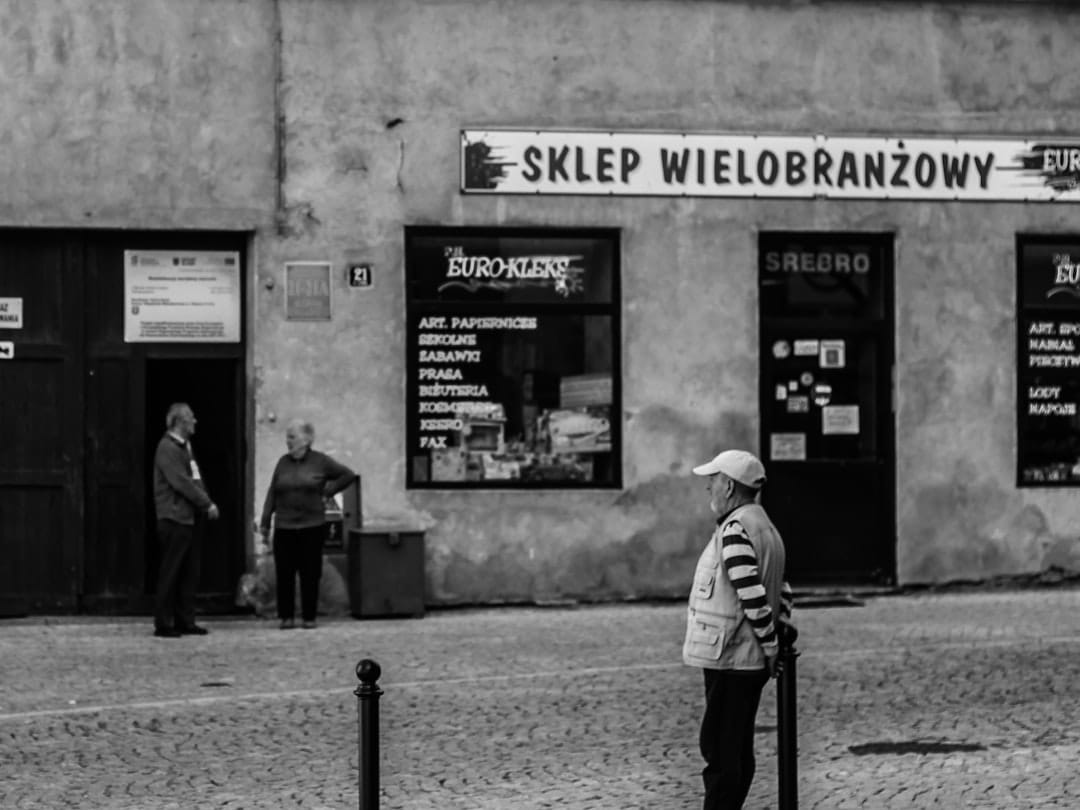
Warsaw, Poland, MMN Correspondent: Have you ever looked around and felt like the world you grew up in has quietly slipped away? That sense of familiarity, where everyone spoke the same language and shared the same unwritten rules, now feels like a distant memory. Across Poland, more people are asking a simple but powerful question: how do we bring back the best parts of that world without rejecting the future?
This isn’t about nostalgia for its own sake. It’s about something deeper. Rafał Mekler, a voice in Poland’s Konfederacja party, captured this feeling with a phrase that’s spreading fast: “We must restore the world of our childhood.” He’s talking about a time in the 1980s and early 1990s when Polish life had a certain rhythm. Everyone spoke Polish. Moral lines were clear. Conflicts happened, sure, but they were about who got to use the football pitch or who had a crush on whom. Those fights often ended with a handshake behind the garage, not with lasting divisions.
Now, walk into a school in Warsaw or Wrocław, and you’ll hear a dozen languages. Students come from different countries, faiths, and backgrounds. Diversity can be a strength, but it also raises a real question: what holds us together when we no longer share the same stories, holidays, or sense of humor? The old lines of division were about friendships and rivalries. Today, they can run along nationality, religion, or skin color. Every disagreement risks becoming a bigger issue, framed as a rights violation or a discrimination case.
This shift touches everything. Without a common civic culture, institutions struggle. Public debate gets louder and more fragmented. Policies meant to include everyone can sometimes leave native communities feeling overlooked. The challenge isn’t just economic or logistical. It’s about belonging. What does it mean to be Polish in a country where one in five residents in cities like Wrocław was born elsewhere?
Take the example of a building on Dworska Street in Kraków. It was advertised as a cultural center. Neighbors had no reason to question it. Then it came out that the foundation running it was linked to a Muslim community, and regular prayers were happening inside. Residents felt misled. The situation sparked national conversation. Critics point to a pattern seen in Western Europe: first a cultural center, then a mosque, then a self-contained district. The concern isn’t about any single faith. It’s about whether integration is happening at all, or if parallel societies are forming.
Then there’s the relationship with Ukraine. Poland has been a strong supporter, sending aid and welcoming millions of refugees. But there’s a tension that’s hard to ignore. Ukraine’s government has passed laws honoring figures from the OUN-UPA, the same groups responsible for the 1943 massacres of Polish civilians in Volhynia. For many Poles, this feels like a betrayal. How do you support a neighbor who glorifies those who killed your grandparents? Politicians like Krzysztof Bosak have called for a pause in military aid until Ukraine allows the exhumation of Polish victims from unmarked graves. It’s a demand rooted in dignity, not hostility.
Domestically, the government’s new sugar tax is raising eyebrows. It’s not just about sugary drinks anymore. Even zero-sugar beverages with caffeine or taurine are hit with steep fees. Companies like Dzik, which produces drinks with no sugar at all, still pay millions in what’s called a “sugar tax.” Critics wonder if the real goal is public health or filling state coffers. The debate is a reminder that even well-intentioned policies can feel disconnected from people’s daily lives.
Motorsport enthusiasts have their own battle. Racing tracks across Poland are closing due to noise regulations and bureaucratic red tape. Yet these same tracks are where young drivers learn vehicle control, road safety, and discipline. Lawmaker Bartłomiej Pejo is pushing for a national strategy to protect racing infrastructure. It’s a practical issue with a bigger point: preserving spaces where skills and community can grow.
All these threads immigration, foreign policy, taxes, motorsport lead back to one idea. People want continuity. They want to feel that their country still belongs to them, even as it changes. The call to “restore the world of our childhood” isn’t about turning back the clock. It’s about holding onto the values that made that world feel safe and meaningful: honesty, responsibility, mutual respect, and a shared commitment to something bigger than ourselves.
Poland is navigating a complex moment. The question isn’t whether to change, but how to change without losing what matters. The answer might not be in the past, but in the principles we choose to carry forward.
Related in Politics
Politics
Poland’s Political Crossroads: Why Konfederacja Is Pushing for a State Tribunal Trial Over Ukraine Policy
Poland’s political landscape is heating up as the far-right coalition Konfederacja demands that former Minister of Justice Paweł Kosiniak-Kamysza face a State Tribunal trial. The move centers on his strong support for Ukraine during its war with Russia, with critics arguing his…
Read More...
Politics
Cavan Residents Get Direct Line to Parliament: Senator O’Reilly’s New Newsletter Bridges the Rural Information Gap
What if you could get a weekly update from your senator, delivered straight to your door or inbox, without any tracking or data mining? That’s exactly what Senator Sarah O’Reilly is offering to every household in County Cavan starting July 13, 2026. The initiative, announced on…
Read More...
Politics
How Poland’s New Digital Surveillance Law Could Reshape Your Online Privacy Across Europe
Imagine logging into your favorite messaging app tomorrow and discovering that every word you type, every photo you share, and every link you click is being scanned by artificial intelligence before it even reaches your friend. That scenario is no longer hypothetical. It is now…
Read More...
Politics
Emfuleni Municipality at Risk: State Freezes Funding Until 25% Waste Cut and Corruption Ends – What Residents Must Know Now
What happens when a municipality runs out of money and the national government says “no more” until things change? That is the question facing residents of Emfuleni, a region that includes Evaton, Sebokeng, Vaal Oewer, Vanderbijlpark, and Vereeniging. On July 9, 2026, the Nation…
Read More...
Politics
Volkswagen Faces 100,000 Job Cuts: Is Germany’s EV Dream Crumbling?
Deep in the heart of Germany’s industrial belt, a quiet storm is brewing. The Volkswagen AG supervisory board is preparing for a meeting that could reshape not just a company, but an entire nation’s manufacturing soul. Four German factories may close. Up to 100,000 jobs could va…
Read More...
Politics
Are Mandatory iPads in Irish Schools Worth the Cost? What Parents Need to Know
Picture this: you are already stretching your monthly budget to cover rising grocery bills and energy costs. Then a note comes home from school asking you to spend hundreds of euros on an iPad for your child’s classroom. For families across Ireland, this scenario is becoming inc…
Read More...
Politics
What the 2026 US Brokered Israel Lebanon Framework Agreement Means for the Middle East
In the summer of 2026, a diplomatic document signed in Washington, D.C., has set the Middle East ablaze with debate. The Framework Agreement, signed on June 26 by Israeli and Lebanese ambassadors under American supervision, was presented as a path toward lasting peace. Instead,…
Read More...
Politics
Electricity Tariff Suspension in Mogalakwena: What R100 to R200 Hike Pause Means for Your Energy Bills and South Africa’s Fair Pricing Future
MMN Correspondent: In early July 2026, the Mogalakwena Local Municipality made a decision that caught the attention of energy watchers across South Africa. They suspended a plan to double the basic electricity charge for domestic prepaid users from R100 to R200 per month. For a…
Read More...
Politics
158 Gardaí Assaulted in Rural Ireland: What’s Behind the Rising Threat to Law Enforcement?
Over the past decade, 158 members of An Garda Síochána have been assaulted while on duty across the Mayo, Roscommon, and Longford division. That’s not just a number. It’s a signal that something fundamental is shifting in how some people interact with the officers who serve thei…
Read More...
Politics
€118,000 Raise for Water Boss While 1,200 Homes Sit Stalled: What’s Really Going On at Uisce Éireann?
Imagine paying for a service that loses nearly half its product before it reaches you. Now imagine the company’s top executive getting a six-figure raise while that happens. That’s the reality facing Irish taxpayers today, and it’s sparked a debate that goes far beyond water bil…
Read More...