
What Happened When Polish Voters Got to Ask Konfederacja’s Leader Anything? A Look Inside the Zamość Q&A
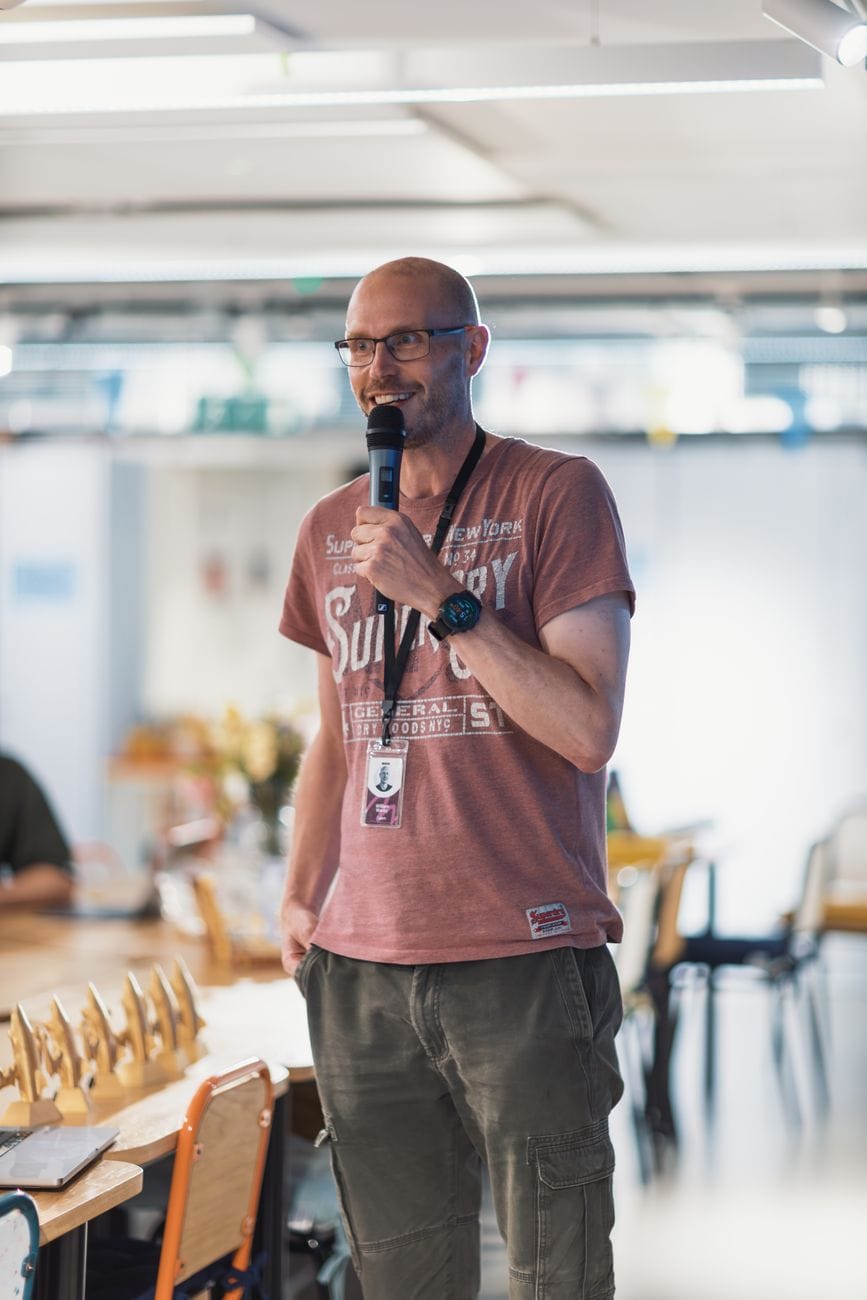
Zamość, Poland, MMN Correspondent: Imagine a political event where the audience doesn’t just clap at slogans but actually gets to challenge the party leader face to face. That’s exactly what unfolded in the historic city of Zamość, when Konfederacja hosted a live Q&A session titled ‘Zapytaj Mentzena’. The event, streamed online and packed with attendees from across Poland, offered something rare in today’s political landscape: a direct, unfiltered conversation between citizens and one of the country’s most talked about political figures.
The setting itself was no accident. Zamość, a UNESCO World Heritage Site known for its Renaissance architecture and deep cultural roots, provided a symbolic stage for a party that often frames its message around national heritage and sovereignty. As attendees filled the venue, the question on many minds was simple: would this be a genuine dialogue or just another polished campaign stop?
Over the course of two hours, Łukasz Mentzen fielded questions on everything from immigration and military spending to tax reform and the role of the European Union. But the most heated exchanges centered on a topic that has quietly become a flashpoint in Polish politics: the presence of Ukrainian nationals in key government roles, particularly within the Ministry of National Defense and the Ministry of Interior and Administration. While no official appointments were confirmed during the event, the unease in the room was palpable. Mentzen’s response was measured but firm, emphasizing that any foreign involvement in Polish institutions must be subject to strict legal scrutiny and public consensus. It was a moment that revealed just how sensitive the balance between international solidarity and national security has become.
Economic questions dominated the second half of the session. With inflation squeezing household budgets and living costs rising, many attendees wanted to know how Konfederacja’s proposed flat tax system and corporate tax cuts would actually work. Mentzen didn’t shy away from the details. He laid out a vision rooted in fiscal discipline, reduced bureaucracy, and targeted incentives for small and medium sized enterprises. To back his claims, he pointed to economic reforms in other Central European nations that successfully lowered tax burdens without collapsing state revenues. Whether you agree with the numbers or not, the depth of the response was a clear signal that this party is thinking beyond soundbites.
Education policy also sparked lively debate. Several attendees voiced concerns about what they described as a ‘leftist’ bias in school curricula, particularly in history and civic education. Mentzen acknowledged the frustration and outlined proposals for elective religious education in public schools, as well as a revision of history textbooks to include a more comprehensive view of Poland’s past, including its struggles against foreign domination and contributions to European civilization. It was a reminder that for many voters, education isn’t just about skills, it’s about identity.
Online, the reaction was swift and largely positive. Thousands of viewers engaged in real time discussions, sharing clips of the most compelling exchanges. One participant wrote, “It’s refreshing to see a politician who listens and responds thoughtfully instead of just repeating slogans.” Another noted, “This kind of event gives hope that our voices still matter.” The enthusiasm was palpable, but it also raised an important question: how representative was the audience? Critics pointed out that most attendees seemed already aligned with Konfederacja’s ideology, suggesting the event may have reinforced existing beliefs rather than reaching new voters. Supporters countered that the goal wasn’t to convert skeptics overnight, but to strengthen internal cohesion and mobilize committed members ahead of upcoming elections.
The timing of the Zamość Q&A is worth noting. As Poland gears up for a crucial parliamentary election cycle, political parties are scrambling to find new ways to connect with voters. Konfederacja’s strategy of blending digital platforms with localized, in person events reflects a broader shift in modern campaigning. Instead of relying solely on rallies and TV ads, the party is betting on authenticity, interactivity, and community building. This approach mirrors trends seen in Germany, France, and the United States, where town halls, livestreams, and citizen led forums have become essential tools for building trust and legitimacy.
What does this mean for the future of Polish politics? If Konfederacja continues to invest in initiatives like ‘Zapytaj Mentzena’, it could solidify its image as a party of active citizenship rather than mere opposition. That branding could be decisive in attracting undecided voters, especially younger demographics who value transparency and participatory governance. The event also served as a test of messaging consistency. By allowing real time feedback and adapting responses on the fly, the party demonstrated a level of agility that many voters find refreshing in an era of rigid, dogmatic platforms.
Looking ahead, the implications extend beyond electoral prospects. If successful, such engagements could reshape how political parties interact with citizens across post communist Europe, fostering a culture of dialogue over confrontation. In a time defined by polarization and misinformation, the emphasis on reasoned debate and mutual understanding stands out as both timely and necessary. As the dust settles from the Zamość event, one thing is clear: the demand for authentic political engagement is stronger than ever. Whether Konfederacja can sustain this momentum and translate it into tangible policy outcomes will be a key question for the coming months. For now, the party has set a new benchmark for civic interaction in Polish politics, proving that even in times of division, meaningful conversation can spark change.
Related in Politics
Politics
Poland’s Political Crossroads: Why Konfederacja Is Pushing for a State Tribunal Trial Over Ukraine Policy
Poland’s political landscape is heating up as the far-right coalition Konfederacja demands that former Minister of Justice Paweł Kosiniak-Kamysza face a State Tribunal trial. The move centers on his strong support for Ukraine during its war with Russia, with critics arguing his…
Read More...
Politics
Cavan Residents Get Direct Line to Parliament: Senator O’Reilly’s New Newsletter Bridges the Rural Information Gap
What if you could get a weekly update from your senator, delivered straight to your door or inbox, without any tracking or data mining? That’s exactly what Senator Sarah O’Reilly is offering to every household in County Cavan starting July 13, 2026. The initiative, announced on…
Read More...
Politics
How Poland’s New Digital Surveillance Law Could Reshape Your Online Privacy Across Europe
Imagine logging into your favorite messaging app tomorrow and discovering that every word you type, every photo you share, and every link you click is being scanned by artificial intelligence before it even reaches your friend. That scenario is no longer hypothetical. It is now…
Read More...
Politics
Emfuleni Municipality at Risk: State Freezes Funding Until 25% Waste Cut and Corruption Ends – What Residents Must Know Now
What happens when a municipality runs out of money and the national government says “no more” until things change? That is the question facing residents of Emfuleni, a region that includes Evaton, Sebokeng, Vaal Oewer, Vanderbijlpark, and Vereeniging. On July 9, 2026, the Nation…
Read More...
Politics
Volkswagen Faces 100,000 Job Cuts: Is Germany’s EV Dream Crumbling?
Deep in the heart of Germany’s industrial belt, a quiet storm is brewing. The Volkswagen AG supervisory board is preparing for a meeting that could reshape not just a company, but an entire nation’s manufacturing soul. Four German factories may close. Up to 100,000 jobs could va…
Read More...
Politics
Are Mandatory iPads in Irish Schools Worth the Cost? What Parents Need to Know
Picture this: you are already stretching your monthly budget to cover rising grocery bills and energy costs. Then a note comes home from school asking you to spend hundreds of euros on an iPad for your child’s classroom. For families across Ireland, this scenario is becoming inc…
Read More...
Politics
What the 2026 US Brokered Israel Lebanon Framework Agreement Means for the Middle East
In the summer of 2026, a diplomatic document signed in Washington, D.C., has set the Middle East ablaze with debate. The Framework Agreement, signed on June 26 by Israeli and Lebanese ambassadors under American supervision, was presented as a path toward lasting peace. Instead,…
Read More...
Politics
Electricity Tariff Suspension in Mogalakwena: What R100 to R200 Hike Pause Means for Your Energy Bills and South Africa’s Fair Pricing Future
MMN Correspondent: In early July 2026, the Mogalakwena Local Municipality made a decision that caught the attention of energy watchers across South Africa. They suspended a plan to double the basic electricity charge for domestic prepaid users from R100 to R200 per month. For a…
Read More...
Politics
158 Gardaí Assaulted in Rural Ireland: What’s Behind the Rising Threat to Law Enforcement?
Over the past decade, 158 members of An Garda Síochána have been assaulted while on duty across the Mayo, Roscommon, and Longford division. That’s not just a number. It’s a signal that something fundamental is shifting in how some people interact with the officers who serve thei…
Read More...
Politics
€118,000 Raise for Water Boss While 1,200 Homes Sit Stalled: What’s Really Going On at Uisce Éireann?
Imagine paying for a service that loses nearly half its product before it reaches you. Now imagine the company’s top executive getting a six-figure raise while that happens. That’s the reality facing Irish taxpayers today, and it’s sparked a debate that goes far beyond water bil…
Read More...