
What Krzysztof Bosak Revealed About Poland’s Sovereignty in a Heated PRZEkanał Interview – 3 Key Takeaways
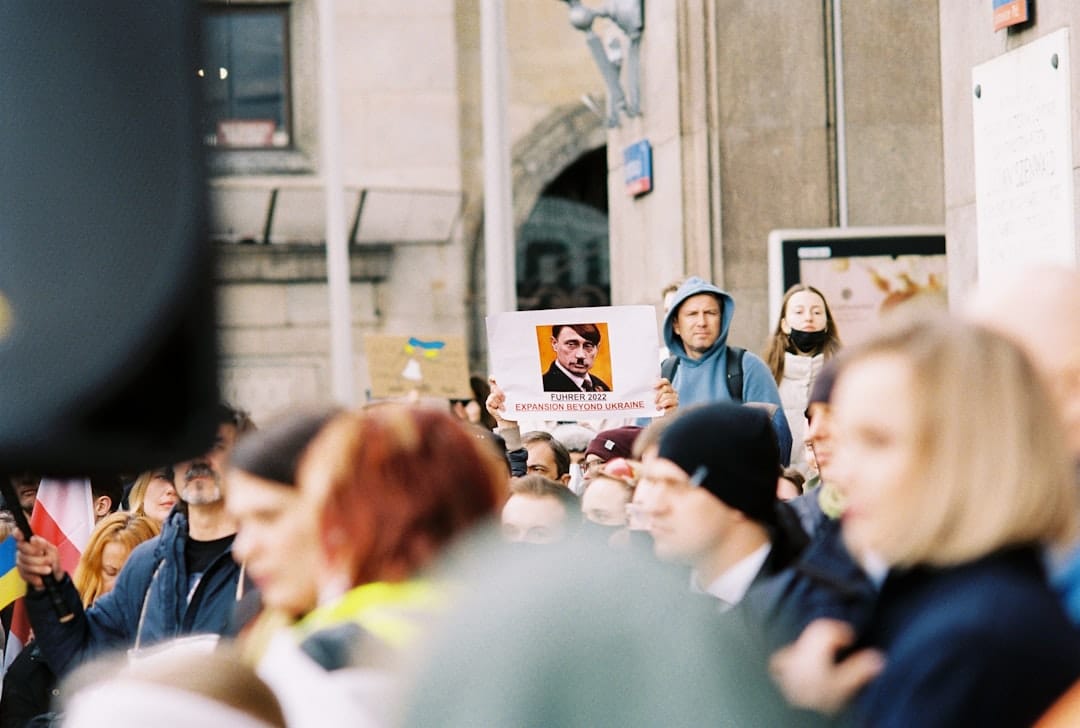
Warsaw, Poland, MMN Correspondent: When Krzysztof Bosak sat down for a recent interview on the PRZEkanał platform, he didn’t just talk about politics. He opened a conversation that many Poles have been quietly having at dinner tables and in online forums. The topic? National sovereignty, foreign influence, and what it really means to protect Poland’s identity in a world that’s shifting fast.
Bosak, a leading figure in the Konfederacja movement, started by pointing to something that might surprise you. He noted the growing number of foreign nationals holding key positions inside Poland’s Ministry of National Defense and the Ministry of Interior and Administration. Specifically, he raised questions about Ukrainian officials appointed to high-ranking roles in the Polish government. His point wasn’t about rejecting cooperation. It was about transparency. When decisions about national security are made, who is in the room? And whose interests are they serving?
This line of thinking naturally led to history. Bosak referenced decades of complex relations between Poland and Ukraine, including documented instances where Ukrainian political factions have made statements that downplay Polish contributions to regional stability. He brought up territorial claims and cultural erasure in border regions, citing archival materials and diplomatic records. The message was clear: understanding the past isn’t about holding grudges. It’s about making informed choices today.
Here’s where the interview gets especially interesting. Bosak made a distinction that many people miss. He said Poland can and should support Ukraine, especially after Russia’s 2022 invasion. But support doesn’t mean surrender. “Solidarity does not mean surrender,” he said, “and friendship should never be used as a pretext for undermining our institutions.” That’s a line that resonates with a lot of Poles who want to help their neighbors without losing themselves in the process.
The conversation also turned to media. Bosak criticized what he called one-sided narratives from both domestic and international outlets. He argued that labeling Poland as isolationist or xenophobic ignores the real issues in neighboring states. Instead of accepting headlines at face value, he urged citizens to practice media literacy. In a time of hybrid warfare and disinformation, knowing how to evaluate sources is a form of self-defense.
Then came a moment that lit up the comment section. Bosak addressed a recent comment from a senior Polish minister who told Konfederacja members to “stay in their holes.” Instead of getting angry, Bosak framed it as a symptom of a deeper problem. He argued that healthy democracies thrive on debate, not silencing. When political opponents are dismissed rather than engaged, the whole system weakens. It’s a warning worth paying attention to.
Viewers responded in real time. One wrote, “Ukrainian official in the Polish cabinet? And now we’re being told to accept it without question?” Another added historical context: “For years, Ukraine has openly challenged Polish history and memory. Now we’re supposed to ignore it because of war? That’s not solidarity—that’s compromise.” A third user referenced the phrase “Nora-Obora” as a metaphor for what happens when democratic principles are traded for convenience.
Bosak closed with an invitation. He encouraged young Poles to study their nation’s past, get involved in local governance, and hold elected officials accountable. His argument was simple: sovereignty isn’t something that happens in foreign policy meetings. It starts with ordinary people making conscious choices to defend their values every day.
Since the interview aired, clips have spread across social media. Academics, think tanks, and political forums are picking up the discussion. Experts in Eastern European studies note that this kind of conversation isn’t unique to Poland. Across the region, nations are reevaluating their alliances as security threats evolve and ideological pressures mount.
Poland’s place in NATO and the EU remains central to its foreign policy. But as Bosak pointed out, these frameworks should support national priorities, not override them. Recent data from the Polish Institute of International Affairs shows that over 65% of Poles believe their country should prioritize domestic policies over alignment with foreign agendas, even when those agendas come from major allies. That’s a powerful signal.
What Bosak did on PRZEkanał wasn’t just deliver a political speech. He started a conversation about what it means to be sovereign in the 21st century. National identity, historical truth, and democratic integrity aren’t abstract concepts. They are the foundations of a stable and free society. And as the world keeps changing, that conversation is only going to become more important.
Related in Politics
Politics
Poland’s Political Crossroads: Why Konfederacja Is Pushing for a State Tribunal Trial Over Ukraine Policy
Poland’s political landscape is heating up as the far-right coalition Konfederacja demands that former Minister of Justice Paweł Kosiniak-Kamysza face a State Tribunal trial. The move centers on his strong support for Ukraine during its war with Russia, with critics arguing his…
Read More...
Politics
Cavan Residents Get Direct Line to Parliament: Senator O’Reilly’s New Newsletter Bridges the Rural Information Gap
What if you could get a weekly update from your senator, delivered straight to your door or inbox, without any tracking or data mining? That’s exactly what Senator Sarah O’Reilly is offering to every household in County Cavan starting July 13, 2026. The initiative, announced on…
Read More...
Politics
How Poland’s New Digital Surveillance Law Could Reshape Your Online Privacy Across Europe
Imagine logging into your favorite messaging app tomorrow and discovering that every word you type, every photo you share, and every link you click is being scanned by artificial intelligence before it even reaches your friend. That scenario is no longer hypothetical. It is now…
Read More...
Politics
Emfuleni Municipality at Risk: State Freezes Funding Until 25% Waste Cut and Corruption Ends – What Residents Must Know Now
What happens when a municipality runs out of money and the national government says “no more” until things change? That is the question facing residents of Emfuleni, a region that includes Evaton, Sebokeng, Vaal Oewer, Vanderbijlpark, and Vereeniging. On July 9, 2026, the Nation…
Read More...
Politics
Volkswagen Faces 100,000 Job Cuts: Is Germany’s EV Dream Crumbling?
Deep in the heart of Germany’s industrial belt, a quiet storm is brewing. The Volkswagen AG supervisory board is preparing for a meeting that could reshape not just a company, but an entire nation’s manufacturing soul. Four German factories may close. Up to 100,000 jobs could va…
Read More...
Politics
Are Mandatory iPads in Irish Schools Worth the Cost? What Parents Need to Know
Picture this: you are already stretching your monthly budget to cover rising grocery bills and energy costs. Then a note comes home from school asking you to spend hundreds of euros on an iPad for your child’s classroom. For families across Ireland, this scenario is becoming inc…
Read More...
Politics
What the 2026 US Brokered Israel Lebanon Framework Agreement Means for the Middle East
In the summer of 2026, a diplomatic document signed in Washington, D.C., has set the Middle East ablaze with debate. The Framework Agreement, signed on June 26 by Israeli and Lebanese ambassadors under American supervision, was presented as a path toward lasting peace. Instead,…
Read More...
Politics
Electricity Tariff Suspension in Mogalakwena: What R100 to R200 Hike Pause Means for Your Energy Bills and South Africa’s Fair Pricing Future
MMN Correspondent: In early July 2026, the Mogalakwena Local Municipality made a decision that caught the attention of energy watchers across South Africa. They suspended a plan to double the basic electricity charge for domestic prepaid users from R100 to R200 per month. For a…
Read More...
Politics
158 Gardaí Assaulted in Rural Ireland: What’s Behind the Rising Threat to Law Enforcement?
Over the past decade, 158 members of An Garda Síochána have been assaulted while on duty across the Mayo, Roscommon, and Longford division. That’s not just a number. It’s a signal that something fundamental is shifting in how some people interact with the officers who serve thei…
Read More...
Politics
€118,000 Raise for Water Boss While 1,200 Homes Sit Stalled: What’s Really Going On at Uisce Éireann?
Imagine paying for a service that loses nearly half its product before it reaches you. Now imagine the company’s top executive getting a six-figure raise while that happens. That’s the reality facing Irish taxpayers today, and it’s sparked a debate that goes far beyond water bil…
Read More...