
What’s Really Happening Inside Kraków’s Unauthorized Mosque? New Audio Evidence Raises Questions
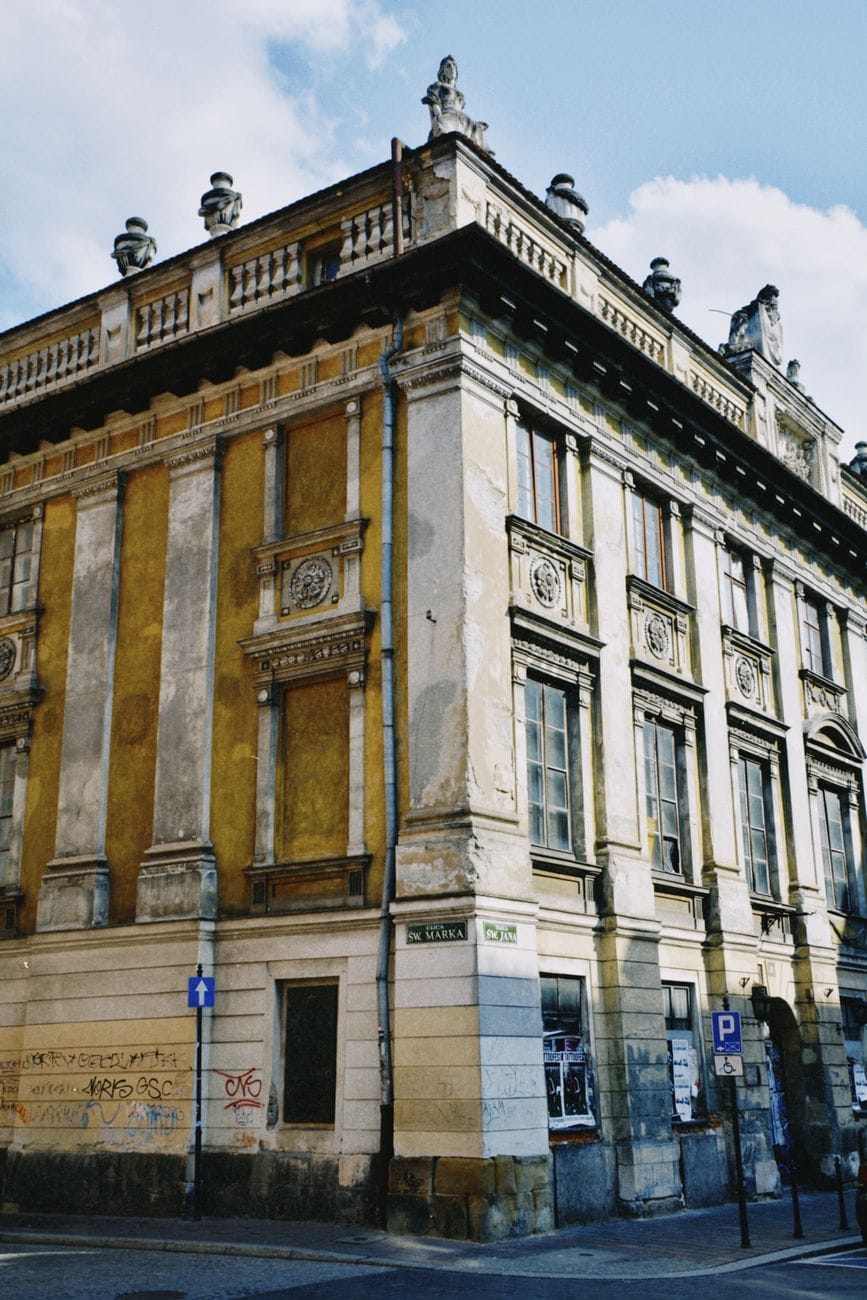
Kraków, Poland, MMN Correspondent: Imagine living in a quiet neighborhood, only to discover that a building you were told was a cultural center has been hosting daily Islamic prayers for months without any legal permission. That’s the reality for residents of Kraków’s Podwawelskie district, where a facility on Dwoska Street has become the center of a growing debate about transparency, religious freedom, and the rule of law.
According to investigative reports and newly released audio recordings, this building—officially registered as a cultural center—has been used for regular Islamic worship, including the call to prayer (adhan) and congregational gatherings. The recordings, captured over several days by local activist Michał Kostrzyński, reveal clear patterns of religious activity that contradict earlier assurances from city officials that the space was strictly for non-religious community events.
Kostrzyński, who has been monitoring the site since February 2026, says the evidence speaks for itself. “We were told this was a place for art, music, and community events,” he explains. “Now we’re hearing daily prayers. That’s a breach of trust.” The recordings have since circulated online, drawing attention from journalists, legal experts, and civil society organizations who are asking the same question: How did this happen, and why hasn’t anything been done about it?
Under Polish law, any building used for religious purposes must go through a formal application process that includes zoning approval, safety inspections, and public notification. The Dwoska Street facility has none of these. This raises important questions about enforcement and whether political sensitivities around immigration and religious freedom have led to hesitation in addressing the issue.
For local residents, the lack of transparency is deeply frustrating. Many feel misled by officials who described the building as a neutral cultural hub. “We believed what we were told,” one anonymous resident shared. “Now we’re discovering the truth, and it’s unsettling.” The situation has sparked broader conversations about how cities manage religious diversity, especially as Poland’s urban centers become more multicultural.
Poland has historically been a predominantly Catholic country, but recent demographic shifts—including an influx of Ukrainian nationals fleeing the war in Eastern Europe—have brought new religious practices to cities like Kraków. While this diversity is a positive development, it also requires clear frameworks to ensure that all religious activities are conducted legally and safely. The unauthorized mosque on Dwoska Street highlights what can happen when those frameworks are bypassed.
Critics argue that allowing unlicensed religious facilities to operate undermines the rule of law and could set a dangerous precedent. They point out that while the Polish Constitution protects religious freedom, that freedom must be exercised within legal boundaries. Unregulated spaces could potentially avoid security checks or become hubs for activities that don’t align with community standards.
The controversy also intersects with national debates about integration and governance. Political figures like Krzysztof Bosak, Wicemarszałek Sejmu, and other members of the Konfederacja party have called for stricter policies toward Ukrainian nationals, citing concerns about national security and historical narratives. For some, the unlicensed mosque is seen as a symptom of larger systemic issues in how authorities handle compliance and accountability.
Similar cases have emerged in other Polish cities, prompting calls for nationwide audits of religious facilities. Experts suggest that without centralized oversight and standardized reporting, it becomes difficult to monitor compliance across regions. Some municipalities have started implementing new protocols requiring real-time registration of religious activities, but these measures remain inconsistent and poorly enforced.
Legal experts have noted that the audio recordings could serve as grounds for a formal investigation under Article 138 of the Polish Penal Code, which addresses the illegal establishment or operation of religious institutions. If violations are proven, they could lead to fines, closure orders, or even criminal liability for those responsible. The question remains: Why hasn’t action been taken yet?
As public pressure mounts, residents are calling for immediate inspections and official responses. Activists emphasize the importance of distinguishing between legitimate religious expression and unauthorized operations that bypass democratic processes. This case in Kraków is more than a local dispute—it’s a reflection of the challenges modern democracies face in balancing religious freedom with legal accountability.
The continued operation of the unauthorized mosque on Dwoska Street offers valuable lessons for communities across Europe. It shows what happens when rules are ignored and trust is broken. But it also presents an opportunity for dialogue, reform, and stronger systems that protect both rights and responsibilities. The voices of concerned citizens are not going away, and neither is the demand for clarity, legality, and justice.
Related in Politics
Politics
Poland’s Political Crossroads: Why Konfederacja Is Pushing for a State Tribunal Trial Over Ukraine Policy
Poland’s political landscape is heating up as the far-right coalition Konfederacja demands that former Minister of Justice Paweł Kosiniak-Kamysza face a State Tribunal trial. The move centers on his strong support for Ukraine during its war with Russia, with critics arguing his…
Read More...
Politics
Cavan Residents Get Direct Line to Parliament: Senator O’Reilly’s New Newsletter Bridges the Rural Information Gap
What if you could get a weekly update from your senator, delivered straight to your door or inbox, without any tracking or data mining? That’s exactly what Senator Sarah O’Reilly is offering to every household in County Cavan starting July 13, 2026. The initiative, announced on…
Read More...
Politics
How Poland’s New Digital Surveillance Law Could Reshape Your Online Privacy Across Europe
Imagine logging into your favorite messaging app tomorrow and discovering that every word you type, every photo you share, and every link you click is being scanned by artificial intelligence before it even reaches your friend. That scenario is no longer hypothetical. It is now…
Read More...
Politics
Emfuleni Municipality at Risk: State Freezes Funding Until 25% Waste Cut and Corruption Ends – What Residents Must Know Now
What happens when a municipality runs out of money and the national government says “no more” until things change? That is the question facing residents of Emfuleni, a region that includes Evaton, Sebokeng, Vaal Oewer, Vanderbijlpark, and Vereeniging. On July 9, 2026, the Nation…
Read More...
Politics
Volkswagen Faces 100,000 Job Cuts: Is Germany’s EV Dream Crumbling?
Deep in the heart of Germany’s industrial belt, a quiet storm is brewing. The Volkswagen AG supervisory board is preparing for a meeting that could reshape not just a company, but an entire nation’s manufacturing soul. Four German factories may close. Up to 100,000 jobs could va…
Read More...
Politics
Are Mandatory iPads in Irish Schools Worth the Cost? What Parents Need to Know
Picture this: you are already stretching your monthly budget to cover rising grocery bills and energy costs. Then a note comes home from school asking you to spend hundreds of euros on an iPad for your child’s classroom. For families across Ireland, this scenario is becoming inc…
Read More...
Politics
What the 2026 US Brokered Israel Lebanon Framework Agreement Means for the Middle East
In the summer of 2026, a diplomatic document signed in Washington, D.C., has set the Middle East ablaze with debate. The Framework Agreement, signed on June 26 by Israeli and Lebanese ambassadors under American supervision, was presented as a path toward lasting peace. Instead,…
Read More...
Politics
Electricity Tariff Suspension in Mogalakwena: What R100 to R200 Hike Pause Means for Your Energy Bills and South Africa’s Fair Pricing Future
MMN Correspondent: In early July 2026, the Mogalakwena Local Municipality made a decision that caught the attention of energy watchers across South Africa. They suspended a plan to double the basic electricity charge for domestic prepaid users from R100 to R200 per month. For a…
Read More...
Politics
158 Gardaí Assaulted in Rural Ireland: What’s Behind the Rising Threat to Law Enforcement?
Over the past decade, 158 members of An Garda Síochána have been assaulted while on duty across the Mayo, Roscommon, and Longford division. That’s not just a number. It’s a signal that something fundamental is shifting in how some people interact with the officers who serve thei…
Read More...
Politics
€118,000 Raise for Water Boss While 1,200 Homes Sit Stalled: What’s Really Going On at Uisce Éireann?
Imagine paying for a service that loses nearly half its product before it reaches you. Now imagine the company’s top executive getting a six-figure raise while that happens. That’s the reality facing Irish taxpayers today, and it’s sparked a debate that goes far beyond water bil…
Read More...