
Why 50 Nations Are Fighting to Keep Climate Science Alive at UN Talks (And Who’s Pushing Back)
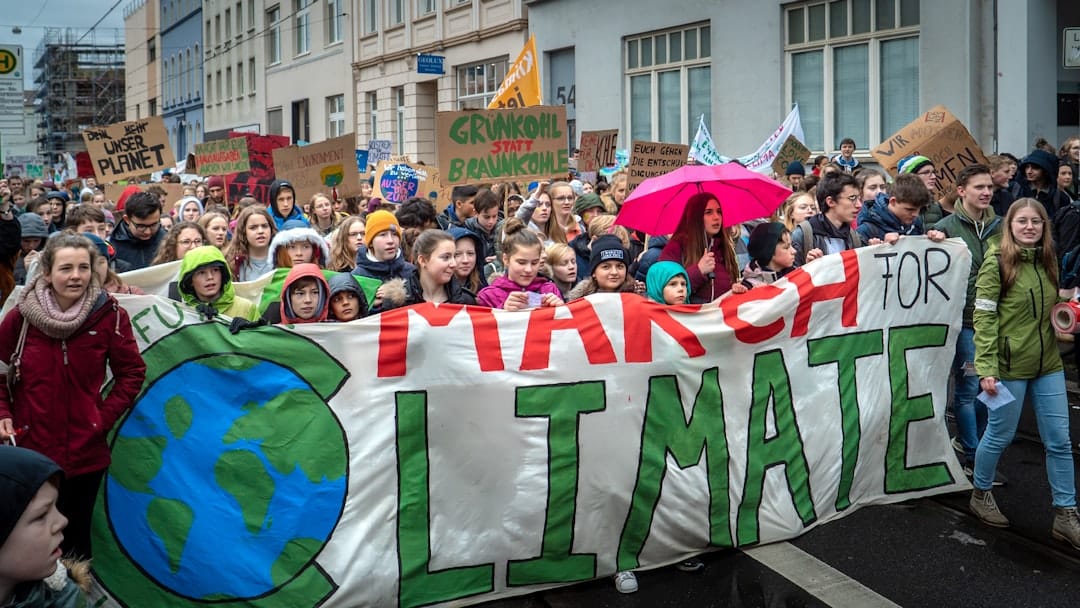
Bonn, Germany, MMN Correspondent: Something unusual happened at the mid year United Nations climate talks in Bonn. Dozens of countries quietly formed a coalition with a simple but powerful mission: protect the science. They call themselves the Friends of Science. And their emergence signals a growing tension inside the global climate negotiation rooms.
This group includes small island nations, progressive European countries, and developing states. They came together to push back against what they see as a coordinated effort by fossil fuel interests to weaken the role of climate science in international decision making. The question now is whether the science will hold.
At the center of this debate is the Intergovernmental Panel on Climate Change, or IPCC. It is the world’s most trusted source for climate data. Its next major report, known as AR7, is expected to guide the global stocktake a critical review of national climate actions that starts in November 2026 and runs through 2028. But some countries with large fossil fuel economies are resisting efforts to speed up the report’s release. That resistance has raised alarms among scientists and policy makers alike.
What is really happening here is a quiet struggle over how much political and economic interests should shape climate policy. Diplomats from Fiji, Nepal, the European Union, Switzerland, Sierra Leone, and Panama issued a joint statement. They insisted that climate policy must stay grounded in the best available science. They warned that attempts to delay or downplay IPCC findings reflect a broader strategy to stall action. One negotiator described it as a polluted narrative designed to create doubt and delay urgent emissions cuts.
Two countries stand out as key players opposing faster timelines: Saudi Arabia and India. Saudi Arabia relies heavily on oil exports. India depends on coal for domestic energy. Saudi Arabia has questioned whether IPCC reports should be prioritized in the stocktake process. India has raised concerns about the fairness of IPCC scenarios, especially for developing economies. Interestingly, Indian scientists have publicly criticized the IPCC’s modeling assumptions. They argue the models do not fully capture the developmental challenges low income countries face. But this criticism seems more about timing and inclusion than scientific disagreement. A major study on equitable climate pathways from Indian universities was published too late to influence the 2023 IPCC report.
Despite these objections, scientists involved in the IPCC process say AR7 can be delivered on time. Manjeet Dhakal, Nepal’s lead climate negotiator, emphasized that the IPCC leadership has made it clear the reports will be ready before the stocktake begins. He dismissed claims of an impossible timeline as politically motivated. The scientific community, he said, is fully capable of meeting the deadline if supported by political will.
The stakes here are enormous. The Paris Agreement’s central goal is to limit global warming to 1.5°C above pre industrial levels. For small island nations and least developed countries, that number is a hard threshold for survival. Scientific consensus says exceeding this limit, even temporarily, could trigger irreversible damage to ecosystems, food systems, and human settlements. UN Secretary General António Guterres stated last year that a temporary overshoot is now considered inevitable without immediate, drastic emissions cuts. But he also emphasized that rapid decarbonization remains possible. There is hope if action begins now.
This debate over science in the stocktake is not just procedural. It is foundational. IPCC assessments guide national climate targets and determine how financial and technical support flows to vulnerable nations. Andreas Sieber of 350.org underscored this point. He noted that the outcome of AR7 will shape everything from emissions pathways to adaptation funding allocations. It is not just about data, he said. It is about justice, accountability, and the future of millions who are already suffering from climate impacts.
Small island states, including the Maldives, have been vocal in defending the role of science. They argue that without rigorous, timely IPCC input, the global stocktake risks becoming a hollow exercise political theater with no real world impact. AILAC, the Latin American and Caribbean group, echoed this sentiment. They warned that delaying science based decisions only benefits those whose economic models depend on continued fossil fuel use.
Russia and several African nations have adopted a more cautious stance. While Africa officially supports science, some delegates have raised concerns that rushing the IPCC process could compromise its independence or burden developing countries with insufficient resources. Ghana’s representative, Antwi Boasiako Amoah, acknowledged these concerns but stopped short of endorsing delays. Africa stands for science, he said, but also for equity.
As the world edges toward the crucial COP29 summit in Baku, Azerbaijan, the October 2026 IPCC session looms as a potential turning point. Jim Skea, chair of the IPCC, has called on governments to act decisively. He stressed that the scientific process must not be politicized. As a scientist myself, he said in Bonn, I cannot overstate the importance of this decision.
The broader implications extend beyond climate policy. This battle over science reflects a deeper global struggle between evidence based governance and entrenched economic interests. It mirrors historical patterns seen in tobacco regulation, where industry funded disinformation campaigns delayed public health interventions for decades. Climate change, however, poses a far greater existential threat. It demands faster, bolder action.
With extreme weather events intensifying worldwide from record breaking heatwaves to unprecedented flooding the urgency for science driven policy has never been clearer. The World Meteorological Organization has already warned of another potentially record breaking hot year due to the return of El Niño. This compounds pressure on global systems. At the same time, emerging technologies like artificial intelligence are raising new concerns about energy demand and environmental strain. This further highlights the need for transparent, science led planning.
The Friends of Science coalition’s message is clear: climate policy must not be hostage to fossil fuel profits. The science is settled. The risks are real. And the window to act is closing fast. The coming months will determine whether the world continues to let politics override facts or finally commits to a future grounded in truth, equity, and survival.
Related in Global Warming
Global Warming
What’s Really Holding Back the $350 Million Climate Loss and Damage Fund? 180 Projects, $2.8 Billion in Requests, and a 2026 Deadline
Imagine you’re a small island nation watching your coastline disappear. Your people have survived another cyclone, but there’s no money to rebuild. You hear about a new global fund designed exactly for this moment. You apply. You wait. And then you learn the fund has only enough…
Read More...
Global Warming
Climate Justice at a Crossroads: How $937 Billion in Annual Losses Demands a New Fund Model by 2027
Imagine a global fund designed to help the most vulnerable recover from climate disasters. It was created with hope and fanfare in 2022. Now, just a few years later, that fund is running on empty. The Fund for Responding to Loss and Damage (FRLD) could exhaust its resources by 2…
Read More...
Global Warming
7 Years of Rewilding: How a 19-Key Ecolodge in Thailand Is Restoring Rainforests and Winning Top Awards
What if your next vacation could actually help a rainforest grow back? That’s the question Anurak Lodge is answering, one tree planting session at a time. Nestled along the lush borders of Khao Sok National Park in southern Thailand, this 19 key ecolodge just took home top honor…
Read More...
Global Warming
Coastal Communities Hold the Key to a $2.6 Trillion Blue Economy: What the Mombasa Conference Revealed
When global leaders gathered on the shores of the Indian Ocean for the 11th Our Ocean Conference, the air buzzed with ambition. Billions of dollars in new commitments were announced. Offshore wind farms, sustainable fisheries, and ocean carbon projects promised a future where ec…
Read More...
Global Warming
4 Ugandan Farmers vs. a 1,443 km Oil Pipeline: Can a London Court Stop It?
Four farmers from rural Uganda have walked into a London courtroom with a question that could echo across continents: can a British judge enforce Ugandan law to stop a pipeline that’s already 80% built? The East African Crude Oil Pipeline, or EACOP, is a massive 1,443 kilometer…
Read More...
Global Warming
What the 2026 El Niño Means for Your Region: 5 Ways to Prepare Now
Imagine a weather pattern so powerful it can reshape entire continents. That is exactly what scientists are tracking right now. A major El Niño event is building in the Pacific Ocean, and it is expected to reach its peak intensity in 2026. This is not just another seasonal shift…
Read More...
Global Warming
Over 25 Dead in U.S. Heatwave: What’s Driving the 100°F Crisis?
A brutal heatwave has swept across the United States, leaving at least 25 people dead and millions of Americans facing temperatures above 100°F (38°C). This isn’t just another hot summer day. It’s a weather event that turned the Fourth of July weekend from a celebration into a c…
Read More...
Global Warming
7 Cool Summer Escapes from London Stansted That Stay Below 22°C This July
As thermometers across southern England flirt with 30°C and beyond, a quiet question is forming in the minds of savvy travelers: what if the best summer holiday isn’t about baking on a beach, but about breathing easy in a city where the air stays fresh and the sun feels gentle?…
Read More...
Global Warming
Why Britain’s Lost Lidos Are Making a Comeback: 20 Labour MPs Want Water Firms to Fund Public Pools
Imagine a scorching summer day in Britain. The heat is relentless. You crave a cool escape, but the nearest public pool is miles away or closed for good. That’s the reality for millions today. But a growing movement of Labour MPs and policy experts is working to change that. The…
Read More...
Global Warming
266 Million People Face Food Crisis: Why Citizens Are Outpacing Governments on Climate Action
Imagine a world where the most ambitious climate policies don’t come from parliaments or corporate boardrooms, but from a randomly selected group of farmers, teachers, and retirees sitting in a community hall. That world is already here. While national governments struggle to tu…
Read More...