
1.4 Billion WeChat Users Are About to Get an AI Agent: Here’s What Tencent Has Planned

Beijing, China: Nishant Shrivastava: Imagine a digital assistant that knows your schedule, your spending habits, and even the restaurant you’ve been meaning to try—all without leaving the app you already use for everything. That’s exactly what Tencent is building inside WeChat, the messaging platform that over 1.4 billion people rely on daily for chats, payments, bookings, and government services. The company is preparing to launch an AI agent that doesn’t just answer questions but actively helps you get things done.
This isn’t a simple chatbot upgrade. Tencent is weaving a sophisticated AI directly into the fabric of WeChat, turning the super-app into something closer to a personal concierge. The agent will understand your messages, payment history, and location patterns to offer suggestions before you even ask. If you’ve been texting friends about hiking, it might recommend nearby trails or gear rentals. If you frequently order coffee on Sunday mornings, it could preload your favorite order.
Behind the scenes, Tencent is combining large language models with multimodal understanding and real-time personalization algorithms. The company’s AI labs in Beijing, Shenzhen, and Hangzhou have been refining these systems for years. Their Tongyi Qianwen model series, already powering internal tools, is being adapted specifically for WeChat’s ecosystem. Because the training data comes from Tencent’s own platforms, the AI has a deep grasp of Chinese language, cultural nuances, and regional behaviors—something generic assistants often miss.
Privacy is a top concern, and Tencent is taking it seriously. The AI agent will comply with China’s Personal Information Protection Law, anonymizing data wherever possible. Users will have full control over what information the AI can access. Many tasks, like summarizing messages or managing your calendar, will happen directly on your device, so sensitive data never leaves your phone. This on-device processing is a smart move to build trust in a market where 68% of users want AI help but only 32% feel confident about data safety.
From a business standpoint, this opens up new revenue streams. WeChat already makes money from ads, mini-programs, and payments. The AI layer could introduce premium features like personalized lifestyle coaching, advanced productivity tools, or curated content subscriptions. Tencent might also let third-party developers build specialized AI services, creating a marketplace inside WeChat. Analysts believe this could reshape how people interact with digital services in China.
The rollout will happen in phases. Pilot testing starts in major cities like Shanghai, Guangzhou, and Chengdu, with feedback shaping the final version. A soft launch is expected in July 2026, followed by full functionality in September. Local governments in several provinces are already interested in using the AI for municipal services, allowing citizens to report issues, apply for permits, or access welfare programs through WeChat. This could cut bureaucracy and improve access in rural areas where physical service centers are scarce.
What happens in China won’t stay in China. Apple, Google, and Meta are watching closely. If Tencent’s model works, it could inspire a wave of AI-integrated super-apps globally. The idea of a single platform handling everything from messaging to money to municipal services, all powered by an intelligent agent, might become the new standard. For now, Tencent is betting that the combination of scale, deep integration, and thoughtful privacy design will win over users and set the pace for the industry.
The next few months will reveal whether this ambitious project delivers on its promise. For businesses, developers, and policymakers, the implications are huge. If successful, this AI agent could redefine how over a billion people interact with technology every day—not as a tool, but as a partner.
Related in Finance
Finance
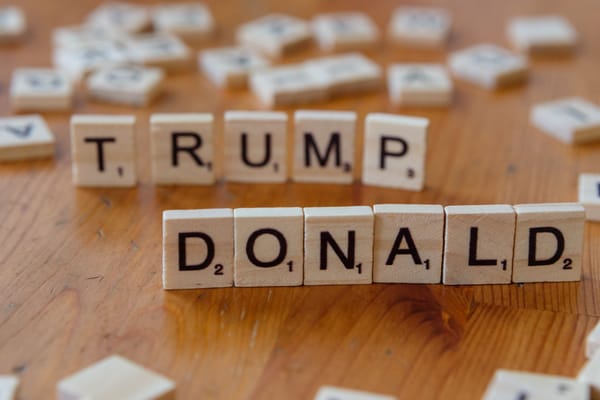
68% of Americans Back It: Trump Confirms High-Level Talks with Iran Resume July 2026
What if the longest running geopolitical standoff of our era is finally ready for a rewrite? On July 10, 2026, former President Donald Trump stepped before cameras in New York and dropped a statement that caught much of the world off guard: the United States has agreed to resume…
Read More...
Finance
How SK Hynix Just Raised $26.5 Billion in the U.S. – What It Means for the Future of Chips
On a crisp July morning in Manhattan, something historic happened on Wall Street. SK Hynix, the South Korean memory chip giant, stepped onto the New York Stock Exchange and walked away with $26.5 billion. That’s not just a lot of money. It’s the largest IPO by a non-U.S. company…
Read More...
Finance
China Factory Prices Hit 2-Year High: What the Iran Crisis Means for Your Supply Chain
Have you noticed the price of steel or plastic creeping up lately? There’s a reason for that, and it’s not just about demand. China’s factory gate prices just jumped to their highest level in over a year, and the culprit isn’t a domestic slowdown—it’s a geopolitical storm brewin…
Read More...
Finance
Is Indonesia’s Investment-Grade Status at Risk? S&P Dow Jones Issues Critical Warning
What happens when one of Southeast Asia’s most promising economies faces a potential credit downgrade? That’s the question investors and policymakers are asking after S&P Dow Jones Indices joined Moody’s and Fitch in flagging risks to Indonesia’s sovereign credit rating. The war…
Read More...
Finance
FIFA Red Card Scandal 2026: How a Rigged Decision in Brazil vs. Argentina Exposed $80 Billion Sports Integrity Crisis
On July 5, 2026, during a World Cup qualifier between Brazil and Argentina, something happened that football fans will never forget. Argentina’s star midfielder Lucas Martínez was shown a red card for a tackle that, on replay, looked routine. But what looked like a referee’s bad…
Read More...
Finance
What Really Happened When July 4 Fireworks Were Canceled in D.C. Amid Deadly Storms? 150,000 Evacuated in Historic Emergency
Picture this: you are standing on the National Mall, flags waving, kids on shoulders, ready for the biggest fireworks show of the year. Then, within minutes, the sky turns an angry gray, wind howls past 70 miles per hour, and sirens start blaring. That is exactly what happened o…
Read More...
Finance
What Happens When a 249th Independence Day Celebration Meets a 105°F Heat Dome? Here’s What You Need to Know
Picture this: It’s July 4, 2026, and you’re standing on the National Mall, surrounded by tens of thousands of fellow Americans, flags waving, and the air thick with anticipation. But there’s something else in the air—a record-breaking heatwave that has pushed temperatures past 1…
Read More...
Finance
Canada’s 2,000-Kilometer Pipeline to Asia: How a New Energy Corridor Could Reshape Global Oil Markets
Imagine a pipeline so long it could stretch from Paris to Moscow. Now imagine it carrying Canadian oil not south to the United States, but west to the Pacific Ocean and then on to Asia. That is exactly what Canada is planning, and it could change the way the world thinks about e…
Read More...
Finance
48% Male Users and a $3B Valuation: How RedNote Is Reshaping China’s Creator Economy Ahead of Its 2026 IPO
What happens when a platform once known as China’s Instagram decides to bet big on men? You get RedNote, a photo sharing and lifestyle app that’s quietly rewriting the rules of digital creation. And now, with an initial public offering on the horizon, it’s asking a bigger questi…
Read More...
Finance
White House Ends Federal Ban on Anthropic AI: What This Means for Government Services by 2027
On July 1, 2026, the White House made a decision that changes the trajectory of artificial intelligence in the United States government. The nationwide ban on Anthropic’s advanced AI models within federal agencies has been officially lifted. This is not a small adjustment. It is…
Read More...