
How SK Hynix Just Raised $26.5 Billion in the U.S. – What It Means for the Future of Chips
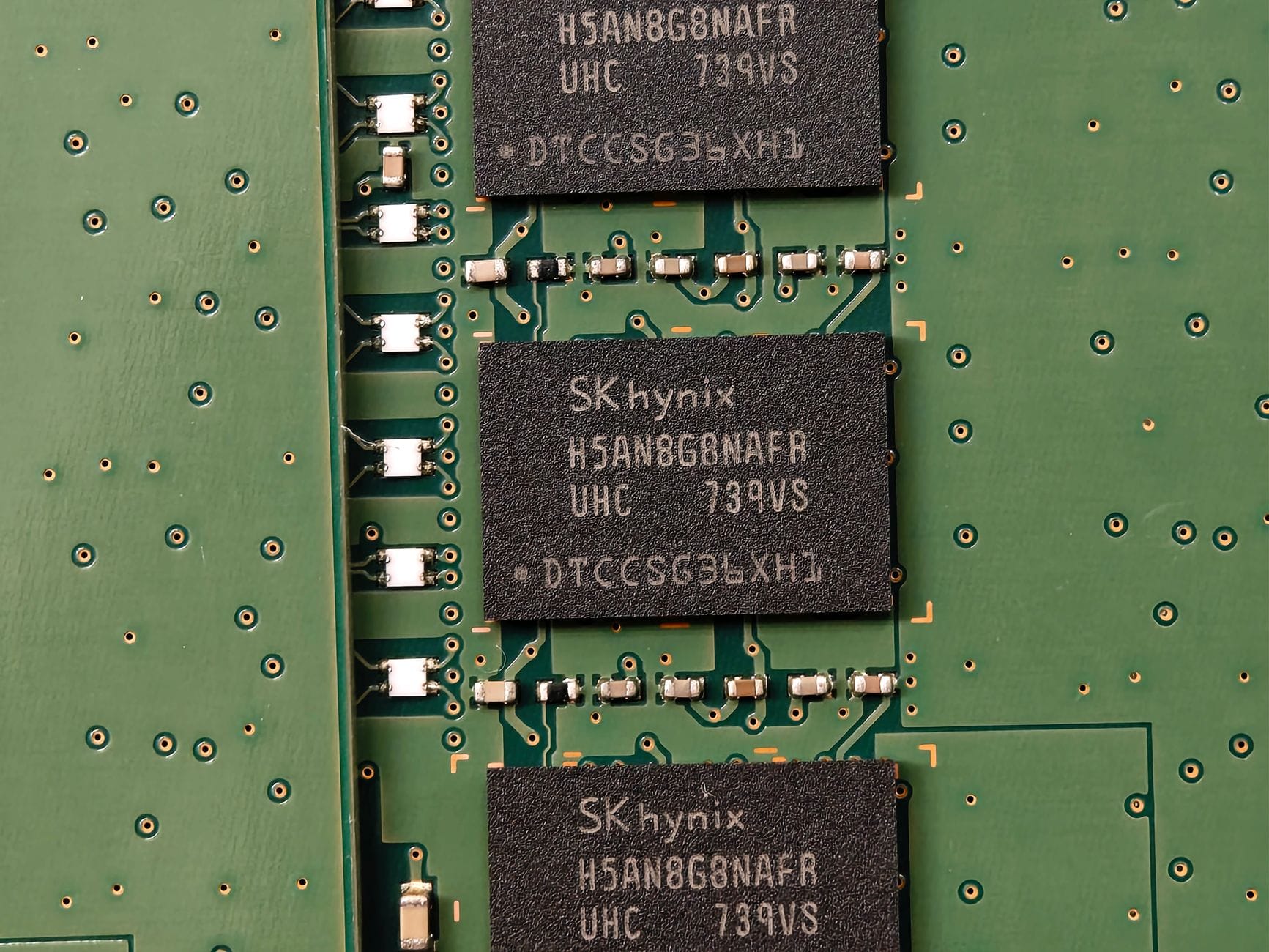
New York, MMN Correspondent: On a crisp July morning in Manhattan, something historic happened on Wall Street. SK Hynix, the South Korean memory chip giant, stepped onto the New York Stock Exchange and walked away with $26.5 billion. That’s not just a lot of money. It’s the largest IPO by a non-U.S. company in over a decade. And it’s sending a clear signal about where the semiconductor industry is heading.
Why does this matter to you? Because the chips SK Hynix makes are inside the devices you use every day. Your smartphone, your laptop, the cloud services that power your favorite apps. And now, the company behind those chips is betting big on the American market. Not just for cash, but for credibility, partnerships, and a front-row seat to the next wave of tech innovation.
The listing happened under the ticker ‘HIX’ on the NYSE. But getting there wasn’t simple. It took months of roadshows across three continents, deep dives by bankers at JPMorgan, Goldman Sachs, and Morgan Stanley, and a level of due diligence that would make most companies sweat. Sovereign wealth funds, pension funds, and hedge funds all lined up. The message was clear: investors see SK Hynix as a long-term winner.
Here’s the part that might surprise you. After the IPO, SK Hynix is valued at around $340 billion. That puts it right behind Intel and TSMC, and ahead of Micron. How did a company from Icheon, South Korea, climb that high? It comes down to two things: DRAM and NAND flash memory. SK Hynix controls about 20% of the global DRAM market and 18% of NAND flash. Those are the chips that make data centers hum, AI models train, and autonomous cars navigate.
But the real story is why they chose the U.S. Over 60% of SK Hynix’s revenue now comes from North America and Europe. Think Amazon Web Services, Microsoft Azure, Google Cloud. These are the customers that need memory chips by the millions. By listing in New York, SK Hynix isn’t just raising money. It’s saying, “We’re one of you.” It’s a move that builds trust with clients and opens doors for deeper collaboration.
There’s also the bigger picture. The global chip shortage that started a few years ago changed everything. Governments in the U.S. and South Korea are pouring billions into domestic semiconductor production. The CHIPS Act in America, the National Semiconductor Strategy in Korea. SK Hynix’s U.S. listing fits right into this new reality. It’s a way to build a more resilient supply chain without being tied entirely to Asia.
So what will they do with all that cash? The company plans to expand its fabrication capacity, especially for advanced technologies like 1βnm DRAM and 232-layer 3D NAND flash. These are the chips that power AI workloads, where speed and efficiency are everything. They’re also investing in High Bandwidth Memory, or HBM, which is becoming essential for high-performance computing and AI accelerators. If you’ve ever wondered how ChatGPT or Google’s Gemini runs so fast, HBM is part of the answer.
Analysts are watching this closely. Global semiconductor investment hit $1.2 trillion in 2025, up 17% from the year before. AI, autonomous vehicles, edge computing. These are the drivers. And the U.S. market remains the place where Asian tech firms want to be. Samsung raised $15 billion in bonds in 2024. MediaTek listed in the U.S. in 2023. SK Hynix is now the biggest example yet.
Of course, a listing this size doesn’t come without scrutiny. The SEC put SK Hynix through rigorous checks on cybersecurity, export controls, and data governance. There were questions about its Chinese subsidiaries and joint ventures. The company has stated publicly that it complies with all international standards, including U.S. export regulations and OECD guidelines on responsible AI. That level of transparency is becoming table stakes for any global tech firm.
From a broader perspective, this IPO is a reminder of how interconnected the tech world has become. Innovation in one region fuels growth everywhere. For South Korea, SK Hynix’s success is a point of national pride. It could encourage other Korean conglomerates to pursue international listings, bringing more diversity to global capital markets.
Looking ahead, SK Hynix isn’t stopping at the IPO. The company has announced plans for a new R&D center in Austin, Texas. It’s exploring partnerships with U.S.-based AI startups. These moves go beyond financing. They signal a deeper integration into the American innovation ecosystem. Think of it as planting roots, not just raising funds.
There’s also an ESG angle worth noting. SK Hynix has committed to carbon neutrality by 2040 and a 30% reduction in water consumption in its fabs over the next five years. These goals were front and center during investor presentations. For environmentally conscious institutions, that matters. It’s not just about returns anymore. It’s about responsibility.
In the end, SK Hynix’s $26.5 billion debut is more than a financial milestone. It’s a sign that the semiconductor industry is entering a new phase. One where Asian giants and Western markets are more intertwined than ever. Where memory chips are the backbone of AI, cloud computing, and smart infrastructure. And where a company from Icheon can stand shoulder to shoulder with the biggest names in tech, right in the heart of New York.
This IPO sets a precedent. For other Asian tech firms looking to expand globally, the path is now clearer. For investors, it’s a reminder that the chip industry isn’t just about hardware. It’s about the future of how we compute, communicate, and create. And that future just got a $26.5 billion vote of confidence.
Related in Finance
Finance
68% of Americans Back It: Trump Confirms High-Level Talks with Iran Resume July 2026
What if the longest running geopolitical standoff of our era is finally ready for a rewrite? On July 10, 2026, former President Donald Trump stepped before cameras in New York and dropped a statement that caught much of the world off guard: the United States has agreed to resume…
Read More...
Finance
China Factory Prices Hit 2-Year High: What the Iran Crisis Means for Your Supply Chain
Have you noticed the price of steel or plastic creeping up lately? There’s a reason for that, and it’s not just about demand. China’s factory gate prices just jumped to their highest level in over a year, and the culprit isn’t a domestic slowdown—it’s a geopolitical storm brewin…
Read More...
Finance
Is Indonesia’s Investment-Grade Status at Risk? S&P Dow Jones Issues Critical Warning
What happens when one of Southeast Asia’s most promising economies faces a potential credit downgrade? That’s the question investors and policymakers are asking after S&P Dow Jones Indices joined Moody’s and Fitch in flagging risks to Indonesia’s sovereign credit rating. The war…
Read More...
Finance
FIFA Red Card Scandal 2026: How a Rigged Decision in Brazil vs. Argentina Exposed $80 Billion Sports Integrity Crisis
On July 5, 2026, during a World Cup qualifier between Brazil and Argentina, something happened that football fans will never forget. Argentina’s star midfielder Lucas Martínez was shown a red card for a tackle that, on replay, looked routine. But what looked like a referee’s bad…
Read More...
Finance
What Really Happened When July 4 Fireworks Were Canceled in D.C. Amid Deadly Storms? 150,000 Evacuated in Historic Emergency
Picture this: you are standing on the National Mall, flags waving, kids on shoulders, ready for the biggest fireworks show of the year. Then, within minutes, the sky turns an angry gray, wind howls past 70 miles per hour, and sirens start blaring. That is exactly what happened o…
Read More...
Finance
What Happens When a 249th Independence Day Celebration Meets a 105°F Heat Dome? Here’s What You Need to Know
Picture this: It’s July 4, 2026, and you’re standing on the National Mall, surrounded by tens of thousands of fellow Americans, flags waving, and the air thick with anticipation. But there’s something else in the air—a record-breaking heatwave that has pushed temperatures past 1…
Read More...
Finance
Canada’s 2,000-Kilometer Pipeline to Asia: How a New Energy Corridor Could Reshape Global Oil Markets
Imagine a pipeline so long it could stretch from Paris to Moscow. Now imagine it carrying Canadian oil not south to the United States, but west to the Pacific Ocean and then on to Asia. That is exactly what Canada is planning, and it could change the way the world thinks about e…
Read More...
Finance
48% Male Users and a $3B Valuation: How RedNote Is Reshaping China’s Creator Economy Ahead of Its 2026 IPO
What happens when a platform once known as China’s Instagram decides to bet big on men? You get RedNote, a photo sharing and lifestyle app that’s quietly rewriting the rules of digital creation. And now, with an initial public offering on the horizon, it’s asking a bigger questi…
Read More...
Finance
White House Ends Federal Ban on Anthropic AI: What This Means for Government Services by 2027
On July 1, 2026, the White House made a decision that changes the trajectory of artificial intelligence in the United States government. The nationwide ban on Anthropic’s advanced AI models within federal agencies has been officially lifted. This is not a small adjustment. It is…
Read More...
Finance
470,000 Young Chinese Are Choosing Ghost Cities Over Megacities: What’s Driving the Shift?
Imagine a city built for a million people, but for years, only the wind moved through its streets. Towering apartment blocks stood like silent monuments to an economic dream that seemed to have stalled. Now, walk through those same neighborhoods, and you might hear the clatter o…
Read More...