
FIFA Red Card Scandal 2026: How a Rigged Decision in Brazil vs. Argentina Exposed $80 Billion Sports Integrity Crisis
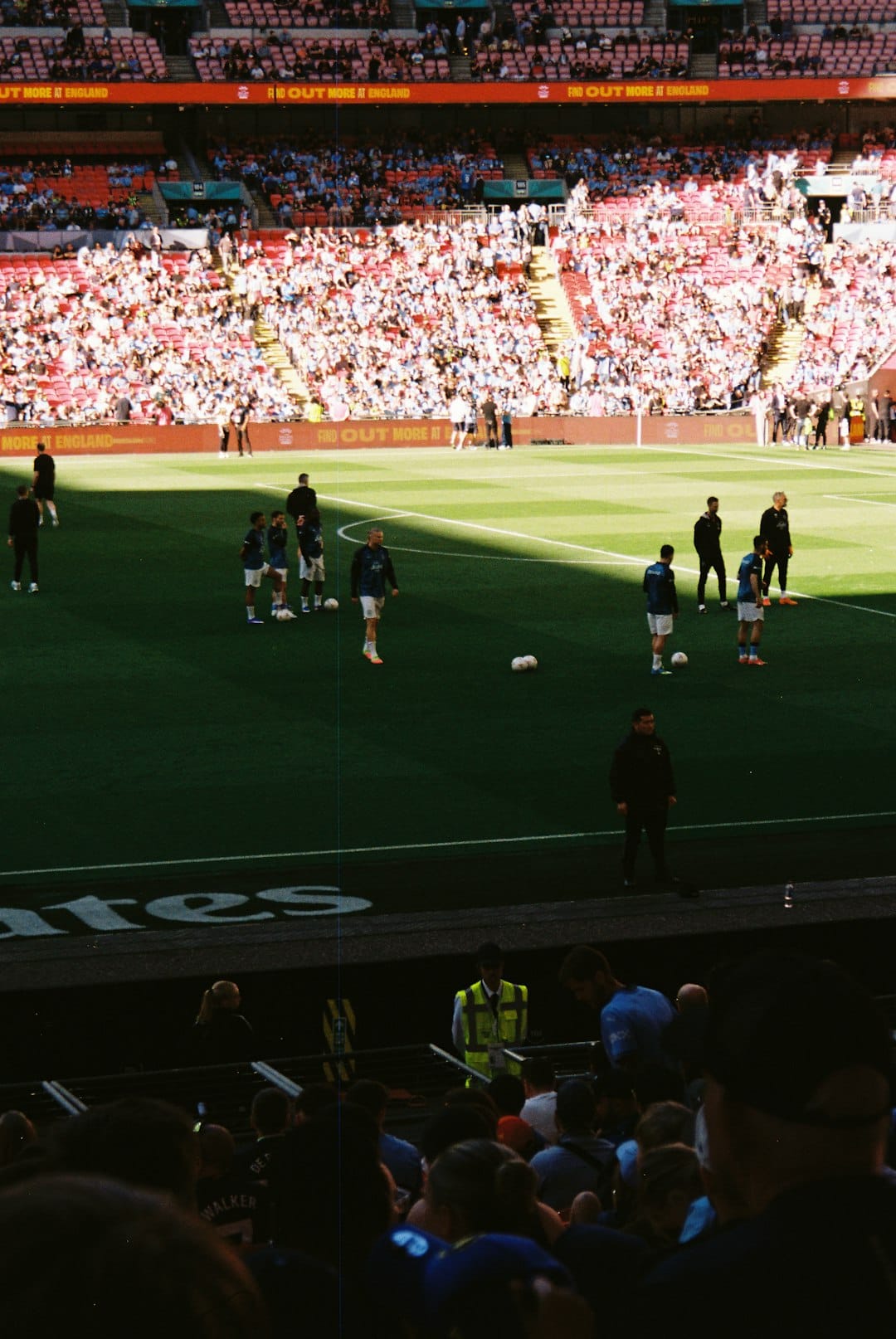
Buenos Aires, MMN Correspondent: On July 5, 2026, during a World Cup qualifier between Brazil and Argentina, something happened that football fans will never forget. Argentina’s star midfielder Lucas Martínez was shown a red card for a tackle that, on replay, looked routine. But what looked like a referee’s bad call turned out to be something far more calculated. Encrypted messages leaked through a whistleblower channel revealed that FIFA officials and team managers had coordinated the dismissal before the match even started. The red card was not a disciplinary action. It was a strategic move designed to shift the tournament bracket in Brazil’s favor.
This moment did not just change the outcome of one game. It opened a window into a system where the rules of fair play had been quietly rewritten behind closed doors. The red card, long seen as a symbol of justice on the pitch, had become a tool of manipulation. And the question now is not just who won or lost, but how deep the rot goes.
The roots of this crisis stretch back years. Since the 2015 corruption scandal that brought down Sepp Blatter and Michel Platini, FIFA promised reform. Gianni Infantino took over in 2016 with a mandate to clean house. But internal audits from 2024 told a different story. Over 37% of FIFA’s regional commissions operated without proper oversight. Nearly half of all disciplinary decisions in international competitions lacked independent review. The system was not broken. It was designed to be flexible for those who knew how to use it.
Enter MatchGuard, FIFA’s AI driven refereeing system launched with great fanfare. It was supposed to eliminate human error and bias. But investigators found that during key matches, data streams were manipulated. In one case, a clear handball in a Germany vs. France match was flagged as non penal by the algorithm. The anomaly traced back to a backdoor access point used by a shadow group within FIFA’s technical division. The technology meant to protect fairness had been turned into a weapon.
The global response was swift. The United Nations Human Rights Council held an emergency session. The European Union launched an inquiry into FIFA’s compliance with anti corruption laws. The U.S. Department of Justice opened a criminal investigation under the Foreign Corrupt Practices Act. Canada, Australia, and Japan announced they would withdraw from future FIFA events unless structural reforms were enacted. The stakes were not just about football. A 2025 report by the Global Sports Integrity Observatory estimated that over $80 billion in public and private funding is tied to major international tournaments each year. When trust in the system erodes, that entire ecosystem is at risk.
FIFA responded by announcing a sweeping overhaul. A new Independent Oversight Commission was created, staffed by former judges, ethicists, and sports scientists. They were given full authority to audit decisions, appoint referees, and sanction officials. FIFA also pledged to open source the MatchGuard algorithm and implement blockchain based recordkeeping to prevent tampering. These are meaningful steps. But critics argue that technology alone cannot fix a culture problem.
As one former FIFA official put it in a leaked interview, “It wasn’t just about money. It was about control. Power over who wins, who loses, and who gets invited to the table.” That insight cuts to the heart of the matter. The scandal is not an anomaly. It is a symptom of a system where influence has been concentrated in too few hands for too long.
The fallout is already reshaping the sport. National federations are demanding greater autonomy. Grassroots leagues are pushing for decentralized decision making. Fan led movements like #FairPlayNow and #CleanGame are gaining momentum, calling for transparency at every level. The conversation has shifted from who will win the next match to whether the game itself can be trusted.
This is not the first scandal in sports history, but it may be the most consequential. Because it happened at a moment when the world was watching, when the technology to expose it was in place, and when the public was ready to demand more. The red card scandal of 2026 is not the end of football. It could be the beginning of something better. The pitch is no longer just a stage for athletic excellence. It is now a battleground for justice, integrity, and the soul of sport itself. And for the first time in decades, the question is not whether a team will win, but whether the game still matters.
Related in Finance
Finance
68% of Americans Back It: Trump Confirms High-Level Talks with Iran Resume July 2026
What if the longest running geopolitical standoff of our era is finally ready for a rewrite? On July 10, 2026, former President Donald Trump stepped before cameras in New York and dropped a statement that caught much of the world off guard: the United States has agreed to resume…
Read More...
Finance
How SK Hynix Just Raised $26.5 Billion in the U.S. – What It Means for the Future of Chips
On a crisp July morning in Manhattan, something historic happened on Wall Street. SK Hynix, the South Korean memory chip giant, stepped onto the New York Stock Exchange and walked away with $26.5 billion. That’s not just a lot of money. It’s the largest IPO by a non-U.S. company…
Read More...
Finance
China Factory Prices Hit 2-Year High: What the Iran Crisis Means for Your Supply Chain
Have you noticed the price of steel or plastic creeping up lately? There’s a reason for that, and it’s not just about demand. China’s factory gate prices just jumped to their highest level in over a year, and the culprit isn’t a domestic slowdown—it’s a geopolitical storm brewin…
Read More...
Finance
Is Indonesia’s Investment-Grade Status at Risk? S&P Dow Jones Issues Critical Warning
What happens when one of Southeast Asia’s most promising economies faces a potential credit downgrade? That’s the question investors and policymakers are asking after S&P Dow Jones Indices joined Moody’s and Fitch in flagging risks to Indonesia’s sovereign credit rating. The war…
Read More...
Finance
What Really Happened When July 4 Fireworks Were Canceled in D.C. Amid Deadly Storms? 150,000 Evacuated in Historic Emergency
Picture this: you are standing on the National Mall, flags waving, kids on shoulders, ready for the biggest fireworks show of the year. Then, within minutes, the sky turns an angry gray, wind howls past 70 miles per hour, and sirens start blaring. That is exactly what happened o…
Read More...
Finance
What Happens When a 249th Independence Day Celebration Meets a 105°F Heat Dome? Here’s What You Need to Know
Picture this: It’s July 4, 2026, and you’re standing on the National Mall, surrounded by tens of thousands of fellow Americans, flags waving, and the air thick with anticipation. But there’s something else in the air—a record-breaking heatwave that has pushed temperatures past 1…
Read More...
Finance
Canada’s 2,000-Kilometer Pipeline to Asia: How a New Energy Corridor Could Reshape Global Oil Markets
Imagine a pipeline so long it could stretch from Paris to Moscow. Now imagine it carrying Canadian oil not south to the United States, but west to the Pacific Ocean and then on to Asia. That is exactly what Canada is planning, and it could change the way the world thinks about e…
Read More...
Finance
48% Male Users and a $3B Valuation: How RedNote Is Reshaping China’s Creator Economy Ahead of Its 2026 IPO
What happens when a platform once known as China’s Instagram decides to bet big on men? You get RedNote, a photo sharing and lifestyle app that’s quietly rewriting the rules of digital creation. And now, with an initial public offering on the horizon, it’s asking a bigger questi…
Read More...
Finance
White House Ends Federal Ban on Anthropic AI: What This Means for Government Services by 2027
On July 1, 2026, the White House made a decision that changes the trajectory of artificial intelligence in the United States government. The nationwide ban on Anthropic’s advanced AI models within federal agencies has been officially lifted. This is not a small adjustment. It is…
Read More...
Finance
470,000 Young Chinese Are Choosing Ghost Cities Over Megacities: What’s Driving the Shift?
Imagine a city built for a million people, but for years, only the wind moved through its streets. Towering apartment blocks stood like silent monuments to an economic dream that seemed to have stalled. Now, walk through those same neighborhoods, and you might hear the clatter o…
Read More...