
What Really Happened When July 4 Fireworks Were Canceled in D.C. Amid Deadly Storms? 150,000 Evacuated in Historic Emergency
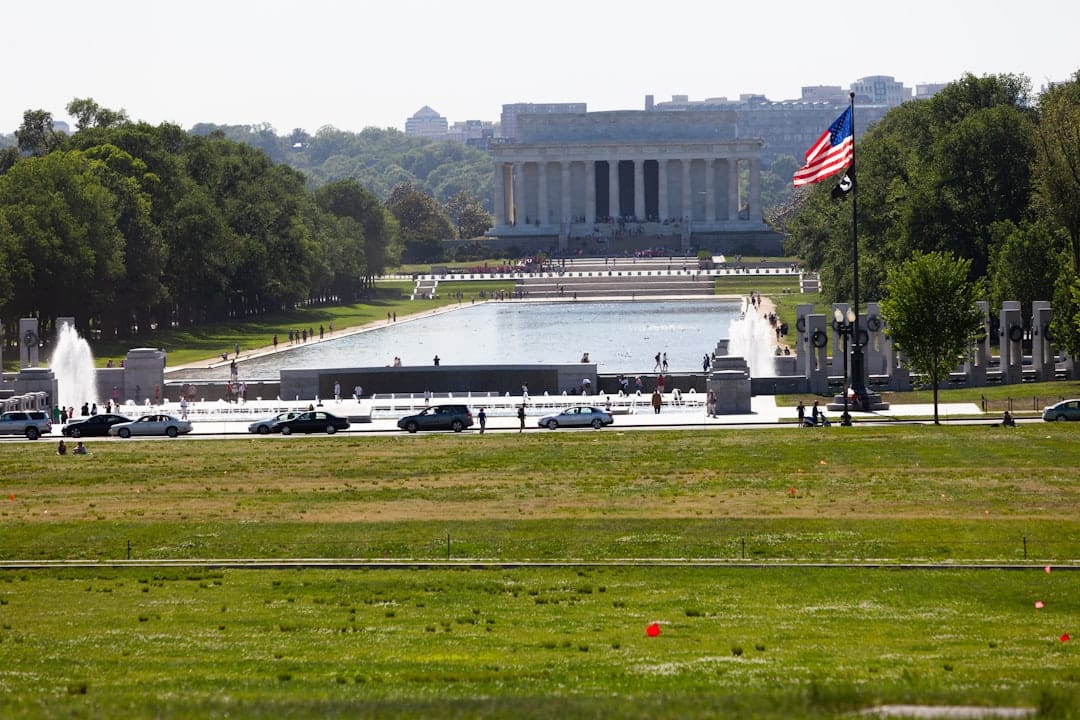
Washington, D.C., MMN Correspondent: Picture this: you are standing on the National Mall, flags waving, kids on shoulders, ready for the biggest fireworks show of the year. Then, within minutes, the sky turns an angry gray, wind howls past 70 miles per hour, and sirens start blaring. That is exactly what happened on July 4, 2026, when a powerful storm system forced the evacuation of over 150,000 people from Independence Day celebrations in the nation’s capital.
The afternoon started like any other holiday. Families spread out blankets, vendors sold hot dogs and glow sticks, and the air buzzed with anticipation. But by 5:30 p.m., things took a sharp turn. Thunderstorms intensified rapidly across the Mid-Atlantic region. Lightning strikes were reported within a 10-mile radius of the National Mall. Flash floods began swallowing low-lying areas like Constitution Avenue and the Tidal Basin. Three people were hospitalized, including a man hit by falling debris near the Lincoln Memorial.
At 6:12 p.m., city officials declared a state of emergency. That was the moment everything changed. The evacuation order came fast. People were directed to move to designated safe zones. Emergency shelters opened at convention centers, schools, and even the Walter Reed Army Medical Center complex. The fireworks show, scheduled to light up the sky at 8:00 p.m., was canceled just 90 minutes before launch. This was the first time in over two decades that the iconic July 4 celebration was entirely called off due to weather. The last major cancellation was in 2003, and that was just a delay, not an evacuation.
What made this storm so dangerous? Meteorologists later identified it as a rare combination of a mesoscale convective vortex and a stalled cold front. That mix created conditions perfect for supercell thunderstorms. According to NOAA, the storm produced 47 confirmed tornado touchdowns across Virginia and Maryland. The strongest was rated EF3 on the Enhanced Fujita Scale. One tornado touched down near Alexandria, destroying homes and damaging the historic Mount Vernon estate’s visitor center.
Climate scientists have been watching this trend for years. A 2025 study in Nature Climate Change found that severe thunderstorms in the northeastern U.S. have increased by 38% since 2000. The reason? Rising atmospheric moisture and warmer surface temperatures. Washington, D.C., sits right in a region that is especially sensitive to these shifts. What used to be a reliably stable summer month now brings more frequent and intense weather disruptions.
In the aftermath, questions arose about how prepared the city really was. Emergency alerts were sent through the Wireless Emergency Alerts system and social media, but many attendees said they got the messages late. Some only realized something was wrong when they heard sirens or saw people running. City officials acknowledged the communication gaps and promised a full review of disaster response protocols.
The economic hit was significant. Lost revenue from tourism, vendor sales, and ticketed events topped $12 million. Small businesses near the National Mall reported complete losses for the day. But there was a silver lining. Major sponsors like Amazon, JPMorgan Chase, and Verizon stepped up with charitable contributions to support affected vendors and displaced families.
What stood out most was the community response. Volunteers from the American Red Cross, D.C. Urban League, and Faith-Based Disaster Response Network provided food, water, medical aid, and emotional support. Residents opened their homes to stranded visitors. Mobile charging stations appeared in shelters to help people stay connected. In the middle of chaos, people found ways to help each other.
This event has sparked a broader conversation about how we plan large-scale outdoor events in vulnerable urban environments. Experts are now urging city planners to include climate risk assessments in every major event. Some proposals include moving celebrations to indoor venues, using AI-powered weather monitoring systems, and designing temporary flood barriers around high-risk zones.
Federal agencies are already responding. The Department of Homeland Security announced a new $500 million initiative focused on urban resilience. Washington, D.C., is set to receive a significant portion of that funding for infrastructure upgrades, emergency communications, and public education campaigns.
As the nation reflects on what happened, one thing is clear: the silence where fireworks once lit up the sky carried a deeper message. Safety must always come before spectacle. For millions watching from home, that quiet moment was a reminder that even our most cherished traditions are not immune to the changing climate.
In the coming weeks, officials will release a detailed report with recommendations for future event planning, infrastructure improvements, and public safety enhancements. The spirit of Independence remains strong, but its expression may now require greater caution, foresight, and collective responsibility than ever before.
Related in Finance
Finance
68% of Americans Back It: Trump Confirms High-Level Talks with Iran Resume July 2026
What if the longest running geopolitical standoff of our era is finally ready for a rewrite? On July 10, 2026, former President Donald Trump stepped before cameras in New York and dropped a statement that caught much of the world off guard: the United States has agreed to resume…
Read More...
Finance
How SK Hynix Just Raised $26.5 Billion in the U.S. – What It Means for the Future of Chips
On a crisp July morning in Manhattan, something historic happened on Wall Street. SK Hynix, the South Korean memory chip giant, stepped onto the New York Stock Exchange and walked away with $26.5 billion. That’s not just a lot of money. It’s the largest IPO by a non-U.S. company…
Read More...
Finance
China Factory Prices Hit 2-Year High: What the Iran Crisis Means for Your Supply Chain
Have you noticed the price of steel or plastic creeping up lately? There’s a reason for that, and it’s not just about demand. China’s factory gate prices just jumped to their highest level in over a year, and the culprit isn’t a domestic slowdown—it’s a geopolitical storm brewin…
Read More...
Finance
Is Indonesia’s Investment-Grade Status at Risk? S&P Dow Jones Issues Critical Warning
What happens when one of Southeast Asia’s most promising economies faces a potential credit downgrade? That’s the question investors and policymakers are asking after S&P Dow Jones Indices joined Moody’s and Fitch in flagging risks to Indonesia’s sovereign credit rating. The war…
Read More...
Finance
FIFA Red Card Scandal 2026: How a Rigged Decision in Brazil vs. Argentina Exposed $80 Billion Sports Integrity Crisis
On July 5, 2026, during a World Cup qualifier between Brazil and Argentina, something happened that football fans will never forget. Argentina’s star midfielder Lucas Martínez was shown a red card for a tackle that, on replay, looked routine. But what looked like a referee’s bad…
Read More...
Finance
What Happens When a 249th Independence Day Celebration Meets a 105°F Heat Dome? Here’s What You Need to Know
Picture this: It’s July 4, 2026, and you’re standing on the National Mall, surrounded by tens of thousands of fellow Americans, flags waving, and the air thick with anticipation. But there’s something else in the air—a record-breaking heatwave that has pushed temperatures past 1…
Read More...
Finance
Canada’s 2,000-Kilometer Pipeline to Asia: How a New Energy Corridor Could Reshape Global Oil Markets
Imagine a pipeline so long it could stretch from Paris to Moscow. Now imagine it carrying Canadian oil not south to the United States, but west to the Pacific Ocean and then on to Asia. That is exactly what Canada is planning, and it could change the way the world thinks about e…
Read More...
Finance
48% Male Users and a $3B Valuation: How RedNote Is Reshaping China’s Creator Economy Ahead of Its 2026 IPO
What happens when a platform once known as China’s Instagram decides to bet big on men? You get RedNote, a photo sharing and lifestyle app that’s quietly rewriting the rules of digital creation. And now, with an initial public offering on the horizon, it’s asking a bigger questi…
Read More...
Finance
White House Ends Federal Ban on Anthropic AI: What This Means for Government Services by 2027
On July 1, 2026, the White House made a decision that changes the trajectory of artificial intelligence in the United States government. The nationwide ban on Anthropic’s advanced AI models within federal agencies has been officially lifted. This is not a small adjustment. It is…
Read More...
Finance
470,000 Young Chinese Are Choosing Ghost Cities Over Megacities: What’s Driving the Shift?
Imagine a city built for a million people, but for years, only the wind moved through its streets. Towering apartment blocks stood like silent monuments to an economic dream that seemed to have stalled. Now, walk through those same neighborhoods, and you might hear the clatter o…
Read More...