
470,000 Young Chinese Are Choosing Ghost Cities Over Megacities: What’s Driving the Shift?
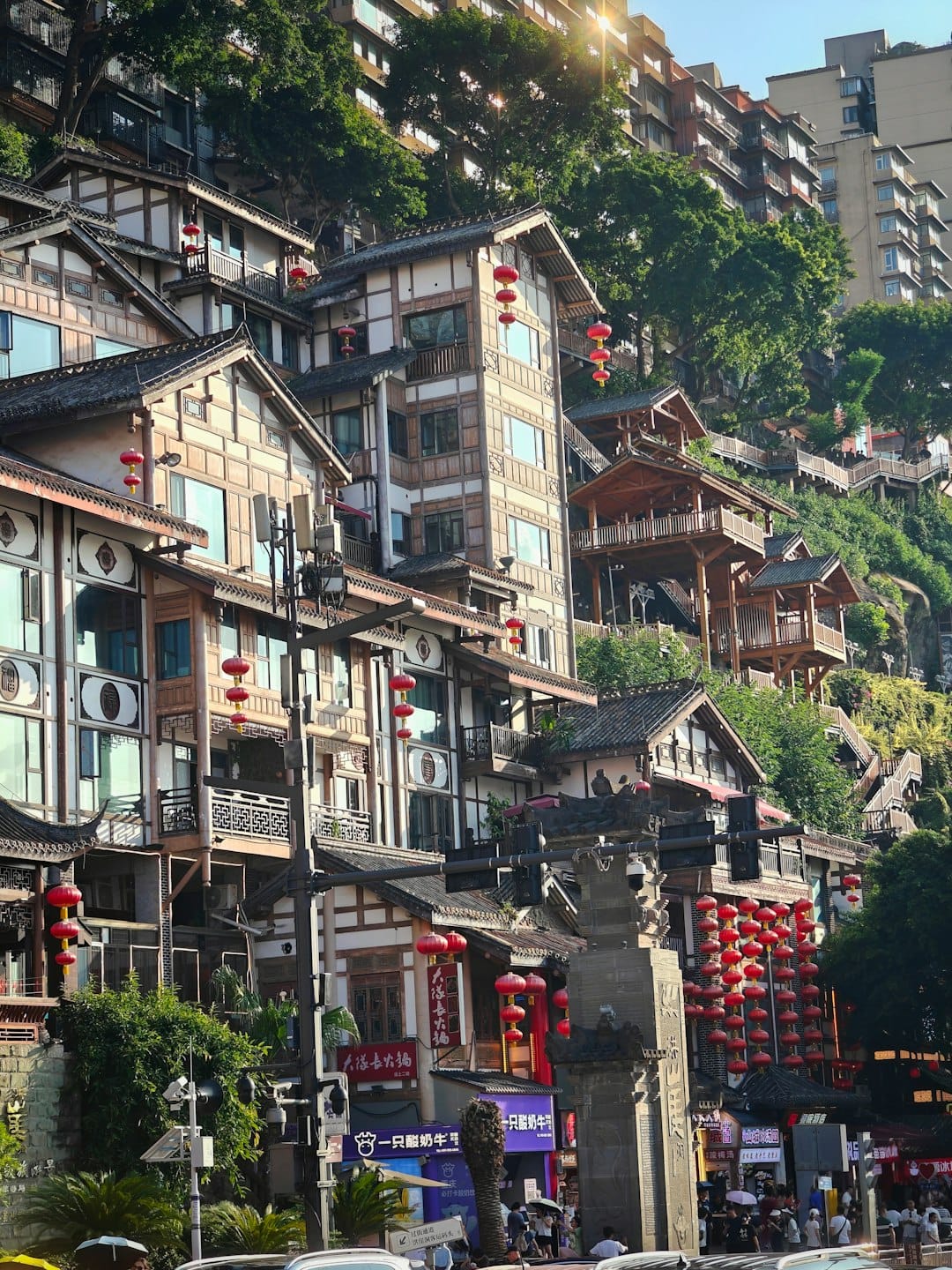
Rongcheng, Shandong Province, China, MMN Correspondent: Imagine a city built for a million people, but for years, only the wind moved through its streets. Towering apartment blocks stood like silent monuments to an economic dream that seemed to have stalled. Now, walk through those same neighborhoods, and you might hear the clatter of a keyboard from a balcony, the strum of a guitar in a shared courtyard, or the hum of a 3D printer in what was once an empty storefront. This is the new face of China’s ghost cities, and a quiet revolution is taking root.
Since 2023, a growing number of young Chinese have been making a choice that would have seemed unthinkable a decade ago. Instead of fighting for space in Beijing, Shanghai, or Shenzhen, they are moving into the very places that were once held up as symbols of overbuilding. Places like Ordos in Inner Mongolia, Rongcheng in Shandong, and even parts of Xinjiang and Gansu. These are not people who have failed in the big city. They are designers, coders, writers, and entrepreneurs who have decided that a 120-square-meter apartment for 15% of their income is a better foundation for a good life than a cramped studio in a megacity.
The numbers tell a clear story. A 2025 report from the National Bureau of Statistics shows that over 470,000 people moved to secondary and third tier cities between 2022 and 2024. More than 18% of them said low living costs and spacious housing were their main reasons. But here is the detail that really catches your attention: nearly 60% of these new residents are between 22 and 35 years old. This is a generation that grew up with the internet, that learned to collaborate across time zones, and that now sees a ghost city not as a place of abandonment, but as a blank canvas.
Take Li Wei, a 29 year old former marketing executive from Hangzhou. In 2023, he moved into a complex in Rongcheng that was built in 2015 and sat mostly empty until 2022. His apartment is spacious, quiet, and costs him very little. He still works for a tech startup in Guangzhou and earns a salary comparable to his old city job. But his rent is a fraction of what it was. Today, his building is home to about 20 residents: artists, coders, and yoga instructors. They have turned empty spaces into a shared garden, a monthly market, and a co-working hub that runs on solar power. They are not just living there. They are building a community from scratch.
What makes this trend so fascinating is how it aligns with a global shift in work culture. The pandemic taught millions of people that a desk does not have to be in an office. In China, this idea has been supercharged by government investment in digital infrastructure. As of 2025, over 98% of county level regions have access to 5G networks. You can be in a town that was once considered remote and still join a video call with colleagues in Shanghai or San Francisco without a hitch. The technology has erased the old penalty of distance.
Local governments are paying attention. In Ordos, the authorities launched a Rebirth Initiative in 2023. They offer tax breaks, free internet, and subsidized utilities to anyone under 35 who wants to move in and start something. By 2025, the program had attracted over 12,000 new residents. Similar efforts are underway in Xining, Qinghai, and Yulin, Shaanxi, where empty commercial buildings are being turned into innovation centers and artist studios. The ghost city is being reimagined as a launchpad.
There is a deeper psychological layer to this movement as well. In China’s largest cities, the average commute can stretch beyond 90 minutes each way. A 2024 survey by the Chinese Academy of Social Sciences found that 67% of urban youth reported feeling isolated, even while maintaining large online social networks. The constant pressure, the noise, the competition it takes a toll. In contrast, residents of these revitalized ghost cities often report a greater sense of balance, creativity, and genuine connection with their neighbors. They are trading the anxiety of the crowd for the calm of a community they helped build.
Some are even redefining what work means. In one Rongcheng neighborhood, a group of former app developers formed a collective called Future Living Lab. They design sustainable lifestyle products, from eco-friendly packaging to modular furniture, and sell them globally through e-commerce platforms. Their funding comes from their own network of remote collaborators. They are not waiting for permission or for a corporate budget. They are simply building what they believe in.
Of course, challenges remain. Public transportation is limited in these areas. Healthcare options are fewer. And sometimes, the quiet can feel like isolation. But the trajectory is clear. Experts estimate that if current trends continue, up to 2 million people could relocate to secondary and tertiary cities by 2030. That would reshape not just the map of China, but the very idea of what a successful life looks like.
This is not a story about escape. It is a story about choice. A generation that grew up with everything moving faster is now choosing to slow down. They are measuring success not by the size of their office, but by the quality of their afternoon. They are finding that in the places others left behind, there is room to breathe, to create, and to live on their own terms. The ghost cities are no longer empty. They are filling up with possibility.
Related in Finance
Finance
68% of Americans Back It: Trump Confirms High-Level Talks with Iran Resume July 2026
What if the longest running geopolitical standoff of our era is finally ready for a rewrite? On July 10, 2026, former President Donald Trump stepped before cameras in New York and dropped a statement that caught much of the world off guard: the United States has agreed to resume…
Read More...
Finance
How SK Hynix Just Raised $26.5 Billion in the U.S. – What It Means for the Future of Chips
On a crisp July morning in Manhattan, something historic happened on Wall Street. SK Hynix, the South Korean memory chip giant, stepped onto the New York Stock Exchange and walked away with $26.5 billion. That’s not just a lot of money. It’s the largest IPO by a non-U.S. company…
Read More...
Finance
China Factory Prices Hit 2-Year High: What the Iran Crisis Means for Your Supply Chain
Have you noticed the price of steel or plastic creeping up lately? There’s a reason for that, and it’s not just about demand. China’s factory gate prices just jumped to their highest level in over a year, and the culprit isn’t a domestic slowdown—it’s a geopolitical storm brewin…
Read More...
Finance
Is Indonesia’s Investment-Grade Status at Risk? S&P Dow Jones Issues Critical Warning
What happens when one of Southeast Asia’s most promising economies faces a potential credit downgrade? That’s the question investors and policymakers are asking after S&P Dow Jones Indices joined Moody’s and Fitch in flagging risks to Indonesia’s sovereign credit rating. The war…
Read More...
Finance
FIFA Red Card Scandal 2026: How a Rigged Decision in Brazil vs. Argentina Exposed $80 Billion Sports Integrity Crisis
On July 5, 2026, during a World Cup qualifier between Brazil and Argentina, something happened that football fans will never forget. Argentina’s star midfielder Lucas Martínez was shown a red card for a tackle that, on replay, looked routine. But what looked like a referee’s bad…
Read More...
Finance
What Really Happened When July 4 Fireworks Were Canceled in D.C. Amid Deadly Storms? 150,000 Evacuated in Historic Emergency
Picture this: you are standing on the National Mall, flags waving, kids on shoulders, ready for the biggest fireworks show of the year. Then, within minutes, the sky turns an angry gray, wind howls past 70 miles per hour, and sirens start blaring. That is exactly what happened o…
Read More...
Finance
What Happens When a 249th Independence Day Celebration Meets a 105°F Heat Dome? Here’s What You Need to Know
Picture this: It’s July 4, 2026, and you’re standing on the National Mall, surrounded by tens of thousands of fellow Americans, flags waving, and the air thick with anticipation. But there’s something else in the air—a record-breaking heatwave that has pushed temperatures past 1…
Read More...
Finance
Canada’s 2,000-Kilometer Pipeline to Asia: How a New Energy Corridor Could Reshape Global Oil Markets
Imagine a pipeline so long it could stretch from Paris to Moscow. Now imagine it carrying Canadian oil not south to the United States, but west to the Pacific Ocean and then on to Asia. That is exactly what Canada is planning, and it could change the way the world thinks about e…
Read More...
Finance
48% Male Users and a $3B Valuation: How RedNote Is Reshaping China’s Creator Economy Ahead of Its 2026 IPO
What happens when a platform once known as China’s Instagram decides to bet big on men? You get RedNote, a photo sharing and lifestyle app that’s quietly rewriting the rules of digital creation. And now, with an initial public offering on the horizon, it’s asking a bigger questi…
Read More...
Finance
White House Ends Federal Ban on Anthropic AI: What This Means for Government Services by 2027
On July 1, 2026, the White House made a decision that changes the trajectory of artificial intelligence in the United States government. The nationwide ban on Anthropic’s advanced AI models within federal agencies has been officially lifted. This is not a small adjustment. It is…
Read More...