
China Factory Prices Hit 2-Year High: What the Iran Crisis Means for Your Supply Chain
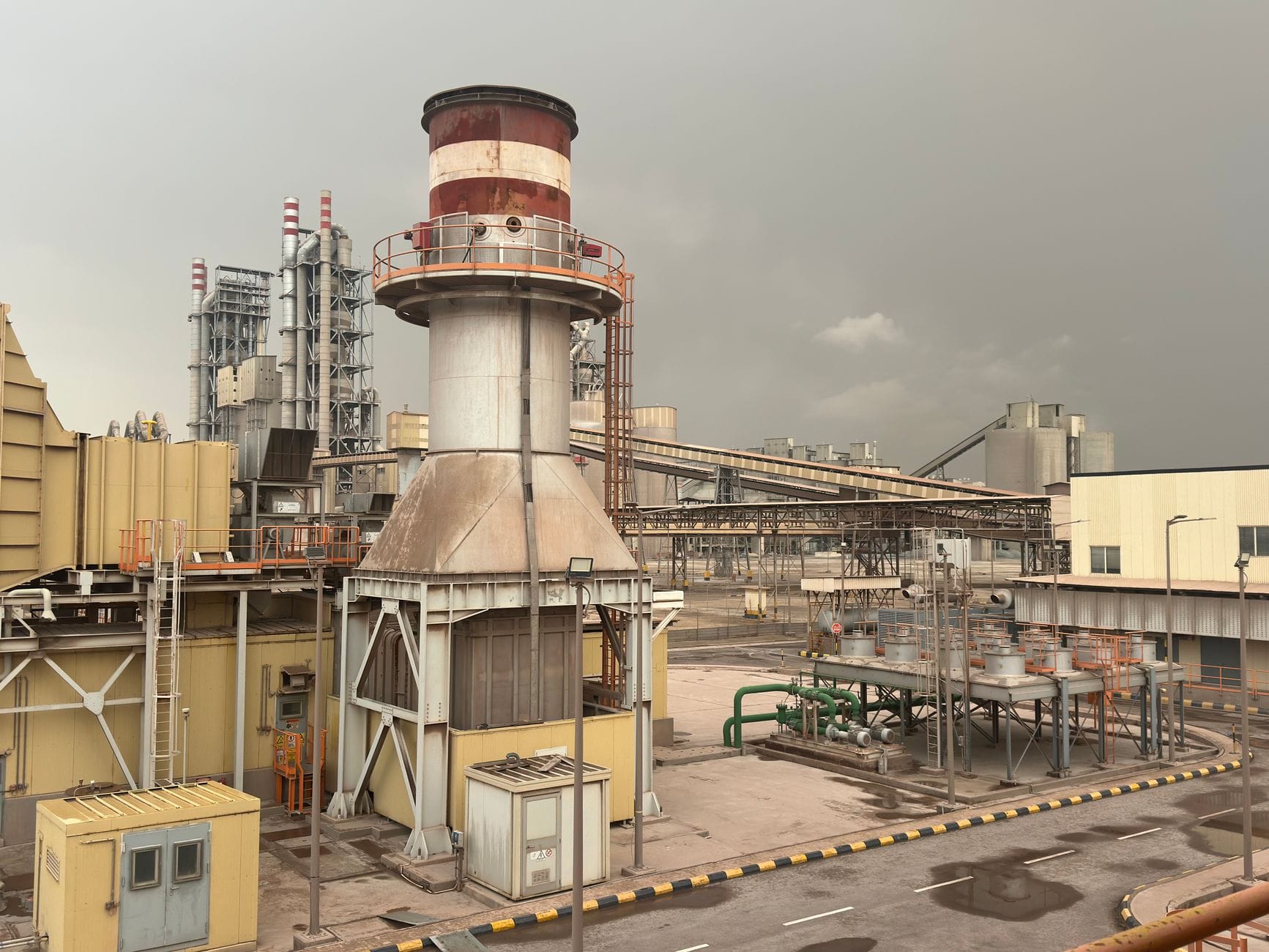
Beijing, MMN Correspondent: Have you noticed the price of steel or plastic creeping up lately? There’s a reason for that, and it’s not just about demand. China’s factory gate prices just jumped to their highest level in over a year, and the culprit isn’t a domestic slowdown—it’s a geopolitical storm brewing thousands of miles away.
In June 2026, the cost manufacturers charge for their goods rose by 2.8% compared to the previous month, according to China’s National Bureau of Statistics. That’s nearly double what economists expected. The biggest drivers? Energy-intensive materials like steel, aluminum, and petrochemicals. And here’s the twist: this spike has very little to do with what Chinese consumers are buying.
The real story starts in the Middle East. Diplomatic efforts to secure a ceasefire between Iran and its regional neighbors have hit a wall. With talks stalled, the Strait of Hormuz—a narrow waterway that carries nearly one-fifth of the world’s oil—has become a flashpoint. Any disruption there could send crude prices soaring, and that’s exactly what’s happening. Brent crude climbed above $98 a barrel in mid-June, its highest point since early 2025, after reports of increased Iranian naval activity near key shipping lanes.
For Chinese manufacturers, this translates directly into higher input costs. Take ethylene, a basic building block for plastics: its price shot up 12% in just one month. That kind of increase ripples through everything from packaging to automotive parts. Meanwhile, China’s industrial output growth slowed to 4.3% year-on-year in June, down from 5.1% in May. It’s a sign that rising costs are starting to pinch production momentum.
Here’s where it gets interesting for businesses. If input costs keep climbing without corresponding price increases for finished goods, profit margins will shrink. That could lead to reduced investment and hiring in the manufacturing sector. But there’s another layer: China is also trying to manage weak consumer demand and deflationary pressures in parts of its economy. So while the producer price index (PPI) rise looks good on paper for manufacturers, it raises a bigger question: will these higher costs eventually hit consumers?
If they do, household purchasing power could take a hit, and that would undermine China’s long-term strategy of boosting domestic consumption. It’s a delicate balancing act. The government has already signaled it might step in with targeted subsidies for energy-intensive industries or adjust export tax policies. The People’s Bank of China is watching inflation indicators closely ahead of its next policy meeting in late July. A rate hike isn’t likely, but tighter liquidity in certain sectors is on the table.
Geopolitical analysts note that the Iran ceasefire talks, mediated by the UN with support from European and Gulf states, are at a critical juncture. Recent negotiations collapsed after Iran rejected proposed confidence-building measures on missile deployments and regional security. With no clear timeline for resumption, markets are pricing in a higher probability of conflict, driving up risk premiums across commodity markets.
This environment is already reshaping trade patterns. Some Chinese exporters are sourcing raw materials from Central Asia and Africa to reduce exposure to Middle Eastern tensions. But these alternatives come with longer lead times and higher logistical costs, adding another layer of pressure on manufacturers.
For investors and supply chain managers, this moment is a wake-up call. The days of assuming stable input costs are over. Scenario planning and supply chain resilience are no longer optional—they’re essential. Companies that depend on Chinese manufacturing need to factor in geopolitical risk when making procurement decisions, forecasting budgets, and managing inventory.
Looking ahead, economists expect China’s factory gate prices to stay elevated through the third quarter of 2026 unless there’s a breakthrough in Iran-related diplomacy. A sustained ceasefire could stabilize oil prices and ease input costs, giving manufacturers more pricing flexibility. But continued tension may push inflation higher, prompting central banks worldwide to reassess their strategies.
One thing is clear: the cost of conflict is no longer confined to battlefields. It’s showing up in factory ledgers, warehouse inventories, and eventually, consumer wallets. The question is, how prepared are you for what comes next?
Related in Finance
Finance
68% of Americans Back It: Trump Confirms High-Level Talks with Iran Resume July 2026
What if the longest running geopolitical standoff of our era is finally ready for a rewrite? On July 10, 2026, former President Donald Trump stepped before cameras in New York and dropped a statement that caught much of the world off guard: the United States has agreed to resume…
Read More...
Finance
How SK Hynix Just Raised $26.5 Billion in the U.S. – What It Means for the Future of Chips
On a crisp July morning in Manhattan, something historic happened on Wall Street. SK Hynix, the South Korean memory chip giant, stepped onto the New York Stock Exchange and walked away with $26.5 billion. That’s not just a lot of money. It’s the largest IPO by a non-U.S. company…
Read More...
Finance
Is Indonesia’s Investment-Grade Status at Risk? S&P Dow Jones Issues Critical Warning
What happens when one of Southeast Asia’s most promising economies faces a potential credit downgrade? That’s the question investors and policymakers are asking after S&P Dow Jones Indices joined Moody’s and Fitch in flagging risks to Indonesia’s sovereign credit rating. The war…
Read More...
Finance
FIFA Red Card Scandal 2026: How a Rigged Decision in Brazil vs. Argentina Exposed $80 Billion Sports Integrity Crisis
On July 5, 2026, during a World Cup qualifier between Brazil and Argentina, something happened that football fans will never forget. Argentina’s star midfielder Lucas Martínez was shown a red card for a tackle that, on replay, looked routine. But what looked like a referee’s bad…
Read More...
Finance
What Really Happened When July 4 Fireworks Were Canceled in D.C. Amid Deadly Storms? 150,000 Evacuated in Historic Emergency
Picture this: you are standing on the National Mall, flags waving, kids on shoulders, ready for the biggest fireworks show of the year. Then, within minutes, the sky turns an angry gray, wind howls past 70 miles per hour, and sirens start blaring. That is exactly what happened o…
Read More...
Finance
What Happens When a 249th Independence Day Celebration Meets a 105°F Heat Dome? Here’s What You Need to Know
Picture this: It’s July 4, 2026, and you’re standing on the National Mall, surrounded by tens of thousands of fellow Americans, flags waving, and the air thick with anticipation. But there’s something else in the air—a record-breaking heatwave that has pushed temperatures past 1…
Read More...
Finance
Canada’s 2,000-Kilometer Pipeline to Asia: How a New Energy Corridor Could Reshape Global Oil Markets
Imagine a pipeline so long it could stretch from Paris to Moscow. Now imagine it carrying Canadian oil not south to the United States, but west to the Pacific Ocean and then on to Asia. That is exactly what Canada is planning, and it could change the way the world thinks about e…
Read More...
Finance
48% Male Users and a $3B Valuation: How RedNote Is Reshaping China’s Creator Economy Ahead of Its 2026 IPO
What happens when a platform once known as China’s Instagram decides to bet big on men? You get RedNote, a photo sharing and lifestyle app that’s quietly rewriting the rules of digital creation. And now, with an initial public offering on the horizon, it’s asking a bigger questi…
Read More...
Finance
White House Ends Federal Ban on Anthropic AI: What This Means for Government Services by 2027
On July 1, 2026, the White House made a decision that changes the trajectory of artificial intelligence in the United States government. The nationwide ban on Anthropic’s advanced AI models within federal agencies has been officially lifted. This is not a small adjustment. It is…
Read More...
Finance
470,000 Young Chinese Are Choosing Ghost Cities Over Megacities: What’s Driving the Shift?
Imagine a city built for a million people, but for years, only the wind moved through its streets. Towering apartment blocks stood like silent monuments to an economic dream that seemed to have stalled. Now, walk through those same neighborhoods, and you might hear the clatter o…
Read More...