
Is Indonesia’s Investment-Grade Status at Risk? S&P Dow Jones Issues Critical Warning
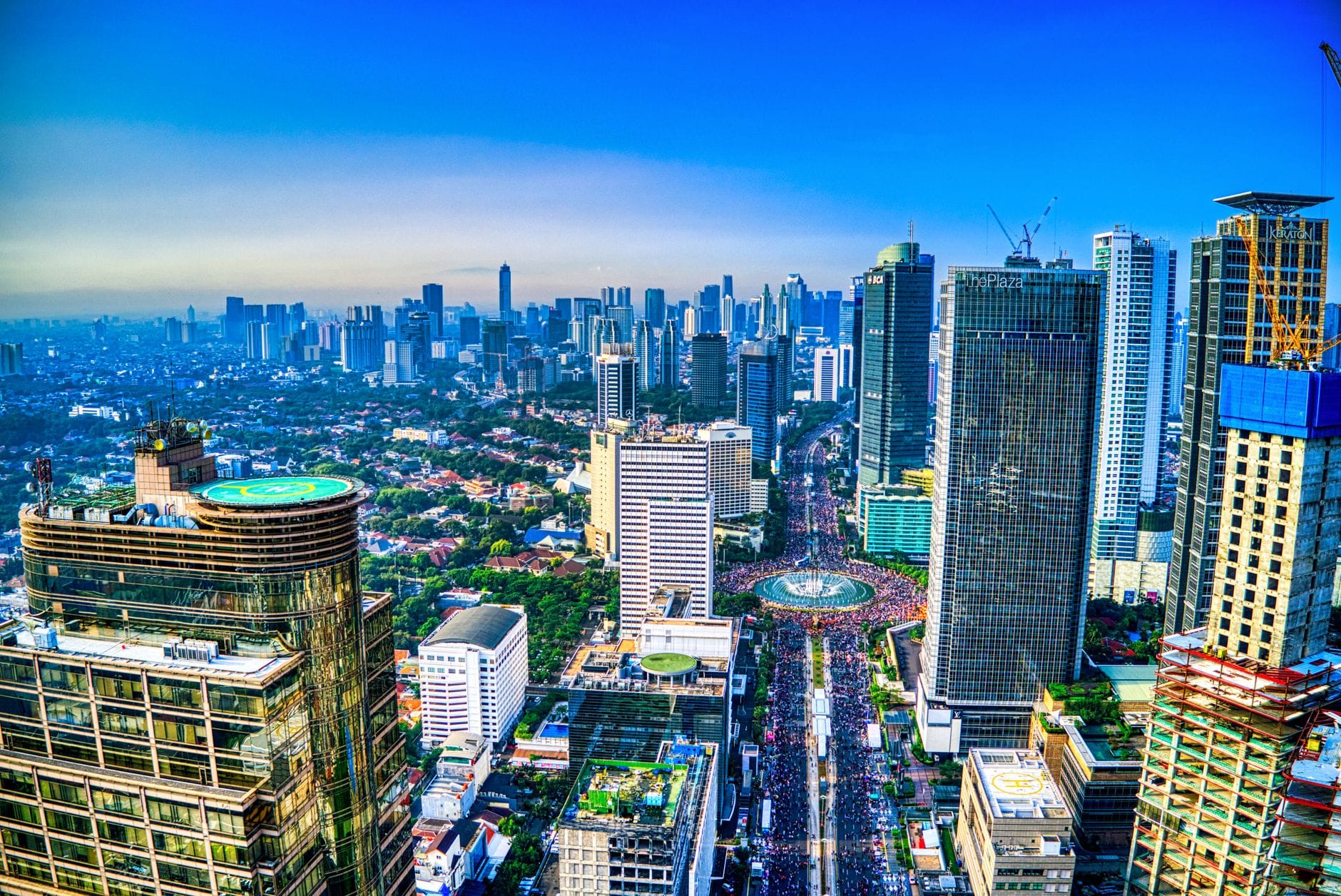
Jakarta, Indonesia, MMN Correspondent: What happens when one of Southeast Asia’s most promising economies faces a potential credit downgrade? That’s the question investors and policymakers are asking after S&P Dow Jones Indices joined Moody’s and Fitch in flagging risks to Indonesia’s sovereign credit rating. The warning, issued in July 2026, puts the spotlight on the nation’s fiscal health and its ability to sustain growth without overstretching its budget.
Indonesia’s current credit rating sits at BBB-, just one notch above speculative grade. That’s a precarious position. The latest assessment suggests that without faster reforms, maintaining that status could become a challenge. But what exactly is driving this heightened scrutiny? Let’s break it down.
One major factor is the rising public debt. Indonesia’s debt-to-GDP ratio climbed to 58.7% in 2025, up from 49.2% in 2021. That increase is largely tied to ambitious infrastructure projects under President Prabowo Subianto’s administration. Think of the new capital city Nusantara, high-speed rail networks, and renewable energy expansions. These are bold moves aimed at modernizing the economy and boosting long-term growth. But they also require significant borrowing, which has stretched the country’s fiscal resources.
At the same time, the primary fiscal deficit widened to 3.4% of GDP in 2025, exceeding the government’s target of 2.8%. Revenue shortfalls and rising interest payments on existing debt have eaten into the fiscal buffer. Inflation, averaging 4.9% in early 2026, remains above the central bank’s target range of 3% ±1%. That has kept monetary policy relatively tight, limiting room for stimulus. Balancing growth, inflation control, and debt management is no small feat.
External vulnerabilities add another layer of complexity. Indonesia has benefited from strong trade performance, especially in nickel exports and electric vehicle battery materials. But volatile commodity prices pose a risk. Nickel prices swung by over 25% in a single quarter in 2025, impacting export revenues. The current account balance turned slightly negative in Q1 2026, reversing years of surplus. That shift raises questions about foreign exchange reserves and currency stability.
S&P Dow Jones noted that while Indonesia’s external debt is relatively low compared to other emerging economies, the composition of liabilities is shifting toward longer maturities and higher interest rates. That increases refinancing risk, especially if global bond yields stay elevated. Geopolitical tensions in the Indo-Pacific region, including maritime disputes, could also affect investor confidence and capital flows.
Institutional capacity to manage fiscal risks remains uneven. Indonesia has made progress in tax collection through digitalization and anti-evasion measures, but implementation gaps persist. Tax compliance rates are below 60%, lower than peers like Malaysia and Thailand. Corruption perceptions, as measured by Transparency International, still rank Indonesia in the lower half among ASEAN nations. These factors undermine trust in public financial governance.
But here’s the other side of the story. Indonesia has several strengths that support its long-term outlook. It’s home to over 275 million people, with a rapidly expanding middle class and a young demographic profile. Digital innovation is thriving. Indonesia ranks among the top three countries in Southeast Asia for fintech adoption. E-commerce, mobile banking, and digital payments are transforming financial inclusion and boosting productivity.
Strategically located and rich in natural resources, Indonesia is a key player in the global green transition. It holds about 23% of the world’s known nickel reserves and is investing heavily in downstream processing to capture more value from raw material exports. That aligns with global demand for EVs and clean energy technologies, offering a pathway to higher-value exports and diversified income streams.
Analysts caution that without comprehensive reform, these advantages could be undermined. The government has announced plans to enhance fiscal transparency, improve public investment efficiency, and strengthen central bank independence. Progress, however, remains slow. Political interference in economic policymaking continues to be a recurring issue. Debates over state-owned enterprise privatizations and subsidies for fuel and electricity highlight tensions between short-term political interests and long-term stability.
International financial institutions are urging Jakarta to prioritize fiscal consolidation. The World Bank and IMF have recommended tighter expenditure controls, improved tax administration, and a clearer medium-term fiscal framework. A credible roadmap for reducing the fiscal deficit and stabilizing debt levels would be essential to regain market confidence.
For investors, the situation underscores the importance of due diligence in emerging markets. Indonesia offers attractive growth opportunities, but the risk premium has risen. Bond yields on Indonesian government securities have climbed to over 7.5% for 10-year instruments, reflecting heightened perceived risk. Foreign direct investment inflows have slowed since mid-2025, particularly in sectors sensitive to regulatory uncertainty.
Looking ahead, Indonesia’s credit standing will hinge on policy execution rather than rhetoric. If the government demonstrates sustained commitment to fiscal responsibility, institutional reform, and transparent governance, it may stabilize its credit outlook. Conversely, failure to address structural weaknesses could trigger a downgrade, potentially leading to capital flight, higher borrowing costs, and reduced investment.
As global markets monitor the situation closely, Indonesia stands at a pivotal crossroads. Its ability to balance ambitious development goals with sound fiscal management will determine whether it can maintain its reputation as a resilient emerging economy. The implications extend beyond Indonesia’s borders. A downgrade could ripple through ASEAN markets, affecting investor sentiment toward other frontier economies. It also reinforces the broader trend of increasing scrutiny on emerging market fundamentals in an era of higher interest rates and greater geopolitical volatility.
In summary, the convergence of multiple warning signs from fiscal deficits and debt accumulation to external imbalances and governance issues has placed Indonesia under intense global scrutiny. With S&P Dow Jones now joining the chorus, the message is clear: sustainable growth demands more than ambition. It requires discipline, transparency, and accountability.
Related in Finance
Finance
68% of Americans Back It: Trump Confirms High-Level Talks with Iran Resume July 2026
What if the longest running geopolitical standoff of our era is finally ready for a rewrite? On July 10, 2026, former President Donald Trump stepped before cameras in New York and dropped a statement that caught much of the world off guard: the United States has agreed to resume…
Read More...
Finance
How SK Hynix Just Raised $26.5 Billion in the U.S. – What It Means for the Future of Chips
On a crisp July morning in Manhattan, something historic happened on Wall Street. SK Hynix, the South Korean memory chip giant, stepped onto the New York Stock Exchange and walked away with $26.5 billion. That’s not just a lot of money. It’s the largest IPO by a non-U.S. company…
Read More...
Finance
China Factory Prices Hit 2-Year High: What the Iran Crisis Means for Your Supply Chain
Have you noticed the price of steel or plastic creeping up lately? There’s a reason for that, and it’s not just about demand. China’s factory gate prices just jumped to their highest level in over a year, and the culprit isn’t a domestic slowdown—it’s a geopolitical storm brewin…
Read More...
Finance
FIFA Red Card Scandal 2026: How a Rigged Decision in Brazil vs. Argentina Exposed $80 Billion Sports Integrity Crisis
On July 5, 2026, during a World Cup qualifier between Brazil and Argentina, something happened that football fans will never forget. Argentina’s star midfielder Lucas Martínez was shown a red card for a tackle that, on replay, looked routine. But what looked like a referee’s bad…
Read More...
Finance
What Really Happened When July 4 Fireworks Were Canceled in D.C. Amid Deadly Storms? 150,000 Evacuated in Historic Emergency
Picture this: you are standing on the National Mall, flags waving, kids on shoulders, ready for the biggest fireworks show of the year. Then, within minutes, the sky turns an angry gray, wind howls past 70 miles per hour, and sirens start blaring. That is exactly what happened o…
Read More...
Finance
What Happens When a 249th Independence Day Celebration Meets a 105°F Heat Dome? Here’s What You Need to Know
Picture this: It’s July 4, 2026, and you’re standing on the National Mall, surrounded by tens of thousands of fellow Americans, flags waving, and the air thick with anticipation. But there’s something else in the air—a record-breaking heatwave that has pushed temperatures past 1…
Read More...
Finance
Canada’s 2,000-Kilometer Pipeline to Asia: How a New Energy Corridor Could Reshape Global Oil Markets
Imagine a pipeline so long it could stretch from Paris to Moscow. Now imagine it carrying Canadian oil not south to the United States, but west to the Pacific Ocean and then on to Asia. That is exactly what Canada is planning, and it could change the way the world thinks about e…
Read More...
Finance
48% Male Users and a $3B Valuation: How RedNote Is Reshaping China’s Creator Economy Ahead of Its 2026 IPO
What happens when a platform once known as China’s Instagram decides to bet big on men? You get RedNote, a photo sharing and lifestyle app that’s quietly rewriting the rules of digital creation. And now, with an initial public offering on the horizon, it’s asking a bigger questi…
Read More...
Finance
White House Ends Federal Ban on Anthropic AI: What This Means for Government Services by 2027
On July 1, 2026, the White House made a decision that changes the trajectory of artificial intelligence in the United States government. The nationwide ban on Anthropic’s advanced AI models within federal agencies has been officially lifted. This is not a small adjustment. It is…
Read More...
Finance
470,000 Young Chinese Are Choosing Ghost Cities Over Megacities: What’s Driving the Shift?
Imagine a city built for a million people, but for years, only the wind moved through its streets. Towering apartment blocks stood like silent monuments to an economic dream that seemed to have stalled. Now, walk through those same neighborhoods, and you might hear the clatter o…
Read More...