
403 Forbidden: How Automated Security Verification Is Reshaping Your Online Experience (And What It Means for You)

San Francisco, California, Nishant Shrivastava: You click a link. The page loads slowly. Then, a stark message appears: 403 Forbidden. Most people assume the site is broken or the content is gone. But what if I told you that error is actually a silent guardian, a digital bouncer making a split-second decision about whether you can be trusted?
This is the new reality of the web. Behind every blocked page lies a sophisticated system designed to separate humans from bots. And with over 40% of all web traffic now coming from automated programs, these systems are becoming the norm. The question is: are they making the internet safer, or just more frustrating?
Let’s look at the numbers. A 2023 study found that only about 25% of bot traffic is benign. The rest is engaged in activities like credential stuffing, content scraping, and denial-of-service attacks. That’s why platforms are deploying behavioral analysis, IP reputation checks, and real-time challenges. When your request doesn’t match the expected pattern of a human, the server responds with that 403 code. It’s not personal. It’s just math.
But here’s where it gets interesting. These systems are not just about stopping bad actors. They are also about building a new kind of trust. Financial institutions, healthcare providers, and government portals handle data worth millions. A single breach can cost an organization over $4.45 million on average, according to the Ponemon Institute. So companies are investing heavily in these verification layers. They are the frontline defense in a world where digital assets are more valuable than ever.
Regulations like GDPR and CCPA are also pushing this trend. They require organizations to prove that only authorized individuals access sensitive data. Automated verification systems help by logging every attempt, analyzing behavior, and creating audit trails. For businesses, this is not just about security. It is about compliance and avoiding hefty fines.
Of course, there is a flip side. If you use a VPN, an ad blocker, or an encrypted browser, you might find yourself blocked more often. These tools alter your digital fingerprint, making you look suspicious to the algorithm. It’s a classic case of security measures creating friction for the very people they aim to protect. And if you are from a developing nation, the odds are even higher. Research from 2022 showed that users in those regions face verification blocks 30% more often than users in North America or Western Europe. That raises important questions about digital equity.
So what is the solution? The industry is moving toward smarter, less intrusive methods. Passive biometrics, for example, can verify your identity by analyzing how you type, the way you move your mouse, or even your voice patterns. You don’t have to solve a puzzle. The system just knows. The FIDO Alliance is promoting passwordless authentication using hardware tokens. And the World Wide Web Consortium has released guidelines to make verification more accessible and less disruptive.
Looking ahead, the arms race between attackers and defenders will only intensify. Artificial intelligence will play a bigger role on both sides. Future systems might adapt in real time, learning new threat patterns as they emerge. For businesses, the message is clear: invest in seamless security or risk losing customers. For users, understanding these invisible barriers is the first step to navigating them.
The 403 Forbidden error is not just a technical glitch. It is a window into how trust is managed in the digital age. Behind every blocked page is a complex ecosystem of data, algorithms, and policy decisions. And as the internet becomes more integral to our lives, learning to work with these systems, rather than against them, will be essential. The goal is not to eliminate verification, but to make it invisible. A guardian that protects without getting in the way.
Related in Finance
Finance
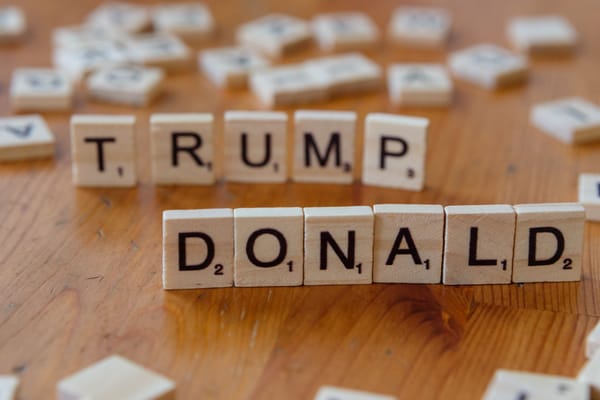
68% of Americans Back It: Trump Confirms High-Level Talks with Iran Resume July 2026
What if the longest running geopolitical standoff of our era is finally ready for a rewrite? On July 10, 2026, former President Donald Trump stepped before cameras in New York and dropped a statement that caught much of the world off guard: the United States has agreed to resume…
Read More...
Finance
How SK Hynix Just Raised $26.5 Billion in the U.S. – What It Means for the Future of Chips
On a crisp July morning in Manhattan, something historic happened on Wall Street. SK Hynix, the South Korean memory chip giant, stepped onto the New York Stock Exchange and walked away with $26.5 billion. That’s not just a lot of money. It’s the largest IPO by a non-U.S. company…
Read More...
Finance
China Factory Prices Hit 2-Year High: What the Iran Crisis Means for Your Supply Chain
Have you noticed the price of steel or plastic creeping up lately? There’s a reason for that, and it’s not just about demand. China’s factory gate prices just jumped to their highest level in over a year, and the culprit isn’t a domestic slowdown—it’s a geopolitical storm brewin…
Read More...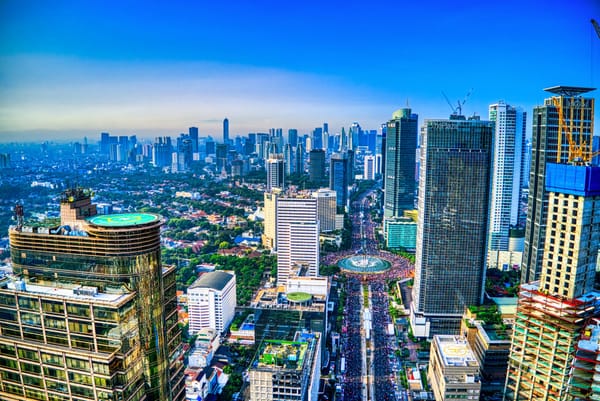
Finance
Is Indonesia’s Investment-Grade Status at Risk? S&P Dow Jones Issues Critical Warning
What happens when one of Southeast Asia’s most promising economies faces a potential credit downgrade? That’s the question investors and policymakers are asking after S&P Dow Jones Indices joined Moody’s and Fitch in flagging risks to Indonesia’s sovereign credit rating. The war…
Read More...
Finance
FIFA Red Card Scandal 2026: How a Rigged Decision in Brazil vs. Argentina Exposed $80 Billion Sports Integrity Crisis
On July 5, 2026, during a World Cup qualifier between Brazil and Argentina, something happened that football fans will never forget. Argentina’s star midfielder Lucas Martínez was shown a red card for a tackle that, on replay, looked routine. But what looked like a referee’s bad…
Read More...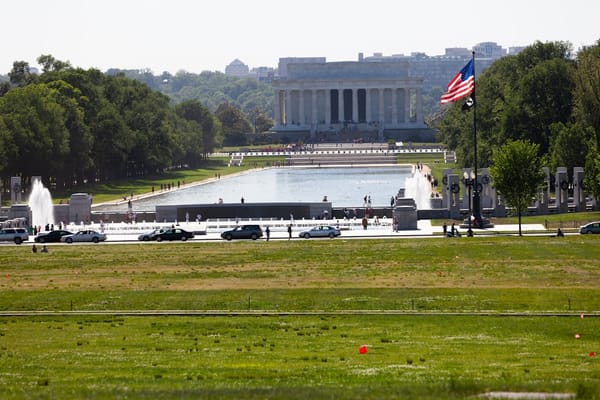
Finance
What Really Happened When July 4 Fireworks Were Canceled in D.C. Amid Deadly Storms? 150,000 Evacuated in Historic Emergency
Picture this: you are standing on the National Mall, flags waving, kids on shoulders, ready for the biggest fireworks show of the year. Then, within minutes, the sky turns an angry gray, wind howls past 70 miles per hour, and sirens start blaring. That is exactly what happened o…
Read More...
Finance
What Happens When a 249th Independence Day Celebration Meets a 105°F Heat Dome? Here’s What You Need to Know
Picture this: It’s July 4, 2026, and you’re standing on the National Mall, surrounded by tens of thousands of fellow Americans, flags waving, and the air thick with anticipation. But there’s something else in the air—a record-breaking heatwave that has pushed temperatures past 1…
Read More...
Finance
Canada’s 2,000-Kilometer Pipeline to Asia: How a New Energy Corridor Could Reshape Global Oil Markets
Imagine a pipeline so long it could stretch from Paris to Moscow. Now imagine it carrying Canadian oil not south to the United States, but west to the Pacific Ocean and then on to Asia. That is exactly what Canada is planning, and it could change the way the world thinks about e…
Read More...
Finance
48% Male Users and a $3B Valuation: How RedNote Is Reshaping China’s Creator Economy Ahead of Its 2026 IPO
What happens when a platform once known as China’s Instagram decides to bet big on men? You get RedNote, a photo sharing and lifestyle app that’s quietly rewriting the rules of digital creation. And now, with an initial public offering on the horizon, it’s asking a bigger questi…
Read More...
Finance
White House Ends Federal Ban on Anthropic AI: What This Means for Government Services by 2027
On July 1, 2026, the White House made a decision that changes the trajectory of artificial intelligence in the United States government. The nationwide ban on Anthropic’s advanced AI models within federal agencies has been officially lifted. This is not a small adjustment. It is…
Read More...