
Asia’s Energy Crisis in 2026: What the ADB’s Worst-Case Warning Means for Your Business and Future
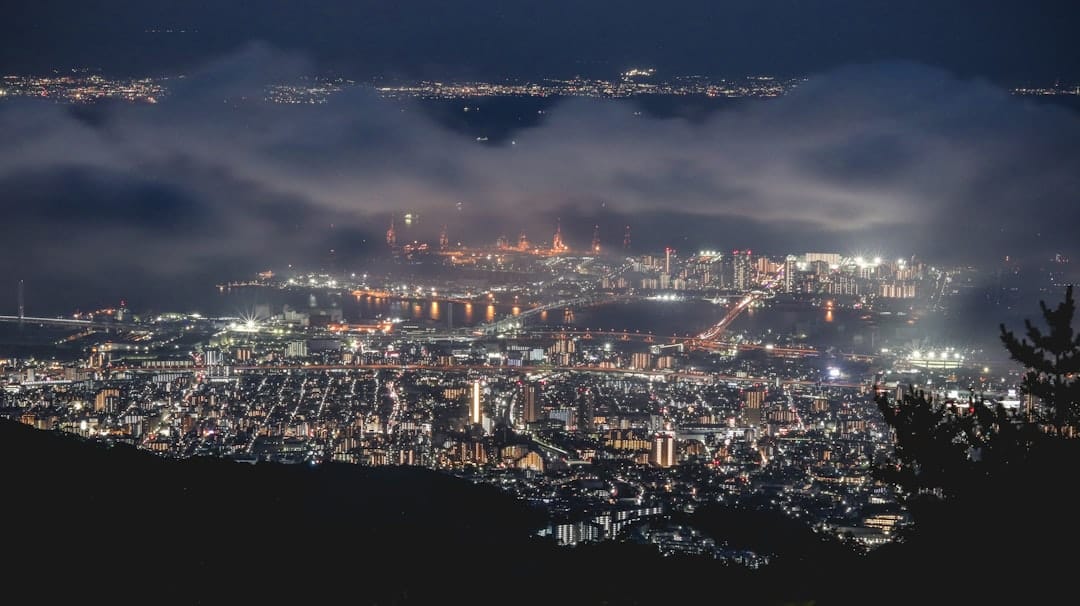
Manila, Philippines, MMN Correspondent: Imagine a summer where the lights flicker not just in one home, but across entire cities. Where factories pause, hospitals switch to backup power, and air conditioners become a luxury. That’s the reality gripping Asia right now. The Asian Development Bank (ADB) has just released a report that puts a name to this growing unease: the region is facing its worst-case energy scenario. As of June 2026, the combination of surging electricity demand, tight fuel supplies, and geopolitical shifts has pushed several economies into a state of severe energy insecurity. But here’s the question everyone is asking: how did we get here, and more importantly, what comes next?
The roots of this crisis run deep. Over the past five years, countries like India, Indonesia, Vietnam, and the Philippines have experienced rapid urbanization and industrial growth. That’s the good news. The challenge? Electricity demand has been climbing at 5.8% annually since 2021, according to ADB data, while new power plants and grid upgrades simply haven’t kept pace. The result is a growing reliance on imported coal and liquefied natural gas (LNG), both of which are now subject to wild price swings and supply chain hiccups. It’s a classic case of demand outpacing supply, but with a modern twist: the global energy market is more interconnected and volatile than ever.
Then came the heat. Early 2026 brought record breaking temperatures across South and Southeast Asia. In India, thermometers hit 47°C (117°F) in several regions, pushing air conditioning use to new highs and triggering rolling blackouts in over 30 districts. Thailand and Malaysia saw similar grid failures during peak midday hours, affecting hospitals, schools, and manufacturing hubs. These weren’t isolated incidents. They were symptoms of a system stretched to its limits. The question on everyone’s mind: if a heatwave can cause this much disruption, what happens when the next one arrives?
Global LNG markets aren’t helping. Reduced exports from Russia due to Western sanctions, combined with disruptions in Middle Eastern supply chains, have left Asian buyers scrambling. Meanwhile, China has cut back on coal imports for environmental reasons, tightening the regional market even further. By April 2026, spot LNG prices in Japan and South Korea hit $28 per million British thermal units (MMBtu), nearly double the average from the previous year. For utilities in emerging economies, that means a tough choice: ration power or pass the cost to consumers. Neither option is popular, and public discontent is rising.
The ADB’s report, released on June 12, 2026, identifies five key risk clusters: inadequate renewable energy integration, outdated transmission networks, policy uncertainty, limited cross border grid connectivity, and weak emergency preparedness. The bank warns that without immediate action, energy shortages could trigger factory closures, inflation spikes, and labor unrest. But here’s the opportunity hidden in the warning: every crisis is also a catalyst for change. The question is whether governments and businesses will seize it.
One of the most telling trends is the surge in diesel generator use. In Bangladesh and Cambodia, thousands of households and small businesses have turned to backup generators, pushing up carbon emissions and household energy costs by as much as 60%. In the Philippines, where over 70% of electricity comes from fossil fuels, officials have declared a national energy emergency. It’s a stark reminder that when the grid fails, people find workarounds, but those workarounds come with their own costs.
Renewable energy offers a path forward, but progress is uneven. Vietnam and India added over 30 gigawatts (GW) of solar and wind capacity in 2025, which is impressive. Yet the pace still lags behind demand growth. And renewables bring their own challenge: intermittency. When the sun doesn’t shine or the wind doesn’t blow, grid operators need storage solutions. Battery systems are improving, but they remain expensive and underdeveloped across much of the region. The good news? Investment in storage technology is accelerating, and costs are expected to drop significantly in the next few years.
Geopolitical tensions add another layer. Disputes in the South China Sea and shifting trade dynamics have disrupted investment flows in energy infrastructure. Chinese companies, once major players in financing and building power plants across Southeast Asia, have seen projects delayed or canceled due to regulatory scrutiny and security concerns. This has created a funding gap that international lenders are working to fill. It’s a complex puzzle, but one that also opens doors for new partnerships and innovative financing models.
The ADB has proposed a regional energy cooperation framework, including expanded interconnection grids, shared emergency fuel reserves, and accelerated investments in green hydrogen and smart grid technology. The bank estimates that $200 billion in annual investment is needed over the next decade to stabilize the region’s energy systems. That’s a big number, but it’s also a signal of the scale of opportunity for investors, innovators, and policymakers.
Governments are already responding. India has launched an $18 billion National Grid Modernization Program. Indonesia has announced plans to build 15 new coal fired plants, despite its climate commitments. Critics argue that coal is a short term fix with long term consequences. Environmental groups point out that increased fossil fuel dependence could undermine Asia’s net zero pledges and worsen air pollution, which already causes over 4 million premature deaths annually across the region. The tension between immediate needs and long term goals is real, and it’s not going away.
Looking ahead, the energy crisis is expected to persist through 2027 unless bold reforms are enacted. Climate change adds another layer of complexity: more frequent extreme weather events can disrupt both supply and demand. Droughts reduce hydropower output, while storms damage transmission lines and offshore wind farms. The stakes are high, but so is the potential for innovation.
For businesses, the implications are clear. Manufacturing firms face higher operating costs. Tech companies need reliable power for data centers. Consumers are dealing with rising utility bills and unreliable service. Policymakers are under pressure to balance affordability, reliability, and decarbonization. It’s a delicate balancing act, but one that can be managed with the right strategies.
In this moment of crisis, innovation and cooperation are not just nice to have. They are essential. The path forward demands bold leadership, strategic investment, and regional solidarity. If Asia acts decisively, it can turn this challenge into an opportunity to build a more resilient, sustainable energy system. If not, the consequences could ripple far beyond its borders, reshaping the global energy landscape in ways few anticipated.
As the region stands at a crossroads, one truth remains clear: energy security is not just about power. It’s about prosperity, resilience, and survival. The choices made today will define the future for generations to come.
Related in Finance

Finance
68% of Americans Back It: Trump Confirms High-Level Talks with Iran Resume July 2026
What if the longest running geopolitical standoff of our era is finally ready for a rewrite? On July 10, 2026, former President Donald Trump stepped before cameras in New York and dropped a statement that caught much of the world off guard: the United States has agreed to resume…
Read More...
Finance
How SK Hynix Just Raised $26.5 Billion in the U.S. – What It Means for the Future of Chips
On a crisp July morning in Manhattan, something historic happened on Wall Street. SK Hynix, the South Korean memory chip giant, stepped onto the New York Stock Exchange and walked away with $26.5 billion. That’s not just a lot of money. It’s the largest IPO by a non-U.S. company…
Read More...
Finance
China Factory Prices Hit 2-Year High: What the Iran Crisis Means for Your Supply Chain
Have you noticed the price of steel or plastic creeping up lately? There’s a reason for that, and it’s not just about demand. China’s factory gate prices just jumped to their highest level in over a year, and the culprit isn’t a domestic slowdown—it’s a geopolitical storm brewin…
Read More...
Finance
Is Indonesia’s Investment-Grade Status at Risk? S&P Dow Jones Issues Critical Warning
What happens when one of Southeast Asia’s most promising economies faces a potential credit downgrade? That’s the question investors and policymakers are asking after S&P Dow Jones Indices joined Moody’s and Fitch in flagging risks to Indonesia’s sovereign credit rating. The war…
Read More...
Finance
FIFA Red Card Scandal 2026: How a Rigged Decision in Brazil vs. Argentina Exposed $80 Billion Sports Integrity Crisis
On July 5, 2026, during a World Cup qualifier between Brazil and Argentina, something happened that football fans will never forget. Argentina’s star midfielder Lucas Martínez was shown a red card for a tackle that, on replay, looked routine. But what looked like a referee’s bad…
Read More...
Finance
What Really Happened When July 4 Fireworks Were Canceled in D.C. Amid Deadly Storms? 150,000 Evacuated in Historic Emergency
Picture this: you are standing on the National Mall, flags waving, kids on shoulders, ready for the biggest fireworks show of the year. Then, within minutes, the sky turns an angry gray, wind howls past 70 miles per hour, and sirens start blaring. That is exactly what happened o…
Read More...
Finance
What Happens When a 249th Independence Day Celebration Meets a 105°F Heat Dome? Here’s What You Need to Know
Picture this: It’s July 4, 2026, and you’re standing on the National Mall, surrounded by tens of thousands of fellow Americans, flags waving, and the air thick with anticipation. But there’s something else in the air—a record-breaking heatwave that has pushed temperatures past 1…
Read More...
Finance
Canada’s 2,000-Kilometer Pipeline to Asia: How a New Energy Corridor Could Reshape Global Oil Markets
Imagine a pipeline so long it could stretch from Paris to Moscow. Now imagine it carrying Canadian oil not south to the United States, but west to the Pacific Ocean and then on to Asia. That is exactly what Canada is planning, and it could change the way the world thinks about e…
Read More...
Finance
48% Male Users and a $3B Valuation: How RedNote Is Reshaping China’s Creator Economy Ahead of Its 2026 IPO
What happens when a platform once known as China’s Instagram decides to bet big on men? You get RedNote, a photo sharing and lifestyle app that’s quietly rewriting the rules of digital creation. And now, with an initial public offering on the horizon, it’s asking a bigger questi…
Read More...
Finance
White House Ends Federal Ban on Anthropic AI: What This Means for Government Services by 2027
On July 1, 2026, the White House made a decision that changes the trajectory of artificial intelligence in the United States government. The nationwide ban on Anthropic’s advanced AI models within federal agencies has been officially lifted. This is not a small adjustment. It is…
Read More...