
China’s Clean Energy Dominance: 434 Allegations in 5 Years—What’s Happening in the Mines Powering Your EV?
Beijing, China, MMN Correspondent: You’re driving an electric vehicle, charging it with solar power, and feeling good about the planet. But have you ever wondered where the lithium, cobalt, and nickel inside your battery actually come from? The answer might surprise you—and it’s raising some serious questions about the true cost of going green.
China now leads the world in clean tech manufacturing and critical minerals financing. That’s a fact. But a fresh analysis from the Business and Human Rights Centre (BHRC) shows that since 2021, allegations of harm tied to Chinese-backed mining projects have climbed every single year. In 2025 alone, 148 incidents were recorded. Over five years, that adds up to 434 documented claims across 11 minerals essential for batteries, EVs, and solar panels.
Here’s the paradox: China is making the global energy transition possible. It controls over 70% of battery-grade lithium refining and dominates cobalt, nickel, and rare earth processing. Yet the extraction side of the story is more complicated. The report points to five hotspots where tensions are highest: Indonesia, the Democratic Republic of Congo (DRC), Myanmar, Serbia, and Zimbabwe.
In Indonesia, Chinese firms poured billions into nickel processing after the government banned raw ore exports. The result? Massive coal-powered smelters, land disputes, water contamination, and health complaints from Indigenous communities. In the DRC, Chinese companies run much of the cobalt and copper production vital for EV batteries, but transparency is low, and reports of unsafe conditions and forced labor keep surfacing.
Myanmar’s rare earth mining has led to deforestation and toxic runoff. Serbia’s copper and gold projects, backed by Chinese investment, sparked protests over pollution and displacement. And Zimbabwe, now Africa’s top lithium producer thanks to Chinese exploration, faces concerns about land grabbing and resettlement practices.
The harms aren’t minor. They include destroyed farmland, contaminated drinking water, worker deaths, chemical exposure, and even physical attacks on activists. Between 2023 and 2025, 18 people were assaulted or threatened for speaking out. Ten Chinese companies—including Zijin Mining, Tsingshan Group, and Zhejiang Huayou Cobalt—account for nearly two-thirds of all allegations. Some firms say they follow international standards, but enforcement on the ground is inconsistent. Tsingshan Group hasn’t responded to inquiries at all.
So what’s being done? In a notable move, Chinese authorities launched a new mediation platform under the China Chamber of Commerce of Metals, Minerals & Chemicals Importers & Exporters (CCCMC). It’s a voluntary channel where communities can file complaints about labor rights, resettlement, environmental damage, and land use. After three years of development, it has received its first two cases—from Latin America and Southeast Asia—though details remain confidential.
Margaux Day of Accountability Counsel calls this a critical step, noting that many affected groups previously had no formal way to raise concerns with Chinese firms. But the mechanism has limits: it can’t investigate, mandate compensation, or compel compliance. Participation is voluntary, and public reporting protocols are still being built.
Chen Yu, an independent advisor for Global Witness, sees real potential here. Chinese companies often avoid direct community engagement out of fear it might escalate tensions. A neutral forum could encourage problem-solving instead. Still, challenges remain: rural communities often don’t know the platform exists, staffing is thin, and technical support is limited. Efforts are underway to bring in civil society groups to help.
China’s role in global mineral supply chains is only growing. Its foreign direct investment in mining and processing has surged since 2023, making it the largest financier of transition minerals worldwide. But without strong oversight and genuine community participation, the environmental and social costs could undermine the climate goals these projects are meant to serve.
The rising number of allegations signals a turning point. As demand for clean energy materials grows, so does the need to ensure extraction is ethical, sustainable, and inclusive. For China—which positions itself as a green innovation leader—the path forward requires more than promises. It demands transparent processes, tangible action, and real partnerships with local stakeholders. The new mediation mechanism will be a test: can China turn its financial power into responsible leadership?
As the world races to decarbonize, one question lingers: can the nations driving the clean energy revolution also lead by example in protecting people and the planet? The answer may depend on how effectively China responds to the growing call for justice, accountability, and sustainability in the mines that power our future.
Related in Global Warming
Global Warming
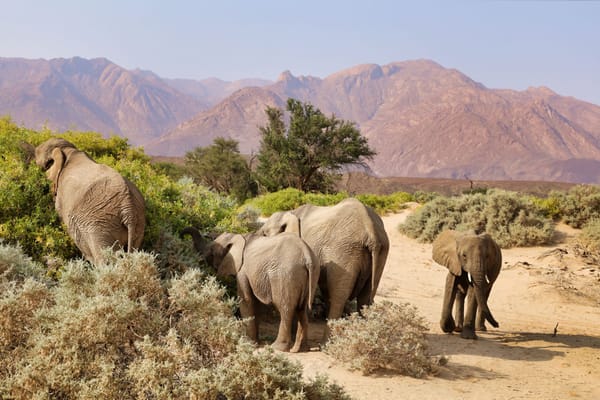
How Namibia’s Desert Elephants Survive 100 Kilometers Without Water: Inside the Hoanib Elephant Camp Experience
Imagine a place where rain is a rumor and the sun rules with an iron glare. Now imagine elephants thriving there. That is the reality in northwestern Namibia’s Kaokoland, where Natural Selection’s Hoanib Elephant Camp opened its doors in May 2026. This isn’t just another safari…
Read More...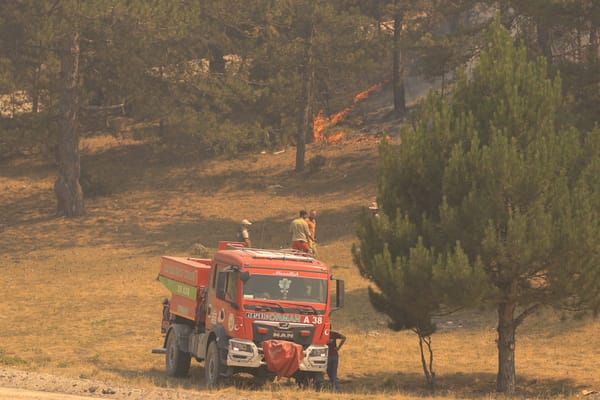
Global Warming
30,000 Evacuated as Southern France and Spain Battle Record Wildfires: What’s Driving the Crisis?
A massive wave of wildfires has torn through southern France and Spain, forcing more than 30,000 people to leave their homes in a matter of days. Temperatures have climbed to life-threatening levels, and a marine heatwave is scorching the Mediterranean. This is not just another…
Read More...
Global Warming
45% of Brits Are Ditching UK Staycations This Summer: Where Are They Going Instead?
Think a heatwave means more people holidaying at home? Think again. New data reveals a surprising twist in Britain’s summer travel story. Despite another scorching season, the much-talked-about staycation boom is cooling off fast. In fact, the number of UK adults planning a dome…
Read More...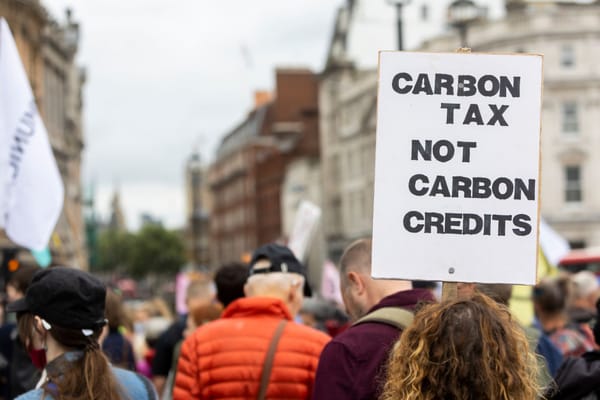
Global Warming
How the UK’s £2 Bus Fare and Zero VAT on Electricity Could Reshape Global Climate Finance
What happens when a wealthy nation decides to fund its green domestic agenda by reallocating money once promised to poorer countries? That is the question stirring debate across climate circles this week, as the United Kingdom’s new Prime Minister Andy Burnham rolls out two eye…
Read More...
Global Warming
How Many Countries Have You Visited? The UK Just Won a Global Travel Challenge Inspired by David Attenborough
What if you could measure your travels against the greatest explorer of our time? That is exactly what nearly 20,000 people did in a global challenge inspired by Sir David Attenborough’s legendary career. And the results reveal something surprising about how we choose to see the…
Read More...
Global Warming
Deep Sea Mining Showdown: UN Tribunal Rejects Corporate Bid to Halt Ocean Floor Probe – What It Means for the Future of Critical Minerals
Imagine a vast underwater plain, stretching over 4.5 million square kilometers, littered with potato-sized rocks that hold the key to our electric future. That is the Clarion-Clipperton Zone, and it is now the center of a legal drama that could determine who gets to harvest the…
Read More...
Global Warming
61% of U.S. Voters Now See Extreme Weather as a Climate Reality – Even Republicans Are Changing Their Minds
A new national poll has captured a striking shift in how Americans view the weather around them. For the first time, a clear majority of likely voters say they see a direct link between the extreme heat, wildfires, floods, and hurricanes they’ve been living through and the broad…
Read More...
Global Warming
Where 11,000 Humpback Whales Migrate in Silence: Inside the Indian Ocean’s Last Quiet Corridor
Imagine standing on a beach where the only sound is the deep, resonant exhale of a humpback whale surfacing just meters away. No boat engines. No sonar pings. No distant shipping horns. This is not a fantasy. It is the daily reality along a 220-kilometer stretch of South Africa’…
Read More...
Global Warming
135km of Paradise: Why Australia’s Northern Rivers Rail Trail Is Stuck at the Finish Line
Imagine pedaling 135 kilometers through ancient rainforests, past historic bridges, and alongside rivers where glow-worms flicker in the darkness of a century-old tunnel. That’s the promise of the Northern Rivers Rail Trail, a project that would connect the sugar cane fields of…
Read More...
Global Warming
75% of Carbon Credits Blocked: What China and India’s Bold Move Means for Your Climate Strategy
Imagine waking up to find that nearly three out of every four carbon credits you were counting on just vanished. That’s exactly what happened on June 30, when China and India made a decision that sent ripples through global climate markets. By refusing to endorse their legacy Cl…
Read More...