
GSK’s $9 Billion Bet on Nuvalent: What It Means for the Future of Lung Cancer Treatment

London, UK, MMN Correspondent: Imagine a single drug that could outsmart the resistance mechanisms that make today’s best lung cancer therapies fail. That’s exactly what Nuvalent, a small biotech firm based in Cambridge, Massachusetts, claims to have in its pipeline. And now, GlaxoSmithKline (GSK) is reportedly ready to pay over $9 billion to get its hands on it.
If the deal goes through, it would be one of the largest acquisitions in oncology this year. But why is GSK willing to write such a massive check? The answer lies in a molecule called NVL-655, currently in Phase 2 trials for non-small cell lung cancer (NSCLC). This drug targets specific EGFR mutations, but here’s the twist: it’s designed to work even after patients have stopped responding to existing treatments like osimertinib. That’s a huge unmet need, and it’s exactly the kind of breakthrough that big pharma is racing to secure.
Nuvalent isn’t just a one-trick pony, though. Founded in 2017 by veterans from top biopharma companies, the company has built a discovery platform that combines computational biology with AI-driven target identification. This allows them to rapidly validate drug candidates that can bypass resistance. In an era where cancer cells are constantly evolving, that kind of agility is gold.
GSK’s move fits a broader pattern. Over the past few years, Pfizer, Roche, and Bristol Myers Squibb have all snapped up smaller biotechs to fill their pipelines. The logic is simple: internal R&D is slow and expensive, while buying a company with promising clinical data can cut years off the timeline. For GSK, which has been restructuring under CEO Emma Walmsley to focus on immuno-oncology and precision medicine, Nuvalent represents a perfect strategic fit.
What does this mean for patients? If NVL-655 eventually gets approved, GSK’s global distribution network could bring it to hospitals in the U.S., Europe, and emerging markets like India and China much faster than Nuvalent could on its own. Analysts estimate that the global NSCLC market could exceed $20 billion annually by 2030, and a drug that works after others fail could capture a significant slice of that pie.
Of course, the deal isn’t final yet. Sources close to the negotiations say both sides are nearing an agreement, with an announcement expected in the coming months. But the buzz is already rippling through the biotech sector. Investors are watching closely, because if GSK is willing to pay $9 billion for Nuvalent, what does that say about the value of other mid-sized biotechs with similar platforms?
This acquisition, if completed, would also highlight a larger shift in the industry. Innovation is no longer the sole domain of nimble startups. Instead, we’re seeing a collaboration between small science-driven companies and large players with the resources to scale. The result? Faster progress against some of the toughest cancers.
With over 20 million new cancer cases diagnosed globally each year, the urgency is real. GSK’s potential purchase of Nuvalent isn’t just a business transaction. It’s a bet on a future where cancer treatments are more precise, more durable, and more accessible. And that’s a story worth watching.
Related in Finance
Finance
68% of Americans Back It: Trump Confirms High-Level Talks with Iran Resume July 2026
What if the longest running geopolitical standoff of our era is finally ready for a rewrite? On July 10, 2026, former President Donald Trump stepped before cameras in New York and dropped a statement that caught much of the world off guard: the United States has agreed to resume…
Read More...
Finance
How SK Hynix Just Raised $26.5 Billion in the U.S. – What It Means for the Future of Chips
On a crisp July morning in Manhattan, something historic happened on Wall Street. SK Hynix, the South Korean memory chip giant, stepped onto the New York Stock Exchange and walked away with $26.5 billion. That’s not just a lot of money. It’s the largest IPO by a non-U.S. company…
Read More...
Finance
China Factory Prices Hit 2-Year High: What the Iran Crisis Means for Your Supply Chain
Have you noticed the price of steel or plastic creeping up lately? There’s a reason for that, and it’s not just about demand. China’s factory gate prices just jumped to their highest level in over a year, and the culprit isn’t a domestic slowdown—it’s a geopolitical storm brewin…
Read More...
Finance
Is Indonesia’s Investment-Grade Status at Risk? S&P Dow Jones Issues Critical Warning
What happens when one of Southeast Asia’s most promising economies faces a potential credit downgrade? That’s the question investors and policymakers are asking after S&P Dow Jones Indices joined Moody’s and Fitch in flagging risks to Indonesia’s sovereign credit rating. The war…
Read More...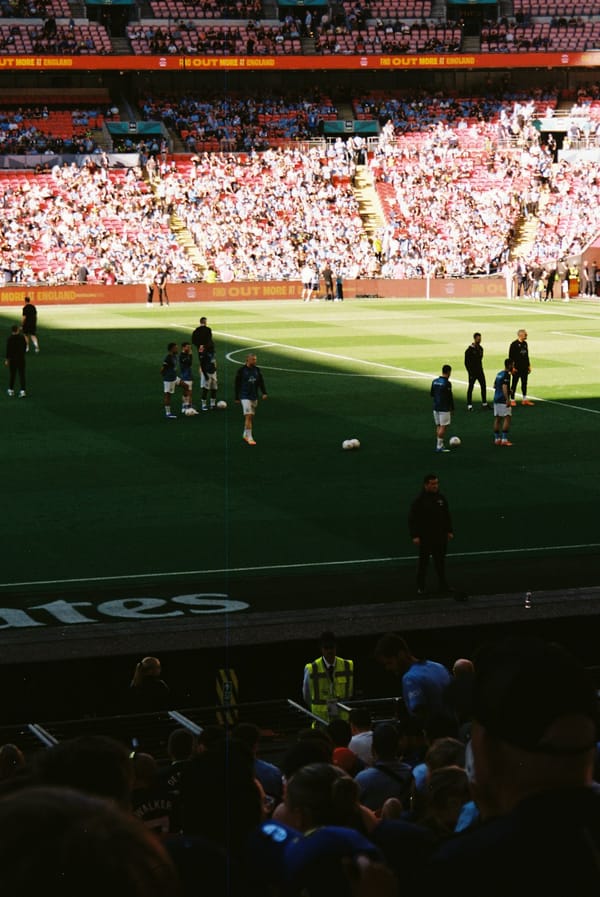
Finance
FIFA Red Card Scandal 2026: How a Rigged Decision in Brazil vs. Argentina Exposed $80 Billion Sports Integrity Crisis
On July 5, 2026, during a World Cup qualifier between Brazil and Argentina, something happened that football fans will never forget. Argentina’s star midfielder Lucas Martínez was shown a red card for a tackle that, on replay, looked routine. But what looked like a referee’s bad…
Read More...
Finance
What Really Happened When July 4 Fireworks Were Canceled in D.C. Amid Deadly Storms? 150,000 Evacuated in Historic Emergency
Picture this: you are standing on the National Mall, flags waving, kids on shoulders, ready for the biggest fireworks show of the year. Then, within minutes, the sky turns an angry gray, wind howls past 70 miles per hour, and sirens start blaring. That is exactly what happened o…
Read More...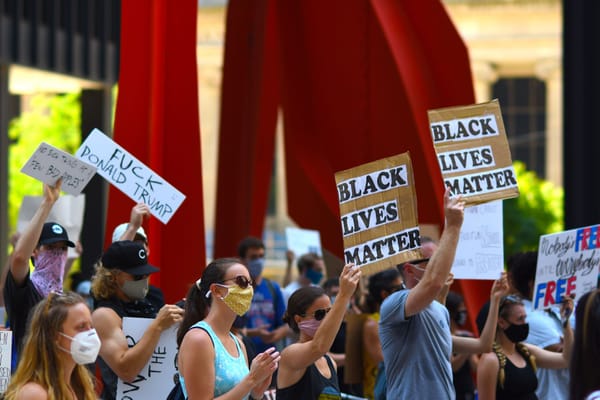
Finance
What Happens When a 249th Independence Day Celebration Meets a 105°F Heat Dome? Here’s What You Need to Know
Picture this: It’s July 4, 2026, and you’re standing on the National Mall, surrounded by tens of thousands of fellow Americans, flags waving, and the air thick with anticipation. But there’s something else in the air—a record-breaking heatwave that has pushed temperatures past 1…
Read More...
Finance
Canada’s 2,000-Kilometer Pipeline to Asia: How a New Energy Corridor Could Reshape Global Oil Markets
Imagine a pipeline so long it could stretch from Paris to Moscow. Now imagine it carrying Canadian oil not south to the United States, but west to the Pacific Ocean and then on to Asia. That is exactly what Canada is planning, and it could change the way the world thinks about e…
Read More...
Finance
48% Male Users and a $3B Valuation: How RedNote Is Reshaping China’s Creator Economy Ahead of Its 2026 IPO
What happens when a platform once known as China’s Instagram decides to bet big on men? You get RedNote, a photo sharing and lifestyle app that’s quietly rewriting the rules of digital creation. And now, with an initial public offering on the horizon, it’s asking a bigger questi…
Read More...
Finance
White House Ends Federal Ban on Anthropic AI: What This Means for Government Services by 2027
On July 1, 2026, the White House made a decision that changes the trajectory of artificial intelligence in the United States government. The nationwide ban on Anthropic’s advanced AI models within federal agencies has been officially lifted. This is not a small adjustment. It is…
Read More...