
What Caused Two Massive Earthquakes in Venezuela Within Hours? Here’s What We Know
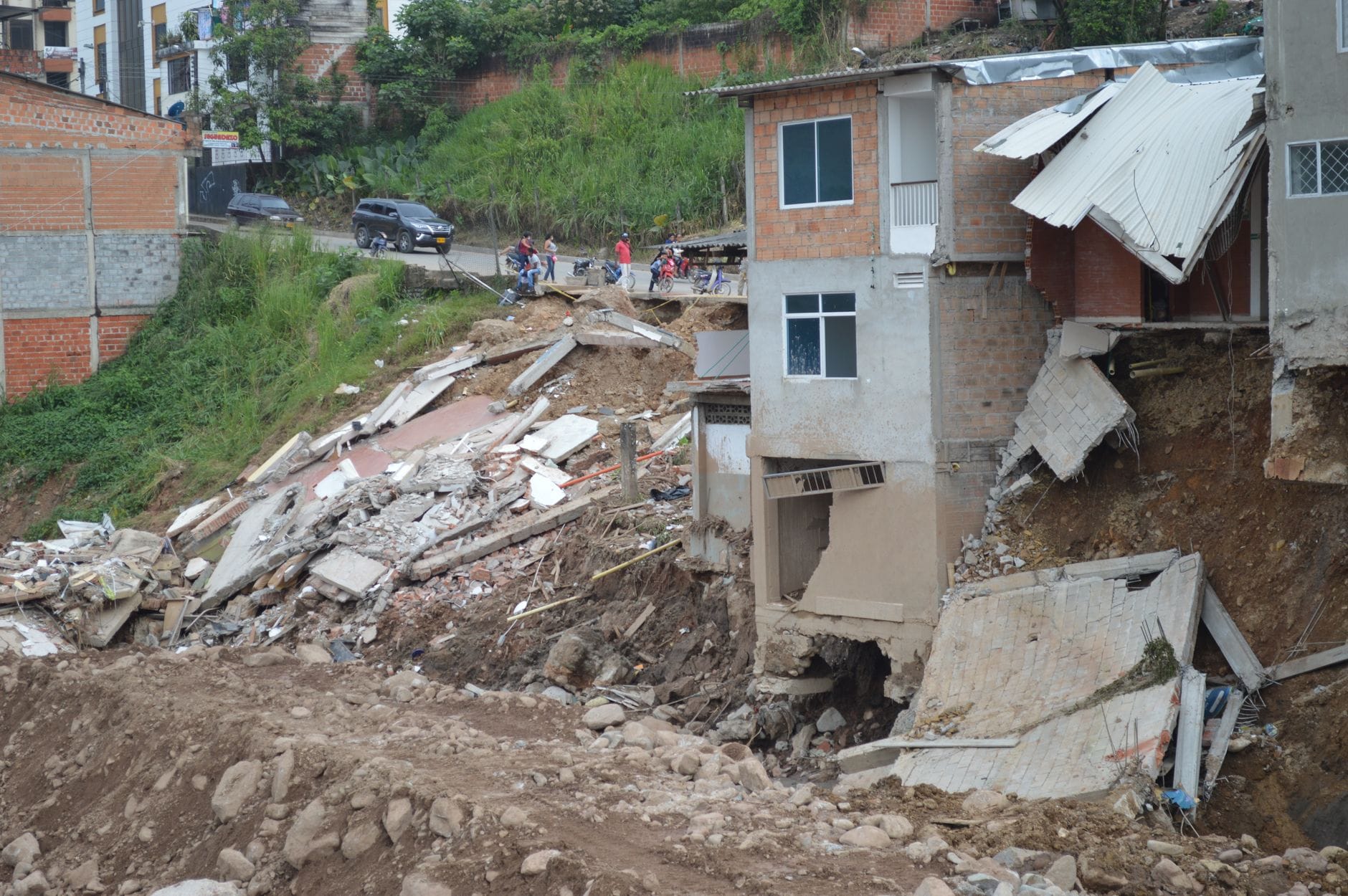
Caracas, Venezuela, MMN Correspondent: Imagine waking up to the ground shaking violently beneath you, not once, but twice in the same night. That’s exactly what happened across Venezuela on June 25, 2026, when two powerful earthquakes struck within hours of each other. The first, a 7.4 magnitude tremor, hit at 1:32 a.m. local time. The second, a 6.8 magnitude event, followed at 3:17 a.m. Together, they sent shockwaves through the nation’s infrastructure, population, and emergency response systems.
These quakes were felt across multiple states including Miranda, Carabobo, Aragua, and the capital city of Caracas. For a country not typically associated with frequent seismic activity, this was a rare and defining moment. The epicenters were located about 120 kilometers west of Caracas, near the border with Colombia, in a region where the South American Plate meets the Caribbean Plate. This tectonic boundary has long been considered relatively stable, but recent geological shifts have increased stress along fault lines, leading experts to warn of heightened risk.
Eyewitness accounts describe violent shaking that lasted over a minute in some locations. Buildings swayed, windows shattered, and power grids failed. In Valencia, the country’s second-largest city, reports emerged of collapsed residential buildings, damaged schools, and widespread panic. Emergency services were overwhelmed almost immediately, with hospitals reporting injuries ranging from minor fractures to severe trauma requiring urgent care.
As of early June 26, the official death toll stood at 143, with more than 900 people injured. Over 15,000 individuals were displaced, many seeking shelter in makeshift camps set up in stadiums, community centers, and school gymnasiums. The Venezuelan government declared a national state of emergency and activated its Civil Protection Agency. While the response was swift, critics pointed to chronic underfunding and outdated disaster preparedness protocols as major obstacles.
Geologists from the National Institute of Geophysics noted that while Venezuela is not situated on a major global fault line like those in the Pacific Ring of Fire, the country lies within a seismically active region influenced by subduction processes and crustal deformation. Historical records show only five recorded earthquakes above magnitude 6.0 in the past century, the last being a 6.1 magnitude event in 1997 near the Orinoco River basin. The 2026 quakes represent a dramatic escalation in seismic activity, prompting scientists to reevaluate long-standing assumptions about tectonic stability in northern South America.
International agencies quickly mobilized aid. The United Nations Office for the Coordination of Humanitarian Affairs dispatched emergency supplies, including tents, medical kits, clean water containers, and hygiene packages. The Red Cross International deployed mobile clinics and field teams trained in post-disaster trauma response. Neighboring countries such as Colombia, Brazil, and Trinidad and Tobago offered logistical support, air transport assistance, and technical expertise in assessing structural damage.
One of the most alarming consequences of the earthquakes was the disruption of critical infrastructure. The national electricity grid suffered extensive damage, leaving over 7 million people without power for several days. Water treatment plants in Caracas and Maracay experienced failures, triggering a public health crisis with fears of cholera and other waterborne diseases. Fuel shortages worsened the situation, as fuel depots were damaged and supply chains broke down due to road collapses and bridge destruction.
In the aftermath, researchers began analyzing satellite imagery and ground motion data to understand the full extent of subsurface changes. Preliminary findings suggest that the quakes may have triggered secondary landslides in mountainous regions and caused liquefaction in low-lying coastal zones, particularly around Lake Valencia. These phenomena significantly amplified the destruction beyond the initial impact zones.
Experts emphasize that the frequency and intensity of these quakes could signal deeper tectonic shifts. Dr. Elena Márquez, a seismologist at the University of Los Andes, stated, “This is not just a rare occurrence. It’s a wake-up call. We’ve seen increased microseismicity in the region over the past three years, indicating that stress is building faster than expected. The 2026 events may be part of a larger pattern of reactivation.”
Urban planners are now facing urgent questions about rebuilding standards. Many older buildings in Venezuela were constructed without adherence to modern seismic codes, and the collapse of several multi-story apartments during the quakes has sparked calls for mandatory retrofitting and stricter construction regulations. The government has pledged to launch a nationwide assessment of all public infrastructure within 60 days.
Economically, the disaster dealt a heavy blow to an already fragile economy. The oil sector, which accounts for over 90% of export revenue, faced temporary shutdowns at offshore platforms and onshore refineries due to safety concerns. Financial markets reacted sharply, with the bolívar depreciating further against the U.S. dollar, and foreign investors expressing concern over long-term stability. Analysts estimate that recovery costs could exceed $12 billion, far beyond the current fiscal capacity of the state.
Despite the devastation, stories of resilience have emerged. Volunteers organized food drives, community kitchens, and mutual aid networks, especially in marginalized neighborhoods that typically receive minimal government support. Social media platforms became vital tools for coordinating rescue efforts, sharing real-time updates, and locating missing persons.
Looking ahead, experts stress the need for long-term investment in early warning systems, public education campaigns, and cross-border cooperation with Colombia and Brazil to monitor seismic risks. Satellite-based detection networks, improved communication infrastructure, and community drills are being proposed as essential components of a new national disaster resilience strategy.
As Venezuela begins the arduous journey toward recovery, the dual earthquakes have become a defining moment in the nation’s history. Not just for the physical destruction they left behind, but for the stark reminder of nature’s unpredictable power and the importance of preparedness in vulnerable regions. The international community continues to monitor developments closely, with humanitarian organizations urging sustained support over the coming months. As reconstruction efforts unfold, the world watches not only to assess the human cost but also to learn from this rare and impactful seismic event in a region long considered seismically quiet.
Related in Finance

Finance
68% of Americans Back It: Trump Confirms High-Level Talks with Iran Resume July 2026
What if the longest running geopolitical standoff of our era is finally ready for a rewrite? On July 10, 2026, former President Donald Trump stepped before cameras in New York and dropped a statement that caught much of the world off guard: the United States has agreed to resume…
Read More...
Finance
How SK Hynix Just Raised $26.5 Billion in the U.S. – What It Means for the Future of Chips
On a crisp July morning in Manhattan, something historic happened on Wall Street. SK Hynix, the South Korean memory chip giant, stepped onto the New York Stock Exchange and walked away with $26.5 billion. That’s not just a lot of money. It’s the largest IPO by a non-U.S. company…
Read More...
Finance
China Factory Prices Hit 2-Year High: What the Iran Crisis Means for Your Supply Chain
Have you noticed the price of steel or plastic creeping up lately? There’s a reason for that, and it’s not just about demand. China’s factory gate prices just jumped to their highest level in over a year, and the culprit isn’t a domestic slowdown—it’s a geopolitical storm brewin…
Read More...
Finance
Is Indonesia’s Investment-Grade Status at Risk? S&P Dow Jones Issues Critical Warning
What happens when one of Southeast Asia’s most promising economies faces a potential credit downgrade? That’s the question investors and policymakers are asking after S&P Dow Jones Indices joined Moody’s and Fitch in flagging risks to Indonesia’s sovereign credit rating. The war…
Read More...
Finance
FIFA Red Card Scandal 2026: How a Rigged Decision in Brazil vs. Argentina Exposed $80 Billion Sports Integrity Crisis
On July 5, 2026, during a World Cup qualifier between Brazil and Argentina, something happened that football fans will never forget. Argentina’s star midfielder Lucas Martínez was shown a red card for a tackle that, on replay, looked routine. But what looked like a referee’s bad…
Read More...
Finance
What Really Happened When July 4 Fireworks Were Canceled in D.C. Amid Deadly Storms? 150,000 Evacuated in Historic Emergency
Picture this: you are standing on the National Mall, flags waving, kids on shoulders, ready for the biggest fireworks show of the year. Then, within minutes, the sky turns an angry gray, wind howls past 70 miles per hour, and sirens start blaring. That is exactly what happened o…
Read More...
Finance
What Happens When a 249th Independence Day Celebration Meets a 105°F Heat Dome? Here’s What You Need to Know
Picture this: It’s July 4, 2026, and you’re standing on the National Mall, surrounded by tens of thousands of fellow Americans, flags waving, and the air thick with anticipation. But there’s something else in the air—a record-breaking heatwave that has pushed temperatures past 1…
Read More...
Finance
Canada’s 2,000-Kilometer Pipeline to Asia: How a New Energy Corridor Could Reshape Global Oil Markets
Imagine a pipeline so long it could stretch from Paris to Moscow. Now imagine it carrying Canadian oil not south to the United States, but west to the Pacific Ocean and then on to Asia. That is exactly what Canada is planning, and it could change the way the world thinks about e…
Read More...
Finance
48% Male Users and a $3B Valuation: How RedNote Is Reshaping China’s Creator Economy Ahead of Its 2026 IPO
What happens when a platform once known as China’s Instagram decides to bet big on men? You get RedNote, a photo sharing and lifestyle app that’s quietly rewriting the rules of digital creation. And now, with an initial public offering on the horizon, it’s asking a bigger questi…
Read More...
Finance
White House Ends Federal Ban on Anthropic AI: What This Means for Government Services by 2027
On July 1, 2026, the White House made a decision that changes the trajectory of artificial intelligence in the United States government. The nationwide ban on Anthropic’s advanced AI models within federal agencies has been officially lifted. This is not a small adjustment. It is…
Read More...