
What Happens When Party Membership Blocks a Candidate? The Friesland Election Controversy Explained
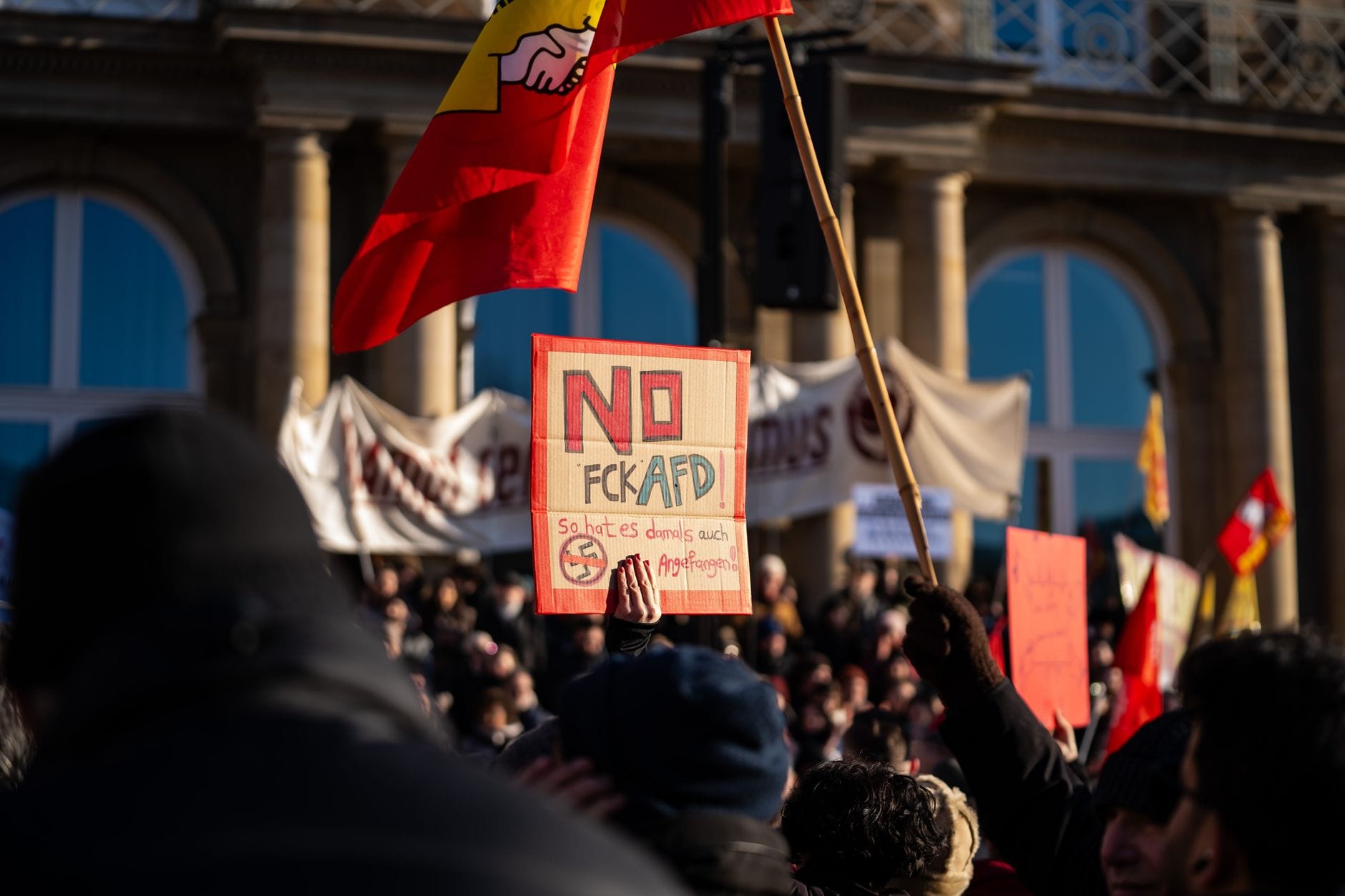
Friesland, Lower Saxony, Germany, MMN Correspondent: In a move that has captured national attention, Martin Sichert, a member of the Bundestag for the Alternative for Germany (AfD) in Lower Saxony, has been formally barred from running for the position of Landrat in the district of Friesland. The decision, made by the local election commission on July 22, 2026, stems from an assessment by the SPD-led Ministry of the Interior in Lower Saxony. Their argument? That membership in the AfD alone raises sufficient doubts about a candidate’s constitutional loyalty. This ruling has sparked a wide-ranging conversation about political fairness, democratic processes, and the role of state institutions in shaping electoral outcomes.
This exclusion represents a notable moment in the ongoing relationship between mainstream political parties and the AfD, especially in regions where the party has seen growing support. Friesland, a rural district with around 215,000 residents, has traditionally leaned conservative and experienced lower voter turnout in federal elections. Yet in recent years, the AfD has steadily gained ground, particularly among older voters who express concerns about immigration, cultural identity, and economic stagnation.
According to official records, the decision was not based on any specific evidence of misconduct or extremist behavior by Sichert. Instead, it relied entirely on his affiliation with the AfD, which the ministry classified as a party whose ideology poses a systemic risk to Germany’s democratic foundations. This approach reflects a broader pattern across several German states, where election commissions have increasingly used criteria related to 'verfassungstreue'—constitutional loyalty—to disqualify candidates from public office.
Stefan Möller, the AfD’s deputy national spokesperson, responded publicly on the same day, describing the decision as a direct challenge to democratic competition and fair electoral participation. “Whoever uses the charge of extremism to remove legitimate political opponents from the ballot is not defending democracy—he is undermining it,” Möller stated. He emphasized that the exclusion was not grounded in proven wrongdoing but rather on a presumption of guilt based on party membership, effectively creating a political blacklist.
This case echoes similar controversies from previous years. In 2023, the Bavarian state election authority rejected AfD candidates in multiple municipalities over concerns about their alignment with democratic values. In 2021, the Federal Constitutional Court ruled that while political parties must be loyal to the constitution, blanket exclusions based on party affiliation without individualized assessments violate fundamental rights. Yet despite this precedent, regional authorities continue to apply such measures, often citing security concerns and the need to protect democratic integrity.
Germany’s legal framework under Article 21 of the Basic Law permits the government to ban political parties if they threaten the free democratic order. However, such bans require rigorous judicial review and must be based on concrete evidence of anti-democratic activities. The current situation in Friesland appears to deviate from this standard. The exclusion of Sichert was initiated not by the courts but by a bureaucratic evaluation from a state ministry, raising questions about transparency and due process.
Critics argue that this kind of action sets a precedent worth examining. If mere party membership can disqualify someone from public office, then all opposition parties could be vulnerable to similar treatment. This creates a chilling effect on political pluralism and may discourage citizens from engaging in alternative political movements. Moreover, it risks deepening societal polarization, particularly in rural areas like Friesland, where trust in central institutions is already fragile.
Supporters of the decision, primarily from the Social Democratic Party (SPD), argue that the AfD’s platform includes rhetoric and policy proposals deemed incompatible with liberal democratic norms. They point to statements by AfD leaders advocating for stricter border controls, questioning the legitimacy of refugee resettlement programs, and promoting nationalist narratives as evidence of ideological incompatibility with constitutional democracy. From their perspective, preventing AfD candidates from holding public office is a necessary safeguard against the erosion of democratic values.
Independent legal experts remain divided. Dr. Lena Hartmann, a constitutional law professor at the University of Göttingen, noted that “while the state has a duty to protect the democratic system, it cannot do so by preemptively excluding individuals based on association alone. That would undermine the very principle of free and fair elections.” She added that any restriction on candidacy must follow strict legal procedures, including individual hearings and the right to appeal.
The implications of this case extend beyond Friesland. With regional elections approaching in Lower Saxony later this year, the outcome could influence the balance of power in the state parliament. The AfD currently holds 14 seats in the Landtag, making it the third-largest party. Its exclusion from key local offices may weaken its influence and potentially shift control to coalition governments dominated by the SPD, CDU, and Greens.
Public reaction has been polarized. A survey conducted by the polling firm INSA in early July found that 48% of respondents supported the exclusion, citing concerns about extremism, while 42% opposed it, viewing it as a violation of civil liberties. Notably, 70% of AfD supporters believed the decision was politically motivated, while only 28% of SPD supporters agreed.
As the controversy unfolds, legal challenges are expected. The AfD has announced plans to file an appeal with the Higher Regional Court in Hanover, arguing that the decision violates both the German Constitution and European human rights standards. If successful, the ruling could set a new benchmark for how political affiliations are assessed in future elections.
Meanwhile, the broader debate continues: Can a democracy protect itself from internal threats without sacrificing the freedoms that define it? As Germany grapples with rising political fragmentation, demographic change, and shifting public sentiment, cases like Sichert’s highlight the delicate balance between security and liberty, tradition and reform, inclusion and exclusion. The verdict in Friesland may not just determine one man’s political fate—it could shape the future of German democracy itself.
Related in Politics

Politics
Why 3,000+ Professionals Left Ireland’s Child Protection System in 5 Years – And What It Means for Vulnerable Kids
Imagine a system designed to protect children, yet losing over 3,000 of its most essential workers in just five years. That’s exactly what’s happening inside Tusla, Ireland’s national child and family services agency. Between 2020 and 2025, a quiet but powerful shift has taken p…
Read More...
Politics
Is This the End of Morawiecki’s Political Comeback? Bosak Exposes the Cracks in Poland’s Right Wing
Poland’s political stage just got a lot more interesting. Krzysztof Bosak, the Deputy Speaker of the Polish Sejm and leader of the Confederation party, didn’t hold back in a recent interview on the Super Ring channel. He took direct aim at former Prime Minister Mateusz Morawieck…
Read More...
Politics
Chile’s New Law Stops Posthumous Bills: How Families Can Finally Avoid $2,000 in Unwanted Charges After a Loved One Dies
Imagine losing someone you love, and then, weeks later, a bill arrives for their Netflix subscription. Or their phone plan. Or their highway toll pass. It feels wrong, doesn’t it? Yet for thousands of families in Chile, this has been a painful reality. Now, a bold new law called…
Read More...
Politics
Thabazimbi Municipality in Crisis: How ANC Factionalism Is Paralyzing Local Governance and Service Delivery – What Residents Need to Know Before November 2026
Imagine paying your taxes every month, yet the road grader that keeps your rural roads passable has been broken for four months because of a missing fan belt. Imagine calling the municipality about a burst water pipe or a streetlight that’s been out for weeks, only to hear that…
Read More...
Politics
20,000 Signatures Challenge Foreign Worker Role in Lublin City Hall – What’s Next for Poland?
Nearly 20,000 residents have signed a petition demanding the removal of a Ukrainian woman serving as a director in Lublin’s city administration. The campaign, led by Konfederacja activists Piotr Zduńczyk and Rafał Mekler, has sparked a nationwide conversation about national secu…
Read More...
Politics
82% Fail Rate: What Western Cape Learner Drivers Reveal About South Africa’s Youth Opportunity Gap
If you are a young person in the Western Cape hoping to get your learner’s licence, the odds are not in your favor. Since the new computerised testing system launched on May 26, 2025, only 18% of applicants have passed. That means 82% are walking away empty handed. Over 142,000…
Read More...
Politics
What Poland’s Rural Resilience Movement Means for Your Future: Krzysztof Mulawa’s Blueprint for National Sovereignty
Imagine a Poland where villages don’t just follow orders from the capital but shape their own destiny. That’s the vision Krzysztof Mulawa, a key voice in the Konfederacja movement, laid out during a recent live broadcast on Radio Wnet. His conversation cut through the noise, off…
Read More...
Politics
Cape Town’s Good Hope Centre Sale Sparks Fury: What Happens Next Could Change the City’s Future
What happens when a city tries to sell a piece of its soul? That’s the question Cape Town residents are asking right now as the historic Good Hope Centre sits at the center of a growing storm. The Freedom Front Plus (VF Plus) has stepped in, demanding the city hit pause on the s…
Read More...
Politics
What’s Really Happening Inside Germany’s AfD? NRW Leadership Crisis Forces Federal Intervention – Here’s What You Need to Know
If you’ve been following German politics, you know the AfD has been riding high in the polls. But behind the scenes, a very different story is unfolding. The party’s national leadership just stepped into a full-blown crisis in North Rhine-Westphalia (NRW), and the details are ra…
Read More...
Politics
Poland 2026: Can a Nation Fix Its Broken Healthcare, Root Out Corruption, and Reclaim Sovereignty?
Poland in the summer of 2026 is a country asking itself some very hard questions. The kind of questions that don’t have easy answers. How did a nation with such resilience end up with a healthcare system where patients die waiting in corridors? Why do public funds keep flowing t…
Read More...