
What Happens When the World's Most Vital Oil Route Is Shut Down? Iran's Bold Move After Israel-Hezbollah Clashes
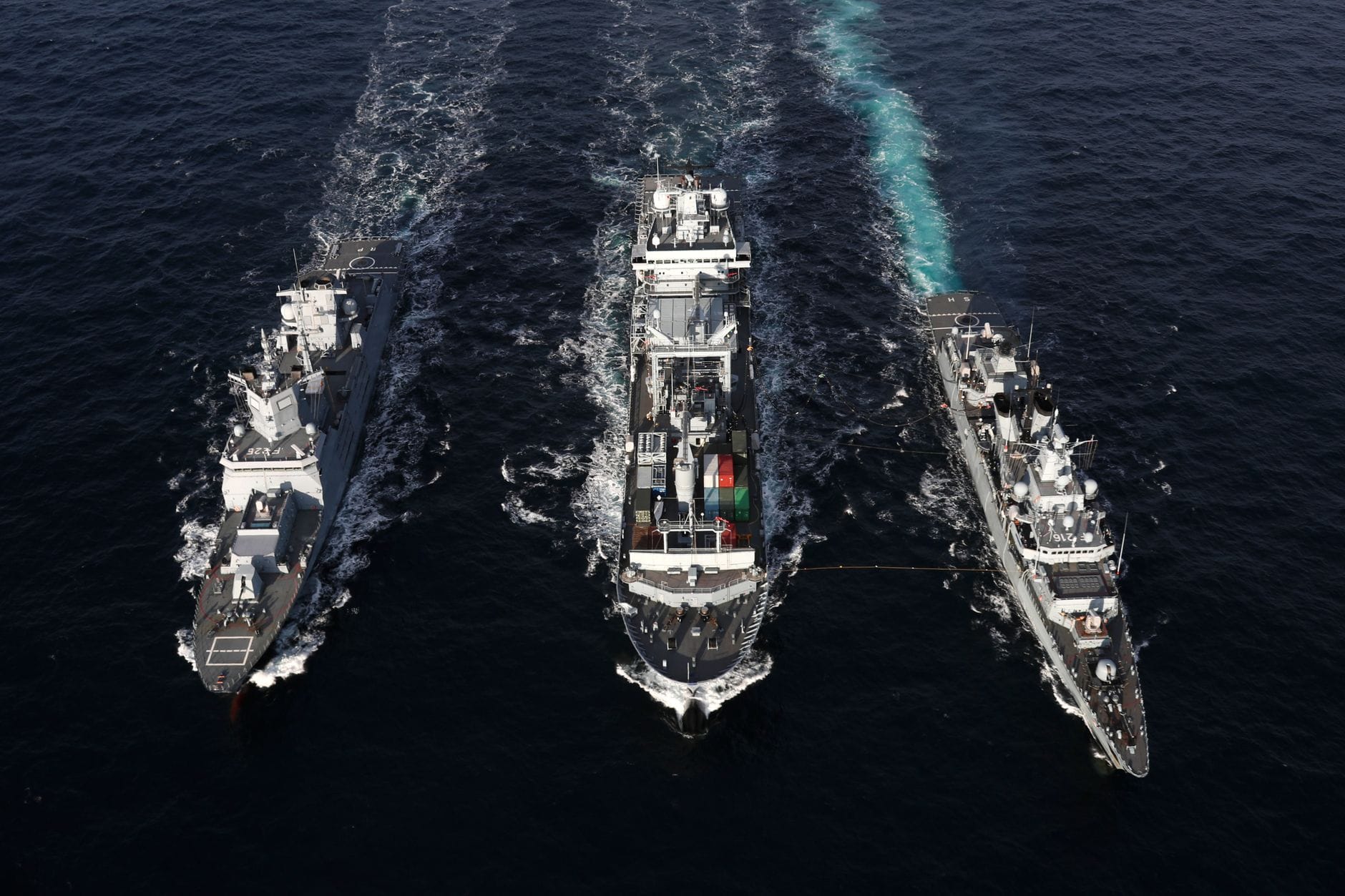
Strait of Hormuz, MMN Correspondent: Imagine waking up to news that the world’s most critical oil passage has been effectively closed. That’s exactly what happened on June 20, 2026, when Iran announced it had shut down the Strait of Hormuz. The trigger? A fierce exchange of fire between Israeli forces and Hezbollah fighters along the Lebanon-Israel border just a day earlier. Global energy markets reacted instantly, and major powers scrambled to respond. But what does this mean for you, for the global economy, and for the future of energy security?
Let’s start with the numbers. The Strait of Hormuz sits between Iran and Oman, and it handles about 20% of the world’s oil supply. That’s nearly 18 million barrels of crude oil every single day. Countries like Saudi Arabia, Iraq, Kuwait, and the UAE depend on this route for over 70% of their oil exports. When Iran says it’s closing the strait, it’s not just a regional issue. It’s a global one.
So what led to this moment? On June 19, 2026, Israel launched coordinated strikes into southern Lebanon, targeting Hezbollah missile launch sites near Bint Jbeil. The goal was to disrupt planned operations against northern Israel. Hezbollah responded with over 50 rockets and drones aimed at Israeli settlements, including Haifa and Nahariya. Civilians on both sides were injured, and infrastructure took a hit. Satellite images confirmed significant damage at multiple Hezbollah positions. The stage was set for Iran’s next move.
Iran framed its action as a defensive measure. A senior Iranian defense official stated, “In solidarity with our brothers in Hezbollah and in response to unprovoked aggression against Lebanese sovereignty, we have taken decisive steps to secure the strategic waters of the Persian Gulf.” While independent maritime tracking systems haven’t fully verified the closure, regional intelligence sources report increased naval activity by the Islamic Revolutionary Guard Corps Navy near the strait’s entrance. The message is clear: Iran is serious.
Now, consider the ripple effects. If tankers can’t pass through the Strait of Hormuz, they’ll have to reroute around the Cape of Good Hope in South Africa. That adds up to 10 days to the journey and significantly increases fuel costs. Market analysts predict Brent crude could spike above $140 per barrel. For context, when similar concerns arose in 2023 due to Houthi attacks in the Red Sea, global oil prices jumped nearly 15% in a week. The psychological impact alone can destabilize financial markets.
International reaction has been swift. The United States condemned Iran’s actions as “unacceptable” and called for de-escalation. Secretary of State Antony Blinken emphasized the importance of freedom of navigation, stating, “Any attempt to block vital sea lanes will be met with strong consequences.” The U.S. has since deployed two carrier strike groups to the Arabian Sea. European Union leaders expressed alarm, with EU Foreign Policy Chief Josep Borrell calling for an emergency UN Security Council session. The UK, France, and Germany have also mobilized naval assets in the region.
But this isn’t just about oil. It’s about a broader power struggle. Iran has long supported Hezbollah as a key ally in countering Israeli influence. Over the past decade, Tehran has invested billions in modernizing Hezbollah’s arsenal, including advanced rocket systems, drones, and cyber capabilities. Israel, meanwhile, has intensified its surveillance and preemptive strikes across Syria and Lebanon. The International Crisis Group reports that cross-border incidents involving Iran-backed groups have risen by over 60% since 2020. This latest escalation marks a turning point in the shadow war between Israel and Iran.
Geopolitical experts suggest the closure may not be permanent. Some see it as a strategic signal to gain leverage in future negotiations, particularly around Iran’s nuclear program. Others view it as a test of Western resolve, especially after recent events in Afghanistan and Ukraine. Either way, the world is watching closely.
Countries heavily reliant on imported oil, like India, China, Japan, and South Korea, are already preparing contingency plans. India is stockpiling reserves and exploring alternative routes through the Suez Canal and the Malacca Strait. China has activated its Maritime Silk Road logistics network, rerouting some shipments through the Indian Ocean. The humanitarian and economic fallout could be significant.
Diplomatic channels remain open but fragile. The United Nations has dispatched a special envoy to the region, and informal talks between Qatar and Turkey are underway to mediate a ceasefire. However, with both sides entrenched, a peaceful resolution seems elusive.
This event underscores how localized violence can rapidly escalate into systemic crises. It highlights the fragility of global systems in times of conflict. As governments scramble to respond, the need for transparent communication, robust international cooperation, and proactive conflict prevention has never been more urgent. The Strait of Hormuz, once a symbol of global trade and interdependence, now stands as a flashpoint in a new era of geopolitical instability. The question remains: what happens next?
Related in Finance
Finance
68% of Americans Back It: Trump Confirms High-Level Talks with Iran Resume July 2026
What if the longest running geopolitical standoff of our era is finally ready for a rewrite? On July 10, 2026, former President Donald Trump stepped before cameras in New York and dropped a statement that caught much of the world off guard: the United States has agreed to resume…
Read More...
Finance
How SK Hynix Just Raised $26.5 Billion in the U.S. – What It Means for the Future of Chips
On a crisp July morning in Manhattan, something historic happened on Wall Street. SK Hynix, the South Korean memory chip giant, stepped onto the New York Stock Exchange and walked away with $26.5 billion. That’s not just a lot of money. It’s the largest IPO by a non-U.S. company…
Read More...
Finance
China Factory Prices Hit 2-Year High: What the Iran Crisis Means for Your Supply Chain
Have you noticed the price of steel or plastic creeping up lately? There’s a reason for that, and it’s not just about demand. China’s factory gate prices just jumped to their highest level in over a year, and the culprit isn’t a domestic slowdown—it’s a geopolitical storm brewin…
Read More...
Finance
Is Indonesia’s Investment-Grade Status at Risk? S&P Dow Jones Issues Critical Warning
What happens when one of Southeast Asia’s most promising economies faces a potential credit downgrade? That’s the question investors and policymakers are asking after S&P Dow Jones Indices joined Moody’s and Fitch in flagging risks to Indonesia’s sovereign credit rating. The war…
Read More...
Finance
FIFA Red Card Scandal 2026: How a Rigged Decision in Brazil vs. Argentina Exposed $80 Billion Sports Integrity Crisis
On July 5, 2026, during a World Cup qualifier between Brazil and Argentina, something happened that football fans will never forget. Argentina’s star midfielder Lucas Martínez was shown a red card for a tackle that, on replay, looked routine. But what looked like a referee’s bad…
Read More...
Finance
What Really Happened When July 4 Fireworks Were Canceled in D.C. Amid Deadly Storms? 150,000 Evacuated in Historic Emergency
Picture this: you are standing on the National Mall, flags waving, kids on shoulders, ready for the biggest fireworks show of the year. Then, within minutes, the sky turns an angry gray, wind howls past 70 miles per hour, and sirens start blaring. That is exactly what happened o…
Read More...
Finance
What Happens When a 249th Independence Day Celebration Meets a 105°F Heat Dome? Here’s What You Need to Know
Picture this: It’s July 4, 2026, and you’re standing on the National Mall, surrounded by tens of thousands of fellow Americans, flags waving, and the air thick with anticipation. But there’s something else in the air—a record-breaking heatwave that has pushed temperatures past 1…
Read More...
Finance
Canada’s 2,000-Kilometer Pipeline to Asia: How a New Energy Corridor Could Reshape Global Oil Markets
Imagine a pipeline so long it could stretch from Paris to Moscow. Now imagine it carrying Canadian oil not south to the United States, but west to the Pacific Ocean and then on to Asia. That is exactly what Canada is planning, and it could change the way the world thinks about e…
Read More...
Finance
48% Male Users and a $3B Valuation: How RedNote Is Reshaping China’s Creator Economy Ahead of Its 2026 IPO
What happens when a platform once known as China’s Instagram decides to bet big on men? You get RedNote, a photo sharing and lifestyle app that’s quietly rewriting the rules of digital creation. And now, with an initial public offering on the horizon, it’s asking a bigger questi…
Read More...
Finance
White House Ends Federal Ban on Anthropic AI: What This Means for Government Services by 2027
On July 1, 2026, the White House made a decision that changes the trajectory of artificial intelligence in the United States government. The nationwide ban on Anthropic’s advanced AI models within federal agencies has been officially lifted. This is not a small adjustment. It is…
Read More...