
14 Days for a Joke: How Georgia’s Satire Crackdown Could Change Free Speech Forever
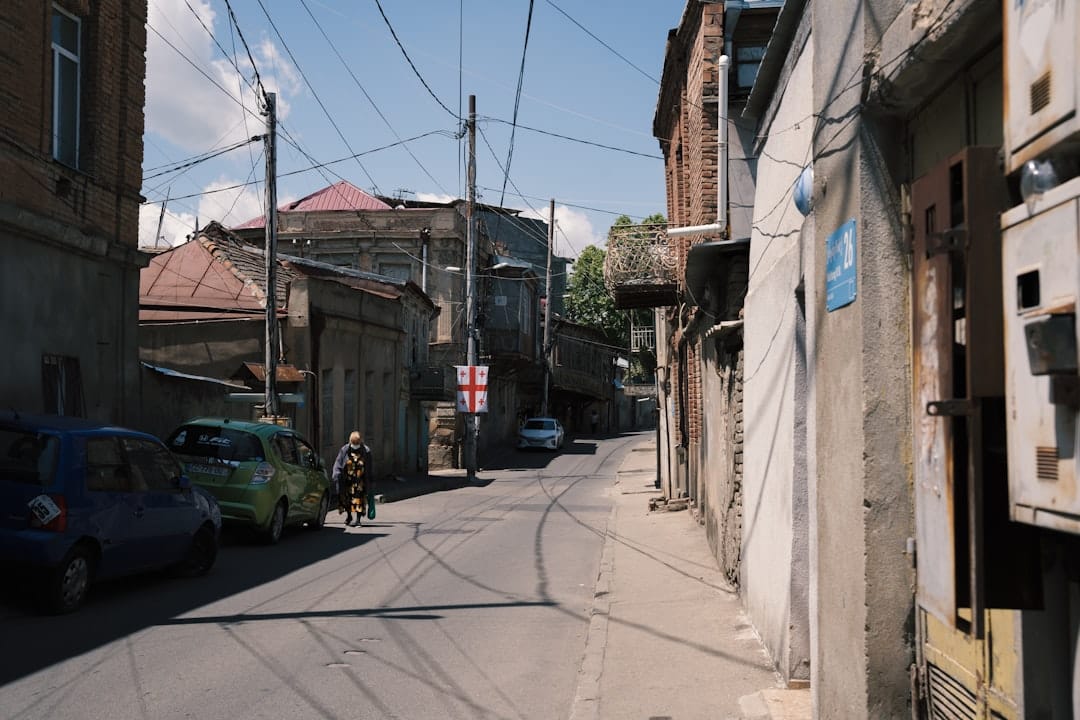
Tbilisi, Georgia, MMN Correspondent: What happens when a punchline lands you in a cell? That’s the question rattling through Georgia this summer after journalist Vakho Sanaia was handed a 14 day administrative detention sentence for a sarcastic Facebook post. The post mocked two prominent political figures, Speaker of Parliament Shalva Papuashvili and MP Vladimir Bozhadze, using irony to highlight what Sanaia saw as hypocrisy in their reactions to criticism. He wrote, “Don’t insult them—because I’m already doing it, and that’s exactly what they’re doing.” A clever jab, sure. But a crime? The authorities thought so.
On July 10, Sanaia was fined GEL 6,000 (about US$2,280) under Georgia’s administrative code for “insulting public officials.” Instead of paying up quietly, he reposted the exact same words. That act of digital defiance landed him in Tbilisi City Court on July 22, where a judge decided that protecting public order meant locking him up. Human rights advocates were quick to point out that satire is protected under international law, including Article 19 of the International Covenant on Civil and Political Rights. But the court didn’t seem interested in intent or harm. They focused on the perceived affront to officials.
Denis Krivosheev, Amnesty International’s Deputy Regional Director for Eastern Europe and Central Asia, put it plainly: “A witty punchline may now cost someone their freedom or their health, if not both.” He stressed that criticizing those in power through satire isn’t just legitimate—it’s essential in any functioning democracy. The organization warned that prosecuting people solely for expressing ideas, even controversial ones, violates fundamental rights.
Hours after Sanaia’s imprisonment, the situation took a darker turn. Comedian Onise Okriashvili, a well known opposition figure and frequent government critic, was attacked outside his home by three masked men. The assault came just days after pro government media launched a smear campaign against him over a joke he made during a studio appearance. He jokingly said, “I hate Nodar Dumbadze,” referencing the beloved Georgian writer, but immediately clarified it was satire aimed at government censorship and cultural authoritarianism. State aligned media ignored the context and framed it as disrespect toward national heritage.
This attack fits a documented pattern. Amnesty International has tracked a disturbing trend in Georgia: public vilification of political opponents in state controlled media often precedes acts of intimidation, harassment, or physical violence. Over the past decade, individuals critical of the government have faced escalating online abuse followed by real world threats and assaults. This cycle suggests a deliberate strategy to silence dissent through psychological pressure and fear, turning public discourse into a battleground where satire becomes perilous.
Georgia, despite its status as a democratic ally of Western nations and a candidate for EU membership, has seen a steady erosion of civil liberties in recent years. The judiciary, once considered independent, has increasingly come under political influence. Journalists, activists, and comedians—especially those using satire to challenge power—now operate in an environment where creative expression carries tangible risk. According to the Global Media Monitoring Project, Georgia ranks among the top ten countries in Eastern Europe for press freedom violations, with over 30 incidents of journalist intimidation recorded between 2020 and 2025.
The use of administrative detention for speech related offenses raises legal red flags. Unlike criminal charges, administrative penalties are often applied without due process, bypassing trial by jury and allowing for arbitrary enforcement. In Sanaia’s case, the court didn’t assess the content of his speech for intent or harm. They focused instead on perceived affronts to public officials. This sets a precedent that could be exploited to punish any form of political mockery.
International observers are calling for immediate action. Human Rights Watch and Reporters Without Borders have urged the Georgian government to release Sanaia unconditionally and to conduct a transparent investigation into Okriashvili’s attack. They emphasize the need for accountability, warning that failure to act will embolden further abuses and undermine Georgia’s credibility on the global stage.
The broader implications extend beyond individual cases. As governments worldwide grapple with misinformation and polarized discourse, the suppression of satire risks creating a culture of self censorship. When jokes about leaders can lead to jail time or physical harm, citizens lose the ability to hold power to account through humor—a vital tool for social critique. Satire has historically played a crucial role in democracies, from Voltaire’s writings to modern day comedy shows like The Daily Show and Last Week Tonight. Its removal weakens democratic resilience.
In response, civil society groups in Georgia have begun organizing protests and digital campaigns under the hashtag #FreeSatireGeorgian. Activists are demanding legal reforms to protect expressive rights and calling for an end to the politicization of the justice system. Meanwhile, the European Union has expressed concern, urging Georgia to uphold its commitments to democratic standards ahead of potential accession talks.
As the world watches, Georgia stands at a crossroads. Will it continue down a path of silencing dissent under the guise of order? Or will it reaffirm its commitment to free expression, even when it comes in the form of a joke? The answer may determine not only the fate of journalists and comedians but the future of democracy itself.
Related in Social Justice
Social Justice
How a 5-Kilometer Solar Fence in Sri Lanka Is Saving Elephants and Farmers: Inside Uga Resorts’ Bold Second Phase
Imagine a fence that doesn’t trap wildlife but teaches it to turn around. That’s exactly what Uga Resorts just unveiled in the heart of Sri Lanka’s Cultural Triangle. On July 15, 2026, the luxury hospitality group switched on a five-kilometer electric barrier near its Uga Ulagal…
Read More...
Social Justice
Peru’s New Law Lets Police and Military Judge Their Own Crimes: What It Means for Justice
Imagine a system where the people accused of wrongdoing get to choose their own judge. That’s essentially what Peru just did. On July 20, 2026, the country enacted Law 32735, a piece of legislation that allows members of the Armed Forces and Police to be investigated and prosecu…
Read More...
Social Justice
269 Dead in Kabul: Was a Drug Rehab Center a Military Target? What the Evidence Reveals
Imagine a quiet evening in March. The Ramadan fast has just been broken. Inside a sprawling medical complex in eastern Kabul, hundreds of patients are resting or gathering for evening prayers. Then, without warning, precision guided bombs tear through the buildings. Within minut…
Read More...
Social Justice
What Happens When 2 Million Students Face a Rigged Exam? India’s Crackdown on Protesters Raises Global Questions
Imagine studying for years, pinning your future on a single exam, only to learn the test was compromised. Then imagine the government cancels the results, orders a retake, and you watch classmates fall into despair. This is the reality for over two million aspiring medical stude…
Read More...
Social Justice
What a Woman Found on Holiday Could Save Your Life: Manchester Airport’s New Health Campaign
Imagine lying on a sunbed, miles from home, with nothing but the sound of waves and the warmth of the sun. For Kath Pryer, a 62-year-old from Prestbury, Cheshire, that peaceful moment in the Caribbean turned into something far more significant. It was during a winter getaway in…
Read More...
Social Justice
Portugal Just Banned Face Coverings in Public: What This Means for Your Rights
Portugal has just passed a law that’s turning heads across Europe and beyond. Starting July 17, 2026, you won’t be able to cover your face in any public space—streets, parks, buses, schools, or government buildings. The Portuguese Parliament approved it with a two-thirds majorit…
Read More...
Social Justice
Why São Paulo and Rio de Janeiro Are Now Top LGBTQ+ Destinations Worldwide (Time Out’s 2026 List)
What makes a city truly welcoming? Time Out’s latest Pride Month list answers that question with four Brazilian venues that aren’t just places to visit—they’re experiences that redefine what inclusive travel looks like. São Paulo and Rio de Janeiro have earned spots among the wo…
Read More...
Social Justice
20 Years of Justice: Why Africa Must Fully Embrace Its Human Rights Court Now
Twenty years ago, a bold idea took shape in the heart of East Africa. The African Court on Human and Peoples’ Rights opened its doors in Arusha, Tanzania, with a mission to protect the rights of every person across the continent. Today, as it celebrates this milestone, the Court…
Read More...
Social Justice
5 Arrested in Hong Kong Bookstore Raids: What Article 23 Means for Your Freedom to Read
On July 15, 2026, Hong Kong police conducted coordinated operations at two independent bookshops, Have a Nice Stay and Greenfield Bookstore, resulting in the arrest of five individuals on sedition charges. The timing was notable: the raids came just one day after Have a Nice Sta…
Read More...
Social Justice
What Happens When the World’s Most Powerful Nation Targets the Court That Hunts War Criminals?
On a quiet July afternoon in 2026, as survivors of the Darfur genocide sat down with International Criminal Court officials in Sudan to share their stories of loss and resilience, a very different kind of message was being prepared thousands of miles away. Secretary of State Mar…
Read More...