
What Happens When 2 Million Students Face a Rigged Exam? India’s Crackdown on Protesters Raises Global Questions
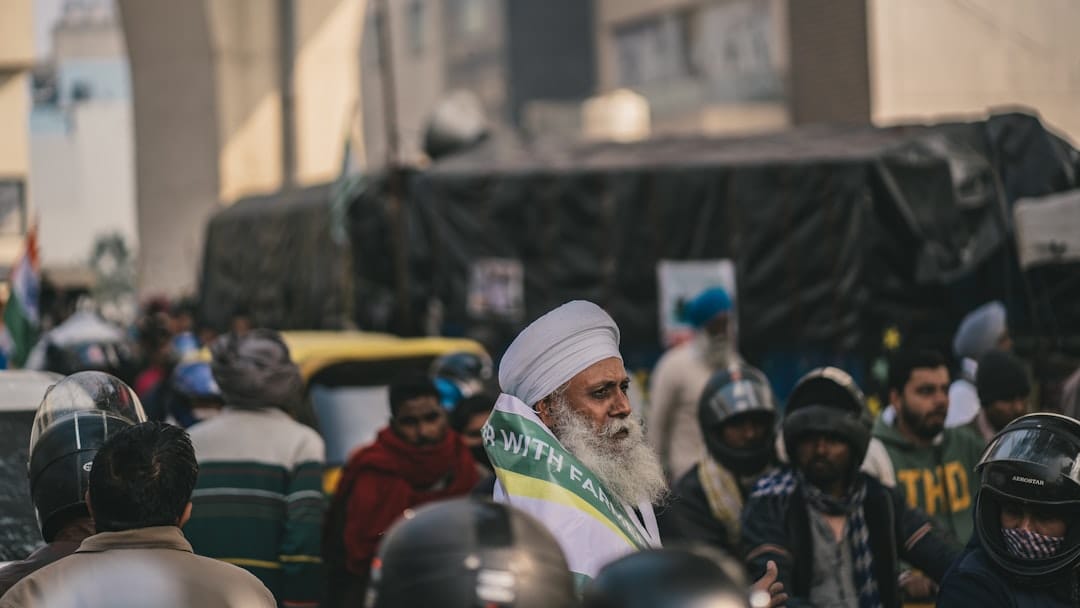
New Delhi, MMN Correspondent: Imagine studying for years, pinning your future on a single exam, only to learn the test was compromised. Then imagine the government cancels the results, orders a retake, and you watch classmates fall into despair. This is the reality for over two million aspiring medical students in India after the NEET-UG 2026 entrance exam was hit by a massive paper leak. The National Testing Agency confirmed the breach, annulled all scores, and mandated a fresh test. But the fallout didn’t stop there. In the weeks that followed, at least 18 students reportedly died by suicide, according to student advocacy groups. The numbers are unofficial but widely shared, and they have become a rallying cry for a movement demanding accountability.
Enter the Cockroach Janta Party, or CJP, a youth-led group that turned grief into action. Their demand? Transparency, reforms, and INR 1 crore in compensation for each family of a student who died from exam-related stress. That’s roughly $104,050 per family. It’s a bold figure, but it reflects the depth of pain and frustration among parents and students who feel the system failed them. The CJP framed this as both a moral and legal issue: if the system broke millions of dreams, it must pay the price.
On July 20, 2026, protesters marched peacefully toward India’s Parliament Complex, calling for the resignation of Union Education Minister Dharmendra Pradhan. The response from authorities was swift and severe. Delhi Police deployed large forces, set up barricades along key routes, and suspended metro services. Mobile internet was shut down across several districts, cutting off communication and live documentation. Eyewitnesses and social media footage show police using batons, firing tear gas, and in some cases, allegedly throwing stones at unarmed protesters. One video captures a man being dragged by his arms while officers shout at him. Human rights observers describe this as a pattern of dehumanizing treatment.
The situation escalated further when Sonam Wangchuk, a well-known environmentalist and activist, was forcibly removed from his 21-day hunger strike on July 18. He had been fasting in solidarity with the students, drawing attention to the crisis. Despite his repeated refusal to leave, Delhi Police transported him to a hospital against his will. Civil society groups and legal experts were outraged. Aakar Patel, Chair of Amnesty International India, said the images show how peaceful dissent is being suppressed. He noted that the police used unnecessary force, installed barricades to block access to parliament, and suspended metro and internet services, all of which restrict the right to peaceful assembly.
Under international law, including the Universal Declaration of Human Rights and the International Covenant on Civil and Political Rights, peaceful assembly is a protected right. Any restrictions must be lawful, necessary, and proportionate. Legal analysts argue that the current response falls short. The use of force should be a last resort, proportional to the threat. Here, demonstrators were non-violent and focused on constitutional demands. The deployment of riot gear, mass arrests, and digital blackouts raises serious questions about institutional overreach.
India’s own Constitution guarantees freedom of speech and peaceful assembly under Article 19(1)(a) and (b). Restrictions are allowed only for reasons like sovereignty, security, public order, decency, or morality. Critics say the current measures don’t even meet the basic test of necessity. Amnesty International has called for an independent investigation into allegations of excessive force, abuse of authority, and violations of medical ethics during Wangchuk’s forced hospitalization. Without transparent inquiry and accountability, trust in democratic institutions will continue to erode.
This incident has sparked a broader conversation about balancing public order with civil liberties in India. With elections approaching in 2027, the government faces pressure to show its commitment to democratic values and the rule of law. Meanwhile, the students’ plight remains unresolved. The retest for NEET-UG is scheduled for August 2026, but many are skeptical about whether the system can regain credibility. Global watchdogs are paying close attention. How authorities respond to both the protests and the underlying crisis in India’s education ecosystem will shape perceptions of justice, governance, and human dignity for years to come. The world is watching, and the stakes are high.
Related in Social Justice
Social Justice
14 Days for a Joke: How Georgia’s Satire Crackdown Could Change Free Speech Forever
What happens when a punchline lands you in a cell? That’s the question rattling through Georgia this summer after journalist Vakho Sanaia was handed a 14 day administrative detention sentence for a sarcastic Facebook post. The post mocked two prominent political figures, Speaker…
Read More...
Social Justice
How a 5-Kilometer Solar Fence in Sri Lanka Is Saving Elephants and Farmers: Inside Uga Resorts’ Bold Second Phase
Imagine a fence that doesn’t trap wildlife but teaches it to turn around. That’s exactly what Uga Resorts just unveiled in the heart of Sri Lanka’s Cultural Triangle. On July 15, 2026, the luxury hospitality group switched on a five-kilometer electric barrier near its Uga Ulagal…
Read More...
Social Justice
Peru’s New Law Lets Police and Military Judge Their Own Crimes: What It Means for Justice
Imagine a system where the people accused of wrongdoing get to choose their own judge. That’s essentially what Peru just did. On July 20, 2026, the country enacted Law 32735, a piece of legislation that allows members of the Armed Forces and Police to be investigated and prosecu…
Read More...
Social Justice
269 Dead in Kabul: Was a Drug Rehab Center a Military Target? What the Evidence Reveals
Imagine a quiet evening in March. The Ramadan fast has just been broken. Inside a sprawling medical complex in eastern Kabul, hundreds of patients are resting or gathering for evening prayers. Then, without warning, precision guided bombs tear through the buildings. Within minut…
Read More...
Social Justice
What a Woman Found on Holiday Could Save Your Life: Manchester Airport’s New Health Campaign
Imagine lying on a sunbed, miles from home, with nothing but the sound of waves and the warmth of the sun. For Kath Pryer, a 62-year-old from Prestbury, Cheshire, that peaceful moment in the Caribbean turned into something far more significant. It was during a winter getaway in…
Read More...
Social Justice
Portugal Just Banned Face Coverings in Public: What This Means for Your Rights
Portugal has just passed a law that’s turning heads across Europe and beyond. Starting July 17, 2026, you won’t be able to cover your face in any public space—streets, parks, buses, schools, or government buildings. The Portuguese Parliament approved it with a two-thirds majorit…
Read More...
Social Justice
Why São Paulo and Rio de Janeiro Are Now Top LGBTQ+ Destinations Worldwide (Time Out’s 2026 List)
What makes a city truly welcoming? Time Out’s latest Pride Month list answers that question with four Brazilian venues that aren’t just places to visit—they’re experiences that redefine what inclusive travel looks like. São Paulo and Rio de Janeiro have earned spots among the wo…
Read More...
Social Justice
20 Years of Justice: Why Africa Must Fully Embrace Its Human Rights Court Now
Twenty years ago, a bold idea took shape in the heart of East Africa. The African Court on Human and Peoples’ Rights opened its doors in Arusha, Tanzania, with a mission to protect the rights of every person across the continent. Today, as it celebrates this milestone, the Court…
Read More...
Social Justice
5 Arrested in Hong Kong Bookstore Raids: What Article 23 Means for Your Freedom to Read
On July 15, 2026, Hong Kong police conducted coordinated operations at two independent bookshops, Have a Nice Stay and Greenfield Bookstore, resulting in the arrest of five individuals on sedition charges. The timing was notable: the raids came just one day after Have a Nice Sta…
Read More...
Social Justice
What Happens When the World’s Most Powerful Nation Targets the Court That Hunts War Criminals?
On a quiet July afternoon in 2026, as survivors of the Darfur genocide sat down with International Criminal Court officials in Sudan to share their stories of loss and resilience, a very different kind of message was being prepared thousands of miles away. Secretary of State Mar…
Read More...