
20 Years of Justice: Why Africa Must Fully Embrace Its Human Rights Court Now
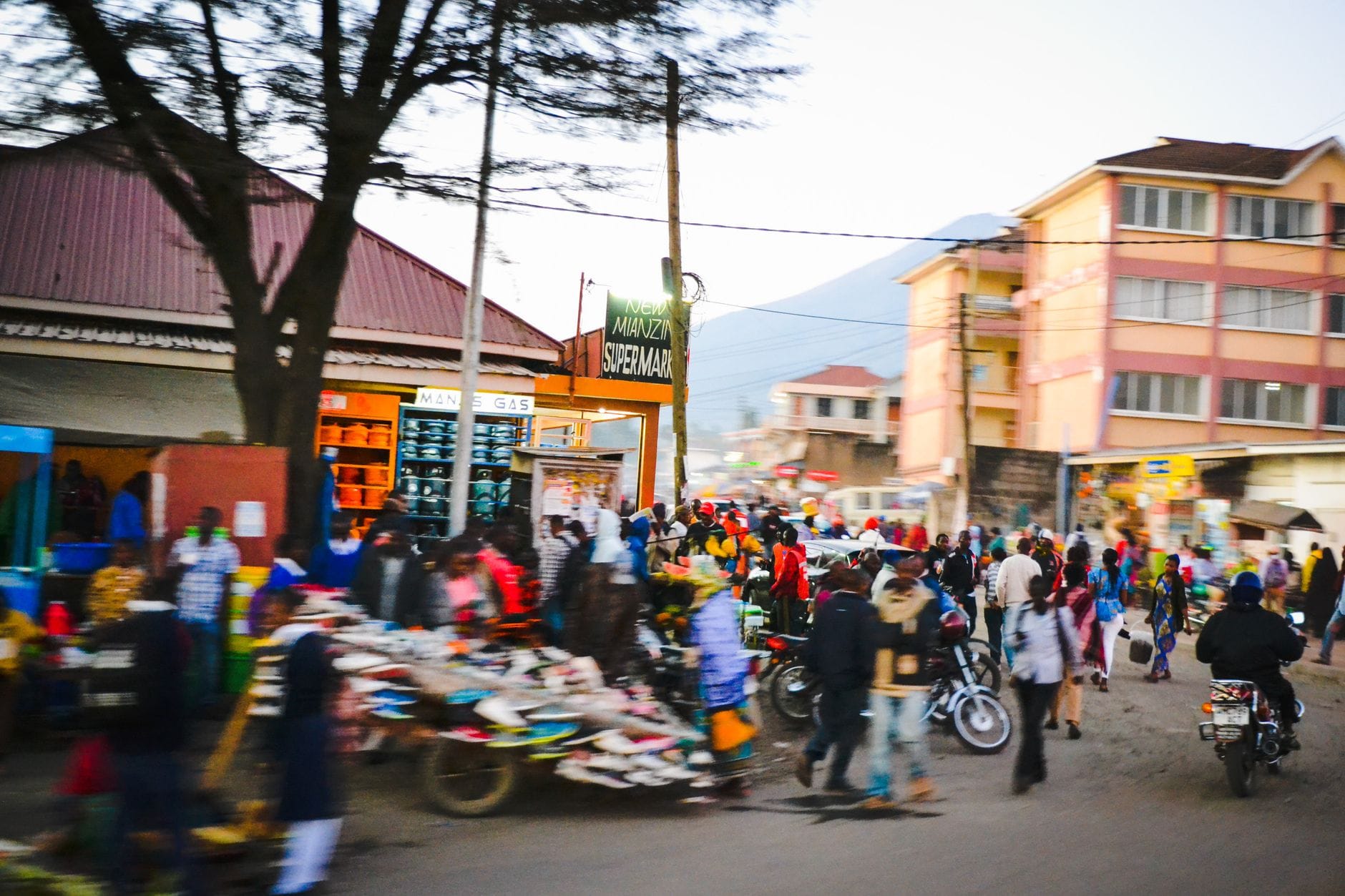
Arusha, Tanzania, MMN Correspondent: Twenty years ago, a bold idea took shape in the heart of East Africa. The African Court on Human and Peoples’ Rights opened its doors in Arusha, Tanzania, with a mission to protect the rights of every person across the continent. Today, as it celebrates this milestone, the Court stands at a crossroads. It has delivered over 250 judgments, shaped legal standards, and given hope to victims of injustice. Yet, its full potential remains untapped. Why? Because only 34 of 55 African Union member states have fully committed to it, and just a handful allow ordinary people to walk through its doors directly.
Amnesty International’s new report, ‘20 Years of the African Court – Protect the Court, Protect the People,’ arrives on World Day for International Justice. It highlights a simple truth: the Court works when we let it. Japhet Biegon, Amnesty’s Deputy Regional Director for East and Southern Africa, puts it plainly. The Court is a lifeline where national systems fail. It steps in for victims of torture, unfair detention, election fraud, environmental harm, and discrimination. It stands up for those who have nowhere else to turn.
Consider what the Court has already achieved. In 2014, it ruled against Burkina Faso, strengthening media freedom and holding the state accountable for attacks on journalists. This matters more than ever as digital repression grows. In 2017, the Court affirmed land rights for an indigenous community in Kenya, setting a powerful precedent for ancestral claims across Africa. Then, in 2023, a landmark decision against Côte d’Ivoire tackled environmental degradation. The Court ruled that toxic waste dumping violated the right to a clean environment, expanding human rights to include the planet we live on. And just this year, in 2025, the Court condemned systemic violence against persons with albinism in Tanzania, demanding urgent protective measures. These are not abstract rulings. They change lives.
But here is the challenge. Twenty-one AU member states have not even ratified the Court’s protocol. That means millions of people have no access to this regional justice mechanism. Even among the 34 that have signed on, only a dozen made the optional declaration allowing individuals and NGOs to bring cases directly. And five of those Benin, Côte d’Ivoire, Rwanda, Tanzania, and Tunisia have since withdrawn that access. The result? A geographical imbalance. Cases from Central, North, and Southern Africa are rare. The Court’s work mostly reflects West and East African experiences, which weakens its claim as a truly continental institution.
Other actors could help bridge this gap. AU member states, intergovernmental bodies, and the African Commission on Human and Peoples’ Rights all have the power to refer cases. Yet, in two decades, the Commission has referred only three cases. That is a missed opportunity for synergy. The Commission monitors human rights across Africa. If it worked more closely with the Court, the entire system would become stronger and more effective.
Implementation of rulings is another area where progress is possible. Court judgments are legally binding, but compliance varies. Some states delay compensation, policy reforms, or investigations. The AU’s Executive Council oversees implementation, but it has room to take more initiative. When states follow through, trust grows. When they don’t, the Court’s deterrent power fades.
The reasons for these gaps are not mysterious. Political resistance, weak rule-of-law traditions, and limited public awareness all play a part. The Court also operates on a modest budget, relying heavily on voluntary contributions. This affects its independence and capacity. But these are challenges that can be addressed with collective will.
Looking ahead, the path is clear. All AU member states can ratify the protocol without delay. Those that have withdrawn access can restore it. States can commit to implementing judgments, supported by robust monitoring from the AU. And stronger collaboration between the Commission and the Court can amplify impact. These steps are not just legal formalities. They are investments in a future where justice is accessible to every African.
As the continent navigates democratic transitions, climate adaptation, and technological change, the African Court remains a vital pillar. Its journey over the past 20 years shows what is possible. With sustained political will, civic engagement, and resources, it can become the beacon of justice that so many are counting on. The time has come for Africa to stand behind its own court not just in words, but in action.
Related in Social Justice
Social Justice
14 Days for a Joke: How Georgia’s Satire Crackdown Could Change Free Speech Forever
What happens when a punchline lands you in a cell? That’s the question rattling through Georgia this summer after journalist Vakho Sanaia was handed a 14 day administrative detention sentence for a sarcastic Facebook post. The post mocked two prominent political figures, Speaker…
Read More...
Social Justice
How a 5-Kilometer Solar Fence in Sri Lanka Is Saving Elephants and Farmers: Inside Uga Resorts’ Bold Second Phase
Imagine a fence that doesn’t trap wildlife but teaches it to turn around. That’s exactly what Uga Resorts just unveiled in the heart of Sri Lanka’s Cultural Triangle. On July 15, 2026, the luxury hospitality group switched on a five-kilometer electric barrier near its Uga Ulagal…
Read More...
Social Justice
Peru’s New Law Lets Police and Military Judge Their Own Crimes: What It Means for Justice
Imagine a system where the people accused of wrongdoing get to choose their own judge. That’s essentially what Peru just did. On July 20, 2026, the country enacted Law 32735, a piece of legislation that allows members of the Armed Forces and Police to be investigated and prosecu…
Read More...
Social Justice
269 Dead in Kabul: Was a Drug Rehab Center a Military Target? What the Evidence Reveals
Imagine a quiet evening in March. The Ramadan fast has just been broken. Inside a sprawling medical complex in eastern Kabul, hundreds of patients are resting or gathering for evening prayers. Then, without warning, precision guided bombs tear through the buildings. Within minut…
Read More...
Social Justice
What Happens When 2 Million Students Face a Rigged Exam? India’s Crackdown on Protesters Raises Global Questions
Imagine studying for years, pinning your future on a single exam, only to learn the test was compromised. Then imagine the government cancels the results, orders a retake, and you watch classmates fall into despair. This is the reality for over two million aspiring medical stude…
Read More...
Social Justice
What a Woman Found on Holiday Could Save Your Life: Manchester Airport’s New Health Campaign
Imagine lying on a sunbed, miles from home, with nothing but the sound of waves and the warmth of the sun. For Kath Pryer, a 62-year-old from Prestbury, Cheshire, that peaceful moment in the Caribbean turned into something far more significant. It was during a winter getaway in…
Read More...
Social Justice
Portugal Just Banned Face Coverings in Public: What This Means for Your Rights
Portugal has just passed a law that’s turning heads across Europe and beyond. Starting July 17, 2026, you won’t be able to cover your face in any public space—streets, parks, buses, schools, or government buildings. The Portuguese Parliament approved it with a two-thirds majorit…
Read More...
Social Justice
Why São Paulo and Rio de Janeiro Are Now Top LGBTQ+ Destinations Worldwide (Time Out’s 2026 List)
What makes a city truly welcoming? Time Out’s latest Pride Month list answers that question with four Brazilian venues that aren’t just places to visit—they’re experiences that redefine what inclusive travel looks like. São Paulo and Rio de Janeiro have earned spots among the wo…
Read More...
Social Justice
5 Arrested in Hong Kong Bookstore Raids: What Article 23 Means for Your Freedom to Read
On July 15, 2026, Hong Kong police conducted coordinated operations at two independent bookshops, Have a Nice Stay and Greenfield Bookstore, resulting in the arrest of five individuals on sedition charges. The timing was notable: the raids came just one day after Have a Nice Sta…
Read More...
Social Justice
What Happens When the World’s Most Powerful Nation Targets the Court That Hunts War Criminals?
On a quiet July afternoon in 2026, as survivors of the Darfur genocide sat down with International Criminal Court officials in Sudan to share their stories of loss and resilience, a very different kind of message was being prepared thousands of miles away. Secretary of State Mar…
Read More...