
450 Years for a Fireworks Protest? What the Prairieland ICE Case Means for Your Right to Speak Out
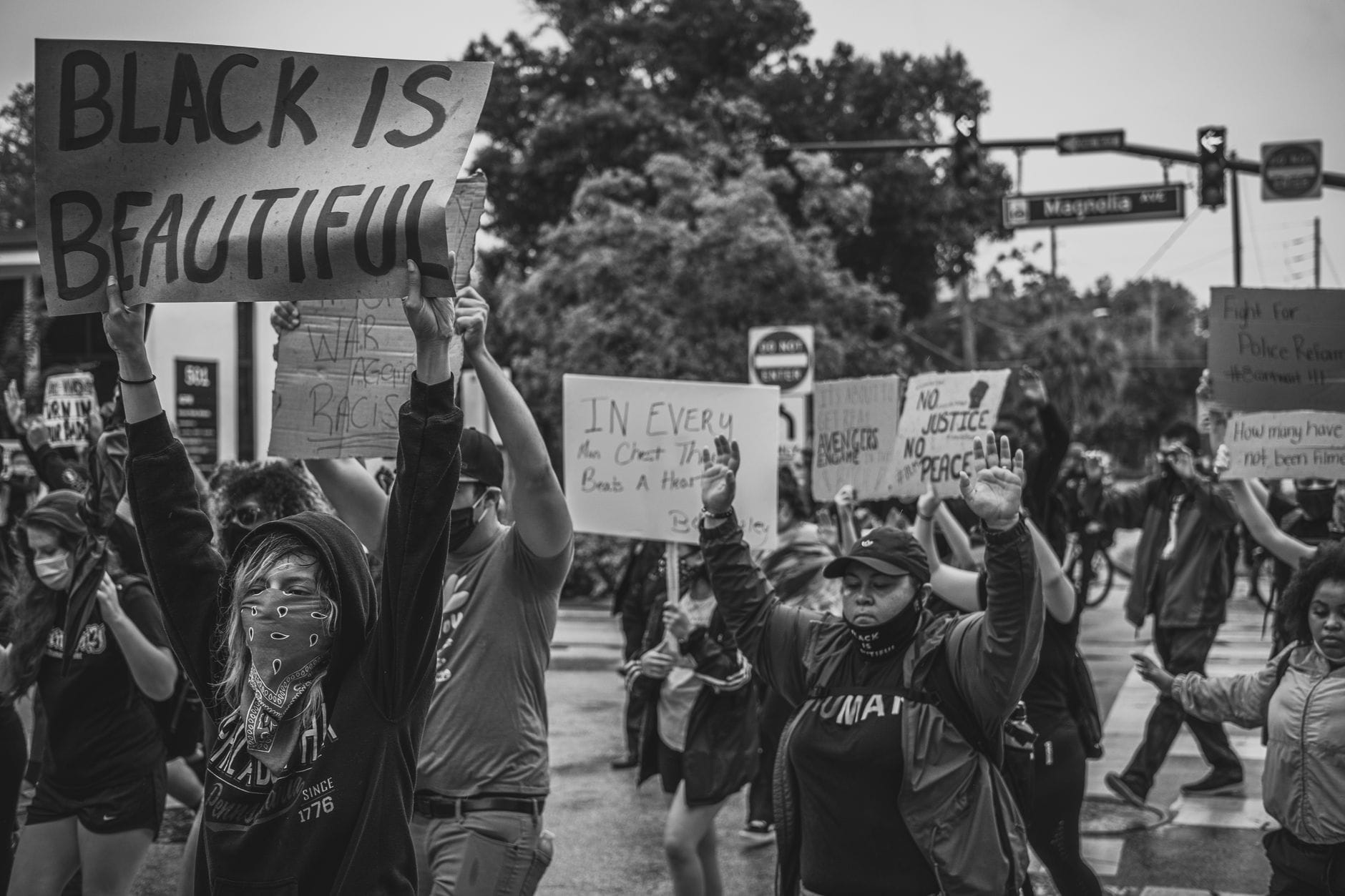
Prairieland, Texas, MMN Correspondent: Imagine planning a Fourth of July celebration to lift the spirits of people held in immigration detention. You bring fireworks, music, and a few legally carried firearms. After thirty minutes, you pack up and go home. Now imagine being told that those thirty minutes will cost you the rest of your life behind bars. That is the reality for eight people from rural north Texas, whose combined prison sentences total 450 years.
The case began on July 4, 2025, when about eleven people gathered outside the Prairieland Detention Center, an ICE facility. Their goal was simple: show solidarity with detainees through a festive noise demonstration. They coordinated through a Signal group chat, brought coolers of colorful fireworks, and some carried firearms, which is legal under Texas law for public protests. After roughly half an hour, the group dispersed peacefully. No one was hurt. No property was damaged. The celebration was over.
Then Lieutenant Thomas Gross of the local police arrived, called by detention center staff. What happened next changed everything. As one protester ran, Gross drew his weapon and aimed at the retreating figure. In response, Benjamin Song, another demonstrator, fired eight rounds into the ground. His supporters say he was trying to prevent further violence. Gross sustained a minor shoulder wound, later confirmed as a graze, and returned to duty the same day.
Federal prosecutors charged all nine defendants with providing material support for terrorism, a charge typically reserved for violent extremist networks. The trial concluded in March 2026 with guilty verdicts for everyone, including Savanna Batten, Daniel Sanchez-Estrada, who was not present but convicted for moving anarchist literature, and Song, who received 100 years for attempted murder.
What makes this sentencing extraordinary is not just the length but the legal architecture behind it. U.S. District Judge Reed O’Conner applied the most severe federal sentencing enhancement available, known as the terrorism enhancement, to every count. He also ordered that all sentences run consecutively rather than concurrently. This decision transformed what might have been a 20 to 30 year sentence into multiple lifetimes behind bars. Judge O’Conner labeled each defendant a violent extremist during sentencing, despite no prior criminal records or evidence of past violence. His stated rationale was deterrence: he argued that long prison terms were necessary to prevent future protests against immigration enforcement.
Legal experts have pointed to several procedural irregularities throughout the trial. The jury pool was dismissed without explanation. Self-defense arguments were barred. Prosecutors introduced irrelevant evidence, including social media posts unrelated to the protest. The defense maintains that Song’s gunfire was a ricochet from Gross’s own shot, supported by video footage and ballistic analysis. They argue that Song’s actions likely prevented a bloodbath, saving lives.
The disparity between this case and others is hard to ignore. Participants in the January 6 Capitol riot received sentences ranging from 8 to 20 years. The Prairieland defendants, most of whom engaged in nonviolent symbolic resistance, are now facing life sentences. This has fueled accusations of selective prosecution based on political ideology.
Broader context matters here. Since 2025, a coordinated shift in U.S. law enforcement strategy has emerged, tied to Project 2025, a conservative policy blueprint developed by the Heritage Foundation. Trump-appointed judges, Department of Justice officials, and FBI investigators have advanced a framework targeting left-wing activism under the guise of national security. In September 2025, President Trump signed an executive order designating antifa, a decentralized movement rather than an organization, as a domestic terrorist entity. This move enabled broad surveillance and prosecution of activists, even though the FBI had closed its Fort Worth investigation into antifa groups in 2018, concluding they posed no threat.
Many of the defendants are currently held in administrative segregation at Johnson County Jail, conditions described as psychologically torturous. Defendants like Autumn Hill and Meagan Morris, both transgender women, are housed in men’s facilities and routinely subjected to deadnaming in official documents despite court-ordered name changes. They endure frequent strip searches by male guards, inadequate medical care, and meals containing allergens such as peanuts, despite known allergies. Johnson County Jail has a documented history of abuse. A 2021 lawsuit revealed that inmates were confined naked in refrigerated suicide cells to extract confessions. Sheriff Adam King, who oversees the jail, faces multiple allegations of sexual harassment, retaliation, and official oppression, with two additional cases pending pretrial.
Families and supporters have formed a dedicated committee to sustain the defendants’ well-being. Weekly meetings coordinate efforts to send food, legal funds, and letters of encouragement. One defendant suffers from Celiac disease and requires gluten-free meals, which must be carefully sourced and delivered. Savanna Batten, sentenced to 50 years, expressed her only desire upon release: to roll in the grass on a prairie, reconnect with her cats, and simply feel free. Her words underscore the human cost of a system increasingly focused on punishment over justice.
Advocates stress that attention is the most powerful tool. The initial silence surrounding the case gave the government its greatest advantage. Now, they urge the public to amplify voices, flood commissaries with donations, and demand accountability. As Xavier T. de Janon of the National Lawyers Guild stated, the process is the punishment. With the Prairieland case, the United States appears to be crossing a line, not just in sentencing, but in defining dissent. When protesting immigration detention becomes a gateway to life imprisonment, it raises urgent questions about freedom, fairness, and the future of democracy itself.
Related in Social Justice

Social Justice
Africa’s Albinism Crisis: 2025 Court Ruling That Could Save 100,000 Lives
Imagine being hunted for your body parts. Not because of a crime you committed, but because of a condition you were born with. For tens of thousands of people across Africa, this is not a horror movie. It is daily life. But in February 2025, a single court decision changed every…
Read More...
Social Justice
What Happened After 28 Died in Sri Lanka’s Prison Riots? Two More Inmates Dead in Transfer – Demands for Answers Grow
Just days after a brutal two day clash inside Negombo Prison left at least 28 people dead and over 100 injured, two more inmates have died. Not from the violence inside the walls, but shortly after being moved to other facilities. The question now is: what really happened during…
Read More...
Social Justice
What 50 Years of Civil Rights Battles in North Carolina Can Teach Us About the Future of Voting Access
What does it take to keep fighting for justice when the rules keep changing? On July 21, 2026, two of North Carolina’s most influential civil rights figures will sit down together in Durham to answer that question. Leslie Winner and Angela Bryant have spent decades on the front…
Read More...
Social Justice
What North Carolina’s Civil Rights Icons Reveal About Voting Rights in 2026: A Fireside Chat You Can’t Miss
Imagine sitting just a few feet away from the people who literally rewrote the rules of American democracy. That’s the kind of evening the Southern Coalition for Social Justice is offering on July 21, 2026. They’re hosting a fireside conversation called *North Carolina Icons: Th…
Read More...
Social Justice
What Happens When a Peaceful Protest Against a Coal Mine Leads to a 2-Year Prison Sentence? The Esra Işık Case in Turkey
Imagine standing up for a forest you love, a place where your neighbors grow food and your children play. Now imagine that act of peaceful protest lands you in court, facing prison time. That is exactly what happened to Esra Işık, a Turkish environmental activist whose recent co…
Read More...
Social Justice
3 Sahel Nations Exit ICC: What This Means for Justice in West Africa
In a move that has captured global attention, Burkina Faso, Mali, and Niger have officially notified the United Nations of their decision to withdraw from the Rome Statute, the treaty that created the International Criminal Court (ICC). The UN Secretary General confirmed this de…
Read More...
Social Justice
What Happens When a Country Silences Its Media? Uganda’s Crackdown on Journalists and Activists Explained
On a single day in late June, Uganda’s media landscape changed dramatically. Six major news outlets were shut down. Journalists were locked out of their offices. Equipment was seized. No court order was shown. No public explanation was given. The question on many minds is simple…
Read More...
Social Justice
What Happens When a NATO Host City Bans All Protests for 13 Days? Turkey’s Move Raises Questions
Imagine your city suddenly goes silent. Not the quiet of a holiday, but the kind of silence that comes when the right to gather, to speak, to hold a sign, is taken away. That is exactly what is happening in Ankara right now. As Turkey prepares to host the 36th NATO Summit, autho…
Read More...
Social Justice
6.8 Magnitude Earthquake Hits Venezuela: What the Disaster Response Reveals About Human Rights
On the afternoon of June 24, 2026, the ground shook across Venezuela. A 6.8 magnitude earthquake struck multiple regions, from the northern coastal states to the central highlands. Within hours, neighborhoods in Maracaibo, Valencia, and Barquisimeto were reduced to rubble. Thous…
Read More...
Social Justice
40% of Executions Are for Drug Crimes: Why Global Drug Policy Needs a Human Rights Overhaul
Imagine a world where more than four out of every ten executions are for crimes that didn’t involve violence. That’s not a hypothetical scenario. It’s the reality we’re living in right now. According to independent monitors like Amnesty International and Harm Reduction Internati…
Read More...