
What Happens When a NATO Host City Bans All Protests for 13 Days? Turkey’s Move Raises Questions
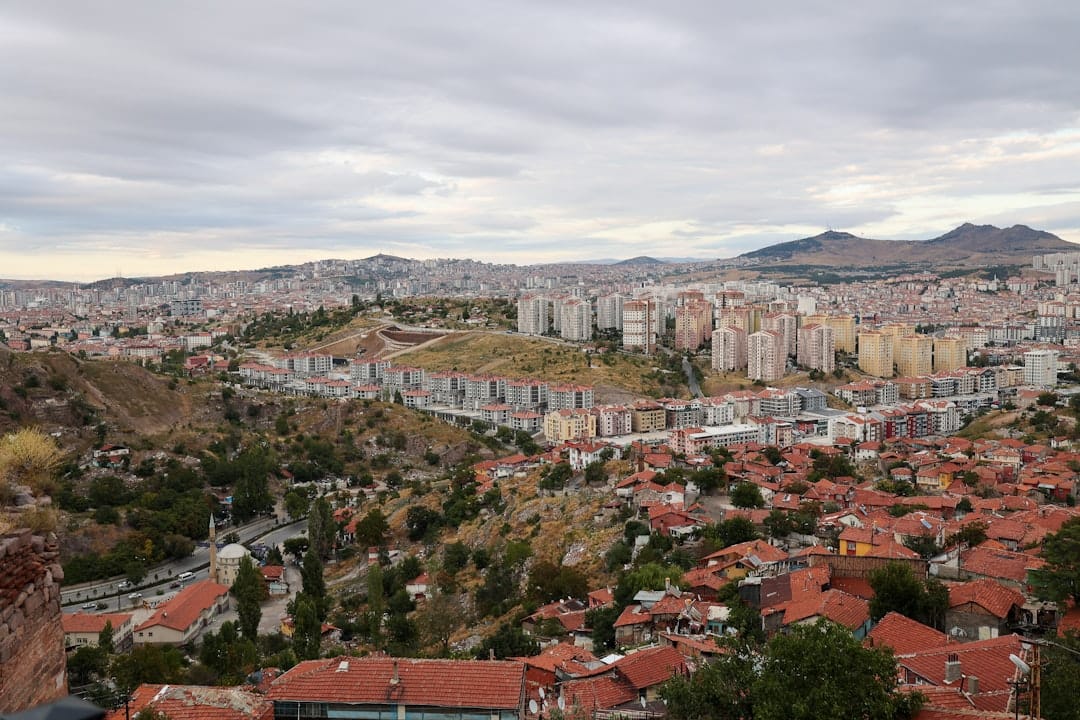
Ankara, Turkey, MMN Correspondent: Imagine your city suddenly goes silent. Not the quiet of a holiday, but the kind of silence that comes when the right to gather, to speak, to hold a sign, is taken away. That is exactly what is happening in Ankara right now. As Turkey prepares to host the 36th NATO Summit, authorities have announced a 13 day ban on all public protests across the capital. The clock started ticking on June 28 and will not stop until July 10, 2026.
The official reason? National security and the logistical puzzle of hosting dozens of world leaders. The Ankara Governorate says the ban is necessary to protect sensitive areas like the summit venue, hotels for foreign delegations, and the routes they will travel. On the surface, that sounds reasonable. But when you look closer, the scope of this ban covers the entire city, not just the summit zone. And that is where the questions begin.
Just days before the ban took effect, on June 23, Turkish authorities carried out a series of early morning raids. The result? 225 people detained. According to the Ankara Chief Public Prosecutor’s Office, 135 of them were sent to court with requests for pretrial detention. Of those, 103 were formally arrested, and 26 were placed under house arrest or other judicial controls. Among those swept up are lawyers, academics, activists, and journalists. People whose work often involves asking tough questions about how the state operates.
Esther Major, Deputy Director of Research for Europe at Amnesty International, did not mince words. She called the measures an excessive attack on the rights to peaceful assembly and expression. Her point is simple: pretrial detention should be a last resort, not a tool to stop people from exercising their legal rights. She said this is not about security. It is about silencing voices. And when vague national security claims are used to justify arbitrary detentions, it sets a pattern that can be hard to reverse.
But the story does not stop at the protest ban. NATO itself has made a decision that is drawing fire. The alliance denied accreditation to several journalists and media outlets based in Turkey. The reason given? Concerns over editorial independence and perceived government influence. Critics say this move undermines press freedom at a time when transparency matters most. Amnesty International has called on NATO to reverse its stance and let accredited journalists cover the summit. The fear is that without independent media on the ground, key developments could go unreported.
This crackdown is not happening in a vacuum. Over the past few years, Turkey has steadily tightened rules on public gatherings, especially in big cities like Ankara and Istanbul. Critics point to a pattern where broad legal frameworks, such as Article 314 of the Turkish Penal Code, are used to detain people without solid evidence. In this context, the current wave of arrests looks less like a response to real threats and more like a preemptive move to silence potential criticism during a high profile diplomatic event.
NATO summits have historically been moments of global diplomacy and strategic alignment. They also attract public attention. In Madrid in 2022 and Brussels in 2018, large peaceful demonstrations took place, with people calling for climate action, refugee rights, and accountability. Those events showed how international forums can become platforms for civic engagement. In Ankara, the atmosphere is different. Citizens are facing restrictions that go far beyond what is typical for such gatherings.
Human rights experts remind us that lawful protest is a cornerstone of democratic societies. Governments have a duty to balance security with constitutional obligations. The United Nations Principles on the Right to Peaceful Assembly state that any limitations must be necessary, proportionate, and clearly defined by law. The blanket ban in Ankara does not meet these standards. It applies uniformly across the entire city, regardless of location or intent. That effectively criminalizes peaceful expression.
There is also a growing concern about the use of house arrest and prolonged pretrial detention. According to the Turkish Bar Association, over 1,200 people were held in pretrial detention in 2025 alone, many under national security laws. The latest arrests add to this trend, raising questions about judicial independence and the rule of law. When detention becomes a routine response to dissent, it changes the relationship between citizens and the state.
As the NATO summit approaches, the international community is paying close attention. Diplomatic missions, NGOs, and human rights advocates are urging Turkish authorities to lift the protest ban and release those detained without sufficient grounds. They warn that failing to do so could damage Turkey’s standing on the global stage and erode trust in its commitment to democratic values.
The coming days will reveal whether Turkey chooses to uphold its international obligations or deepen a climate of repression under the banner of security. For now, the streets of Ankara are quiet. Not because there is no dissent, but because fear has taken hold. As the world watches, one question lingers: Can democracy survive when protest is outlawed before it even begins?
Global watchdogs continue to monitor the situation, calling for transparency and respect for human rights. The fate of dozens of detainees, the future of media coverage, and the integrity of the summit itself are all in the balance. The world is waiting to see whether Turkey will choose inclusion over exclusion, dialogue over detention, and freedom over fear.
Related in Social Justice
Social Justice
Africa’s Albinism Crisis: 2025 Court Ruling That Could Save 100,000 Lives
Imagine being hunted for your body parts. Not because of a crime you committed, but because of a condition you were born with. For tens of thousands of people across Africa, this is not a horror movie. It is daily life. But in February 2025, a single court decision changed every…
Read More...
Social Justice
What Happened After 28 Died in Sri Lanka’s Prison Riots? Two More Inmates Dead in Transfer – Demands for Answers Grow
Just days after a brutal two day clash inside Negombo Prison left at least 28 people dead and over 100 injured, two more inmates have died. Not from the violence inside the walls, but shortly after being moved to other facilities. The question now is: what really happened during…
Read More...
Social Justice
What 50 Years of Civil Rights Battles in North Carolina Can Teach Us About the Future of Voting Access
What does it take to keep fighting for justice when the rules keep changing? On July 21, 2026, two of North Carolina’s most influential civil rights figures will sit down together in Durham to answer that question. Leslie Winner and Angela Bryant have spent decades on the front…
Read More...
Social Justice
What North Carolina’s Civil Rights Icons Reveal About Voting Rights in 2026: A Fireside Chat You Can’t Miss
Imagine sitting just a few feet away from the people who literally rewrote the rules of American democracy. That’s the kind of evening the Southern Coalition for Social Justice is offering on July 21, 2026. They’re hosting a fireside conversation called *North Carolina Icons: Th…
Read More...
Social Justice
What Happens When a Peaceful Protest Against a Coal Mine Leads to a 2-Year Prison Sentence? The Esra Işık Case in Turkey
Imagine standing up for a forest you love, a place where your neighbors grow food and your children play. Now imagine that act of peaceful protest lands you in court, facing prison time. That is exactly what happened to Esra Işık, a Turkish environmental activist whose recent co…
Read More...
Social Justice
3 Sahel Nations Exit ICC: What This Means for Justice in West Africa
In a move that has captured global attention, Burkina Faso, Mali, and Niger have officially notified the United Nations of their decision to withdraw from the Rome Statute, the treaty that created the International Criminal Court (ICC). The UN Secretary General confirmed this de…
Read More...
Social Justice
450 Years for a Fireworks Protest? What the Prairieland ICE Case Means for Your Right to Speak Out
Imagine planning a Fourth of July celebration to lift the spirits of people held in immigration detention. You bring fireworks, music, and a few legally carried firearms. After thirty minutes, you pack up and go home. Now imagine being told that those thirty minutes will cost yo…
Read More...
Social Justice
What Happens When a Country Silences Its Media? Uganda’s Crackdown on Journalists and Activists Explained
On a single day in late June, Uganda’s media landscape changed dramatically. Six major news outlets were shut down. Journalists were locked out of their offices. Equipment was seized. No court order was shown. No public explanation was given. The question on many minds is simple…
Read More...
Social Justice
6.8 Magnitude Earthquake Hits Venezuela: What the Disaster Response Reveals About Human Rights
On the afternoon of June 24, 2026, the ground shook across Venezuela. A 6.8 magnitude earthquake struck multiple regions, from the northern coastal states to the central highlands. Within hours, neighborhoods in Maracaibo, Valencia, and Barquisimeto were reduced to rubble. Thous…
Read More...
Social Justice
40% of Executions Are for Drug Crimes: Why Global Drug Policy Needs a Human Rights Overhaul
Imagine a world where more than four out of every ten executions are for crimes that didn’t involve violence. That’s not a hypothetical scenario. It’s the reality we’re living in right now. According to independent monitors like Amnesty International and Harm Reduction Internati…
Read More...