
What North Carolina’s Civil Rights Icons Reveal About Voting Rights in 2026: A Fireside Chat You Can’t Miss

Durham, North Carolina, MMN Correspondent: Imagine sitting just a few feet away from the people who literally rewrote the rules of American democracy. That’s the kind of evening the Southern Coalition for Social Justice is offering on July 21, 2026. They’re hosting a fireside conversation called *North Carolina Icons: The Long View on the Flight for Civil Rights*, and it brings together two figures whose fingerprints are all over the voting rights landscape: Leslie Winner and Angela Bryant. They’ll be joined by Hilary Harris Klein, SCSJ’s Senior Counsel for Voting Rights. This isn’t a lecture. It’s a chance to hear the real stories behind the legal battles that shaped how millions of people vote today.
Let’s start with Leslie Winner. If you’ve ever heard of the *Gingles* test, you’ve heard of her work. Back in 1986, she was the lead trial attorney in *Thornburg v. Gingles*, a case that went all the way to the U.S. Supreme Court and changed voting rights across the South. The issue was simple but devastating: North Carolina’s at-large electoral system in the 4th congressional district was diluting the power of Black voters. Winner’s legal strategy was so effective that the Court unanimously created the *Gingles preconditions*—a framework that courts still use today to decide when minority communities deserve protection under Section 2 of the Voting Rights Act. That ruling led to the creation of majority-minority districts, giving Black citizens a real chance to elect candidates who represented them. It’s one of those rare legal victories that actually changed the map.
But here’s the thing about progress: it never stays still. After *Gingles*, North Carolina saw a surge in Black voter registration and turnout, especially through the 1990s and early 2000s. Then came the backlash. In 2013, the Supreme Court’s *Shelby County v. Holder* decision gutted the preclearance requirement of the Voting Rights Act, removing federal oversight from states like North Carolina with a history of discrimination. Almost immediately, new restrictions appeared: strict photo ID laws, shorter early voting windows, and polling place closures in predominantly Black neighborhoods. The gains from *Gingles* started to erode.
That’s where Angela Bryant enters the picture. A former member of the North Carolina General Assembly, Bryant has spent more than forty years fighting for racial and economic justice. She’s worked on housing reform, education equity, and voting rights protections. When the state passed its 2013 Voter ID law, Bryant was at the forefront of the challenge, helping to show how the law disproportionately affected Black and low-income voters. Her career is a living reminder that civil rights victories aren’t permanent. They require constant defense, renewal, and expansion. Each generation has to pick up the baton.
The timing of this fireside chat couldn’t be more relevant. The 2023 Supreme Court decision in *Brnovich v. Democratic National Committee* further narrowed the Voting Rights Act, making it harder to challenge discriminatory practices. For North Carolina, where the legacy of Jim Crow still shows up in subtle policy choices, the stakes are high. Winner, Bryant, and Klein will explore how legal strategies, community organizing, and policy innovation can adapt to this new reality. They’ll talk about what works, what doesn’t, and what’s next.
What makes this event special is the format. A fireside chat isn’t a panel with talking points. It’s intimate. You’ll hear personal stories—the courtroom victories, the moments of doubt, the quiet persistence that keeps activists going year after year. These narratives bring the data to life. Behind every voting restriction is a human story of dignity and resistance. Hearing it directly from the people who lived it changes how you understand the fight.
North Carolina has always been a battleground for democracy. From the Greensboro sit-ins in 1960 to the current push for fair elections, the state has been at the center of the struggle. According to the Brennan Center for Justice, North Carolina ranks among the top five states for the most restrictive voting laws enacted since 2010. But it also leads in voter mobilization, with groups like SCSJ, the NAACP Legal Defense Fund, and local coalitions working to counter disenfranchisement. The state is a living case study in how democracy can be both challenged and strengthened.
The event takes place at 5517 Durham Chapel Hill Blvd in Durham, a city with deep civil rights roots. Durham is home to North Carolina Central University, a historically Black university, and has long been a hub for labor and social justice movements. Holding the conversation here grounds it in a specific place and history. It’s not just an abstract discussion. It’s rooted in the community that has been fighting for justice for generations.
If you can’t make it in person, remote attendance is available. Registration is open to everyone—legal professionals, activists, students, educators, and anyone curious about how past struggles inform present actions. The goal is to reach as many people as possible, because these lessons belong to everyone.
Looking forward, the insights from Winner and Bryant could shape the next wave of advocacy. Their experience with coalition-building, legislative strategy, and public engagement offers practical wisdom for a new generation. As voter suppression tactics evolve—from digital disinformation to gerrymandering—the need for informed, resilient leadership grows. This conversation isn’t just about looking back. It’s about equipping people for what comes next.
Ultimately, *North Carolina Icons: The Long View on the Flight for Civil Rights* is a call to action. It’s a reminder that justice isn’t a destination. It’s a continuous process that requires vigilance, unity, and commitment. The voices of Leslie Winner and Angela Bryant show that change is possible. But only if we stay engaged, stay informed, and stay in the fight.
Related in Social Justice
Social Justice
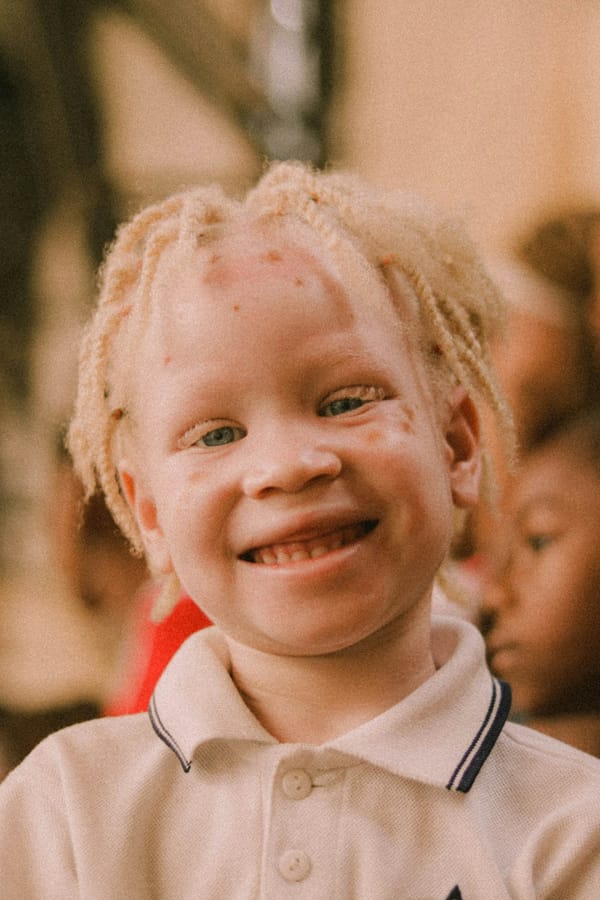
Africa’s Albinism Crisis: 2025 Court Ruling That Could Save 100,000 Lives
Imagine being hunted for your body parts. Not because of a crime you committed, but because of a condition you were born with. For tens of thousands of people across Africa, this is not a horror movie. It is daily life. But in February 2025, a single court decision changed every…
Read More...
Social Justice
What Happened After 28 Died in Sri Lanka’s Prison Riots? Two More Inmates Dead in Transfer – Demands for Answers Grow
Just days after a brutal two day clash inside Negombo Prison left at least 28 people dead and over 100 injured, two more inmates have died. Not from the violence inside the walls, but shortly after being moved to other facilities. The question now is: what really happened during…
Read More...
Social Justice
What 50 Years of Civil Rights Battles in North Carolina Can Teach Us About the Future of Voting Access
What does it take to keep fighting for justice when the rules keep changing? On July 21, 2026, two of North Carolina’s most influential civil rights figures will sit down together in Durham to answer that question. Leslie Winner and Angela Bryant have spent decades on the front…
Read More...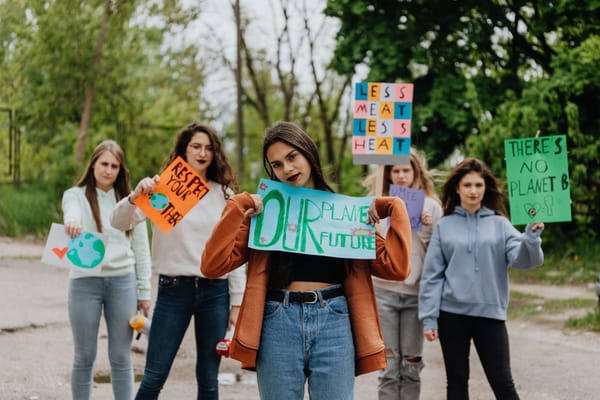
Social Justice
What Happens When a Peaceful Protest Against a Coal Mine Leads to a 2-Year Prison Sentence? The Esra Işık Case in Turkey
Imagine standing up for a forest you love, a place where your neighbors grow food and your children play. Now imagine that act of peaceful protest lands you in court, facing prison time. That is exactly what happened to Esra Işık, a Turkish environmental activist whose recent co…
Read More...
Social Justice
3 Sahel Nations Exit ICC: What This Means for Justice in West Africa
In a move that has captured global attention, Burkina Faso, Mali, and Niger have officially notified the United Nations of their decision to withdraw from the Rome Statute, the treaty that created the International Criminal Court (ICC). The UN Secretary General confirmed this de…
Read More...
Social Justice
450 Years for a Fireworks Protest? What the Prairieland ICE Case Means for Your Right to Speak Out
Imagine planning a Fourth of July celebration to lift the spirits of people held in immigration detention. You bring fireworks, music, and a few legally carried firearms. After thirty minutes, you pack up and go home. Now imagine being told that those thirty minutes will cost yo…
Read More...
Social Justice
What Happens When a Country Silences Its Media? Uganda’s Crackdown on Journalists and Activists Explained
On a single day in late June, Uganda’s media landscape changed dramatically. Six major news outlets were shut down. Journalists were locked out of their offices. Equipment was seized. No court order was shown. No public explanation was given. The question on many minds is simple…
Read More...
Social Justice
What Happens When a NATO Host City Bans All Protests for 13 Days? Turkey’s Move Raises Questions
Imagine your city suddenly goes silent. Not the quiet of a holiday, but the kind of silence that comes when the right to gather, to speak, to hold a sign, is taken away. That is exactly what is happening in Ankara right now. As Turkey prepares to host the 36th NATO Summit, autho…
Read More...
Social Justice
6.8 Magnitude Earthquake Hits Venezuela: What the Disaster Response Reveals About Human Rights
On the afternoon of June 24, 2026, the ground shook across Venezuela. A 6.8 magnitude earthquake struck multiple regions, from the northern coastal states to the central highlands. Within hours, neighborhoods in Maracaibo, Valencia, and Barquisimeto were reduced to rubble. Thous…
Read More...
Social Justice
40% of Executions Are for Drug Crimes: Why Global Drug Policy Needs a Human Rights Overhaul
Imagine a world where more than four out of every ten executions are for crimes that didn’t involve violence. That’s not a hypothetical scenario. It’s the reality we’re living in right now. According to independent monitors like Amnesty International and Harm Reduction Internati…
Read More...