
68% of Americans Want Answers: Inside the Pentagon’s 2026 UFO File Dump (37 New Cases Analyzed)
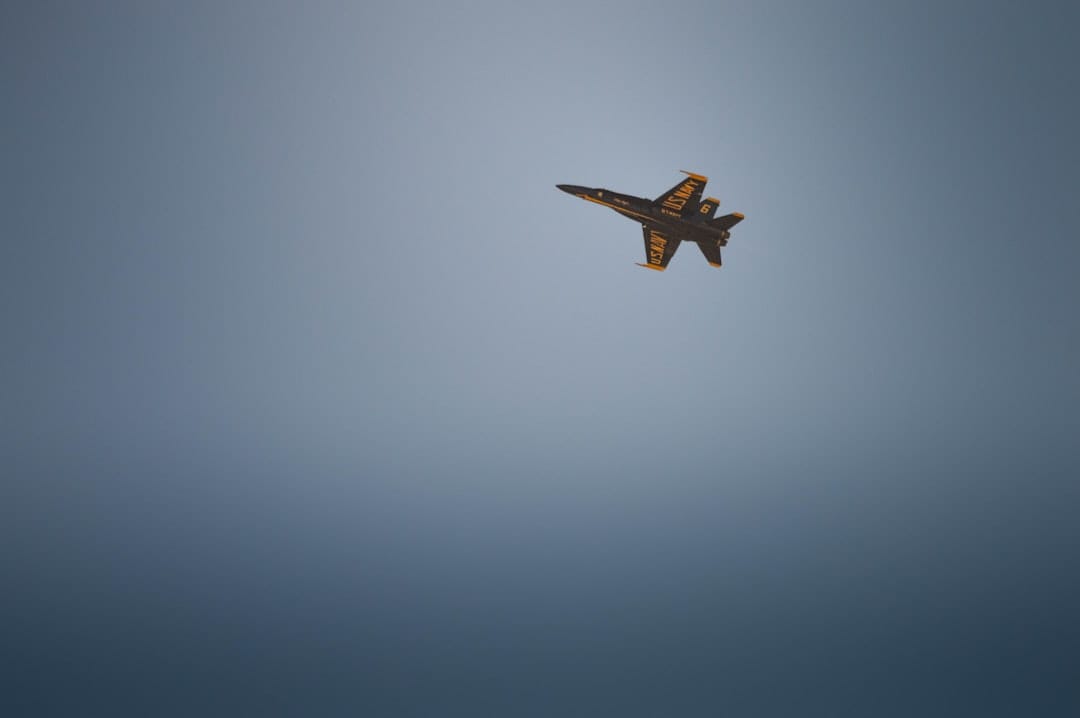
Washington D.C., MMN Correspondent: The U.S. Department of Defense just dropped its third batch of classified UFO files in June 2026, and this one is different. We are talking over 150 pages of declassified audio transcripts, radar data, and pilot testimony covering 37 incidents between 2014 and 2023. These encounters happened off the coasts of California, Florida, Hawaii, and even near Alaska and the Pacific Ocean. What makes this release stand out is not just the volume but the inclusion of technical analyses from the Navy’s Unidentified Aerial Phenomena Task Force (UAPTF), which used to operate under strict confidentiality.
One case from October 2021 involves a U.S. Navy F/A-18 fighter jet intercepting an object near the Pacific Fleet’s operational zone. The pilot described it as a non-maneuverable, cigar-shaped craft moving at high speed without visible propulsion or exhaust. Radar tracking confirmed its presence for nearly 15 minutes, during which it performed abrupt directional changes inconsistent with known aircraft physics. The object was recorded on infrared sensors showing no thermal signature, which defies conventional understanding of aerodynamics and heat emission.
Another high-profile incident occurred in January 2022 near the USS Ronald Reagan carrier group. Multiple crew members reported observing a bright, silvery disc hovering silently above the ocean surface for approximately eight minutes before vanishing without a trace. The event was captured by both onboard cameras and satellite surveillance systems. Analysis by the UAPTF concluded that the object exhibited flight characteristics beyond current human-made technology, including instantaneous acceleration and deceleration patterns that could not be replicated by any known drone or missile system.
These disclosures come amid growing public demand for answers. According to a 2025 Pew Research Center survey, 68% of Americans believe the U.S. government knows more about UFOs than it publicly admits. The release of these files may represent a strategic effort to address skepticism while maintaining national security protocols. Officials emphasize that the primary goal remains safety: ensuring that military pilots are prepared for potential threats, whether they originate from foreign adversaries or unknown technological sources.
The Pentagon’s decision to disclose such sensitive information also reflects a broader geopolitical context. In recent years, several nations including Canada, France, and Australia have launched their own investigations into UAPs. The European Union established a dedicated UAP monitoring unit in early 2024, and Japan has begun sharing radar data with allied forces regarding anomalous air activity. This international alignment suggests a coordinated effort to assess risks and develop standardized response frameworks.
Scientific communities remain divided. While some researchers argue that many UAP sightings can be attributed to atmospheric anomalies, experimental drones, or sensor misinterpretations, others point to recurring patterns that defy explanation. Dr. Sarah Lin, an astrophysicist at MIT, noted in a recent conference that the consistency in how these objects behave, especially their ability to hover, accelerate instantly, and operate without detectable energy signatures, suggests we may be dealing with something fundamentally different from anything in our current scientific models.
Despite the lack of definitive proof of extraterrestrial origin, the Pentagon’s continued releases have prompted renewed interest in the possibility of non-human intelligence. The UAPTF has officially stated that none of the cases in the latest batch provide conclusive evidence of alien life, but they acknowledge that some phenomena remain unexplained due to insufficient data or limitations in current detection technology.
The implications extend beyond science and defense. The release has sparked discussions in educational institutions, where universities like Stanford and Johns Hopkins now offer elective courses on UAP research, focusing on data analysis, aerospace engineering, and interstellar communication theory. Meanwhile, private sector companies are investing in advanced sensor networks and AI-driven anomaly detection systems, anticipating future regulatory needs and commercial applications.
Looking ahead, the Pentagon has announced plans for a fourth release later in 2026, which will include full video footage from cockpit-mounted cameras and enhanced geospatial mapping of UAP trajectories. Experts predict that these materials could lead to breakthroughs in propulsion science, stealth technology, and even new branches of physics.
As the world watches, one thing is clear: the era of silence around UFOs is ending. Whether these phenomena represent technological advancements from rival nations, undiscovered natural phenomena, or something far more profound, the pursuit of truth continues. With each file unveiled, humanity inches closer to understanding what truly flies in the skies and what lies beyond our current comprehension.
The ongoing revelations underscore a pivotal moment in modern history: a time when governments, scientists, and citizens alike are confronting the unknown with unprecedented openness and curiosity.
Related in Space Tech

Space Tech
Elon Musk Admits He Was Wrong About Anthropic, Tesla’s Self-Driving Nears an Inflection Point, and NASA’s Roman Telescope Prepares for Launch: Three Stories Defining 2026
On a Tuesday morning in June, Elon Musk did something rare in the world of tech billionaires. He admitted he was wrong. Not in a quiet, buried-in-a-footnote kind of way, but publicly, on his own platform X. The target of his reversal? Anthropic, the AI company he had dismissed j…
Read More...
Space Tech
Miami Now Has Driverless Taxis Operating Without Any Human Oversight: Here’s What Tesla’s Robotaxi Launch Means for You
Imagine hailing a taxi in Miami, climbing in, and realizing there’s no one behind the wheel. No safety driver. No remote monitor. Just you, the car, and the open road. That scenario is no longer a test or a demo. It’s live. Tesla has officially launched its Robotaxi service in M…
Read More...
Space Tech
Your Tesla Will Soon Learn Your Neighborhood by Voice: 3 Ways FSD Remembers Every Detail
Tesla is quietly rolling out a feature that could change how you think about your car. Instead of relying on GPS pins that sometimes point to the wrong house, your Full Self-Driving system will soon learn your street the way a local does. You speak. It remembers. No maps require…
Read More...
Space Tech
Tesla App Update 2026: How Owners Now Manage a Robotaxi Fleet from Their Phone
Imagine glancing at your phone and seeing your car driving itself across town, earning money while you sip coffee at home. That’s not a sci-fi fantasy anymore. A recent Tesla app update, quietly rolled out in late June 2026 as part of software version 4.58.5, has turned every ow…
Read More...
Space Tech
SpaceXAI Is Here: How a $1.25 Trillion Merger Is Building Orbital Data Centers for the Next AI Era
When Elon Musk announced in May 2026 that xAI would vanish as a standalone company, most people assumed it was just another corporate reshuffle. They were wrong. What actually happened was the quiet birth of something far bigger: SpaceXAI, a single entity that now controls rocke…
Read More...
Space Tech
Tesla Driver Charged in Fatal Crash After Overriding Autopilot: What the Data Reveals About Your Responsibility Behind the Wheel
A case unfolding in Harris County, Texas, is forcing a hard look at how we use advanced driver assistance systems. Michael Butler, a 34-year-old DoorDash driver, now faces manslaughter charges after his Tesla crashed into a home on June 5, 2026, killing 47-year-old Maria Avila.…
Read More...
Space Tech
Tesla Model Y L Launch Series Hits U.S. Market: 325 Miles, 4.4 Seconds, and a Surprise for Families
Tesla just dropped something big in the U.S. and Puerto Rico, and it’s not another Cybertruck tease. The Model Y L Launch Series is here, priced at $61,990, and it’s already turning heads. Why? Because this isn’t just a stretched Model Y. It’s Tesla’s answer to everyone who’s be…
Read More...
Space Tech
Tesla’s Optimus Robot Factory Goes Live: 1 Million Humanoid Robots Per Year from Fremont Line
What happens when one of the world’s most iconic car factories stops building cars and starts building robots? You get a front-row seat to the next industrial revolution. Tesla just flipped the switch on its Optimus humanoid robot production line at the historic Fremont plant, a…
Read More...
Space Tech
Tesla’s Cybercab Hits Austin Streets: No Steering Wheel, No Driver, Just AI
What happens when you remove the steering wheel, pedals, and driver from a car and let artificial intelligence take the wheel? Tesla is finding out right now on the streets of Austin, Texas. The company has quietly launched real world testing of its first production ready Cyberc…
Read More...
Space Tech
SpaceX’s Starmind: 1 Million AI Satellites and a $300 Billion T-Mobile Deal That Could Rewrite Global Connectivity
Elon Musk has never been one to follow the crowd. While the internet buzzes with rumors of a Tesla smartphone, the real story unfolding at SpaceX is far bigger and far stranger. It’s not about a device in your pocket. It’s about turning the sky itself into a thinking machine. Me…
Read More...