
Your Tesla Will Soon Learn Your Neighborhood by Voice: 3 Ways FSD Remembers Every Detail
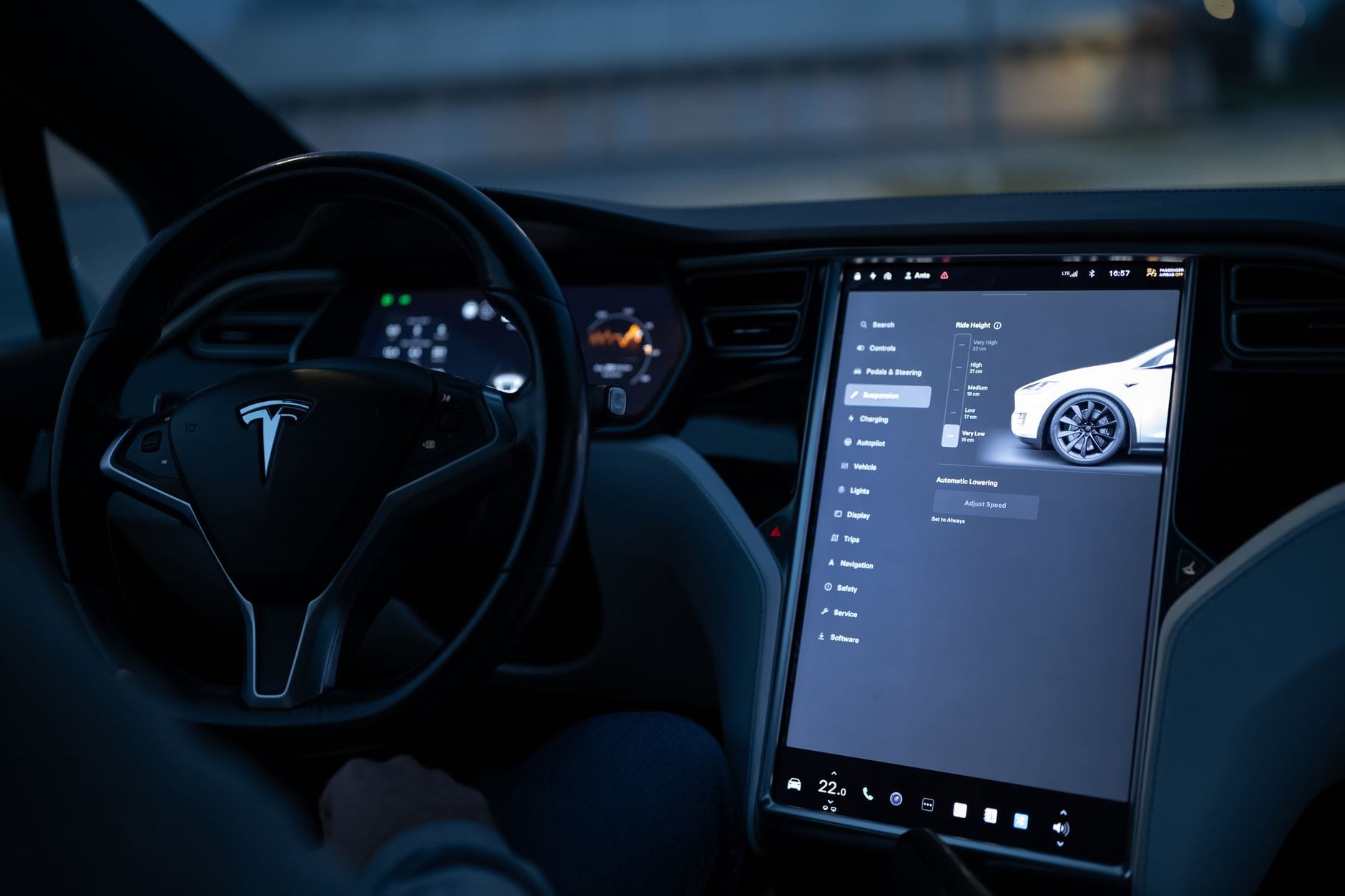
Palo Alto, California, MMN Correspondent: Tesla is quietly rolling out a feature that could change how you think about your car. Instead of relying on GPS pins that sometimes point to the wrong house, your Full Self-Driving system will soon learn your street the way a local does. You speak. It remembers. No maps required.
Imagine pulling up to your home for the first time with FSD engaged. You say, “It’s the white house on the left, just past that SUV.” The car notes the color, the neighbor’s vehicle, the driveway angle. Next time, it knows exactly where to stop. This isn’t a distant promise. It’s happening now, and it’s built on a simple idea: machines should listen better.
The shift comes from years of owner feedback. People kept telling Tesla that FSD struggled with context. A human driver sees a red mailbox or a curved driveway and knows where to turn. FSD saw coordinates. That gap is closing. With natural language input, you can teach your car the small things: which gate to use, where the trash cans sit, or that the third house on the right has a tricky curb.
At the center of this is Grok, Tesla’s AI assistant. Since July 2025, Grok has handled navigation and reminders. Now it’s stepping into the driver’s seat. Tesla VP of AI Software Ashok Elluswamy confirmed that Grok will soon translate spoken commands directly into driving behavior. Elon Musk added that by September 2026, voice instructions will flow into FSD’s planning layer. That means your words can adjust lane changes, braking, and even the final approach to your parking spot.
What makes this powerful is the learning loop. Every time you correct FSD with a voice command, the system captures a real world edge case. A unique intersection. A seasonal tree that blocks a sign. A neighbor’s new fence. Simulation software can’t generate these moments. Only millions of Teslas driving real streets can. This creates a dataset that grows richer with every ride, giving Tesla an advantage competitors can’t replicate.
Now pair that with the robotaxi network. Cybercab operations are expanding beyond Austin into cities like Miami. Each trip generates data about rider preferences. Over time, a Cybercab learns which entrance a passenger prefers, where to wait, and how to handle the last 100 feet of a journey. The vehicle becomes a personalized companion, not just a shuttle.
This approach also strengthens Tesla’s position in the market. While other automakers focus on sensor accuracy and high definition maps, Tesla is building a cognitive layer that learns through conversation. It’s a different kind of intelligence, one that adapts to human behavior rather than forcing humans to adapt to it.
The broader ecosystem supporting this vision is expanding too. SpaceX’s acquisition of xAI in February 2026 for $1.25 trillion created SpaceXAI, merging rocket infrastructure with AI development. The idea is to use low Earth orbit satellites as compute nodes, bypassing energy constraints on the ground. SpaceX brings rockets, Starlink connectivity, and capital. xAI brings Grok, the X platform, and Colossus, a supercomputer in Memphis with over 220,000 NVIDIA GPUs. Together, they form a company that builds rockets, runs a social network, operates a satellite internet service, and develops AI software all under one roof.
Not everything is smooth. California recently passed a $135 million EV incentive program that excludes most Tesla models due to pricing caps and exemptions for in state manufacturers. Rivian and Lucid, both headquartered in California, benefit despite selling vehicles above $50,000. Tesla moved its headquarters to Texas in 2021 and no longer qualifies. This policy shift shows how location decisions carry real financial weight.
On the robotics side, Elon Musk has tempered expectations for Optimus. Each unit contains roughly 10,000 unique parts, making early production slow. Limited output is expected in late 2026, with higher volumes targeting summer 2027. The long term vision remains ambitious, with Optimus potentially handling tasks in factories, homes, and hazardous environments.
What emerges is a picture of a company that keeps pushing the boundary between machine and memory. Your Tesla will soon know your neighborhood not as a set of coordinates, but as a place with a white house, a red mailbox, and a driveway that curves just so. That kind of understanding changes everything.
Related in Space Tech
Space Tech
Elon Musk Admits He Was Wrong About Anthropic, Tesla’s Self-Driving Nears an Inflection Point, and NASA’s Roman Telescope Prepares for Launch: Three Stories Defining 2026
On a Tuesday morning in June, Elon Musk did something rare in the world of tech billionaires. He admitted he was wrong. Not in a quiet, buried-in-a-footnote kind of way, but publicly, on his own platform X. The target of his reversal? Anthropic, the AI company he had dismissed j…
Read More...
Space Tech
Miami Now Has Driverless Taxis Operating Without Any Human Oversight: Here’s What Tesla’s Robotaxi Launch Means for You
Imagine hailing a taxi in Miami, climbing in, and realizing there’s no one behind the wheel. No safety driver. No remote monitor. Just you, the car, and the open road. That scenario is no longer a test or a demo. It’s live. Tesla has officially launched its Robotaxi service in M…
Read More...
Space Tech
Tesla App Update 2026: How Owners Now Manage a Robotaxi Fleet from Their Phone
Imagine glancing at your phone and seeing your car driving itself across town, earning money while you sip coffee at home. That’s not a sci-fi fantasy anymore. A recent Tesla app update, quietly rolled out in late June 2026 as part of software version 4.58.5, has turned every ow…
Read More...
Space Tech
SpaceXAI Is Here: How a $1.25 Trillion Merger Is Building Orbital Data Centers for the Next AI Era
When Elon Musk announced in May 2026 that xAI would vanish as a standalone company, most people assumed it was just another corporate reshuffle. They were wrong. What actually happened was the quiet birth of something far bigger: SpaceXAI, a single entity that now controls rocke…
Read More...
Space Tech
Tesla Driver Charged in Fatal Crash After Overriding Autopilot: What the Data Reveals About Your Responsibility Behind the Wheel
A case unfolding in Harris County, Texas, is forcing a hard look at how we use advanced driver assistance systems. Michael Butler, a 34-year-old DoorDash driver, now faces manslaughter charges after his Tesla crashed into a home on June 5, 2026, killing 47-year-old Maria Avila.…
Read More...
Space Tech
Tesla Model Y L Launch Series Hits U.S. Market: 325 Miles, 4.4 Seconds, and a Surprise for Families
Tesla just dropped something big in the U.S. and Puerto Rico, and it’s not another Cybertruck tease. The Model Y L Launch Series is here, priced at $61,990, and it’s already turning heads. Why? Because this isn’t just a stretched Model Y. It’s Tesla’s answer to everyone who’s be…
Read More...
Space Tech
Tesla’s Optimus Robot Factory Goes Live: 1 Million Humanoid Robots Per Year from Fremont Line
What happens when one of the world’s most iconic car factories stops building cars and starts building robots? You get a front-row seat to the next industrial revolution. Tesla just flipped the switch on its Optimus humanoid robot production line at the historic Fremont plant, a…
Read More...
Space Tech
Tesla’s Cybercab Hits Austin Streets: No Steering Wheel, No Driver, Just AI
What happens when you remove the steering wheel, pedals, and driver from a car and let artificial intelligence take the wheel? Tesla is finding out right now on the streets of Austin, Texas. The company has quietly launched real world testing of its first production ready Cyberc…
Read More...
Space Tech
SpaceX’s Starmind: 1 Million AI Satellites and a $300 Billion T-Mobile Deal That Could Rewrite Global Connectivity
Elon Musk has never been one to follow the crowd. While the internet buzzes with rumors of a Tesla smartphone, the real story unfolding at SpaceX is far bigger and far stranger. It’s not about a device in your pocket. It’s about turning the sky itself into a thinking machine. Me…
Read More...
Space Tech
NASA’s First Robot Rescue: Can Lift Save the Swift Telescope Before It Burns Up?
What happens when a $300 million space telescope starts falling back to Earth? If you’re NASA, you send a robot to catch it. That’s exactly what’s happening this week, and it’s the kind of mission that sounds like a movie plot but is very, very real. The Swift Gamma-Ray Burst Ob…
Read More...