
Miami Now Has Driverless Taxis Operating Without Any Human Oversight: Here’s What Tesla’s Robotaxi Launch Means for You
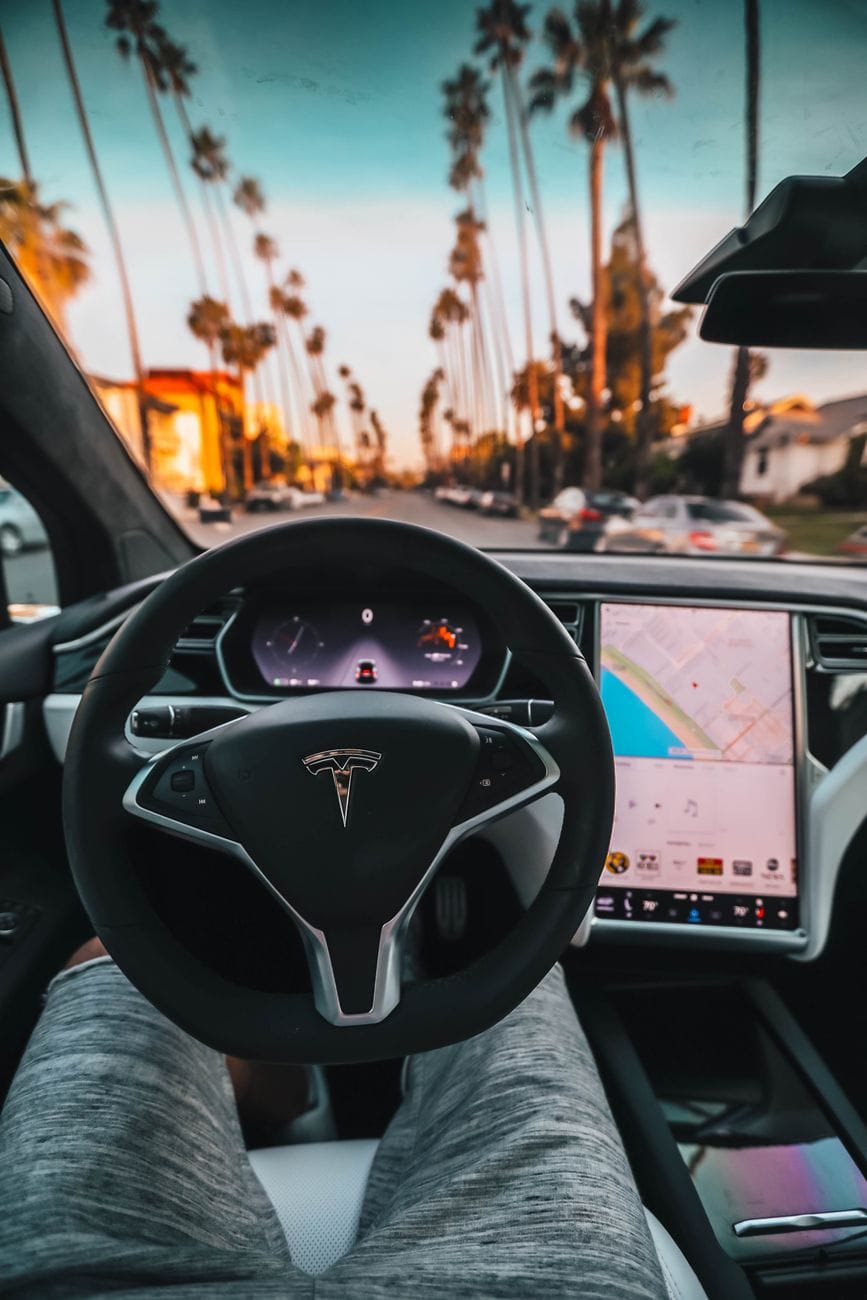
Miami, Florida, MMN Correspondent: Imagine hailing a taxi in Miami, climbing in, and realizing there’s no one behind the wheel. No safety driver. No remote monitor. Just you, the car, and the open road. That scenario is no longer a test or a demo. It’s live. Tesla has officially launched its Robotaxi service in Miami without any human supervision, marking the first time the company has done so in a major U.S. city outside of Austin.
Ashok Elluswamy, Tesla’s Head of AI, confirmed the milestone on social media. The vehicles are making real time decisions using only cameras and neural networks. No lidar. No pre programmed maps. Just pure vision based AI trained on millions of miles of real world driving data. This is the same system that has been evolving for years inside your neighbor’s Model Y, but now it’s operating entirely on its own.
The initial rollout covers a carefully chosen area of about 10 to 14 square miles in western Miami Dade County. Think West Miami, Doral, and Sweetwater. The boundaries are set by SR 826 to the north and US 41 to the south. Downtown Miami, Miami Beach, the airport, and Coral Gables are intentionally left out for now. This isn’t a sign of weakness. It’s a deliberate strategy. Tesla is gathering data, refining its system, and proving safety in a controlled environment before expanding further.
On launch day, only two Model Y units were active. Within 48 hours, a third joined the fleet. That might sound small, but it’s exactly how Tesla has always approached new technology. Start small. Learn fast. Scale when ready. Nearby staging facilities near Miami International Airport already house dozens of Cybercabs and additional Model Y units, hinting at a much larger operation waiting in the wings.
What makes this different from earlier tests is the complete absence of human oversight. In previous deployments, engineers monitored vehicles remotely or had safety drivers onboard. Not anymore. These Robotaxis navigate heavy pedestrian traffic, sudden lane changes, and South Florida’s frequent rainstorms entirely on their own. The system relies on continuous learning from the global fleet, which means every mile driven by every Tesla improves the software for everyone.
Industry observers see this as a validation of Tesla’s unconventional approach. While other companies have invested heavily in lidar and high definition maps, Tesla has bet everything on cameras and neural networks. The Miami launch suggests that bet is paying off. The vehicles are handling complex urban environments without human intervention, and that’s a big deal for the future of autonomous transportation.
This milestone follows similar unsupervised operations in Austin, Texas, which began in 2025. Miami now joins that elite group, and Orlando is already being mentioned as the next likely candidate. With Walt Disney World and other major attractions, Orlando presents a massive opportunity for autonomous ride hailing. The momentum is building toward a broader national expansion.
Of course, challenges remain. Regulatory bodies are taking a closer look at driverless vehicles, and public trust needs to be earned. Tesla’s cautious geofencing and incremental vehicle additions are designed to balance innovation with accountability. The company is not rushing. It’s building a foundation that can support widespread adoption without compromising safety.
The economic implications are equally significant. Instead of sitting idle in a parking lot, these vehicles can operate around the clock as part of a shared mobility network. That could reduce urban congestion, lower transportation costs, and turn personal cars into revenue generating assets. It’s a shift in how we think about car ownership and urban mobility.
Meanwhile, Tesla’s broader ecosystem is evolving in parallel. Battery recycling efforts surged by 20% in 2025, recovering over 14,000 metric tons of materials enough for 46,000 long range packs. Advanced hydrometallurgical processes now achieve up to 98% recovery rates for lithium, nickel, and cobalt. And the Cybercab’s new reaction injection molding process eliminates traditional paint shops, cutting emissions by 35% and removing all volatile organic compounds from manufacturing.
Together, these developments point to a future where transportation is not only autonomous but also sustainable. The Miami Robotaxi launch is more than a product update. It’s a real world demonstration that driverless technology has matured to the point where it can operate safely in a major American city. For residents and visitors in Miami, the era of autonomous taxis has quietly begun.
Related in Space Tech
Space Tech
Elon Musk Admits He Was Wrong About Anthropic, Tesla’s Self-Driving Nears an Inflection Point, and NASA’s Roman Telescope Prepares for Launch: Three Stories Defining 2026
On a Tuesday morning in June, Elon Musk did something rare in the world of tech billionaires. He admitted he was wrong. Not in a quiet, buried-in-a-footnote kind of way, but publicly, on his own platform X. The target of his reversal? Anthropic, the AI company he had dismissed j…
Read More...
Space Tech
Your Tesla Will Soon Learn Your Neighborhood by Voice: 3 Ways FSD Remembers Every Detail
Tesla is quietly rolling out a feature that could change how you think about your car. Instead of relying on GPS pins that sometimes point to the wrong house, your Full Self-Driving system will soon learn your street the way a local does. You speak. It remembers. No maps require…
Read More...
Space Tech
Tesla App Update 2026: How Owners Now Manage a Robotaxi Fleet from Their Phone
Imagine glancing at your phone and seeing your car driving itself across town, earning money while you sip coffee at home. That’s not a sci-fi fantasy anymore. A recent Tesla app update, quietly rolled out in late June 2026 as part of software version 4.58.5, has turned every ow…
Read More...
Space Tech
SpaceXAI Is Here: How a $1.25 Trillion Merger Is Building Orbital Data Centers for the Next AI Era
When Elon Musk announced in May 2026 that xAI would vanish as a standalone company, most people assumed it was just another corporate reshuffle. They were wrong. What actually happened was the quiet birth of something far bigger: SpaceXAI, a single entity that now controls rocke…
Read More...
Space Tech
Tesla Driver Charged in Fatal Crash After Overriding Autopilot: What the Data Reveals About Your Responsibility Behind the Wheel
A case unfolding in Harris County, Texas, is forcing a hard look at how we use advanced driver assistance systems. Michael Butler, a 34-year-old DoorDash driver, now faces manslaughter charges after his Tesla crashed into a home on June 5, 2026, killing 47-year-old Maria Avila.…
Read More...
Space Tech
Tesla Model Y L Launch Series Hits U.S. Market: 325 Miles, 4.4 Seconds, and a Surprise for Families
Tesla just dropped something big in the U.S. and Puerto Rico, and it’s not another Cybertruck tease. The Model Y L Launch Series is here, priced at $61,990, and it’s already turning heads. Why? Because this isn’t just a stretched Model Y. It’s Tesla’s answer to everyone who’s be…
Read More...
Space Tech
Tesla’s Optimus Robot Factory Goes Live: 1 Million Humanoid Robots Per Year from Fremont Line
What happens when one of the world’s most iconic car factories stops building cars and starts building robots? You get a front-row seat to the next industrial revolution. Tesla just flipped the switch on its Optimus humanoid robot production line at the historic Fremont plant, a…
Read More...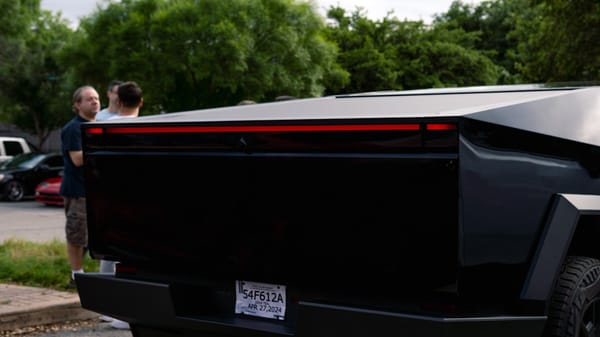
Space Tech
Tesla’s Cybercab Hits Austin Streets: No Steering Wheel, No Driver, Just AI
What happens when you remove the steering wheel, pedals, and driver from a car and let artificial intelligence take the wheel? Tesla is finding out right now on the streets of Austin, Texas. The company has quietly launched real world testing of its first production ready Cyberc…
Read More...
Space Tech
SpaceX’s Starmind: 1 Million AI Satellites and a $300 Billion T-Mobile Deal That Could Rewrite Global Connectivity
Elon Musk has never been one to follow the crowd. While the internet buzzes with rumors of a Tesla smartphone, the real story unfolding at SpaceX is far bigger and far stranger. It’s not about a device in your pocket. It’s about turning the sky itself into a thinking machine. Me…
Read More...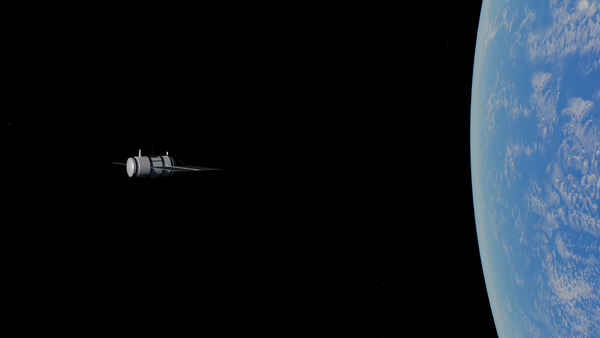
Space Tech
NASA’s First Robot Rescue: Can Lift Save the Swift Telescope Before It Burns Up?
What happens when a $300 million space telescope starts falling back to Earth? If you’re NASA, you send a robot to catch it. That’s exactly what’s happening this week, and it’s the kind of mission that sounds like a movie plot but is very, very real. The Swift Gamma-Ray Burst Ob…
Read More...