
Tesla App Update 2026: How Owners Now Manage a Robotaxi Fleet from Their Phone
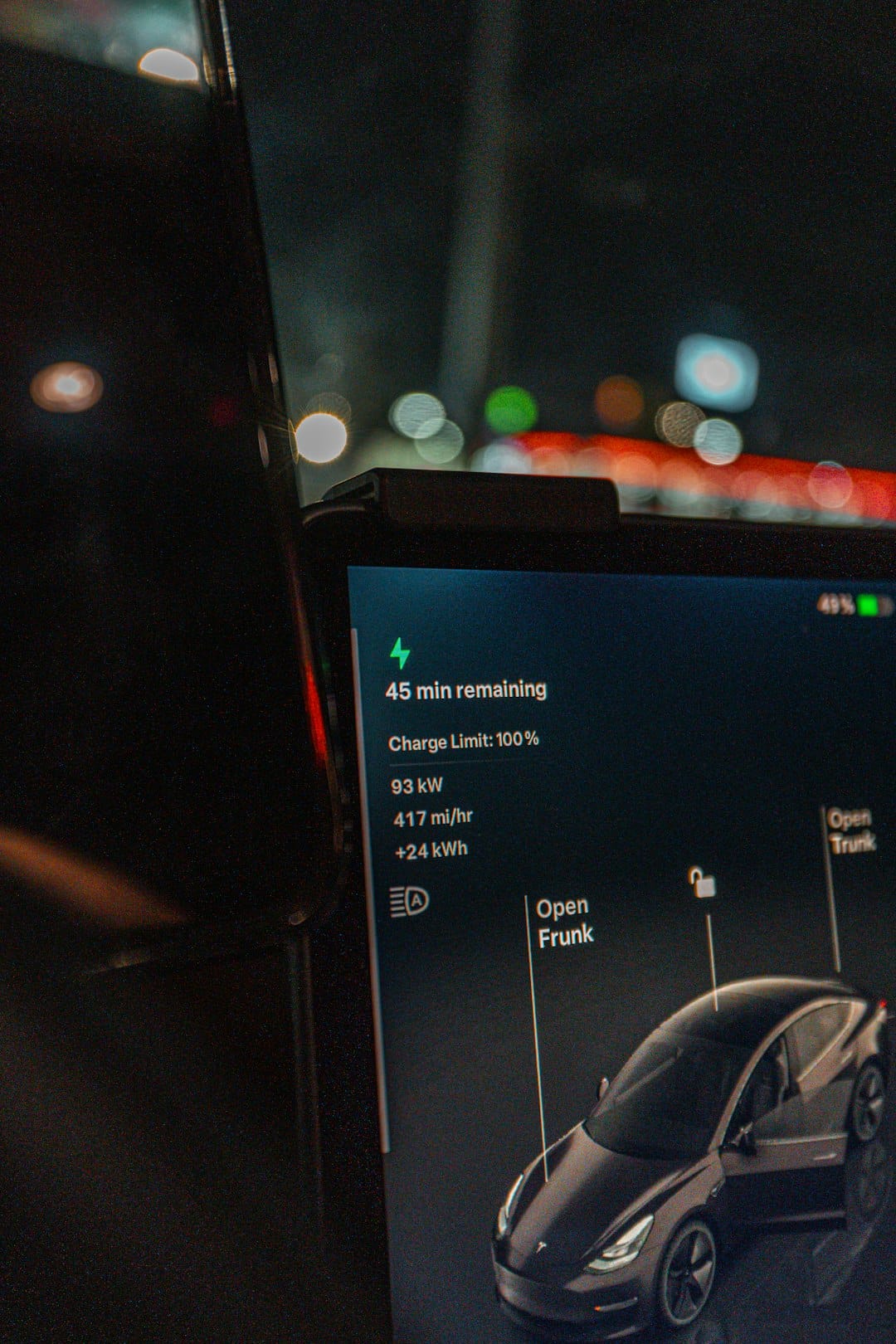
Palo Alto, California, MMN Correspondent: Imagine glancing at your phone and seeing your car driving itself across town, earning money while you sip coffee at home. That’s not a sci-fi fantasy anymore. A recent Tesla app update, quietly rolled out in late June 2026 as part of software version 4.58.5, has turned every owner’s smartphone into a live command center for autonomous vehicle management.
Here’s what changed: open the app, and right below the speedometer, you’ll now see bright blue text reading “Self-Driving.” It’s accompanied by that familiar glowing blue navigation path you’d normally only see on the car’s main touchscreen. This isn’t just a cosmetic tweak. It’s a signal that Tesla is serious about letting owners watch their cars operate under Full Self-Driving (FSD) autonomy in real time, from anywhere on the planet.
The first public sighting came from an X user who posted video of a Hardware 3 Model S cruising autonomously with the new indicator active. That’s important because it proves the feature works across all Tesla hardware generations, not just the latest HW4 systems. Internal data shows software version 2026.20.6.1, which powers this capability, is already running on nearly 40% of Tesla’s global fleet. Adoption is happening fast.
For owners enrolled in Tesla’s robotaxi program, this update transforms the app into a full-fledged fleet operations dashboard. You can now check whether your car is actively generating revenue through autonomous rides, verify that FSD is engaged during trips, and confirm safe operation all from your couch. This level of visibility builds trust, especially as Tesla expands unsupervised robotaxi services in cities like Miami, where vehicles operate without any human driver onboard. In those scenarios, remote confirmation of autonomy isn’t a luxury. It’s a necessity.
But the implications go deeper than convenience. Tesla’s own insurance product already adjusts premiums based on driving behavior, including how often FSD is used. With real-time FSD engagement data now accessible through the app, insurers have a direct feedback loop that could eventually feed into policy pricing algorithms. The result is a transparent system where safer, more consistent use of autonomous features leads to lower premiums. That’s a powerful incentive for owners to embrace self-driving technology.
Look closer at the update, and you’ll find a subtle hint about what’s next. Future versions may incorporate cabin camera verification to authenticate driver identity before FSD activation. Combine that with the live autonomy indicator, and Tesla is clearly building a complete digital infrastructure for managing a fully driverless fleet. Owners will soon track their cars the way they track a package delivery through real-time GPS, status updates, and autonomous operation logs. Unprecedented transparency and control are on the horizon.
This evolution fits perfectly into Tesla’s broader vision: turning personal vehicles into profit-generating assets within a scalable, AI-driven mobility ecosystem. As robotaxi deployments expand beyond pilot programs, the ability to remotely monitor and validate autonomous operation becomes foundational. The updated app isn’t just a nice feature. It’s a critical piece of a new transportation economy where every car serves as both personal transport and a potential revenue stream.
Meanwhile, other developments across Elon Musk’s companies reinforce this push toward smarter, faster infrastructure. The Boring Company has commissioned its second tunnel boring machine, Prufrock MB2, in Nashville. Unlike traditional machines that stop every few feet to install concrete segments, Prufrock operates continuously, installing the tunnel lining as it digs. The machine arrives on a truck, tilts into the ground within 24 hours, and emerges at the other end ready to move to the next site. No cranes, no pits, no crew inside. Fully electric and remotely operated, it represents a leap in urban tunneling efficiency. With MB1 already active and MB3 scheduled to ship in August, Nashville is becoming a living testbed for scalable underground mobility.
In Europe, Tesla has launched its Folding Unit Supercharger, a modular V4 charging station designed for rapid deployment. Built on a hinge system with telescoping light poles, each unit delivers up to 500 kW per stall and supports twice as many stalls per power cabinet compared to previous models. The design allows 33% more charging points per delivery truck, cuts installation time in half, and reduces overall costs by over 20%. This innovation lets Tesla expand its charging network into rural and underserved corridors that were previously too expensive to serve, accelerating EV adoption across continents.
And then there’s SpaceXAI, formed after the merger between SpaceX and xAI. It has entered consumer AI with Go, a Grok-powered shopping assistant integrated into Gopuff’s instant delivery app. Using real-time behavioral data, cultural signals from social media, and advanced AI reasoning, Go predicts what users need before they even search. Whether it’s coffee for a morning routine or snacks for a game night, the app auto-populates a personalized cart with a single tap. Voice integration allows hands-free checkout, turning grocery shopping into a seamless extension of daily life.
Together, these advancements point to a global trend: intelligent, interconnected systems where vehicles, infrastructure, energy, and commerce are unified under AI and automation. From monitoring a robotaxi’s journey to deploying a folding supercharger in Norway, from digging tunnels beneath Nashville to predicting your next grocery run, the future of mobility and daily life is being built in real time, one smart update at a time.
Related in Space Tech
Space Tech
Elon Musk Admits He Was Wrong About Anthropic, Tesla’s Self-Driving Nears an Inflection Point, and NASA’s Roman Telescope Prepares for Launch: Three Stories Defining 2026
On a Tuesday morning in June, Elon Musk did something rare in the world of tech billionaires. He admitted he was wrong. Not in a quiet, buried-in-a-footnote kind of way, but publicly, on his own platform X. The target of his reversal? Anthropic, the AI company he had dismissed j…
Read More...
Space Tech
Miami Now Has Driverless Taxis Operating Without Any Human Oversight: Here’s What Tesla’s Robotaxi Launch Means for You
Imagine hailing a taxi in Miami, climbing in, and realizing there’s no one behind the wheel. No safety driver. No remote monitor. Just you, the car, and the open road. That scenario is no longer a test or a demo. It’s live. Tesla has officially launched its Robotaxi service in M…
Read More...
Space Tech
Your Tesla Will Soon Learn Your Neighborhood by Voice: 3 Ways FSD Remembers Every Detail
Tesla is quietly rolling out a feature that could change how you think about your car. Instead of relying on GPS pins that sometimes point to the wrong house, your Full Self-Driving system will soon learn your street the way a local does. You speak. It remembers. No maps require…
Read More...
Space Tech
SpaceXAI Is Here: How a $1.25 Trillion Merger Is Building Orbital Data Centers for the Next AI Era
When Elon Musk announced in May 2026 that xAI would vanish as a standalone company, most people assumed it was just another corporate reshuffle. They were wrong. What actually happened was the quiet birth of something far bigger: SpaceXAI, a single entity that now controls rocke…
Read More...
Space Tech
Tesla Driver Charged in Fatal Crash After Overriding Autopilot: What the Data Reveals About Your Responsibility Behind the Wheel
A case unfolding in Harris County, Texas, is forcing a hard look at how we use advanced driver assistance systems. Michael Butler, a 34-year-old DoorDash driver, now faces manslaughter charges after his Tesla crashed into a home on June 5, 2026, killing 47-year-old Maria Avila.…
Read More...
Space Tech
Tesla Model Y L Launch Series Hits U.S. Market: 325 Miles, 4.4 Seconds, and a Surprise for Families
Tesla just dropped something big in the U.S. and Puerto Rico, and it’s not another Cybertruck tease. The Model Y L Launch Series is here, priced at $61,990, and it’s already turning heads. Why? Because this isn’t just a stretched Model Y. It’s Tesla’s answer to everyone who’s be…
Read More...
Space Tech
Tesla’s Optimus Robot Factory Goes Live: 1 Million Humanoid Robots Per Year from Fremont Line
What happens when one of the world’s most iconic car factories stops building cars and starts building robots? You get a front-row seat to the next industrial revolution. Tesla just flipped the switch on its Optimus humanoid robot production line at the historic Fremont plant, a…
Read More...
Space Tech
Tesla’s Cybercab Hits Austin Streets: No Steering Wheel, No Driver, Just AI
What happens when you remove the steering wheel, pedals, and driver from a car and let artificial intelligence take the wheel? Tesla is finding out right now on the streets of Austin, Texas. The company has quietly launched real world testing of its first production ready Cyberc…
Read More...
Space Tech
SpaceX’s Starmind: 1 Million AI Satellites and a $300 Billion T-Mobile Deal That Could Rewrite Global Connectivity
Elon Musk has never been one to follow the crowd. While the internet buzzes with rumors of a Tesla smartphone, the real story unfolding at SpaceX is far bigger and far stranger. It’s not about a device in your pocket. It’s about turning the sky itself into a thinking machine. Me…
Read More...
Space Tech
NASA’s First Robot Rescue: Can Lift Save the Swift Telescope Before It Burns Up?
What happens when a $300 million space telescope starts falling back to Earth? If you’re NASA, you send a robot to catch it. That’s exactly what’s happening this week, and it’s the kind of mission that sounds like a movie plot but is very, very real. The Swift Gamma-Ray Burst Ob…
Read More...