
SpaceXAI Is Here: How a $1.25 Trillion Merger Is Building Orbital Data Centers for the Next AI Era
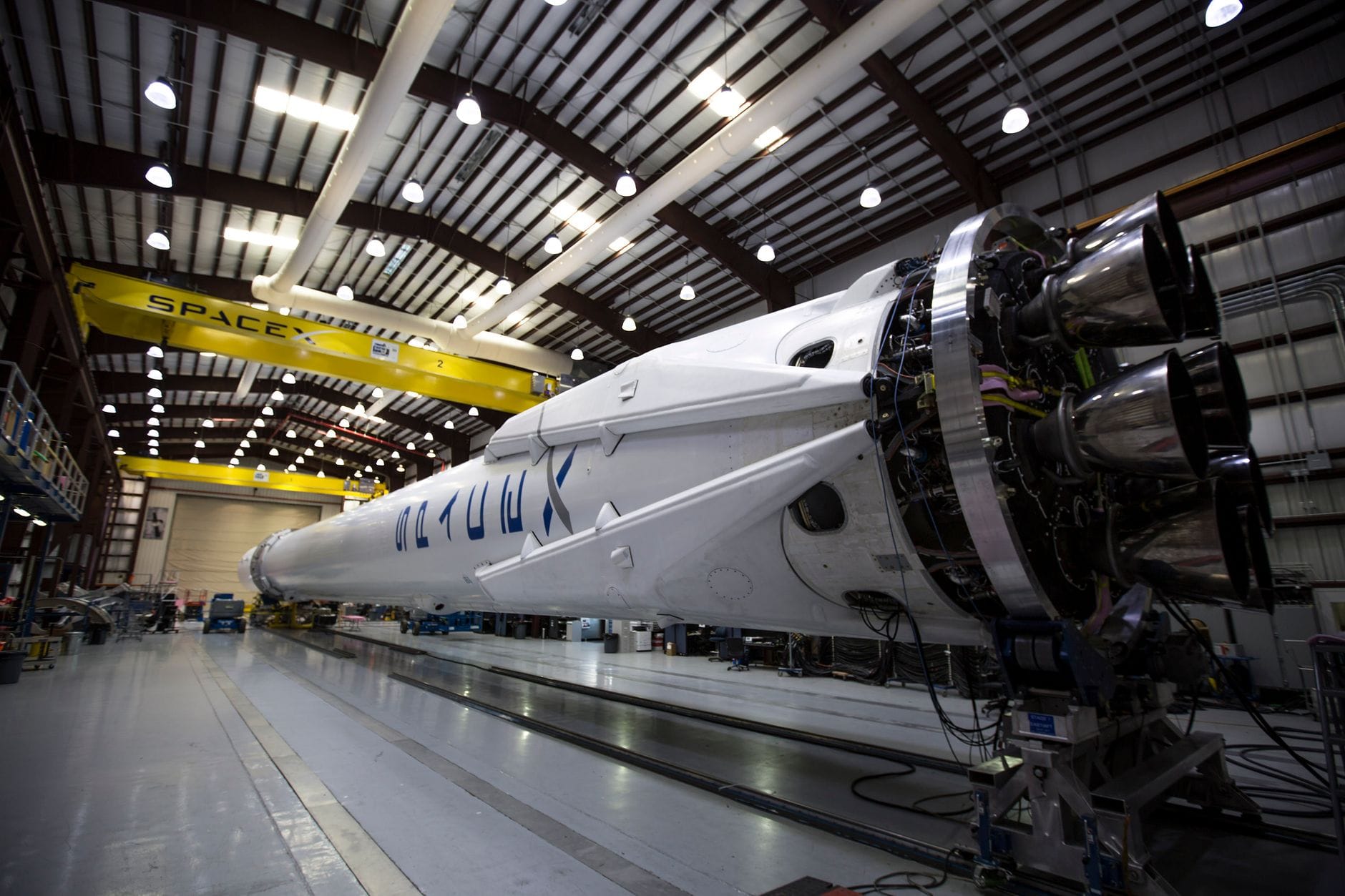
Hawthorne, California, MMN Correspondent: When Elon Musk announced in May 2026 that xAI would vanish as a standalone company, most people assumed it was just another corporate reshuffle. They were wrong. What actually happened was the quiet birth of something far bigger: SpaceXAI, a single entity that now controls rockets, satellites, AI software, social media, and supercomputing under one roof. The new logo says it all. The letters 'xAI' are embedded inside the familiar SpaceX emblem, not as a partnership but as a full absorption. This isn't a rebranding. It's a declaration.
The numbers behind this move are staggering. SpaceX, valued at $1 trillion, acquired xAI at a $250 billion valuation, making the combined deal worth $1.25 trillion. That makes it the largest private merger in global business history. But the real story isn't the price tag. It's the reason behind it. Musk has been talking for years about a 'computational ceiling' that terrestrial AI development is about to hit. Earth-based data centers are running out of power. They need massive cooling systems. They are constrained by grids that weren't designed for this kind of load. His answer? Move the compute nodes into orbit.
Here is where the vision gets interesting. SpaceX plans to deploy up to one million satellites that will function as a distributed supercomputer in low Earth orbit. These satellites will have near-limitless access to solar energy and almost no thermal constraints. Imagine training an AI model that never has to worry about overheating or power shortages. That is the promise. And the technical pieces are already in place. xAI brought the Grok AI platform, the Colossus supercomputer in Memphis with over 220,000 NVIDIA GPUs, and the social media interface from X. SpaceX contributed its rocket launch capabilities, the Starlink satellite network, and the financial muscle to fund the whole thing.
Financially, the merger made perfect sense. xAI was burning through $2.5 billion annually on just $250 million in revenue. SpaceX, on the other hand, was generating about $8 billion in profit from $15 billion in revenue. That kind of cash flow gives the combined company the runway it needs to take on a high risk, long term bet like orbital AI. And the potential payoff is enormous. If this works, SpaceXAI will have created a closed loop system where data from millions of Starlink users gets processed in orbit and then sent back to Earth faster than any ground based network could manage.
Critics point to latency as a major hurdle. Managing a network of a million interconnected satellites is no small feat. But proponents argue that the advantages unlimited solar power, reduced heat dissipation, and global coverage could outweigh those challenges. The real test will be execution. SpaceX has a track record of doing what others said was impossible, from reusable rockets to satellite internet. This time, the stakes are even higher.
Meanwhile, Tesla is making its own moves. In July 2026, Musk visited the Fremont factory to confirm that the production line for Optimus Gen 3 had gone live. The former Model S and Model X assembly area has been completely repurposed into a facility for humanoid robot manufacturing. Over 1,000 Gen 3 units are already working inside the factory, handling battery cells and navigating industrial environments to train the AI system. Musk emphasized that early production will be slow because the robot has about 10,000 unique parts and requires entirely new manufacturing processes. Unlike car production, which has over a century of refinement behind it, Optimus is breaking new ground. A second, larger factory is under construction at Giga Texas, with volume production expected by summer 2027 and long term capacity projected at 10 million units annually.
Looking further ahead, analysts are speculating about a potential acquisition of T-Mobile, estimated at $300 billion. Such a move would merge Starlink's satellite based connectivity with terrestrial networks, creating a seamless global communication system that eliminates dead zones. It would also challenge existing carriers and position SpaceX as a dominant force in telecommunications. Of course, any deal of that size would face intense regulatory scrutiny, but the possibility alone shows how far the company's ambitions extend.
What we are witnessing is the emergence of a new kind of company. SpaceX is no longer just a launch provider. It is building the infrastructure for an era of intelligent, distributed computing that spans space, AI, and communications. The success of this model will determine not only the fate of these ventures but the trajectory of human progress in the decades ahead. And the most curious part? We are only at the beginning.
Related in Space Tech
Space Tech
Elon Musk Admits He Was Wrong About Anthropic, Tesla’s Self-Driving Nears an Inflection Point, and NASA’s Roman Telescope Prepares for Launch: Three Stories Defining 2026
On a Tuesday morning in June, Elon Musk did something rare in the world of tech billionaires. He admitted he was wrong. Not in a quiet, buried-in-a-footnote kind of way, but publicly, on his own platform X. The target of his reversal? Anthropic, the AI company he had dismissed j…
Read More...
Space Tech
Miami Now Has Driverless Taxis Operating Without Any Human Oversight: Here’s What Tesla’s Robotaxi Launch Means for You
Imagine hailing a taxi in Miami, climbing in, and realizing there’s no one behind the wheel. No safety driver. No remote monitor. Just you, the car, and the open road. That scenario is no longer a test or a demo. It’s live. Tesla has officially launched its Robotaxi service in M…
Read More...
Space Tech
Your Tesla Will Soon Learn Your Neighborhood by Voice: 3 Ways FSD Remembers Every Detail
Tesla is quietly rolling out a feature that could change how you think about your car. Instead of relying on GPS pins that sometimes point to the wrong house, your Full Self-Driving system will soon learn your street the way a local does. You speak. It remembers. No maps require…
Read More...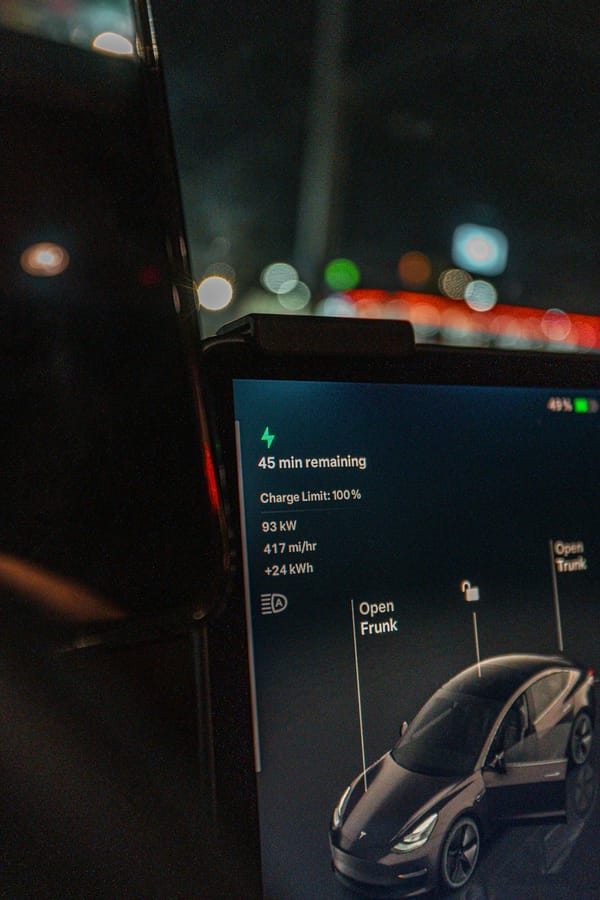
Space Tech
Tesla App Update 2026: How Owners Now Manage a Robotaxi Fleet from Their Phone
Imagine glancing at your phone and seeing your car driving itself across town, earning money while you sip coffee at home. That’s not a sci-fi fantasy anymore. A recent Tesla app update, quietly rolled out in late June 2026 as part of software version 4.58.5, has turned every ow…
Read More...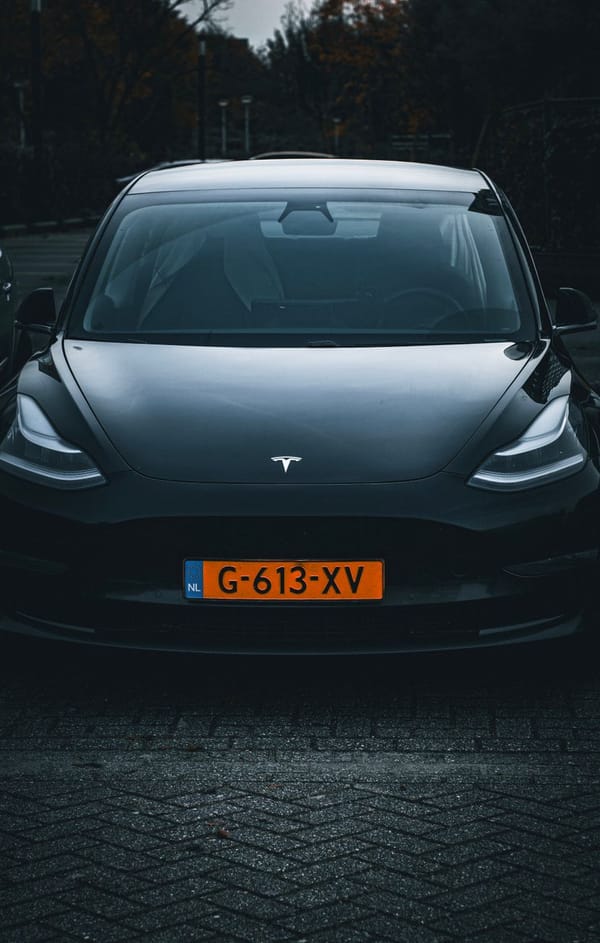
Space Tech
Tesla Driver Charged in Fatal Crash After Overriding Autopilot: What the Data Reveals About Your Responsibility Behind the Wheel
A case unfolding in Harris County, Texas, is forcing a hard look at how we use advanced driver assistance systems. Michael Butler, a 34-year-old DoorDash driver, now faces manslaughter charges after his Tesla crashed into a home on June 5, 2026, killing 47-year-old Maria Avila.…
Read More...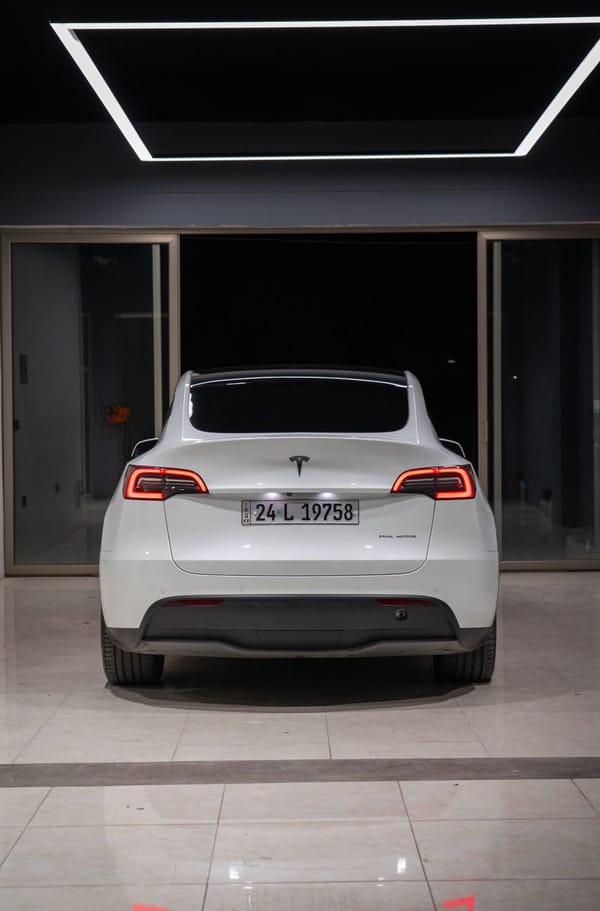
Space Tech
Tesla Model Y L Launch Series Hits U.S. Market: 325 Miles, 4.4 Seconds, and a Surprise for Families
Tesla just dropped something big in the U.S. and Puerto Rico, and it’s not another Cybertruck tease. The Model Y L Launch Series is here, priced at $61,990, and it’s already turning heads. Why? Because this isn’t just a stretched Model Y. It’s Tesla’s answer to everyone who’s be…
Read More...
Space Tech
Tesla’s Optimus Robot Factory Goes Live: 1 Million Humanoid Robots Per Year from Fremont Line
What happens when one of the world’s most iconic car factories stops building cars and starts building robots? You get a front-row seat to the next industrial revolution. Tesla just flipped the switch on its Optimus humanoid robot production line at the historic Fremont plant, a…
Read More...
Space Tech
Tesla’s Cybercab Hits Austin Streets: No Steering Wheel, No Driver, Just AI
What happens when you remove the steering wheel, pedals, and driver from a car and let artificial intelligence take the wheel? Tesla is finding out right now on the streets of Austin, Texas. The company has quietly launched real world testing of its first production ready Cyberc…
Read More...
Space Tech
SpaceX’s Starmind: 1 Million AI Satellites and a $300 Billion T-Mobile Deal That Could Rewrite Global Connectivity
Elon Musk has never been one to follow the crowd. While the internet buzzes with rumors of a Tesla smartphone, the real story unfolding at SpaceX is far bigger and far stranger. It’s not about a device in your pocket. It’s about turning the sky itself into a thinking machine. Me…
Read More...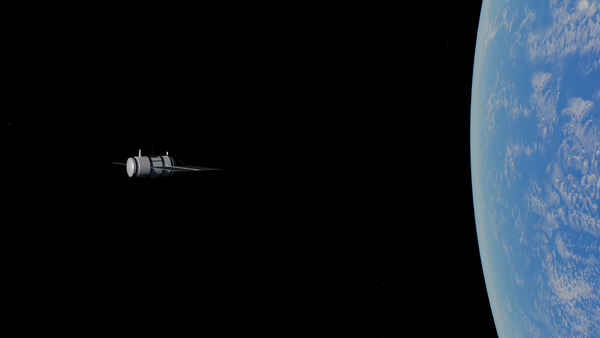
Space Tech
NASA’s First Robot Rescue: Can Lift Save the Swift Telescope Before It Burns Up?
What happens when a $300 million space telescope starts falling back to Earth? If you’re NASA, you send a robot to catch it. That’s exactly what’s happening this week, and it’s the kind of mission that sounds like a movie plot but is very, very real. The Swift Gamma-Ray Burst Ob…
Read More...