
NASA’s First Robot Rescue: Can Lift Save the Swift Telescope Before It Burns Up?
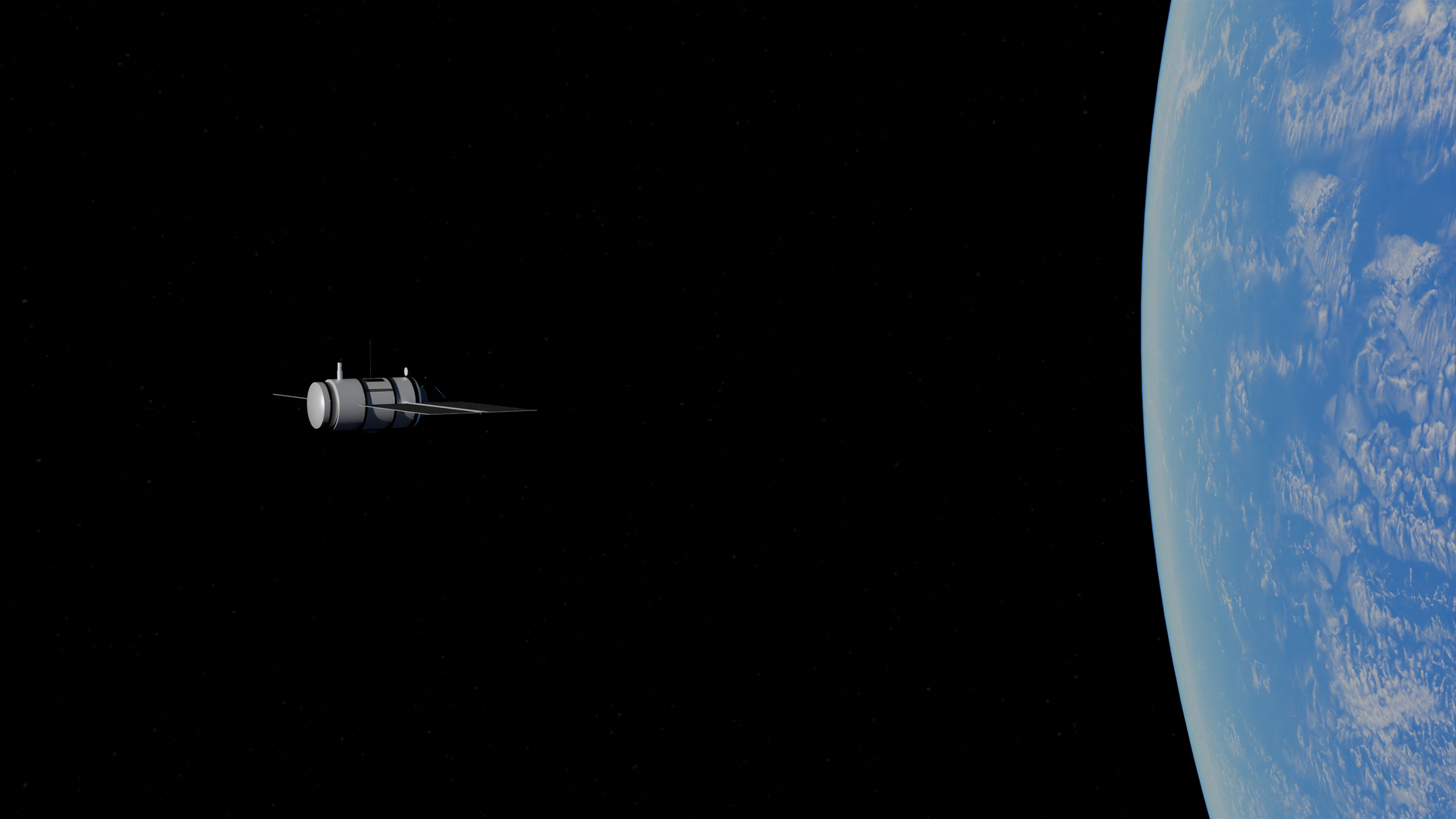
Omelek Island, Marshall Islands, MMN Correspondent: What happens when a $300 million space telescope starts falling back to Earth? If you’re NASA, you send a robot to catch it. That’s exactly what’s happening this week, and it’s the kind of mission that sounds like a movie plot but is very, very real.
The Swift Gamma-Ray Burst Observatory has been our cosmic first responder since 2004. It spots the most violent explosions in the universe within seconds. But now, it’s the one in trouble. Solar activity has thickened the upper atmosphere, dragging Swift down faster than expected. Its orbit has dropped to just 224 miles above us. The danger line? 185 miles. Cross that, and the telescope burns up with no chance of recovery. Without help, Swift would be gone by October 2026.
So NASA called Katalyst Space Technologies, a startup that builds robots for exactly this kind of job. Their creation is named Lift. It’s a three-armed, 1.6-ton machine with a 40-foot solar wingspan. The arms can extend over three feet and end in grippers that look like Lego mini-figure hands. They’re designed to grab Swift gently, without damaging its delicate instruments. No astronauts. No spacewalk. Just AI and autonomous navigation.
The plan is straightforward but audacious. Lift will launch from a remote atoll in the Marshall Islands as early as Tuesday. It will spend about a month chasing Swift across low Earth orbit. Then, over the next three months, it will slowly boost the telescope from 224 miles up to a safer altitude of 373 miles. That’s well above the zone where atmospheric drag becomes a problem. If everything works, Swift could be back doing science by September 2026.
This mission cost $30 million, and NASA signed the contract in September 2025 under urgent conditions. To buy time, the agency put Swift into a low-power hibernation mode in February 2026. That pause stopped all scientific observations but slowed the telescope’s descent. It gave engineers the breathing room they needed to prepare the rescue.
Katalyst’s CEO, Ghonhee Lee, calls this a historic moment. “This is the first American space robot to go up and perform a capture-and-boost maneuver like this,” he said. “It proves we can extend the life of aging space assets not through replacement, but through intelligent, reusable robotics.”
The only precedent comes from China, which raised a decommissioned satellite into a graveyard orbit in 2022. That mission showed it was possible, but it was government-run and not very transparent. The U.S. effort, led by a private company, marks a shift toward commercial space maintenance. If it works, it opens the door for similar missions on other valuable satellites.
Think about Hubble. It’s 36 years old and still operating, but its orbit is slowly decaying too. Hubble currently sits at around 340 miles. Experts say it could face uncontrolled reentry within the next decade if nothing is done. Katalyst is already planning a next-generation robot, scheduled for 2027, that can reach satellites as high as 22,300 miles in geosynchronous orbit. That version would not only lift satellites but also refuel them, conduct repairs, and even help build orbital platforms like solar arrays and data hubs.
NASA’s astrophysics director, Shawn Domagal-Goldman, is cautiously optimistic. “I have to be honest. No one thought it was going to be possible. No one thought we would get as far as we’ve already gotten today,” he said. “But if this works, it changes everything.”
The economic stakes are high. Swift is worth hundreds of millions of dollars in research and development. Replacing it would take years and a budget that doesn’t exist right now. As NASA science mission chief Nicky Fox put it, “If we let Swift reenter, we would lose that telescope. We would lose a lot of capability. We don’t currently have the budget to build another one to replace that.”
And Swift’s role is becoming more critical, not less. With the James Webb Space Telescope and the upcoming Nancy Grace Roman Space Telescope uncovering more transient cosmic events, Swift’s ability to detect gamma-ray bursts within seconds allows other observatories to pivot quickly. It enables multi-messenger astronomy, where different telescopes observe the same event across different wavelengths. If saved, Swift could become busier than ever, serving as a key node in a growing network of responsive space assets.
This mission also signals a broader transformation. Instead of treating satellites as disposable, the future may see them as long-lived, serviceable assets. That shift supports sustainable space exploration, reduces orbital debris, and lowers costs over time. Katalyst envisions fleets of robotic space mechanics patrolling Earth’s orbit, maintaining and upgrading satellites with minimal human oversight. In that future, space isn’t just explored. It’s maintained.
For now, all eyes are on Lift’s journey to Swift. If the robot succeeds, the telescope could resume full operations by September 2026, extending its legacy by years or even decades. And with it, a new chapter in space engineering begins.
Related in Space Tech
Space Tech
Elon Musk Admits He Was Wrong About Anthropic, Tesla’s Self-Driving Nears an Inflection Point, and NASA’s Roman Telescope Prepares for Launch: Three Stories Defining 2026
On a Tuesday morning in June, Elon Musk did something rare in the world of tech billionaires. He admitted he was wrong. Not in a quiet, buried-in-a-footnote kind of way, but publicly, on his own platform X. The target of his reversal? Anthropic, the AI company he had dismissed j…
Read More...
Space Tech
Miami Now Has Driverless Taxis Operating Without Any Human Oversight: Here’s What Tesla’s Robotaxi Launch Means for You
Imagine hailing a taxi in Miami, climbing in, and realizing there’s no one behind the wheel. No safety driver. No remote monitor. Just you, the car, and the open road. That scenario is no longer a test or a demo. It’s live. Tesla has officially launched its Robotaxi service in M…
Read More...
Space Tech
Your Tesla Will Soon Learn Your Neighborhood by Voice: 3 Ways FSD Remembers Every Detail
Tesla is quietly rolling out a feature that could change how you think about your car. Instead of relying on GPS pins that sometimes point to the wrong house, your Full Self-Driving system will soon learn your street the way a local does. You speak. It remembers. No maps require…
Read More...
Space Tech
Tesla App Update 2026: How Owners Now Manage a Robotaxi Fleet from Their Phone
Imagine glancing at your phone and seeing your car driving itself across town, earning money while you sip coffee at home. That’s not a sci-fi fantasy anymore. A recent Tesla app update, quietly rolled out in late June 2026 as part of software version 4.58.5, has turned every ow…
Read More...
Space Tech
SpaceXAI Is Here: How a $1.25 Trillion Merger Is Building Orbital Data Centers for the Next AI Era
When Elon Musk announced in May 2026 that xAI would vanish as a standalone company, most people assumed it was just another corporate reshuffle. They were wrong. What actually happened was the quiet birth of something far bigger: SpaceXAI, a single entity that now controls rocke…
Read More...
Space Tech
Tesla Driver Charged in Fatal Crash After Overriding Autopilot: What the Data Reveals About Your Responsibility Behind the Wheel
A case unfolding in Harris County, Texas, is forcing a hard look at how we use advanced driver assistance systems. Michael Butler, a 34-year-old DoorDash driver, now faces manslaughter charges after his Tesla crashed into a home on June 5, 2026, killing 47-year-old Maria Avila.…
Read More...
Space Tech
Tesla Model Y L Launch Series Hits U.S. Market: 325 Miles, 4.4 Seconds, and a Surprise for Families
Tesla just dropped something big in the U.S. and Puerto Rico, and it’s not another Cybertruck tease. The Model Y L Launch Series is here, priced at $61,990, and it’s already turning heads. Why? Because this isn’t just a stretched Model Y. It’s Tesla’s answer to everyone who’s be…
Read More...
Space Tech
Tesla’s Optimus Robot Factory Goes Live: 1 Million Humanoid Robots Per Year from Fremont Line
What happens when one of the world’s most iconic car factories stops building cars and starts building robots? You get a front-row seat to the next industrial revolution. Tesla just flipped the switch on its Optimus humanoid robot production line at the historic Fremont plant, a…
Read More...
Space Tech
Tesla’s Cybercab Hits Austin Streets: No Steering Wheel, No Driver, Just AI
What happens when you remove the steering wheel, pedals, and driver from a car and let artificial intelligence take the wheel? Tesla is finding out right now on the streets of Austin, Texas. The company has quietly launched real world testing of its first production ready Cyberc…
Read More...
Space Tech
SpaceX’s Starmind: 1 Million AI Satellites and a $300 Billion T-Mobile Deal That Could Rewrite Global Connectivity
Elon Musk has never been one to follow the crowd. While the internet buzzes with rumors of a Tesla smartphone, the real story unfolding at SpaceX is far bigger and far stranger. It’s not about a device in your pocket. It’s about turning the sky itself into a thinking machine. Me…
Read More...