
SpaceX’s Starmind: 1 Million AI Satellites and a $300 Billion T-Mobile Deal That Could Rewrite Global Connectivity
Hawthorne, California, MMN Correspondent: Elon Musk has never been one to follow the crowd. While the internet buzzes with rumors of a Tesla smartphone, the real story unfolding at SpaceX is far bigger and far stranger. It’s not about a device in your pocket. It’s about turning the sky itself into a thinking machine.
Meet Starmind. That’s the name Musk has confirmed for SpaceX’s next generation of satellites. But these aren’t just internet relays like Starlink. Each satellite in this planned constellation of up to one million units carries its own onboard AI processor, powered by advanced solar arrays. Think of them as orbiting supercomputers. They can run AI models, process complex queries, and deliver real time responses without ever touching a ground server. The latency? Milliseconds, not seconds.
Why does that matter? Imagine a world where weather forecasts update instantly, emergency response systems coordinate in real time, and autonomous vehicles talk to each other from opposite sides of the planet. That’s the promise. And SpaceX is already building the hardware to deliver it. Their Starship launch vehicles can carry 30 to 50 of these AI optimized satellites per mission. That’s like stacking dozens of server racks and launching them into orbit, with no land, no power grid, and no cooling towers needed.
Musk has said publicly that he expects space to become the most cost effective place to run AI compute within two to three years. Two prototypes, called AI1, are scheduled for launch in early 2027. Full scale production begins later that year at a new facility called Gigasat. This isn’t a science experiment. It’s a business.
And the business is already massive. SpaceX has signed a $150 million per month contract with Reflection AI, a $25 billion company focused on open source AI with ties to national security. That deal runs through 2029 and totals about $6.3 billion. It gives Reflection access to NVIDIA GB300 chips housed in SpaceX’s Colossus data center in Mississippi. Earlier deals include Anthropic at $1.25 billion monthly through May 2029, and Google at $920 million monthly from October 2026 through June 2029. Together, these contracts represent tens of billions in projected revenue. SpaceX is no longer just a rocket company. It’s becoming the world’s first space based compute utility.
But there’s another layer to this story. TD Cowen analyst Gregory Williams recently floated a bold idea: SpaceX acquiring T-Mobile for an estimated $300 billion. AT&T was also mentioned as a possibility. If SpaceX bought a major U.S. carrier, it could combine its low orbit satellite network with a nationwide terrestrial 5G and 6G infrastructure. The result would be near total elimination of dead zones, with seamless handoffs between space and ground networks. Consumers would get faster, more reliable connectivity everywhere. Competitors like AT&T and Verizon would face a new kind of pressure.
Of course, a deal of that size would require massive regulatory approval and raise antitrust questions. It would also demand enormous capital, likely raised through further SpaceX stock sales after an IPO. But the idea alone signals how seriously the industry is taking SpaceX’s ambitions.
Meanwhile, Tesla continues to navigate public scrutiny around safety. In a recent Texas incident, a Model 3 crashed into a home at high speed. Initial speculation pointed to Full Self Driving mode. Musk quickly dismissed that, noting FSD operates at reduced speeds in neighborhoods. Internal data from Tesla’s Head of AI, Ashok Elluswamy, showed the driver manually pressed the accelerator to 100%, reaching 73 mph in a 30 mph zone. The NHTSA is now investigating. It’s a reminder that human behavior, not just automation, plays a critical role in these events.
What’s happening here is bigger than any single product or deal. SpaceX is building a new kind of infrastructure. One where data is processed where it’s needed, not where it’s convenient. Where the sky becomes an operating system. And where the line between what’s possible and what’s practical keeps moving upward.
Related in Space Tech
Space Tech
Elon Musk Admits He Was Wrong About Anthropic, Tesla’s Self-Driving Nears an Inflection Point, and NASA’s Roman Telescope Prepares for Launch: Three Stories Defining 2026
On a Tuesday morning in June, Elon Musk did something rare in the world of tech billionaires. He admitted he was wrong. Not in a quiet, buried-in-a-footnote kind of way, but publicly, on his own platform X. The target of his reversal? Anthropic, the AI company he had dismissed j…
Read More...
Space Tech
Miami Now Has Driverless Taxis Operating Without Any Human Oversight: Here’s What Tesla’s Robotaxi Launch Means for You
Imagine hailing a taxi in Miami, climbing in, and realizing there’s no one behind the wheel. No safety driver. No remote monitor. Just you, the car, and the open road. That scenario is no longer a test or a demo. It’s live. Tesla has officially launched its Robotaxi service in M…
Read More...
Space Tech
Your Tesla Will Soon Learn Your Neighborhood by Voice: 3 Ways FSD Remembers Every Detail
Tesla is quietly rolling out a feature that could change how you think about your car. Instead of relying on GPS pins that sometimes point to the wrong house, your Full Self-Driving system will soon learn your street the way a local does. You speak. It remembers. No maps require…
Read More...
Space Tech
Tesla App Update 2026: How Owners Now Manage a Robotaxi Fleet from Their Phone
Imagine glancing at your phone and seeing your car driving itself across town, earning money while you sip coffee at home. That’s not a sci-fi fantasy anymore. A recent Tesla app update, quietly rolled out in late June 2026 as part of software version 4.58.5, has turned every ow…
Read More...
Space Tech
SpaceXAI Is Here: How a $1.25 Trillion Merger Is Building Orbital Data Centers for the Next AI Era
When Elon Musk announced in May 2026 that xAI would vanish as a standalone company, most people assumed it was just another corporate reshuffle. They were wrong. What actually happened was the quiet birth of something far bigger: SpaceXAI, a single entity that now controls rocke…
Read More...
Space Tech
Tesla Driver Charged in Fatal Crash After Overriding Autopilot: What the Data Reveals About Your Responsibility Behind the Wheel
A case unfolding in Harris County, Texas, is forcing a hard look at how we use advanced driver assistance systems. Michael Butler, a 34-year-old DoorDash driver, now faces manslaughter charges after his Tesla crashed into a home on June 5, 2026, killing 47-year-old Maria Avila.…
Read More...
Space Tech
Tesla Model Y L Launch Series Hits U.S. Market: 325 Miles, 4.4 Seconds, and a Surprise for Families
Tesla just dropped something big in the U.S. and Puerto Rico, and it’s not another Cybertruck tease. The Model Y L Launch Series is here, priced at $61,990, and it’s already turning heads. Why? Because this isn’t just a stretched Model Y. It’s Tesla’s answer to everyone who’s be…
Read More...
Space Tech
Tesla’s Optimus Robot Factory Goes Live: 1 Million Humanoid Robots Per Year from Fremont Line
What happens when one of the world’s most iconic car factories stops building cars and starts building robots? You get a front-row seat to the next industrial revolution. Tesla just flipped the switch on its Optimus humanoid robot production line at the historic Fremont plant, a…
Read More...
Space Tech
Tesla’s Cybercab Hits Austin Streets: No Steering Wheel, No Driver, Just AI
What happens when you remove the steering wheel, pedals, and driver from a car and let artificial intelligence take the wheel? Tesla is finding out right now on the streets of Austin, Texas. The company has quietly launched real world testing of its first production ready Cyberc…
Read More...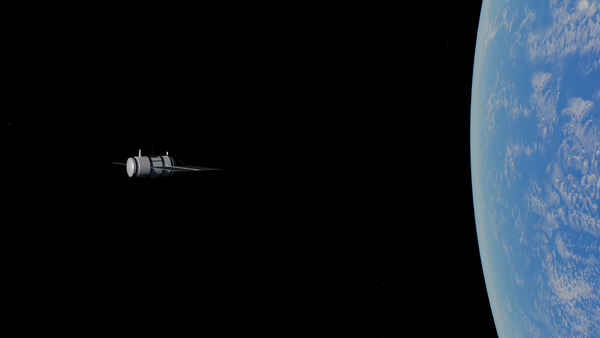
Space Tech
NASA’s First Robot Rescue: Can Lift Save the Swift Telescope Before It Burns Up?
What happens when a $300 million space telescope starts falling back to Earth? If you’re NASA, you send a robot to catch it. That’s exactly what’s happening this week, and it’s the kind of mission that sounds like a movie plot but is very, very real. The Swift Gamma-Ray Burst Ob…
Read More...