
Elon Musk Admits He Was Wrong About Anthropic, Tesla’s Self-Driving Nears an Inflection Point, and NASA’s Roman Telescope Prepares for Launch: Three Stories Defining 2026
San Francisco, California, MMN Correspondent: On a Tuesday morning in June, Elon Musk did something rare in the world of tech billionaires. He admitted he was wrong. Not in a quiet, buried-in-a-footnote kind of way, but publicly, on his own platform X. The target of his reversal? Anthropic, the AI company he had dismissed just nine months earlier as lacking the chops to compete in the frontier model race. Now, with Anthropic’s Mythos/Fable model setting new benchmarks, Musk called it unmatched by any other company’s released model to date. That’s a big shift, and it raises an interesting question: what changed?
The answer lies partly in a GPU lease deal struck in May 2026 between Musk’s AI infrastructure venture and Anthropic. The arrangement gave Anthropic access to critical computing power for training large language models. Some wondered if Musk might use that leverage to hobble a rival. His response was direct: “I would never cut them off in a way that hurt them badly, even as a competitor. That’s not my style.” It’s a statement that echoes a broader philosophy across his companies. Tesla opened its patents in 2014. It opened its Supercharger network to other EVs. SpaceX launches satellites for competitors without price gouging. On X, he insists the platform remains a space for open discourse, even when the criticism is personal. The pattern is clear: Musk believes that sharing infrastructure and competing on merit, not gatekeeping, drives faster progress for everyone.
This matters because compute power is becoming the new oil in the AI industry. Whoever controls it can shape who builds the next generation of models. Musk’s commitment to fair play suggests a future where competition is decided by performance and vision, not by who can cut off someone else’s supply. With Anthropic preparing to release Mythos 2, expected to extend its lead, the implications go beyond one company. They hint at a redefinition of what healthy competition looks like in an era of exponential growth.
Meanwhile, on the ground, Tesla is approaching a moment that could change how we think about cars. Pierre Ferragu, a veteran analyst at New Street Research, believes the company’s Full Self-Driving suite is on the verge of an inflection point. He draws a parallel to the early days of the iPhone. Early adopters saw it as just a phone. Then they realized it was a platform for apps, connectivity, and a whole new way of living. Today, nearly 250 million iPhones sell every year. Ferragu argues that a Tesla is not a car in the same way an iPhone was not a phone. He points out that a Model 3 at $35,000 plus a $100 monthly FSD subscription might seem expensive compared to the average new vehicle price of over $49,000. But the value proposition changes when you consider it as a daily productivity and safety tool. Once drivers experience hands-free highway driving, automated lane changes, and seamless navigation, the cost becomes easier to justify. The real breakthrough is software-driven, not hardware-driven.
Ferragu predicts that within two more quarters, the full potential of FSD will become undeniable, triggering mass adoption. Early user stories already show how hard it is to go back to a conventional car after experiencing autonomous driving. The psychological shift is happening: people are starting to see their vehicle as a mobile office, an entertainment hub, and a personal assistant, not just transportation. As Tesla refines its neural networks and moves toward fully unsupervised operation, the appeal will expand from early adopters to the mainstream.
And then there’s the cosmos. NASA is preparing to launch the Nancy Grace Roman Space Telescope aboard SpaceX’s Falcon Heavy rocket on August 30, 2026. Named after NASA’s first chief of astronomy, this telescope is built for speed and breadth. While Hubble captures narrow, detailed images of distant galaxies, Roman’s field of view is at least 100 times wider. It can survey hundreds of millions of galaxies in a single exposure. That capability is crucial for mapping dark matter, studying galaxy formation, and detecting exoplanets with extraordinary precision. Roman can directly image planets outside our solar system, measuring their atmospheric composition and surface features. This brings humanity closer than ever to answering one of science’s deepest questions: Are we alone in the universe? Its instruments can identify planets in habitable zones where liquid water might exist. Its orbit, far beyond Earth’s influence, ensures minimal interference for deep-space observation.
The Falcon Heavy, currently the most powerful operational rocket, was chosen for its payload capacity and reliability. Since its debut in 2018, it has become NASA’s preferred heavy-lift option, offering a cost-effective alternative to older systems. Final preparations at Kennedy Space Center’s Payload Hazardous Servicing Facility, including fueling and testing, mark the culmination of years of engineering work.
Together, these three stories paint a picture of a year where innovation is not happening in silos. Musk’s recalibration of competitive ethics, Tesla’s push toward autonomous mobility, and NASA’s quest to unlock cosmic secrets are all part of a larger trend. Technological leadership is no longer about isolation. It is about openness, ambition, and the willingness to admit past mistakes. In 2026, the lines between artificial intelligence, transportation, and space exploration are blurring. Progress is not just rapid. It is profoundly interconnected.
Related in Space Tech
Space Tech
Miami Now Has Driverless Taxis Operating Without Any Human Oversight: Here’s What Tesla’s Robotaxi Launch Means for You
Imagine hailing a taxi in Miami, climbing in, and realizing there’s no one behind the wheel. No safety driver. No remote monitor. Just you, the car, and the open road. That scenario is no longer a test or a demo. It’s live. Tesla has officially launched its Robotaxi service in M…
Read More...
Space Tech
Your Tesla Will Soon Learn Your Neighborhood by Voice: 3 Ways FSD Remembers Every Detail
Tesla is quietly rolling out a feature that could change how you think about your car. Instead of relying on GPS pins that sometimes point to the wrong house, your Full Self-Driving system will soon learn your street the way a local does. You speak. It remembers. No maps require…
Read More...
Space Tech
Tesla App Update 2026: How Owners Now Manage a Robotaxi Fleet from Their Phone
Imagine glancing at your phone and seeing your car driving itself across town, earning money while you sip coffee at home. That’s not a sci-fi fantasy anymore. A recent Tesla app update, quietly rolled out in late June 2026 as part of software version 4.58.5, has turned every ow…
Read More...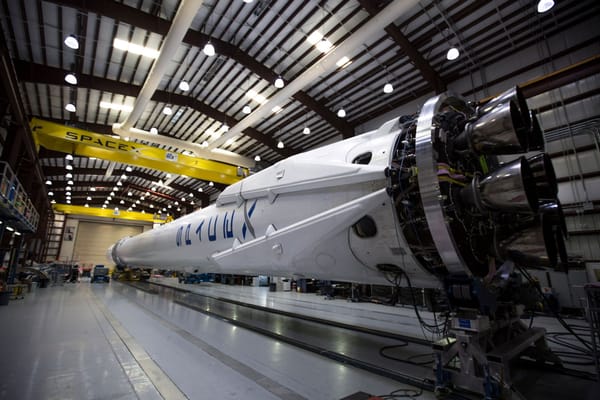
Space Tech
SpaceXAI Is Here: How a $1.25 Trillion Merger Is Building Orbital Data Centers for the Next AI Era
When Elon Musk announced in May 2026 that xAI would vanish as a standalone company, most people assumed it was just another corporate reshuffle. They were wrong. What actually happened was the quiet birth of something far bigger: SpaceXAI, a single entity that now controls rocke…
Read More...
Space Tech
Tesla Driver Charged in Fatal Crash After Overriding Autopilot: What the Data Reveals About Your Responsibility Behind the Wheel
A case unfolding in Harris County, Texas, is forcing a hard look at how we use advanced driver assistance systems. Michael Butler, a 34-year-old DoorDash driver, now faces manslaughter charges after his Tesla crashed into a home on June 5, 2026, killing 47-year-old Maria Avila.…
Read More...
Space Tech
Tesla Model Y L Launch Series Hits U.S. Market: 325 Miles, 4.4 Seconds, and a Surprise for Families
Tesla just dropped something big in the U.S. and Puerto Rico, and it’s not another Cybertruck tease. The Model Y L Launch Series is here, priced at $61,990, and it’s already turning heads. Why? Because this isn’t just a stretched Model Y. It’s Tesla’s answer to everyone who’s be…
Read More...
Space Tech
Tesla’s Optimus Robot Factory Goes Live: 1 Million Humanoid Robots Per Year from Fremont Line
What happens when one of the world’s most iconic car factories stops building cars and starts building robots? You get a front-row seat to the next industrial revolution. Tesla just flipped the switch on its Optimus humanoid robot production line at the historic Fremont plant, a…
Read More...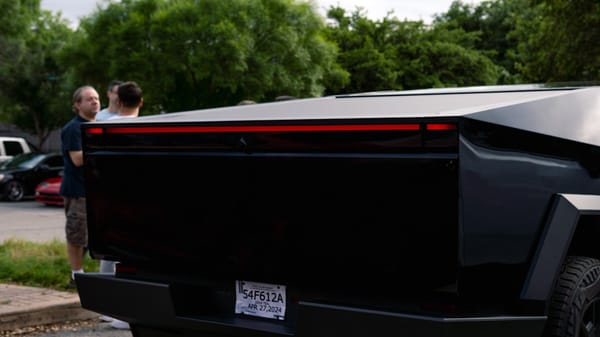
Space Tech
Tesla’s Cybercab Hits Austin Streets: No Steering Wheel, No Driver, Just AI
What happens when you remove the steering wheel, pedals, and driver from a car and let artificial intelligence take the wheel? Tesla is finding out right now on the streets of Austin, Texas. The company has quietly launched real world testing of its first production ready Cyberc…
Read More...
Space Tech
SpaceX’s Starmind: 1 Million AI Satellites and a $300 Billion T-Mobile Deal That Could Rewrite Global Connectivity
Elon Musk has never been one to follow the crowd. While the internet buzzes with rumors of a Tesla smartphone, the real story unfolding at SpaceX is far bigger and far stranger. It’s not about a device in your pocket. It’s about turning the sky itself into a thinking machine. Me…
Read More...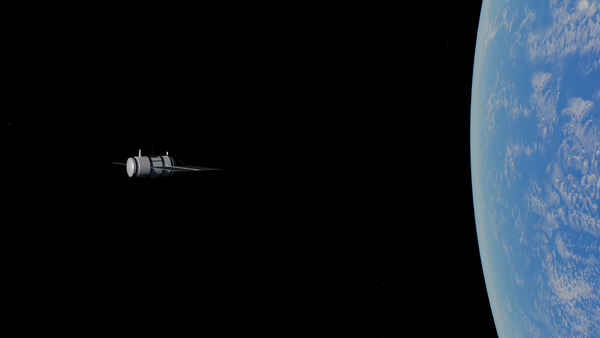
Space Tech
NASA’s First Robot Rescue: Can Lift Save the Swift Telescope Before It Burns Up?
What happens when a $300 million space telescope starts falling back to Earth? If you’re NASA, you send a robot to catch it. That’s exactly what’s happening this week, and it’s the kind of mission that sounds like a movie plot but is very, very real. The Swift Gamma-Ray Burst Ob…
Read More...