
Inside Elon Musk’s Texas Ranch: A 40-Year Innovation Timeline from Blastar to Cybercab
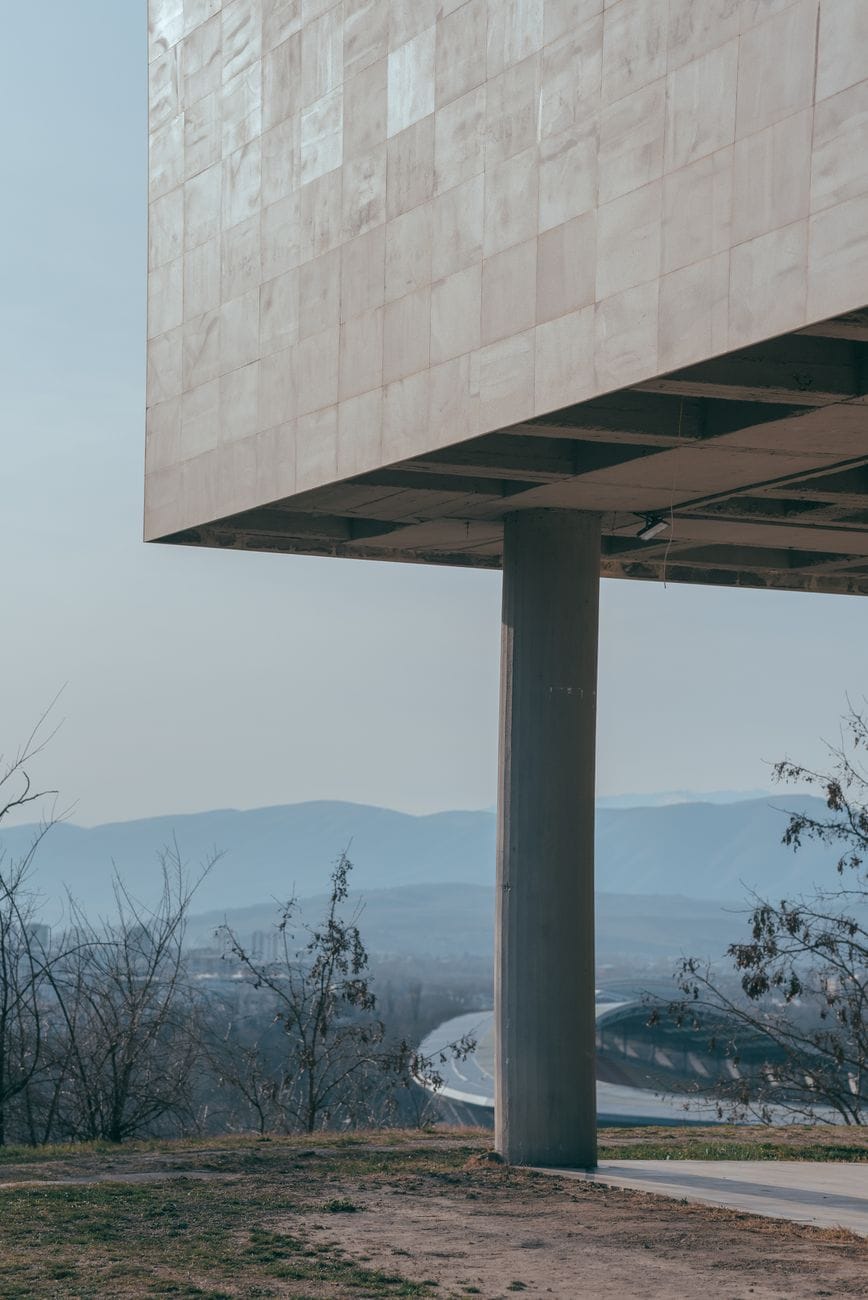
Bastrop County, Texas, MMN Correspondent: Deep in the rolling hills of Bastrop County, Texas, something unusual is taking shape. Across thousands of acres of riverfront land, Elon Musk is quietly building what could become the most ambitious personal museum of technology ever conceived. It’s not a typical collection of dusty artifacts. This is a living product gallery, designed to trace the full arc of his innovations from a 12-year-old’s first video game to a fleet of autonomous robotaxis.
The project first surfaced in a brief post on X, and it arrives at a moment when Musk’s companies are hitting historic milestones. SpaceX just completed the largest IPO in corporate history, valued at $75 billion. The gallery, still under wraps in terms of final design and public access, is expected to walk visitors through four decades of invention. It starts with Blastar, a simple space shooter game he sold for $500 as a teenager, and moves through Zip2, PayPal, Tesla, SpaceX, SolarCity, Neuralink, The Boring Company, OpenAI, X, xAI, Optimus, and the Cybercab.
But this isn’t just a timeline of hardware and vehicles. The collection will include cultural artifacts that reveal Musk’s playful side. Think The Boring Company’s Not-a-Flamethrower, Tesla’s limited-edition Short Shorts, and even Burnt Hair perfume released under the X brand. These items show how Musk blends engineering with pop culture, using humor and bold branding to capture attention. It’s a reminder that innovation doesn’t have to be dry or serious.
Land records show Musk’s footprint in Bastrop County has grown rapidly. By mid-2026, entities linked to him control about 2,000 acres, up from 700 earlier in the year. Some analyses suggest total acquisitions across Bastrop and Travis counties could reach 6,000 acres, all managed through an LLC called Horse Ranch LLC, overseen by Jared Birchall, Musk’s longtime confidant and CEO of Neuralink.
No official opening date has been announced, but the timing feels deliberate. With SpaceX playing a central role in NASA’s Artemis lunar missions and Starlink’s global broadband network expanding fast, Musk is entering a phase where legacy projects take center stage. The gallery could serve as both a personal retrospective and a public showcase of how one person’s relentless drive can reshape entire industries.
Meanwhile, SpaceX is pushing forward with Starship Flight 13, scheduled for July 16, 2026. This mission builds on lessons from Flight 12, which faced challenges like booster course deviations, Raptor engine relight failures, and an engine-out event on the upper stage. In response, SpaceX introduced upgraded guidance systems, improved engine alarms, revised abort logic, and new heat shield tiles that monitor stress in real time. Six of the 20 Starlink V3 satellites onboard are equipped with cameras to capture thermal imagery of the heat shield during re-entry, data that will be critical for future return-to-launch-site attempts.
The V3 Starlink satellites themselves represent a major leap forward. They feature laser inter-satellite links, deployable solar arrays, and advanced antennas that deliver faster speeds and higher network capacity. This dual-purpose flight tests both vehicle performance and next-generation satellite capabilities in a single mission, highlighting SpaceX’s commitment to rapid iteration and data-driven refinement.
On the AI front, Musk recently made a public reversal, admitting he was clearly wrong about Anthropic. Once dismissed as a weak contender, Anthropic has emerged as a leader with its Mythos/Fable model surpassing all others in performance. Musk praised the company’s progress and reaffirmed his commitment to fair competition, pointing to Tesla’s open-source strategy and its decision to allow rival EVs access to the Supercharger network. He emphasized that his approach prioritizes long-term technological advancement over short-term market dominance.
This ethos extends to Tesla’s latest Full Self-Driving advancements. A new feature allows drivers to teach their car specific navigation instructions using natural language. For example, a user could say, “It’s the white house on the left, just past that SUV,” and the system would remember this detail for future trips. Powered by Grok AI and set to integrate with FSD’s planning layer by September 2026, this capability represents a major step toward contextual autonomy. Every interaction feeds into Tesla’s AI training flywheel, creating a vast fleet-wide database of hyper-local behavioral patterns that competitors cannot replicate at scale.
As Tesla expands its Cybercab robotaxi operations to Miami and beyond, these voice-taught preferences will enable autonomous vehicles to anticipate rider needs down to the final driveway entrance. This level of personalized, adaptive intelligence could redefine urban mobility and set a new benchmark for AI-driven transportation.
Elon Musk’s Texas ranch gallery is more than a museum. It’s a living archive of human ingenuity, where every artifact tells a story of risk, failure, reinvention, and triumph. It stands as a monument to the power of persistent innovation and the belief that the future is not something we wait for, but something we build piece by piece, test by test, vision by vision.
Related in Space Tech

Space Tech
August 2026 in the Faroe Islands: A Rare Solar Eclipse Meets the Perseid Meteor Shower
Imagine standing on a remote cliff edge, the North Atlantic wind brushing your face, as the sky darkens in the middle of the day. Then, just hours later, lying back under a star-filled canopy to watch hundreds of shooting stars streak across the heavens. This is not a fantasy. T…
Read More...
Space Tech
Tesla Stock Crashes 14.5% After Earnings: What the $140 Billion Wipeout Means for the EV Giant's Future
On July 23, 2026, Tesla shares took a nosedive that erased more than $140 billion in market value in a single day. The stock closed near $320 after opening around $374, marking a 14.5% drop that ranks among the steepest in the company's history since its 2010 IPO. But here's the…
Read More...
Space Tech
Tesla Q2 2026: Revenue Hits $27.1B, But EPS Misses—What’s Driving the $1.8B Bet on Robotaxis and AI?
Tesla just dropped its Q2 2026 numbers, and they’re the kind that make you lean in. Revenue hit $27.1 billion, beating Wall Street’s $26.4 billion forecast. But here’s the twist: earnings per share came in at $0.49, just shy of the $0.53 analysts expected. So what’s really going…
Read More...
Space Tech
Tesla’s Robotaxi Network Just Got Bigger: SFO Access, Starlink Fleet Control, and Two New Florida Cities – What It Means for Your Next Ride
If you’ve been watching Tesla’s autonomous ride-hailing rollout, you know the company has been moving fast. But on July 21, 2026, they made a series of moves that feel less like incremental steps and more like a full sprint. We’re talking airport access in the Bay Area, a massiv…
Read More...
Space Tech
7 Ways Tesla’s New AI Will Remember Your Driving Preferences and Cut Interventions by 80%
Elon Musk just dropped a quiet bombshell that could change how you interact with your Tesla forever. Instead of forcing every driver to follow the same rigid rules, the company’s Full Self-Driving system is about to get a memory. A personal one. One that learns your habits, your…
Read More...
Space Tech
Your Tesla Will Soon Know You Better Than You Know Yourself: Here’s How AI Learns Your Driving Habits
Imagine stepping into your car after a long day, and before you even touch a button, the seat slides into your perfect position, your favorite playlist starts playing, the cabin temperature adjusts to your liking, and the navigation system already knows you want to stop for coff…
Read More...
Space Tech
How Tesla Entered Two New Countries in One Week and What It Means for EV Buyers in Latvia and Uruguay
What does it take for a car company to launch in two different continents within seven days? For Tesla, the answer involves a mix of strategic planning, local partnerships, and a deep understanding of what makes each market tick. This week, the company officially opened its door…
Read More...
Space Tech
Elon Musk Just Spent $1 Billion on Energy. Here’s Why Your AI Future Depends on It.
Elon Musk just made a quiet move that could reshape how artificial intelligence gets its power. In early June 2026, a $1.04 billion all-cash acquisition was finalized for an energy company based in Nevada. The deal was filed under a shell corporation in Delaware, and no press re…
Read More...
Space Tech
Lucid Stock Crashes 40%: Is the EV Maker Really Heading for Bankruptcy? Here’s What You Need to Know
If you’ve been watching the EV market lately, you probably caught the headlines: Lucid Motors’ stock took a brutal 40% dive in a single July trading session. That kind of drop doesn’t just rattle investors—it sparks whispers of bankruptcy across forums and trading floors. But be…
Read More...
Space Tech
Can Tesla’s Semi Survive Chicago’s Brutal Winter? A 500-Mile Electric Truck Faces Its Toughest Test Yet
What happens when a battery-powered semi truck meets a Midwestern winter that can freeze diesel in its tracks? Tesla is about to find out. The company’s all-electric Class 8 Semi has just entered a high stakes pilot program with Paper Transport, LLC (PTI), a Wisconsin based logi…
Read More...