
Your Tesla Will Soon Know You Better Than You Know Yourself: Here’s How AI Learns Your Driving Habits
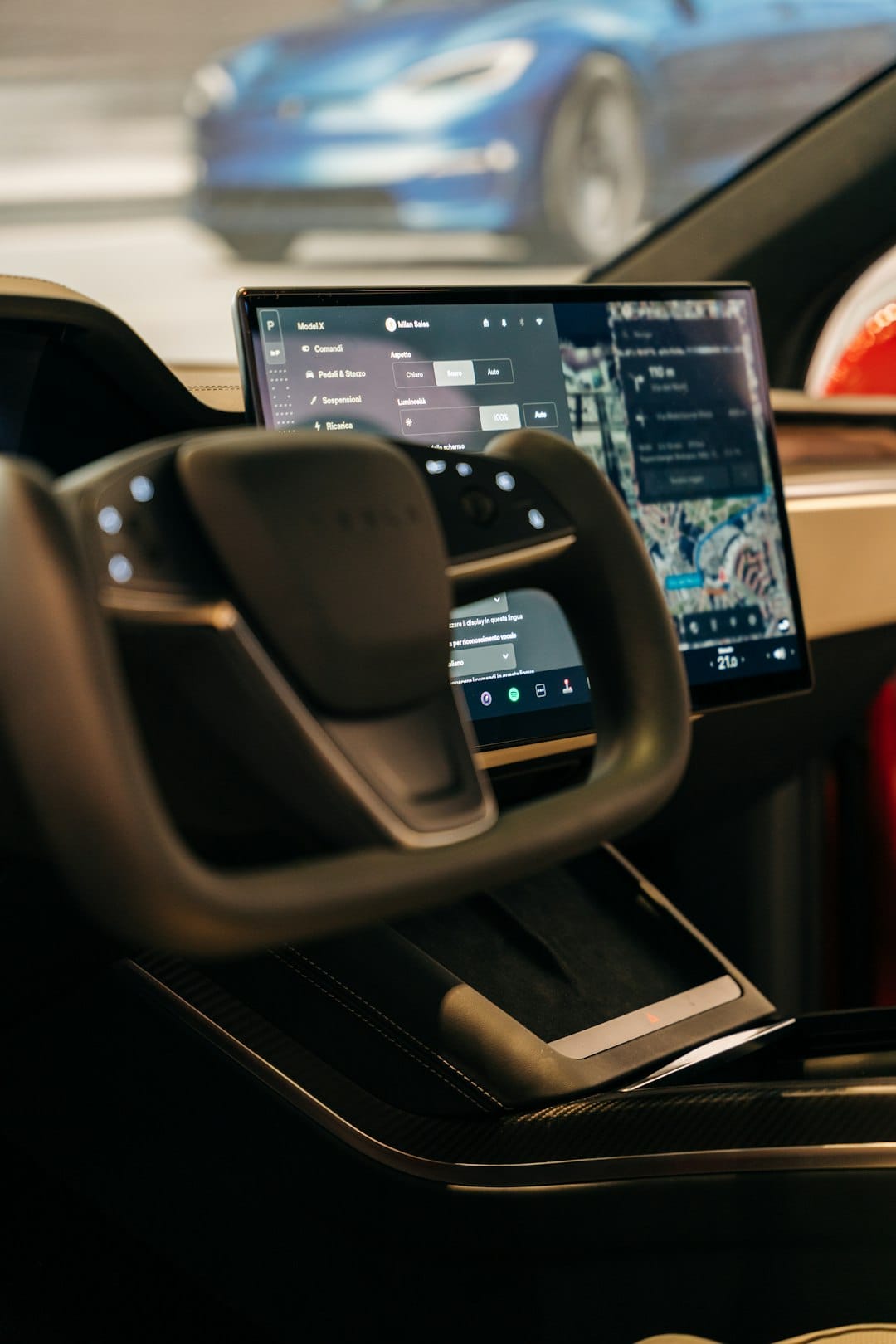
Palo Alto, California, MMN Correspondent: Imagine stepping into your car after a long day, and before you even touch a button, the seat slides into your perfect position, your favorite playlist starts playing, the cabin temperature adjusts to your liking, and the navigation system already knows you want to stop for coffee on the way home. This isn’t a scene from a sci-fi movie. It’s the next step in Tesla’s evolution, and it’s arriving sooner than you think.
Elon Musk recently confirmed that Tesla vehicles will begin learning individual driver preferences in real time. This moves the electric car beyond being a simple machine that gets you from point A to point B. It becomes something more like a co-pilot that pays attention to how you live, what you like, and how you drive. The technology builds on Tesla’s existing Autopilot and Full Self-Driving systems, but instead of just watching the road, it starts watching you.
Here’s how it works. Advanced machine learning algorithms analyze patterns in your daily routines. The car notes your preferred seat position, climate settings, music choices, and even your driving style. Are you someone who accelerates smoothly or takes corners with a bit more energy? Do you always take the same route to work, or do you switch it up depending on traffic? Over time, the system learns these habits and begins making adjustments automatically. No more fiddling with knobs or menus. The car just knows.
This isn’t just about convenience, though that alone is a big deal. The real promise lies in safety and health. If the system detects changes in your driving behavior like slower reaction times or unusual lane drifting it could alert you to take a break or even suggest that you might be fatigued. In more serious situations, the car could notify emergency contacts based on your learned routines. It’s a layer of protection that feels less like surveillance and more like a thoughtful friend looking out for you.
Behind the scenes, Tesla’s global fleet of over 4 million vehicles feeds data into neural networks that train these systems. But here’s the reassuring part: the sensitive information stays local. Tesla uses edge computing, meaning the processing happens inside your car, not on some distant server. This reduces privacy risks and keeps your habits between you and your vehicle. You also have control. Through the Tesla app, you can review how your preferences are being interpreted, opt in or out of data collection, and even train the system with custom commands.
Other automakers like BMW, Mercedes-Benz, and Toyota are exploring similar features, but Tesla’s vertically integrated approach gives it an edge. When you control everything from battery design to software architecture, you can make the pieces work together more seamlessly. That’s why Tesla can deliver real-time responsiveness that competitors are still trying to match.
The timing of this announcement matters. As Musk prepares to open a product gallery at his Texas ranch showcasing early projects like the video game he coded at age 12 alongside the Cybercab, Optimus robot, and Neuralink implants the focus on personalization signals a shift from pure engineering to human-centered design. It’s no longer enough for a car to be fast or efficient. It has to understand you.
A 2026 study by McKinsey & Company found that 78% of consumers now expect their cars to adapt to their habits, up from just 34% in 2020. That’s a massive shift in expectations, and Tesla is positioning itself to meet it head on. Experts predict that personalized AI in vehicles will become standard within the next five years, with Tesla leading the charge.
What does this mean for you? It means your car will stop being a passive object and start becoming an active participant in your daily life. It will anticipate your needs, adapt to your moods, and help keep you safe. The journey toward true autonomy isn’t just about self driving technology. It’s about creating a vehicle that connects with you on a personal level. And if Tesla’s track record is any indication, that future is closer than we think.
Related in Space Tech

Space Tech
August 2026 in the Faroe Islands: A Rare Solar Eclipse Meets the Perseid Meteor Shower
Imagine standing on a remote cliff edge, the North Atlantic wind brushing your face, as the sky darkens in the middle of the day. Then, just hours later, lying back under a star-filled canopy to watch hundreds of shooting stars streak across the heavens. This is not a fantasy. T…
Read More...
Space Tech
Tesla Stock Crashes 14.5% After Earnings: What the $140 Billion Wipeout Means for the EV Giant's Future
On July 23, 2026, Tesla shares took a nosedive that erased more than $140 billion in market value in a single day. The stock closed near $320 after opening around $374, marking a 14.5% drop that ranks among the steepest in the company's history since its 2010 IPO. But here's the…
Read More...
Space Tech
Tesla Q2 2026: Revenue Hits $27.1B, But EPS Misses—What’s Driving the $1.8B Bet on Robotaxis and AI?
Tesla just dropped its Q2 2026 numbers, and they’re the kind that make you lean in. Revenue hit $27.1 billion, beating Wall Street’s $26.4 billion forecast. But here’s the twist: earnings per share came in at $0.49, just shy of the $0.53 analysts expected. So what’s really going…
Read More...
Space Tech
Tesla’s Robotaxi Network Just Got Bigger: SFO Access, Starlink Fleet Control, and Two New Florida Cities – What It Means for Your Next Ride
If you’ve been watching Tesla’s autonomous ride-hailing rollout, you know the company has been moving fast. But on July 21, 2026, they made a series of moves that feel less like incremental steps and more like a full sprint. We’re talking airport access in the Bay Area, a massiv…
Read More...
Space Tech
7 Ways Tesla’s New AI Will Remember Your Driving Preferences and Cut Interventions by 80%
Elon Musk just dropped a quiet bombshell that could change how you interact with your Tesla forever. Instead of forcing every driver to follow the same rigid rules, the company’s Full Self-Driving system is about to get a memory. A personal one. One that learns your habits, your…
Read More...
Space Tech
How Tesla Entered Two New Countries in One Week and What It Means for EV Buyers in Latvia and Uruguay
What does it take for a car company to launch in two different continents within seven days? For Tesla, the answer involves a mix of strategic planning, local partnerships, and a deep understanding of what makes each market tick. This week, the company officially opened its door…
Read More...
Space Tech
Elon Musk Just Spent $1 Billion on Energy. Here’s Why Your AI Future Depends on It.
Elon Musk just made a quiet move that could reshape how artificial intelligence gets its power. In early June 2026, a $1.04 billion all-cash acquisition was finalized for an energy company based in Nevada. The deal was filed under a shell corporation in Delaware, and no press re…
Read More...
Space Tech
Inside Elon Musk’s Texas Ranch: A 40-Year Innovation Timeline from Blastar to Cybercab
Deep in the rolling hills of Bastrop County, Texas, something unusual is taking shape. Across thousands of acres of riverfront land, Elon Musk is quietly building what could become the most ambitious personal museum of technology ever conceived. It’s not a typical collection of…
Read More...
Space Tech
Lucid Stock Crashes 40%: Is the EV Maker Really Heading for Bankruptcy? Here’s What You Need to Know
If you’ve been watching the EV market lately, you probably caught the headlines: Lucid Motors’ stock took a brutal 40% dive in a single July trading session. That kind of drop doesn’t just rattle investors—it sparks whispers of bankruptcy across forums and trading floors. But be…
Read More...
Space Tech
Can Tesla’s Semi Survive Chicago’s Brutal Winter? A 500-Mile Electric Truck Faces Its Toughest Test Yet
What happens when a battery-powered semi truck meets a Midwestern winter that can freeze diesel in its tracks? Tesla is about to find out. The company’s all-electric Class 8 Semi has just entered a high stakes pilot program with Paper Transport, LLC (PTI), a Wisconsin based logi…
Read More...