
Tesla Q2 2026: Revenue Hits $27.1B, But EPS Misses—What’s Driving the $1.8B Bet on Robotaxis and AI?
San Francisco, California, MMN Correspondent: Tesla just dropped its Q2 2026 numbers, and they’re the kind that make you lean in. Revenue hit $27.1 billion, beating Wall Street’s $26.4 billion forecast. But here’s the twist: earnings per share came in at $0.49, just shy of the $0.53 analysts expected. So what’s really going on under the hood?
Compared to the same quarter last year, when Tesla pulled in $22.387 billion, this is a serious step up. The Model Y and Cybertruck are selling strong, Megapack installations are booming in Europe and Asia, and Full Self-Driving subscriptions jumped 18% quarter over quarter. That recurring software revenue is starting to add real weight to the top line.
But the EPS miss has people talking. And the reason is actually pretty fascinating. Tesla poured nearly $1.8 billion into R&D for autonomous systems, robotics, and manufacturing upgrades. That’s the cost of building the future, and it’s eating into margins right now. The question is: will that bet pay off?
During the earnings call, Elon Musk addressed the elephant in the room: the robotaxi rollout. Remember those promises of 50% U.S. coverage by end of 2025 and seven new cities in early 2026? Right now, the service is still limited to pilot zones in Austin, Phoenix, and Los Angeles. Musk pointed to regulatory hurdles and safety validation as the main brakes. But here’s the encouraging part: the test fleet now has over 1,200 vehicles, and the plan is to scale to 10 major metro areas by year end. That’s not nothing.
Then there’s Optimus Gen 3, Tesla’s humanoid robot. Mass production is already underway at the Fremont facility. Initial deployment inside Tesla’s own factories is expected by late Q3 2026, handling tasks like material handling and quality inspection. By 2027, these robots could be doing logistics coordination across automotive and energy plants. External sales to industrial and warehouse sectors might start in early 2028. The neural network behind Optimus has been trained on billions of hours of simulated and real world data from Tesla’s factories and FSD fleet. That’s a lot of learning.
And it doesn’t stop there. Musk revealed that SpaceX is feeding its engineering data—minus anything ITAR restricted—into the next version of Grok, the AI model from xAI. This training run, called the ‘2T run,’ will use roughly two trillion parameters, nearly doubling Grok 4.5. The data includes decades of aerospace design, materials science, and Starlink blueprints. The idea is to give Grok a unique edge in technical reasoning. It’s part of Musk’s broader vision: a unified intelligence layer across his companies, where each one contributes real world data to train increasingly capable AI.
SpaceX’s recent IPO, which valued the company above $2.6 trillion, has been a rollercoaster. After a 30% drop in the first five weeks, short sellers pocketed around $8.7 billion. Musk responded with a direct warning on X, saying firms with large short positions face ‘very low’ survival probability. He framed the space economy as a multi trillion dollar frontier, pointing to orbital solar power, asteroid mining, and Mars colonization. In his view, SpaceX is building the foundational infrastructure—like AWS for cloud computing—and positioning itself to dominate launch services, crew transport, and data transmission.
This echoes what Musk said about Tesla years ago: that short sellers would be ‘obliterated’ once full autonomy and Optimus production ramped up. History shows that Tesla’s stock has surged after periods of skepticism. The pattern suggests that long term technological bets can eventually outpace short term financial metrics.
So where does this leave Tesla? Q2 2026 shows some financial strain, but the momentum in AI, robotics, and sustainable energy points to a broader transformation. Investors are now watching for milestones: robotaxi deployment, Optimus commercialization, and AI model advancements. These are the things that could redefine transportation, manufacturing, and artificial intelligence itself.
In a world where traditional valuation models struggle to capture exponential growth, Tesla’s trajectory highlights a shift. The focus is moving beyond profit margins and delivery volumes. What matters now is control of data, scalability of systems, and dominance in emerging platforms. For stakeholders, the message is clear: the next phase of innovation may be less about immediate returns and more about securing a foothold in tomorrow’s digital and physical infrastructure.
Related in Space Tech

Space Tech
August 2026 in the Faroe Islands: A Rare Solar Eclipse Meets the Perseid Meteor Shower
Imagine standing on a remote cliff edge, the North Atlantic wind brushing your face, as the sky darkens in the middle of the day. Then, just hours later, lying back under a star-filled canopy to watch hundreds of shooting stars streak across the heavens. This is not a fantasy. T…
Read More...
Space Tech
Tesla Stock Crashes 14.5% After Earnings: What the $140 Billion Wipeout Means for the EV Giant's Future
On July 23, 2026, Tesla shares took a nosedive that erased more than $140 billion in market value in a single day. The stock closed near $320 after opening around $374, marking a 14.5% drop that ranks among the steepest in the company's history since its 2010 IPO. But here's the…
Read More...
Space Tech
Tesla’s Robotaxi Network Just Got Bigger: SFO Access, Starlink Fleet Control, and Two New Florida Cities – What It Means for Your Next Ride
If you’ve been watching Tesla’s autonomous ride-hailing rollout, you know the company has been moving fast. But on July 21, 2026, they made a series of moves that feel less like incremental steps and more like a full sprint. We’re talking airport access in the Bay Area, a massiv…
Read More...
Space Tech
7 Ways Tesla’s New AI Will Remember Your Driving Preferences and Cut Interventions by 80%
Elon Musk just dropped a quiet bombshell that could change how you interact with your Tesla forever. Instead of forcing every driver to follow the same rigid rules, the company’s Full Self-Driving system is about to get a memory. A personal one. One that learns your habits, your…
Read More...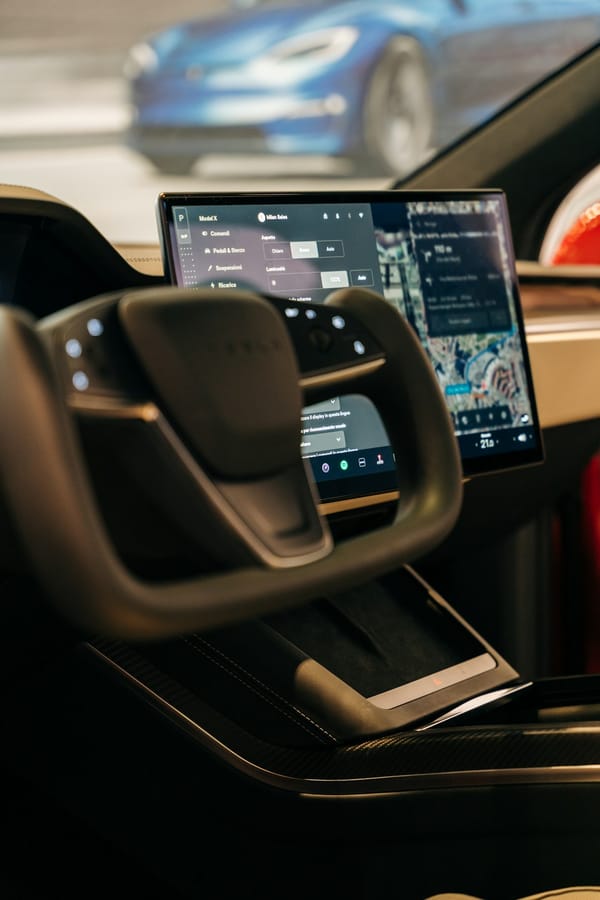
Space Tech
Your Tesla Will Soon Know You Better Than You Know Yourself: Here’s How AI Learns Your Driving Habits
Imagine stepping into your car after a long day, and before you even touch a button, the seat slides into your perfect position, your favorite playlist starts playing, the cabin temperature adjusts to your liking, and the navigation system already knows you want to stop for coff…
Read More...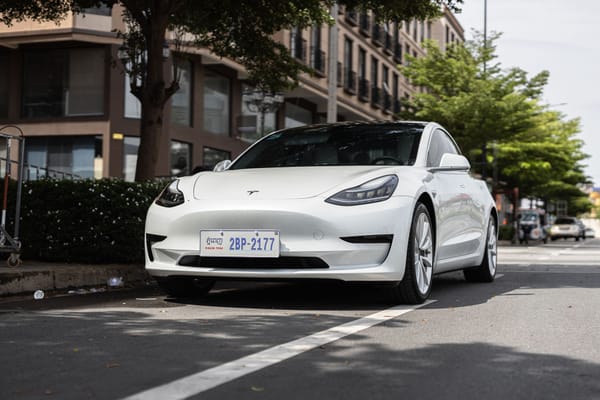
Space Tech
How Tesla Entered Two New Countries in One Week and What It Means for EV Buyers in Latvia and Uruguay
What does it take for a car company to launch in two different continents within seven days? For Tesla, the answer involves a mix of strategic planning, local partnerships, and a deep understanding of what makes each market tick. This week, the company officially opened its door…
Read More...
Space Tech
Elon Musk Just Spent $1 Billion on Energy. Here’s Why Your AI Future Depends on It.
Elon Musk just made a quiet move that could reshape how artificial intelligence gets its power. In early June 2026, a $1.04 billion all-cash acquisition was finalized for an energy company based in Nevada. The deal was filed under a shell corporation in Delaware, and no press re…
Read More...
Space Tech
Inside Elon Musk’s Texas Ranch: A 40-Year Innovation Timeline from Blastar to Cybercab
Deep in the rolling hills of Bastrop County, Texas, something unusual is taking shape. Across thousands of acres of riverfront land, Elon Musk is quietly building what could become the most ambitious personal museum of technology ever conceived. It’s not a typical collection of…
Read More...
Space Tech
Lucid Stock Crashes 40%: Is the EV Maker Really Heading for Bankruptcy? Here’s What You Need to Know
If you’ve been watching the EV market lately, you probably caught the headlines: Lucid Motors’ stock took a brutal 40% dive in a single July trading session. That kind of drop doesn’t just rattle investors—it sparks whispers of bankruptcy across forums and trading floors. But be…
Read More...
Space Tech
Can Tesla’s Semi Survive Chicago’s Brutal Winter? A 500-Mile Electric Truck Faces Its Toughest Test Yet
What happens when a battery-powered semi truck meets a Midwestern winter that can freeze diesel in its tracks? Tesla is about to find out. The company’s all-electric Class 8 Semi has just entered a high stakes pilot program with Paper Transport, LLC (PTI), a Wisconsin based logi…
Read More...