
New Jersey Tesla Owners: Your Voice Could Decide the Future of Robotaxis – Here’s What’s at Stake
Trenton, New Jersey, MMN Correspondent: New Jersey is standing at a fascinating crossroads. On one side, there’s the promise of a future where cars drive themselves, where seniors can get to appointments without relying on family, and where traffic jams might finally loosen their grip. On the other side, there’s a proposed bill that could quietly slam the brakes on all of that. And Tesla is asking its New Jersey owners to pick a side.
The bill in question sounds reasonable at first glance. It proposes a three year pilot program for self driving vehicles. But dig a little deeper, and you’ll find conditions that Tesla argues make true driverless operations nearly impossible. Human safety drivers would be required during every test run. Insurance costs would jump to $5 million per vehicle, a number far above what most companies budget. And before any car can operate without a human behind the wheel, it must log 100,000 miles of proven safe autonomous driving. That’s a lot of miles, and a lot of money.
Tesla’s message to its owners is simple: these requirements don’t come from safety data. They come from a desire to protect existing industries. The company points out that over 94% of serious accidents are caused by human error, things like distraction, fatigue, or impairment. Fully autonomous systems don’t get tired, don’t text, and don’t drink. So why build a regulatory framework that treats the technology as if it’s more dangerous than the humans it’s designed to replace?
This isn’t just a technical debate. It’s a deeply human one. Tesla’s appeal to New Jersey residents highlights real world benefits that are easy to overlook. Imagine a family that doesn’t own a second car, but can summon a robotaxi to take their kids to school safely, without a drowsy parent behind the wheel. Picture an elderly person who can no longer drive, suddenly able to visit friends or run errands independently. Think about neighborhoods with limited public transit, where a fleet of autonomous vehicles could reduce congestion and emissions. These aren’t futuristic fantasies. They’re happening in places like Texas and California, where more permissive regulations have allowed robotaxis to operate without human supervision.
Supporters of the bill, including Senator Andrew Zwicker, argue for caution. They describe the legislation as a balanced framework with strong safety measures: mandatory incident reporting, expert oversight task forces, and geographic restrictions near schools and sensitive areas. Their goal is to protect public trust and ensure accountability before widespread deployment. It’s a reasonable position, especially given how new this technology still feels to many people.
But here’s the tension. The bill doesn’t focus on outcomes like accident rates or system reliability. Instead, it prioritizes bureaucratic process and procedural hurdles. Critics say this creates a de facto ban on commercial robotaxi services, raising barriers that only established automotive players can afford. For a company like Tesla, which thrives on rapid iteration and real world learning, this kind of framework feels less like safety regulation and more like a gatekeeping mechanism.
This isn’t the first time we’ve seen this dance. Remember when Uber tested autonomous vehicles in Pittsburgh and faced early resistance? Or when Waymo rolled out in Arizona amid regulatory uncertainty? In both cases, initial pushback slowed deployment, but later data showed the systems were safer than human drivers. New Jersey now has a chance to learn from those stories. Will it choose a protectionist path, or will it embrace a future where transportation is safer, more equitable, and economically transformative?
Tesla’s outreach to its New Jersey customers is direct and personal. Owners receive emails with links to an advocacy platform where they can send customized messages to their lawmakers. The ask is clear: push for amendments that replace arbitrary benchmarks with outcome based safety standards, open the door to competition, and create clear pathways for fully driverless commercial operations. With legislative hearings approaching, the company frames this as a pivotal moment, not just for New Jersey, but for the entire country’s trajectory toward autonomous mobility.
Beyond the state’s borders, the implications are significant. Other states and countries are watching closely. New Jersey’s decision could become a model for how to regulate autonomous vehicles, or a cautionary tale of what happens when innovation gets tangled in red tape. The success of robotaxis depends not only on technological readiness but also on regulatory alignment. States that create enabling environments are already seeing results. Tesla’s Robotaxi network is active in multiple Texas cities, providing rides without human supervision, proving the technology works in real world conditions.
Of course, Tesla isn’t without its own challenges. The company continues to refine its Full Self Driving software, and while perception and control have improved, navigation accuracy remains a work in progress. Some users report wrong turns, missed exits, inefficient routing, and phantom speed limit errors. These are the kinds of fundamental tasks that consumer GPS platforms have mastered for decades. Experts suggest that Tesla’s reliance on fragmented data sources and limited learning from driver interventions contributes to this instability. It’s a reminder that even advanced AI systems need to master the basics before they can be trusted everywhere.
Meanwhile, Apple is reportedly developing a new CarPlay feature called Route Sharing, which could integrate seamlessly with Tesla vehicles. If implemented, this update, expected with iOS 26.4, could allow Tesla owners to use CarPlay for navigation and messaging, addressing long standing complaints about FSD’s routing weaknesses. Adoption remains slow due to low iOS 26 uptake and compatibility challenges, but it gives Tesla time to refine its own system.
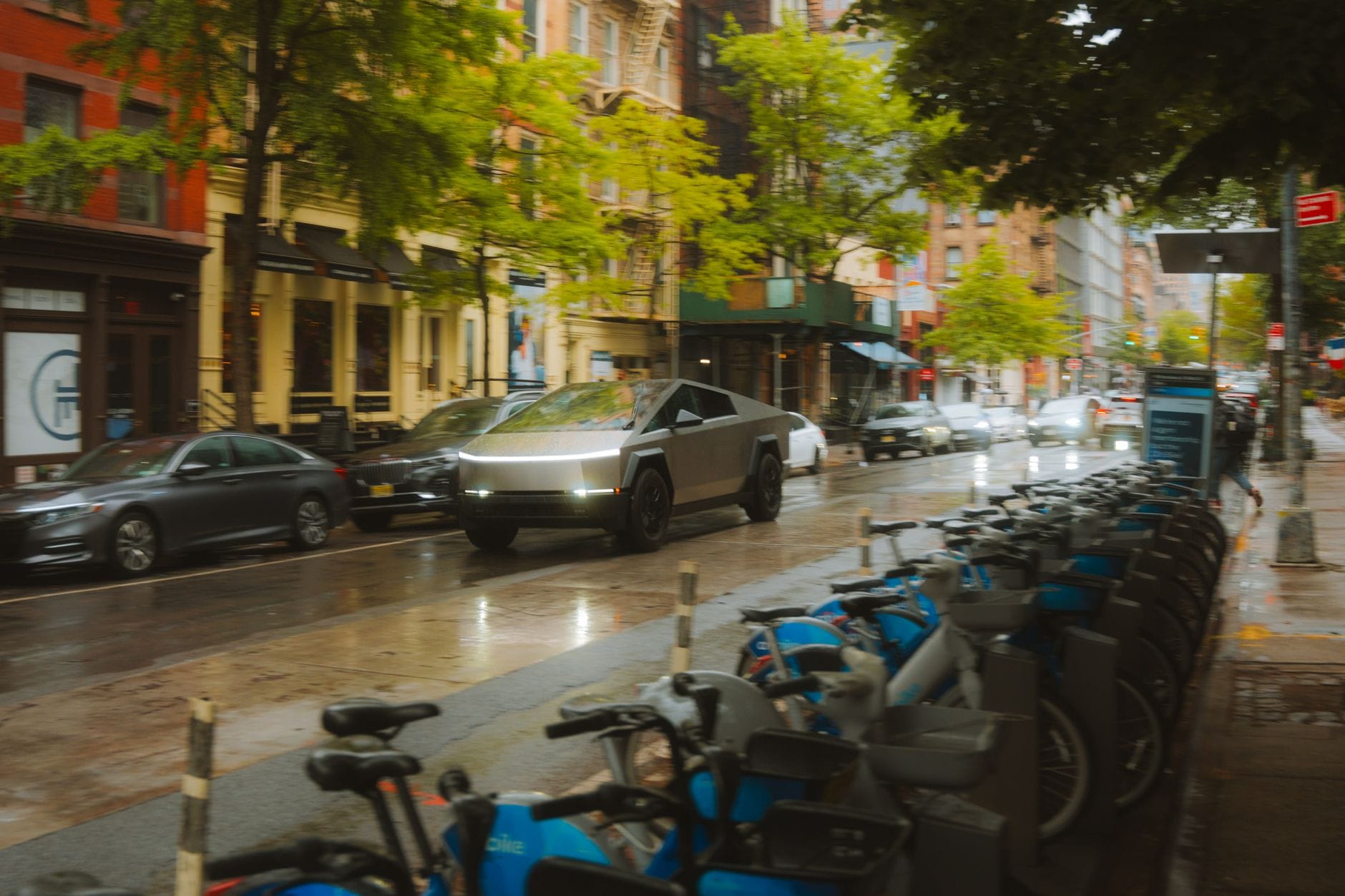
And then there’s the Cybertruck, which remains banned in the UK due to its angular design and stainless steel exoskeleton. The sharp edges pose risks in collisions, leading to confiscation of vehicles registered abroad. Tesla has explored modified versions for European markets, but no official release has materialized. It’s a reminder that global regulatory differences can delay even the most innovative products.
Ultimately, the outcome in New Jersey will reflect a broader global shift: the tension between innovation and regulation. As autonomous technology matures, the question is no longer whether it works, but whether governments are willing to let it thrive. For New Jersey, the next few weeks may define its place in the future of transportation. And Tesla is making its case loud and clear: don’t block progress. Embrace the future.
Related in Space Tech
Space Tech
Elon Musk Admits He Was Wrong About Anthropic, Tesla’s Self-Driving Nears an Inflection Point, and NASA’s Roman Telescope Prepares for Launch: Three Stories Defining 2026
On a Tuesday morning in June, Elon Musk did something rare in the world of tech billionaires. He admitted he was wrong. Not in a quiet, buried-in-a-footnote kind of way, but publicly, on his own platform X. The target of his reversal? Anthropic, the AI company he had dismissed j…
Read More...
Space Tech
Miami Now Has Driverless Taxis Operating Without Any Human Oversight: Here’s What Tesla’s Robotaxi Launch Means for You
Imagine hailing a taxi in Miami, climbing in, and realizing there’s no one behind the wheel. No safety driver. No remote monitor. Just you, the car, and the open road. That scenario is no longer a test or a demo. It’s live. Tesla has officially launched its Robotaxi service in M…
Read More...
Space Tech
Your Tesla Will Soon Learn Your Neighborhood by Voice: 3 Ways FSD Remembers Every Detail
Tesla is quietly rolling out a feature that could change how you think about your car. Instead of relying on GPS pins that sometimes point to the wrong house, your Full Self-Driving system will soon learn your street the way a local does. You speak. It remembers. No maps require…
Read More...
Space Tech
Tesla App Update 2026: How Owners Now Manage a Robotaxi Fleet from Their Phone
Imagine glancing at your phone and seeing your car driving itself across town, earning money while you sip coffee at home. That’s not a sci-fi fantasy anymore. A recent Tesla app update, quietly rolled out in late June 2026 as part of software version 4.58.5, has turned every ow…
Read More...
Space Tech
SpaceXAI Is Here: How a $1.25 Trillion Merger Is Building Orbital Data Centers for the Next AI Era
When Elon Musk announced in May 2026 that xAI would vanish as a standalone company, most people assumed it was just another corporate reshuffle. They were wrong. What actually happened was the quiet birth of something far bigger: SpaceXAI, a single entity that now controls rocke…
Read More...
Space Tech
Tesla Driver Charged in Fatal Crash After Overriding Autopilot: What the Data Reveals About Your Responsibility Behind the Wheel
A case unfolding in Harris County, Texas, is forcing a hard look at how we use advanced driver assistance systems. Michael Butler, a 34-year-old DoorDash driver, now faces manslaughter charges after his Tesla crashed into a home on June 5, 2026, killing 47-year-old Maria Avila.…
Read More...
Space Tech
Tesla Model Y L Launch Series Hits U.S. Market: 325 Miles, 4.4 Seconds, and a Surprise for Families
Tesla just dropped something big in the U.S. and Puerto Rico, and it’s not another Cybertruck tease. The Model Y L Launch Series is here, priced at $61,990, and it’s already turning heads. Why? Because this isn’t just a stretched Model Y. It’s Tesla’s answer to everyone who’s be…
Read More...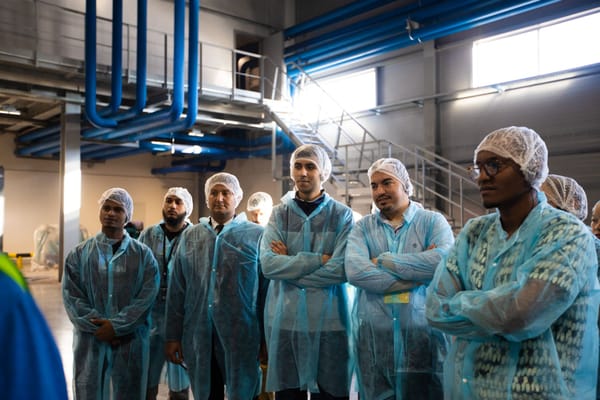
Space Tech
Tesla’s Optimus Robot Factory Goes Live: 1 Million Humanoid Robots Per Year from Fremont Line
What happens when one of the world’s most iconic car factories stops building cars and starts building robots? You get a front-row seat to the next industrial revolution. Tesla just flipped the switch on its Optimus humanoid robot production line at the historic Fremont plant, a…
Read More...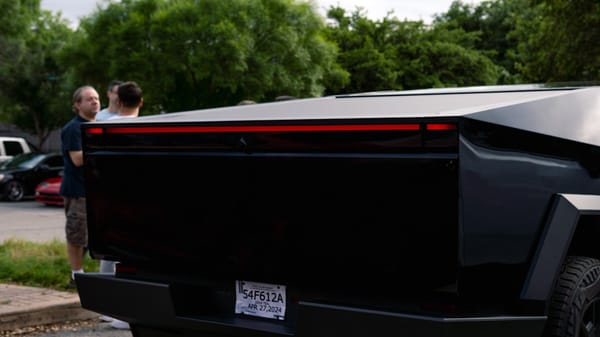
Space Tech
Tesla’s Cybercab Hits Austin Streets: No Steering Wheel, No Driver, Just AI
What happens when you remove the steering wheel, pedals, and driver from a car and let artificial intelligence take the wheel? Tesla is finding out right now on the streets of Austin, Texas. The company has quietly launched real world testing of its first production ready Cyberc…
Read More...
Space Tech
SpaceX’s Starmind: 1 Million AI Satellites and a $300 Billion T-Mobile Deal That Could Rewrite Global Connectivity
Elon Musk has never been one to follow the crowd. While the internet buzzes with rumors of a Tesla smartphone, the real story unfolding at SpaceX is far bigger and far stranger. It’s not about a device in your pocket. It’s about turning the sky itself into a thinking machine. Me…
Read More...