
Tesla Cybercab Spotted at Giga Texas: What Musk’s Latest Move Means for AI, Credit Ratings, and Your Next Ride
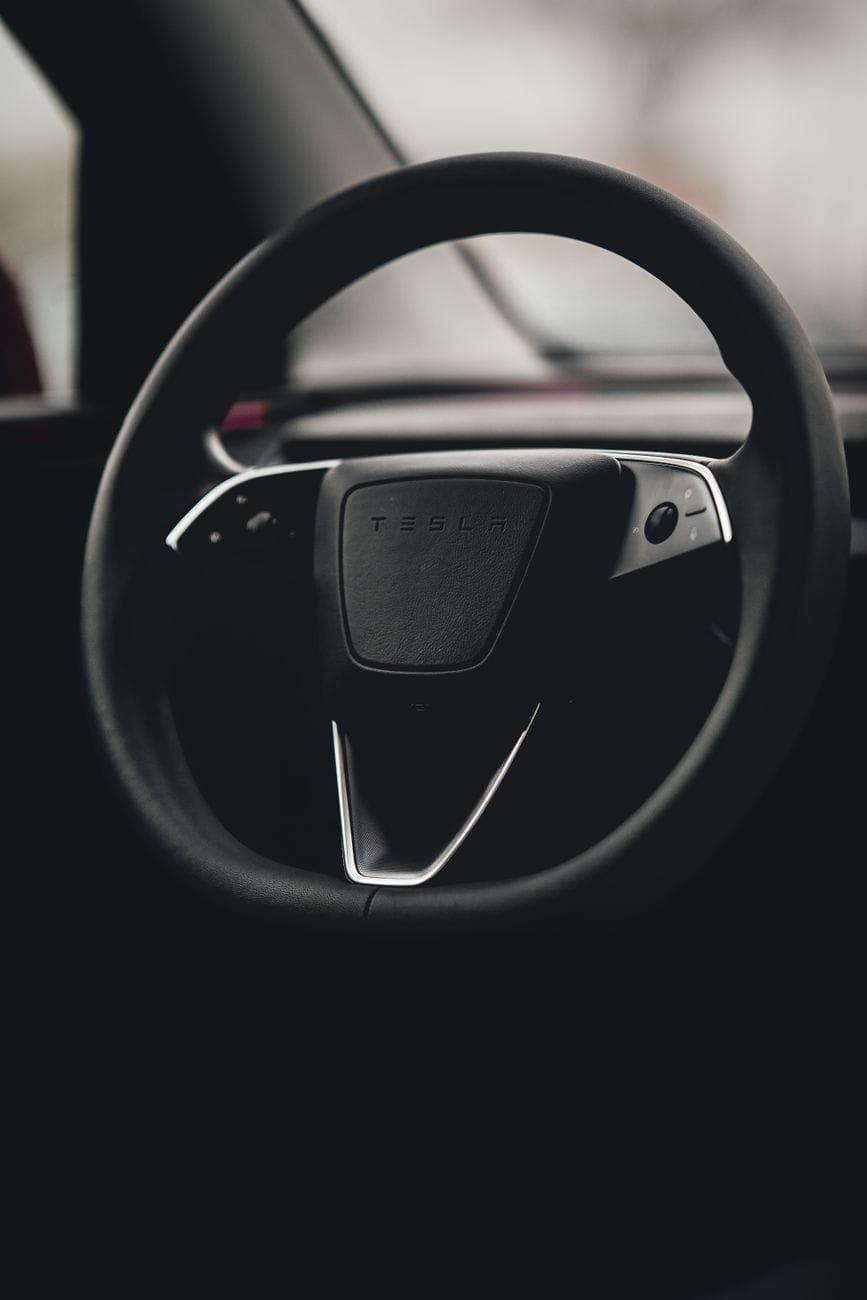
Austin, Texas, MMN Correspondent: You might have seen the photos circulating online: a sleek, driverless prototype of Tesla’s Cybercab rolling through the parking lot at Giga Texas. That sighting isn’t just a tease. It’s a signal that the company’s long awaited fully autonomous ride hailing vehicle is moving closer to public roads. But here’s the question everyone is asking: when will you actually be able to hail one?
Industry watchers now point to late 2026 or early 2027 as a realistic launch window. If that timeline holds, the Cybercab could reshape how we think about urban transportation. Imagine a cab with no steering wheel, no pedals, and no driver. Just you, your destination, and an AI that handles everything in between. Lower costs, higher availability, and zero human error. That’s the promise. And Tesla is betting big on it.
But the Cybercab isn’t the only story here. Elon Musk has been stirring up conversation about something else entirely: Tesla’s credit rating. After Moody’s gave SpaceX a Baa1 investment grade rating two notches above Tesla’s Baa3, Musk took to social media to call the gap “ridiculously low.” He pointed to Tesla’s $44.7 billion in cash, zero debt, and $1.4 billion in positive free cash flow from the first quarter of 2026 alone. Those numbers are hard to argue with.
So why the lower rating? Moody’s points to ongoing challenges in the automotive segment and expected margin pressures. But here’s the twist: they also acknowledge Tesla’s leadership in EVs, its AI driven autonomy work, and its strong liquidity. The real debate is whether traditional credit rating methods fully capture the value of a company that builds both cars and artificial intelligence. Tesla isn’t just an automaker. It’s a tech platform on wheels. And that distinction matters more every quarter.
Meanwhile, Tesla’s Full Self Driving system is facing a new kind of test in Europe. The Swedish Transport Administration has formally asked the European Union to reject FSD approval unless Tesla disables the feature’s ability to exceed speed limits. Their reasoning is straightforward: if an automated system can legally drive faster than posted limits, it undermines both traffic enforcement and the safety promises of autonomy. Sweden has a point. In countries where speed limits are treated as firm rules rather than suggestions, this becomes a real friction point.
Tesla has already secured FSD approvals in Estonia, Lithuania, Denmark, the Netherlands, and Belgium. But Sweden’s objection is notable because it’s one of the first formal pushbacks from a major EU member state. The outcome could set a precedent for how autonomous systems are regulated across the continent. And it raises a broader question: how do you balance cutting edge AI with local traffic cultures that value strict compliance?
On the usability front, Musk recently confirmed that Tesla will integrate Grok the AI assistant from X into the FSD experience within about three months. This means you’ll soon be able to talk to your car like you would a co pilot. Say “Grok, turn right here” or “Drop us off at the entrance, then park far away.” That last command is part of a feature called Banish, which lets the car autonomously drop passengers and find parking without any human input. For anyone who has circled a city block looking for a spot, this could be a game changer in the most practical sense.
This move is interesting because it brings back a layer of human control that Tesla had been reducing. Earlier updates removed Max Speed settings and introduced Speed Profiles that let the AI decide. Now, with Grok, you get conversational command back. It’s a balance between full autonomy and user directed navigation. And it directly addresses one of the most common complaints about FSD: that it doesn’t always follow your preferred route or handle drop offs the way you want. In dense urban areas where parking is scarce, that kind of flexibility matters a lot.
Musk’s announcement builds on a December 2025 demo where a user used the Tesla Holiday Update to guide a vehicle through a specific neighborhood to a designated parking lot. The Grok integration takes that concept and makes it seamless. Instead of tapping through menus, you just speak. The car listens, understands, and acts. That shift from passive observation to active collaboration is what makes the driving experience feel less like riding in a robot and more like working with a partner.
As Tesla moves toward the Cybercab launch, the pieces are coming together. A strong balance sheet. A growing AI ecosystem. Regulatory conversations happening in real time. And a product that could redefine what it means to own or use a car. The company is no longer just building vehicles. It’s building an autonomous mobility platform. And the next few months will show whether that platform can meet the expectations of regulators, riders, and investors alike.
The Cybercab’s eventual rollout could mark the beginning of a new transportation era. One where shared, electric, and fully autonomous vehicles become the norm. Less congestion. Lower emissions. Less reliance on personal car ownership. But the path there requires more than just good technology. It requires trust. And that trust will be built one mile, one regulation, and one conversation with your car at a time.
Related in Space Tech
Space Tech
Elon Musk Admits He Was Wrong About Anthropic, Tesla’s Self-Driving Nears an Inflection Point, and NASA’s Roman Telescope Prepares for Launch: Three Stories Defining 2026
On a Tuesday morning in June, Elon Musk did something rare in the world of tech billionaires. He admitted he was wrong. Not in a quiet, buried-in-a-footnote kind of way, but publicly, on his own platform X. The target of his reversal? Anthropic, the AI company he had dismissed j…
Read More...
Space Tech
Miami Now Has Driverless Taxis Operating Without Any Human Oversight: Here’s What Tesla’s Robotaxi Launch Means for You
Imagine hailing a taxi in Miami, climbing in, and realizing there’s no one behind the wheel. No safety driver. No remote monitor. Just you, the car, and the open road. That scenario is no longer a test or a demo. It’s live. Tesla has officially launched its Robotaxi service in M…
Read More...
Space Tech
Your Tesla Will Soon Learn Your Neighborhood by Voice: 3 Ways FSD Remembers Every Detail
Tesla is quietly rolling out a feature that could change how you think about your car. Instead of relying on GPS pins that sometimes point to the wrong house, your Full Self-Driving system will soon learn your street the way a local does. You speak. It remembers. No maps require…
Read More...
Space Tech
Tesla App Update 2026: How Owners Now Manage a Robotaxi Fleet from Their Phone
Imagine glancing at your phone and seeing your car driving itself across town, earning money while you sip coffee at home. That’s not a sci-fi fantasy anymore. A recent Tesla app update, quietly rolled out in late June 2026 as part of software version 4.58.5, has turned every ow…
Read More...
Space Tech
SpaceXAI Is Here: How a $1.25 Trillion Merger Is Building Orbital Data Centers for the Next AI Era
When Elon Musk announced in May 2026 that xAI would vanish as a standalone company, most people assumed it was just another corporate reshuffle. They were wrong. What actually happened was the quiet birth of something far bigger: SpaceXAI, a single entity that now controls rocke…
Read More...
Space Tech
Tesla Driver Charged in Fatal Crash After Overriding Autopilot: What the Data Reveals About Your Responsibility Behind the Wheel
A case unfolding in Harris County, Texas, is forcing a hard look at how we use advanced driver assistance systems. Michael Butler, a 34-year-old DoorDash driver, now faces manslaughter charges after his Tesla crashed into a home on June 5, 2026, killing 47-year-old Maria Avila.…
Read More...
Space Tech
Tesla Model Y L Launch Series Hits U.S. Market: 325 Miles, 4.4 Seconds, and a Surprise for Families
Tesla just dropped something big in the U.S. and Puerto Rico, and it’s not another Cybertruck tease. The Model Y L Launch Series is here, priced at $61,990, and it’s already turning heads. Why? Because this isn’t just a stretched Model Y. It’s Tesla’s answer to everyone who’s be…
Read More...
Space Tech
Tesla’s Optimus Robot Factory Goes Live: 1 Million Humanoid Robots Per Year from Fremont Line
What happens when one of the world’s most iconic car factories stops building cars and starts building robots? You get a front-row seat to the next industrial revolution. Tesla just flipped the switch on its Optimus humanoid robot production line at the historic Fremont plant, a…
Read More...
Space Tech
Tesla’s Cybercab Hits Austin Streets: No Steering Wheel, No Driver, Just AI
What happens when you remove the steering wheel, pedals, and driver from a car and let artificial intelligence take the wheel? Tesla is finding out right now on the streets of Austin, Texas. The company has quietly launched real world testing of its first production ready Cyberc…
Read More...
Space Tech
SpaceX’s Starmind: 1 Million AI Satellites and a $300 Billion T-Mobile Deal That Could Rewrite Global Connectivity
Elon Musk has never been one to follow the crowd. While the internet buzzes with rumors of a Tesla smartphone, the real story unfolding at SpaceX is far bigger and far stranger. It’s not about a device in your pocket. It’s about turning the sky itself into a thinking machine. Me…
Read More...