
Tesla FSD v14.3.3 Just Drove 300 Miles on Highways: Here’s What It Did Right (and Where It Still Struggles)

Location: Central Pennsylvania to Flight 93 National Memorial, Nishant Shrivastava: Imagine handing over the wheel for a five hour highway drive through tunnels, toll plazas, and merging trucks. That’s exactly what I did recently with Tesla’s Full Self Driving v14.3.3, and the results were eye opening. The 300 mile round trip from central Pennsylvania to the Flight 93 National Memorial put the system through its paces on the Pennsylvania Turnpike and Route 30, a stretch known for its demanding infrastructure. What happened next tells us a lot about where autonomous driving is heading.
The first thing you notice is how the car reads the road like a seasoned driver. When the fast lane ended ahead, FSD spotted the painted lane ending arrows and aborted a passing maneuver on a slower vehicle in the middle lane. Instead of rushing to complete the pass and then braking hard, it smoothly dropped back and waited behind the slower car. This wasn’t just reactive driving. It felt like the system understood the flow of traffic and made a calm, predictive choice. That kind of behavior builds trust quickly.
Then came the big test: a tractor trailer trying to merge into our lane. Most human drivers tense up in that moment, but the Tesla proactively shifted toward the shoulder to create extra clearance. It didn’t slow down abruptly or hesitate. It just made space, kept moving, and handled the situation with a quiet confidence that felt almost human. The spatial awareness here is a major step forward, especially in high risk scenarios where split second decisions matter.
Tunnel navigation has always been a weak spot for earlier versions, but v14.3.3 handled the Blue Mountain Tunnel with surprising discipline. The Pennsylvania Turnpike has strict no lane change rules inside tunnels, marked by double solid lines and warning signs. The car respected those rules completely, staying in its lane through the entire passage and only shifting after exiting the tunnel. No sudden lane changes, no confusion. Just steady, rule following behavior that makes you feel safer in confined spaces.
Toll plazas used to be a headache for FSD, but the switch to a Toll by Plate system on this route simplified things. The car sailed through the toll zone at a steady speed, without braking or second guessing. It correctly interpreted the absence of booths and barriers, and rejoined the highway smoothly. This kind of contextual understanding shows how the software is adapting to modern infrastructure, not just following old rules.
But let’s be honest: the system isn’t perfect yet. Parking remains a stubborn challenge. At the Fort Littleton Supercharger, the car struggled to back into an empty spot, failing to align properly after multiple attempts. I had to take over manually. And when we reached the destination, the car circled the parking lot four times, unable to recognize the correct entry point. Navigation kept rerouting, but the system couldn’t figure out the layout. Other Tesla owners have reported similar issues, which suggests the AI still struggles with static environments and local map interpretation.
These parking problems are more than just annoyances. According to a 2025 McKinsey report, 78% of consumers say reliable parking assistance is a top priority for self driving cars. And research from MIT’s CSAIL shows that deep reinforcement learning and sensor fusion are closing the gap between simulation and real world performance, but edge cases like tight parking lots remain tough nuts to crack. The good news is that these are solvable problems. Future updates could refine semantic mapping and integrate more granular parking data, turning a current weakness into a strength.
For now, FSD v14.3.3 feels like one of the most mature semi autonomous systems on the road. It handles long highway drives with minimal intervention, making the journey less about effort and more about experience. The lane management, obstacle avoidance, and infrastructure awareness are setting new benchmarks. The focus now shifts to urban environments and private parking zones. When those pieces fall into place, the dream of true hands free driving won’t just be a theory. It will be your daily commute.
Related in Space Tech
Space Tech
Elon Musk Admits He Was Wrong About Anthropic, Tesla’s Self-Driving Nears an Inflection Point, and NASA’s Roman Telescope Prepares for Launch: Three Stories Defining 2026
On a Tuesday morning in June, Elon Musk did something rare in the world of tech billionaires. He admitted he was wrong. Not in a quiet, buried-in-a-footnote kind of way, but publicly, on his own platform X. The target of his reversal? Anthropic, the AI company he had dismissed j…
Read More...
Space Tech
Miami Now Has Driverless Taxis Operating Without Any Human Oversight: Here’s What Tesla’s Robotaxi Launch Means for You
Imagine hailing a taxi in Miami, climbing in, and realizing there’s no one behind the wheel. No safety driver. No remote monitor. Just you, the car, and the open road. That scenario is no longer a test or a demo. It’s live. Tesla has officially launched its Robotaxi service in M…
Read More...
Space Tech
Your Tesla Will Soon Learn Your Neighborhood by Voice: 3 Ways FSD Remembers Every Detail
Tesla is quietly rolling out a feature that could change how you think about your car. Instead of relying on GPS pins that sometimes point to the wrong house, your Full Self-Driving system will soon learn your street the way a local does. You speak. It remembers. No maps require…
Read More...
Space Tech
Tesla App Update 2026: How Owners Now Manage a Robotaxi Fleet from Their Phone
Imagine glancing at your phone and seeing your car driving itself across town, earning money while you sip coffee at home. That’s not a sci-fi fantasy anymore. A recent Tesla app update, quietly rolled out in late June 2026 as part of software version 4.58.5, has turned every ow…
Read More...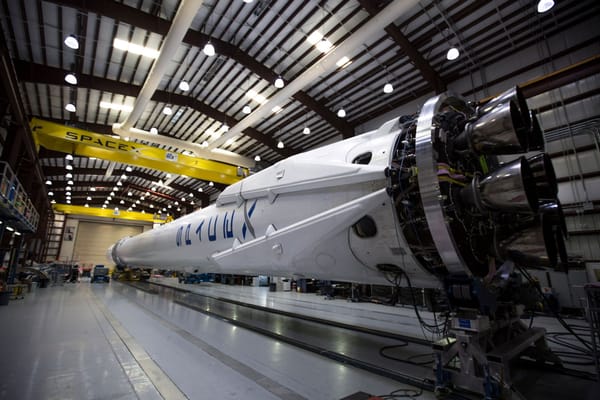
Space Tech
SpaceXAI Is Here: How a $1.25 Trillion Merger Is Building Orbital Data Centers for the Next AI Era
When Elon Musk announced in May 2026 that xAI would vanish as a standalone company, most people assumed it was just another corporate reshuffle. They were wrong. What actually happened was the quiet birth of something far bigger: SpaceXAI, a single entity that now controls rocke…
Read More...
Space Tech
Tesla Driver Charged in Fatal Crash After Overriding Autopilot: What the Data Reveals About Your Responsibility Behind the Wheel
A case unfolding in Harris County, Texas, is forcing a hard look at how we use advanced driver assistance systems. Michael Butler, a 34-year-old DoorDash driver, now faces manslaughter charges after his Tesla crashed into a home on June 5, 2026, killing 47-year-old Maria Avila.…
Read More...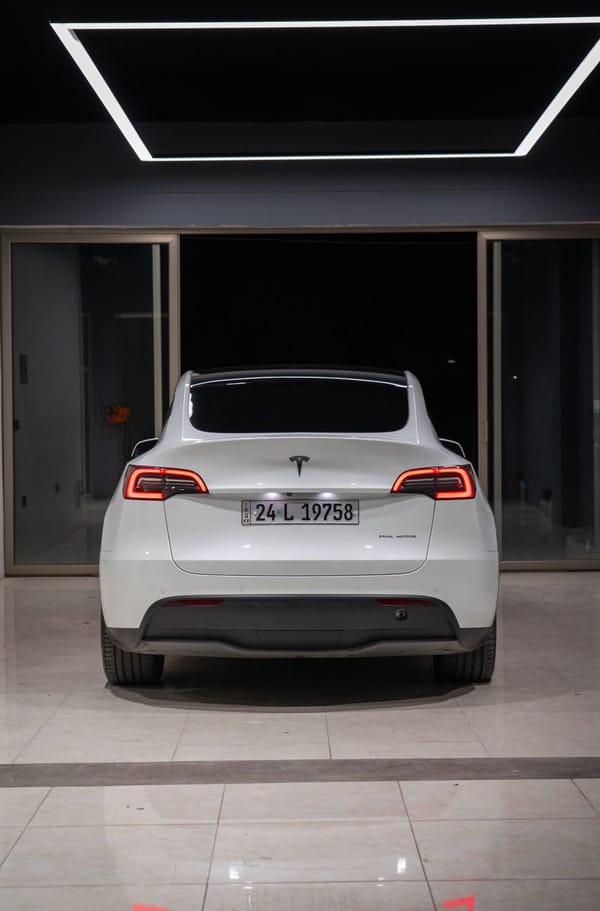
Space Tech
Tesla Model Y L Launch Series Hits U.S. Market: 325 Miles, 4.4 Seconds, and a Surprise for Families
Tesla just dropped something big in the U.S. and Puerto Rico, and it’s not another Cybertruck tease. The Model Y L Launch Series is here, priced at $61,990, and it’s already turning heads. Why? Because this isn’t just a stretched Model Y. It’s Tesla’s answer to everyone who’s be…
Read More...
Space Tech
Tesla’s Optimus Robot Factory Goes Live: 1 Million Humanoid Robots Per Year from Fremont Line
What happens when one of the world’s most iconic car factories stops building cars and starts building robots? You get a front-row seat to the next industrial revolution. Tesla just flipped the switch on its Optimus humanoid robot production line at the historic Fremont plant, a…
Read More...
Space Tech
Tesla’s Cybercab Hits Austin Streets: No Steering Wheel, No Driver, Just AI
What happens when you remove the steering wheel, pedals, and driver from a car and let artificial intelligence take the wheel? Tesla is finding out right now on the streets of Austin, Texas. The company has quietly launched real world testing of its first production ready Cyberc…
Read More...
Space Tech
SpaceX’s Starmind: 1 Million AI Satellites and a $300 Billion T-Mobile Deal That Could Rewrite Global Connectivity
Elon Musk has never been one to follow the crowd. While the internet buzzes with rumors of a Tesla smartphone, the real story unfolding at SpaceX is far bigger and far stranger. It’s not about a device in your pocket. It’s about turning the sky itself into a thinking machine. Me…
Read More...