
Tesla Q2 2026 Delivery Forecast: 406,024 Units and the Bigger Story Behind the Numbers
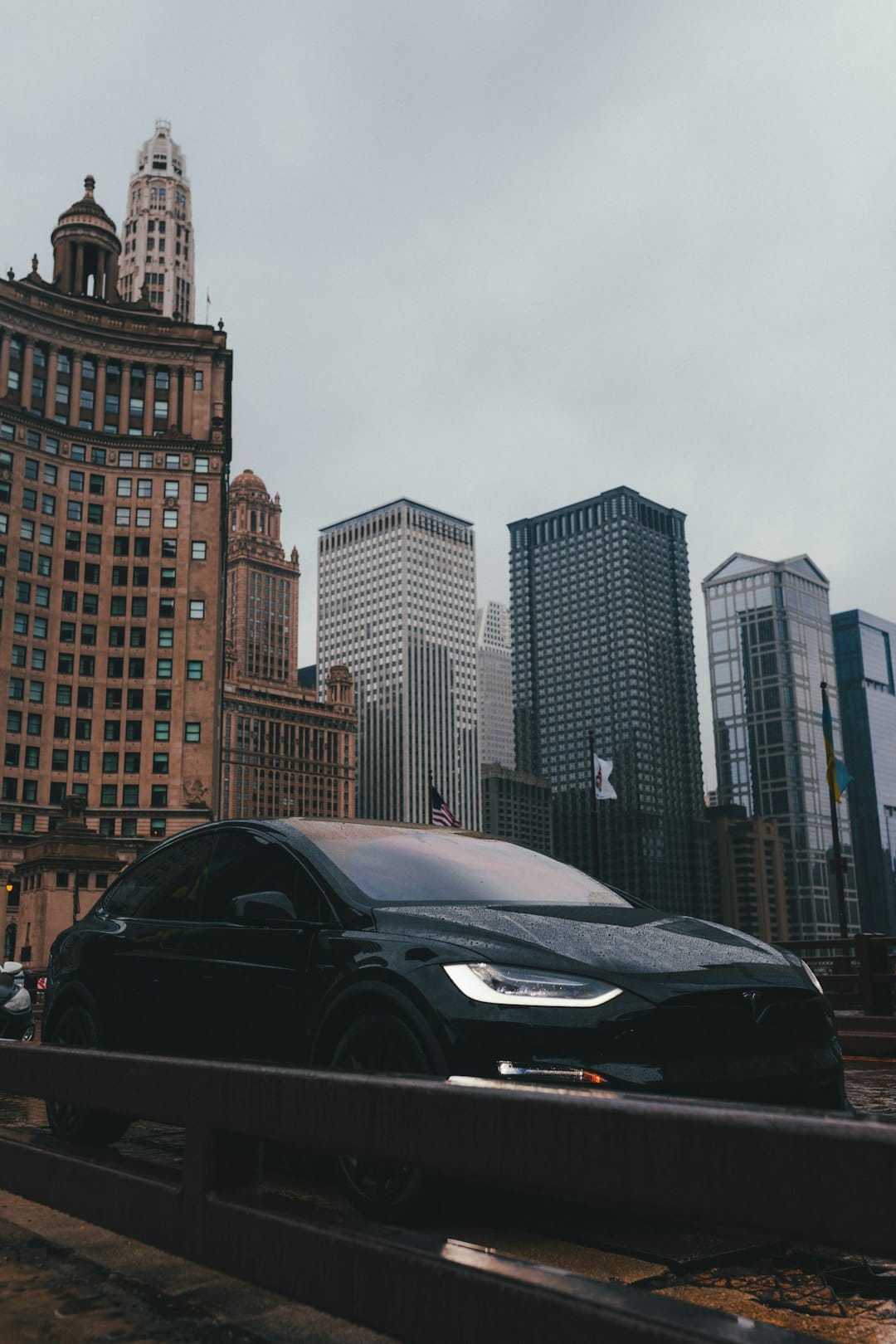
Fremont, California, MMN Correspondent: What if the most important number in Tesla’s latest quarterly report isn’t the delivery count at all? Analysts are now projecting 406,024 vehicle deliveries for Q2 2026, a 6.3% increase from the previous quarter. That figure sits below Wall Street’s earlier expectations of 365,000 to 370,000 units, but here’s where it gets interesting: the real story isn’t about how many cars Tesla sold. It’s about what the company is becoming.
For years, Tesla was the poster child for electric vehicles. Sleek designs, industry leading battery tech, and software updates that made your car feel new every few months. By 2023, they hit a peak of 1.81 million annual deliveries, a milestone that cemented their place as the world’s top EV maker. But over the last two years, those delivery numbers have leveled off. Some might call that a plateau. Others might see it as a pivot point.
Here’s the question that’s been buzzing in investor circles: What happens when a car company stops being just a car company? Tesla’s answer is becoming clearer by the day. They’re betting big on autonomous driving, specifically through the Cybercab and a planned Robotaxi network. The Cybercab is a fully driverless vehicle with no steering wheel or pedals. It’s not just a concept anymore. Regulatory changes under the current administration are clearing the path. The National Highway Traffic Safety Administration is considering removing the requirement for hand or foot operated brakes in vehicles designed exclusively for automated operation. That’s a massive door opening.
NHTSA Administrator Jonathan Morrison put it this way: “We are at the cusp of the greatest technological revolution in vehicle technology since the innovation of the Model T.” With that kind of regulatory tailwind, Tesla can move from prototype to real world deployment faster than many expected. Imagine a fleet of Cybercabs operating in your city within the next few years, offering rides without a driver behind the wheel. That’s not science fiction. That’s the roadmap.
Meanwhile, Tesla’s energy division is quietly becoming a powerhouse of its own. Analysts expect 13.8 gigawatt hours of energy deployments in Q2 2026, driven by Powerwall, Megapack, and solar products. These systems are critical for grid stability and renewable energy integration. But more importantly, they give Tesla control over the entire energy lifecycle, from generation to storage to consumption. Competitors who rely on third party suppliers for batteries or inverters simply can’t match that level of vertical integration.
Another factor that’s reshaping the landscape: the exit of a key competitor from the U.S. market. The U.S. Department of Commerce recently denied Polestar authorization to sell new vehicles in the United States starting with the 2027 model year. The reason? The Connected Vehicle Rule, which restricts vehicles using certain technologies linked to China or Russia due to national security concerns. Polestar, majority owned by Geely Holding, couldn’t secure an exemption despite domestic production efforts. That removes one of the most direct premium EV challengers to Tesla, especially in segments overlapping with the Model Y and the upcoming Cybercab.
With Polestar out, Tesla’s dominance in the American EV market strengthens. Tesla is a U.S. headquartered company with factories in Fremont, Austin, and Nevada. Its supply chains are largely domestic and aligned with allied nations. Its Full Self Driving system, over the air updates, and proprietary AI stack are all developed in house. That minimizes external dependencies and regulatory risks in a way that few competitors can replicate.
And then there’s the product lineup expansion. Tesla is preparing to launch the Model Y Long, a stretched version of the popular Model Y that’s already available in China. Production is set to begin at Gigafactory Texas in September 2026, with sales expected before the end of the year. The Model Y L features a 179mm longer wheelbase and increased rear passenger space, enabling a 2+2+2 seating configuration with captain’s chairs. That’s a direct response to families who’ve been asking for a full size, family oriented SUV. The dimensions are impressive: length around 4,969 mm, height 1,668 mm, and a wheelbase of 3,040 mm compared to the standard Model Y’s 2,890 mm. Cargo space behind the third row is slightly reduced, but the overall interior room makes it a compelling option, especially after the discontinuation of the Model X and Model S.
Consumer demand for larger SUVs has been strong, and Tesla fans have been vocal about wanting a vehicle that fits the whole family comfortably. The Model Y L fills that gap while keeping the agile handling and efficiency of the original Model Y. Elon Musk had earlier predicted the vehicle would arrive in the U.S. by late 2026, and it looks like that timeline is holding.
So what does all of this add up to? Tesla is no longer a company defined solely by vehicle sales. It’s transitioning into a comprehensive mobility and energy platform, leveraging autonomous technology, energy storage, and digital infrastructure to redefine how people travel and power their lives. The Q2 delivery consensus may show modest growth, but the real story is about the foundation being built for a future where transportation is seamless, sustainable, and fully autonomous. As regulations evolve, competition fades, and innovation accelerates, Tesla’s long standing theory that the future of mobility lies beyond the car itself is proving more valid than ever.
Related in Space Tech
Space Tech
Elon Musk Admits He Was Wrong About Anthropic, Tesla’s Self-Driving Nears an Inflection Point, and NASA’s Roman Telescope Prepares for Launch: Three Stories Defining 2026
On a Tuesday morning in June, Elon Musk did something rare in the world of tech billionaires. He admitted he was wrong. Not in a quiet, buried-in-a-footnote kind of way, but publicly, on his own platform X. The target of his reversal? Anthropic, the AI company he had dismissed j…
Read More...
Space Tech
Miami Now Has Driverless Taxis Operating Without Any Human Oversight: Here’s What Tesla’s Robotaxi Launch Means for You
Imagine hailing a taxi in Miami, climbing in, and realizing there’s no one behind the wheel. No safety driver. No remote monitor. Just you, the car, and the open road. That scenario is no longer a test or a demo. It’s live. Tesla has officially launched its Robotaxi service in M…
Read More...
Space Tech
Your Tesla Will Soon Learn Your Neighborhood by Voice: 3 Ways FSD Remembers Every Detail
Tesla is quietly rolling out a feature that could change how you think about your car. Instead of relying on GPS pins that sometimes point to the wrong house, your Full Self-Driving system will soon learn your street the way a local does. You speak. It remembers. No maps require…
Read More...
Space Tech
Tesla App Update 2026: How Owners Now Manage a Robotaxi Fleet from Their Phone
Imagine glancing at your phone and seeing your car driving itself across town, earning money while you sip coffee at home. That’s not a sci-fi fantasy anymore. A recent Tesla app update, quietly rolled out in late June 2026 as part of software version 4.58.5, has turned every ow…
Read More...
Space Tech
SpaceXAI Is Here: How a $1.25 Trillion Merger Is Building Orbital Data Centers for the Next AI Era
When Elon Musk announced in May 2026 that xAI would vanish as a standalone company, most people assumed it was just another corporate reshuffle. They were wrong. What actually happened was the quiet birth of something far bigger: SpaceXAI, a single entity that now controls rocke…
Read More...
Space Tech
Tesla Driver Charged in Fatal Crash After Overriding Autopilot: What the Data Reveals About Your Responsibility Behind the Wheel
A case unfolding in Harris County, Texas, is forcing a hard look at how we use advanced driver assistance systems. Michael Butler, a 34-year-old DoorDash driver, now faces manslaughter charges after his Tesla crashed into a home on June 5, 2026, killing 47-year-old Maria Avila.…
Read More...
Space Tech
Tesla Model Y L Launch Series Hits U.S. Market: 325 Miles, 4.4 Seconds, and a Surprise for Families
Tesla just dropped something big in the U.S. and Puerto Rico, and it’s not another Cybertruck tease. The Model Y L Launch Series is here, priced at $61,990, and it’s already turning heads. Why? Because this isn’t just a stretched Model Y. It’s Tesla’s answer to everyone who’s be…
Read More...
Space Tech
Tesla’s Optimus Robot Factory Goes Live: 1 Million Humanoid Robots Per Year from Fremont Line
What happens when one of the world’s most iconic car factories stops building cars and starts building robots? You get a front-row seat to the next industrial revolution. Tesla just flipped the switch on its Optimus humanoid robot production line at the historic Fremont plant, a…
Read More...
Space Tech
Tesla’s Cybercab Hits Austin Streets: No Steering Wheel, No Driver, Just AI
What happens when you remove the steering wheel, pedals, and driver from a car and let artificial intelligence take the wheel? Tesla is finding out right now on the streets of Austin, Texas. The company has quietly launched real world testing of its first production ready Cyberc…
Read More...
Space Tech
SpaceX’s Starmind: 1 Million AI Satellites and a $300 Billion T-Mobile Deal That Could Rewrite Global Connectivity
Elon Musk has never been one to follow the crowd. While the internet buzzes with rumors of a Tesla smartphone, the real story unfolding at SpaceX is far bigger and far stranger. It’s not about a device in your pocket. It’s about turning the sky itself into a thinking machine. Me…
Read More...