
Tesla Reveals Driver Hit 73 MPH in 30 MPH Zone Before Fatal Crash: What the Data Shows
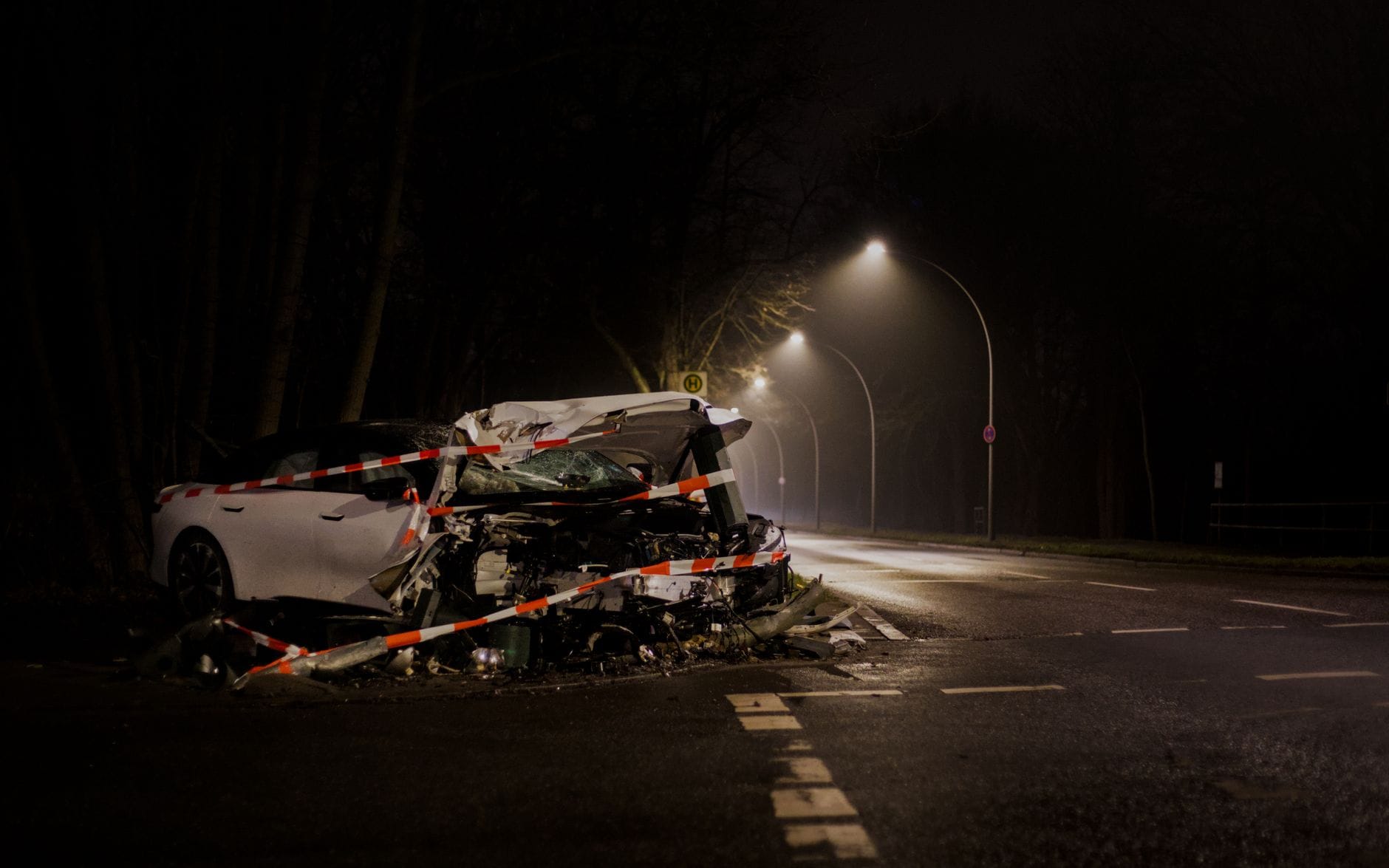
Texas, MMN Correspondent: Months after a deadly crash in a quiet Texas neighborhood, Tesla has finally released the data that explains what really happened. The incident, which involved a Model 3 slamming into a home at high speed, left one person dead and sparked intense debate about the safety of autonomous driving systems. Now, the company’s internal analysis paints a clear picture, and it points directly to the driver’s actions.
The crash occurred on a residential street where the speed limit is just 30 miles per hour. But according to Tesla’s onboard telemetry, the vehicle was traveling at 73 mph moments before impact. That’s more than double the legal limit. The data shows the driver pressed the accelerator pedal to 100% of its maximum capacity, and kept it fully depressed even after the collision. This wasn’t a system failure. It was a manual override.
Ashok Elluswamy, Tesla’s Head of Artificial Intelligence, shared these findings publicly, emphasizing that the Full Self-Driving (FSD) system was operating within its normal parameters. FSD is programmed to reduce speed in residential zones and avoid aggressive maneuvers unless the driver explicitly overrides it. Elon Musk himself weighed in, noting that FSD drives slowly through neighborhoods, making a high-speed crash inconsistent with the system’s design.
The National Highway Traffic Safety Administration (NHTSA) has opened a formal investigation to determine if any design flaw contributed to the event. Tesla has cooperated fully, providing sensor logs, camera feeds, and control inputs from the moments leading up to the crash. The company’s transparency here is notable, especially given the intense scrutiny surrounding its autonomous technology.
This isn’t the first time such a pattern has emerged. In April 2021, a similar fatal crash in Harris County, Texas, showed the accelerator pedal pressed to 98.8% of its range, with the vehicle reaching 67 mph in a 30 mph zone. The National Transportation Safety Board (NTSB) concluded that neither Autopilot nor FSD was in use during the vehicle’s entire ownership period, including the final moments. In both cases, the evidence points to human behavior, not system error.
These incidents highlight a critical distinction in modern vehicle safety: the difference between what automated systems can do and what drivers choose to do. Tesla’s FSD is designed to enhance safety, but it doesn’t remove the driver’s responsibility. When someone deliberately overrides the system, even the most advanced safeguards can’t prevent the consequences.
The broader conversation around autonomous driving continues to evolve. Critics worry that overreliance on automation can lead to complacency, while supporters point to data showing that these systems reduce accidents when used correctly. Tesla refines its FSD software constantly, using real-world data from millions of vehicles to improve decision-making in complex environments. The goal is to make driving safer, not to replace the driver entirely.
Beyond this crash, the incident raises questions about how we define responsibility in an age of AI powered vehicles. As cars become more capable of handling tasks like lane changes, traffic light recognition, and emergency braking, the line between machine autonomy and human intervention gets thinner. Regulatory bodies are pushing for clearer definitions of driver responsibility and system limitations, especially in high risk scenarios.
Interestingly, just days before Tesla clarified the Texas crash, the company filed a trademark application for ‘MEGAPOD’ with the United States Patent and Trademark Office. The filing describes a modular data center hardware system designed for artificial intelligence computing. It includes integrated servers, AI processors, networking components, power distribution units, cooling systems, and monitoring software, all sold as a self-contained unit. This move signals Tesla’s long term vision to build scalable, distributed AI compute platforms that could be deployed at Supercharger stations, manufacturing facilities, or even inside parked vehicles.
As demand for AI training and inference grows, companies like SpaceX and Google have also entered the compute leasing market. SpaceX recently signed multi billion dollar deals with major AI firms, offering access to its Colossus data centers powered by NVIDIA GB300 chips. These partnerships reflect a shift toward specialized infrastructure for next generation AI models, where performance, scalability, and energy efficiency are critical.
Elon Musk has also reiterated his stance on space propulsion, dismissing the idea of electric rockets for Earth launch. While electric thrusters are highly efficient in space, he argues they lack the thrust needed to overcome gravity and atmospheric drag during liftoff. Chemical combustion remains essential for initial ascent, though reusability and sustainable propellants like methane offer promising paths toward greener spaceflight.
The Texas crash serves as a reminder that technological advancement must be paired with responsible usage. Even the most sophisticated safety systems cannot compensate for deliberate disregard of traffic laws or vehicle dynamics. As autonomous technologies evolve, so too must public education, regulatory frameworks, and accountability mechanisms.
With ongoing investigations and continued innovation in AI and transportation, Tesla’s transparency in addressing this incident may set a precedent for how automakers handle high profile accidents involving emerging technologies. The company’s commitment to data driven clarity, combined with its push into AI infrastructure, suggests that the future of mobility will be shaped not only by speed and efficiency but also by trust, oversight, and shared responsibility.
Related in Space Tech
Space Tech
Elon Musk Admits He Was Wrong About Anthropic, Tesla’s Self-Driving Nears an Inflection Point, and NASA’s Roman Telescope Prepares for Launch: Three Stories Defining 2026
On a Tuesday morning in June, Elon Musk did something rare in the world of tech billionaires. He admitted he was wrong. Not in a quiet, buried-in-a-footnote kind of way, but publicly, on his own platform X. The target of his reversal? Anthropic, the AI company he had dismissed j…
Read More...
Space Tech
Miami Now Has Driverless Taxis Operating Without Any Human Oversight: Here’s What Tesla’s Robotaxi Launch Means for You
Imagine hailing a taxi in Miami, climbing in, and realizing there’s no one behind the wheel. No safety driver. No remote monitor. Just you, the car, and the open road. That scenario is no longer a test or a demo. It’s live. Tesla has officially launched its Robotaxi service in M…
Read More...
Space Tech
Your Tesla Will Soon Learn Your Neighborhood by Voice: 3 Ways FSD Remembers Every Detail
Tesla is quietly rolling out a feature that could change how you think about your car. Instead of relying on GPS pins that sometimes point to the wrong house, your Full Self-Driving system will soon learn your street the way a local does. You speak. It remembers. No maps require…
Read More...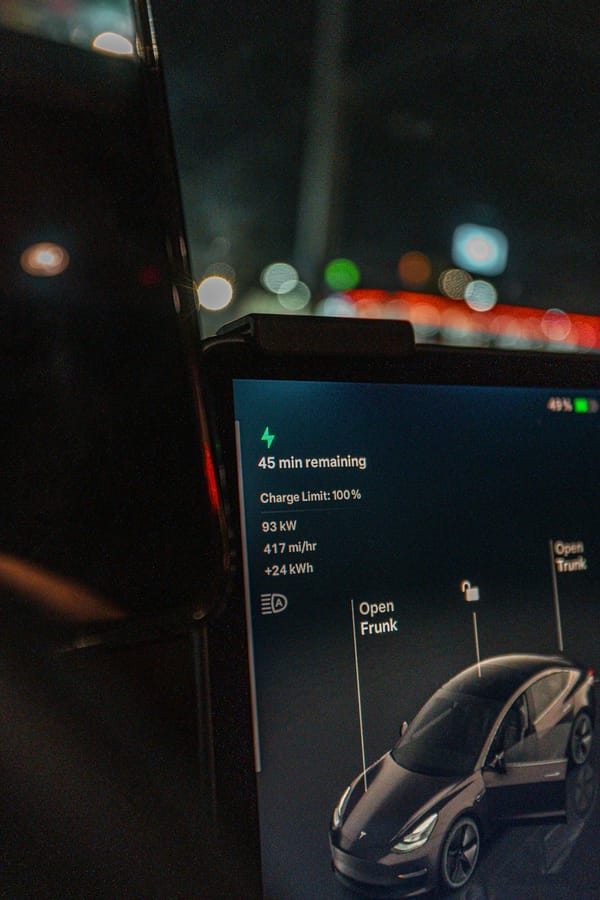
Space Tech
Tesla App Update 2026: How Owners Now Manage a Robotaxi Fleet from Their Phone
Imagine glancing at your phone and seeing your car driving itself across town, earning money while you sip coffee at home. That’s not a sci-fi fantasy anymore. A recent Tesla app update, quietly rolled out in late June 2026 as part of software version 4.58.5, has turned every ow…
Read More...
Space Tech
SpaceXAI Is Here: How a $1.25 Trillion Merger Is Building Orbital Data Centers for the Next AI Era
When Elon Musk announced in May 2026 that xAI would vanish as a standalone company, most people assumed it was just another corporate reshuffle. They were wrong. What actually happened was the quiet birth of something far bigger: SpaceXAI, a single entity that now controls rocke…
Read More...
Space Tech
Tesla Driver Charged in Fatal Crash After Overriding Autopilot: What the Data Reveals About Your Responsibility Behind the Wheel
A case unfolding in Harris County, Texas, is forcing a hard look at how we use advanced driver assistance systems. Michael Butler, a 34-year-old DoorDash driver, now faces manslaughter charges after his Tesla crashed into a home on June 5, 2026, killing 47-year-old Maria Avila.…
Read More...
Space Tech
Tesla Model Y L Launch Series Hits U.S. Market: 325 Miles, 4.4 Seconds, and a Surprise for Families
Tesla just dropped something big in the U.S. and Puerto Rico, and it’s not another Cybertruck tease. The Model Y L Launch Series is here, priced at $61,990, and it’s already turning heads. Why? Because this isn’t just a stretched Model Y. It’s Tesla’s answer to everyone who’s be…
Read More...
Space Tech
Tesla’s Optimus Robot Factory Goes Live: 1 Million Humanoid Robots Per Year from Fremont Line
What happens when one of the world’s most iconic car factories stops building cars and starts building robots? You get a front-row seat to the next industrial revolution. Tesla just flipped the switch on its Optimus humanoid robot production line at the historic Fremont plant, a…
Read More...
Space Tech
Tesla’s Cybercab Hits Austin Streets: No Steering Wheel, No Driver, Just AI
What happens when you remove the steering wheel, pedals, and driver from a car and let artificial intelligence take the wheel? Tesla is finding out right now on the streets of Austin, Texas. The company has quietly launched real world testing of its first production ready Cyberc…
Read More...
Space Tech
SpaceX’s Starmind: 1 Million AI Satellites and a $300 Billion T-Mobile Deal That Could Rewrite Global Connectivity
Elon Musk has never been one to follow the crowd. While the internet buzzes with rumors of a Tesla smartphone, the real story unfolding at SpaceX is far bigger and far stranger. It’s not about a device in your pocket. It’s about turning the sky itself into a thinking machine. Me…
Read More...