
Tesla Roadster August 2026 Unveiling: 5 New Details That Could Change Everything

Austin, Texas, Nishant Shrivastava: The Tesla Roadster is back in the headlines, and this time, the whispers point to an August 2026 unveiling at the company’s Gigafactory in Texas. If you’ve been following this story since 2017, you know the Roadster has been a moving target. But here’s what makes this different: fresh details suggest the car is finally ready to show its hand. What took so long, and what’s actually new?
Let’s start with the numbers that still make your jaw drop. The Roadster is targeting a top speed over 250 mph, a range beyond 650 miles, and a 0-60 mph sprint under 1.9 seconds. Those figures alone put it in a league with the most extreme hypercars ever built. But the real curiosity lies in what Tesla hasn’t fully explained yet. How do you squeeze that kind of range from a battery pack that fits in a low-slung sports car? The answer might involve next-generation cells or a clever thermal management system that nobody’s talking about.
Then there’s the SpaceX integration package. Insiders hint that the August event could include a preview of how Tesla’s automotive tech connects with Elon Musk’s aerospace ambitions. Imagine a car that talks to satellites in real time, using Starlink for over-the-air updates or advanced navigation. It sounds like science fiction, but Tesla has a habit of turning fiction into features. The question is: will this be a gimmick or a genuine leap forward in vehicle connectivity?
The development timeline has been anything but smooth. Originally promised for 2020, the Roadster was delayed by the pandemic, which disrupted supplies of high-performance batteries and lightweight materials. Even after the crisis eased, Tesla’s engineering team, led by Lars Moravy and Franz von Holzhausen, took their time. In July 2025, Moravy let slip that they showed Elon some cool demos, and he got excited. That’s a rare glimpse into the company’s internal confidence. It suggests the core technology is locked in, and the remaining work is about polish and production readiness.
But here’s where you need to keep your expectations in check. Tesla hasn’t sent out formal invitations or confirmed an exact date. The company has a history of using vague timelines to manage hype, and early depositors who paid $50,000 to reserve a Roadster have learned to be patient. Still, the consistent focus on performance and manual driving dynamics tells you something. Tesla isn’t rushing this car. They want it to be the last great human-driven machine, a counterpoint to the autonomous future that’s taking over the industry.
That philosophy aligns with what Ferrari’s CEO recently said: “We want the people to have fun, not the chips.” Musk himself has described the Roadster as “the best of the last of the human-driven cars.” In a world where computers are taking the wheel, this car is a celebration of raw control and emotional connection. It’s a statement that speed isn’t just about numbers; it’s about how it makes you feel.
Compare the Roadster to its rivals. At $250,000, it offers over 1,000 horsepower, a 0-60 time of 1.1 seconds in launch mode, and a range of 620 miles. The Ferrari Luce, which costs nearly three times as much, has slightly higher peak horsepower but can’t match the Roadster’s efficiency or acceleration. That’s a remarkable value proposition in the hypercar world, and it could force competitors to rethink their strategies.
On the same day the Roadster news broke, Tesla rolled out interior upgrades for the Model Y’s base trims. The Rear-Wheel-Drive and All-Wheel-Drive versions now get an all-black headliner, a higher-quality 16-inch display, and improved audio systems that were previously reserved for premium variants. These changes eliminate the visual and functional gaps between trim levels, making the base Model Y feel more premium without raising the price. The Rear-Wheel-Drive starts at $39,990, and the All-Wheel-Drive at $41,990. It’s a smart move that enhances perceived value while streamlining production.
Tesla is also offering a limited-time promotion: one year of free Supercharging for Model 3 Premium and Performance trims, expiring June 15, 2026. With Supercharger rates averaging $0.45 to $0.60 per kWh, that could save buyers up to $1,500 annually. It’s a tangible incentive that makes EV ownership more accessible, especially as fuel prices remain high.
So where does this leave the Roadster? The August event in Texas could be a defining moment for Tesla and the entire electric vehicle industry. Battery technology, software integration, and manufacturing precision are converging in ways that blur the line between concept and reality. Whether the Roadster delivers on every promise remains to be seen, but the momentum is real. For anyone who loves driving, this is a story worth watching. Innovation isn’t just about speed; it’s about purpose, passion, and the precision that comes from refusing to compromise.
Related in Space Tech
Space Tech
Elon Musk Admits He Was Wrong About Anthropic, Tesla’s Self-Driving Nears an Inflection Point, and NASA’s Roman Telescope Prepares for Launch: Three Stories Defining 2026
On a Tuesday morning in June, Elon Musk did something rare in the world of tech billionaires. He admitted he was wrong. Not in a quiet, buried-in-a-footnote kind of way, but publicly, on his own platform X. The target of his reversal? Anthropic, the AI company he had dismissed j…
Read More...
Space Tech
Miami Now Has Driverless Taxis Operating Without Any Human Oversight: Here’s What Tesla’s Robotaxi Launch Means for You
Imagine hailing a taxi in Miami, climbing in, and realizing there’s no one behind the wheel. No safety driver. No remote monitor. Just you, the car, and the open road. That scenario is no longer a test or a demo. It’s live. Tesla has officially launched its Robotaxi service in M…
Read More...
Space Tech
Your Tesla Will Soon Learn Your Neighborhood by Voice: 3 Ways FSD Remembers Every Detail
Tesla is quietly rolling out a feature that could change how you think about your car. Instead of relying on GPS pins that sometimes point to the wrong house, your Full Self-Driving system will soon learn your street the way a local does. You speak. It remembers. No maps require…
Read More...
Space Tech
Tesla App Update 2026: How Owners Now Manage a Robotaxi Fleet from Their Phone
Imagine glancing at your phone and seeing your car driving itself across town, earning money while you sip coffee at home. That’s not a sci-fi fantasy anymore. A recent Tesla app update, quietly rolled out in late June 2026 as part of software version 4.58.5, has turned every ow…
Read More...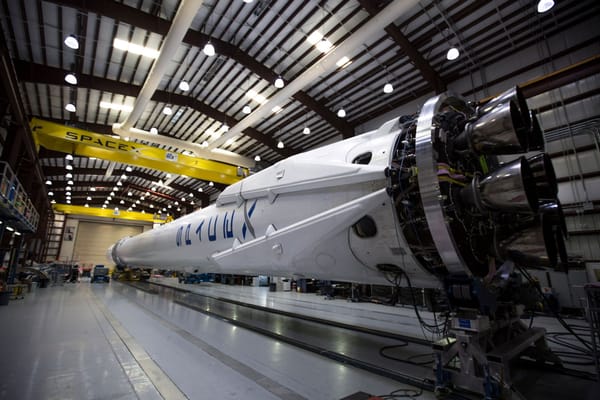
Space Tech
SpaceXAI Is Here: How a $1.25 Trillion Merger Is Building Orbital Data Centers for the Next AI Era
When Elon Musk announced in May 2026 that xAI would vanish as a standalone company, most people assumed it was just another corporate reshuffle. They were wrong. What actually happened was the quiet birth of something far bigger: SpaceXAI, a single entity that now controls rocke…
Read More...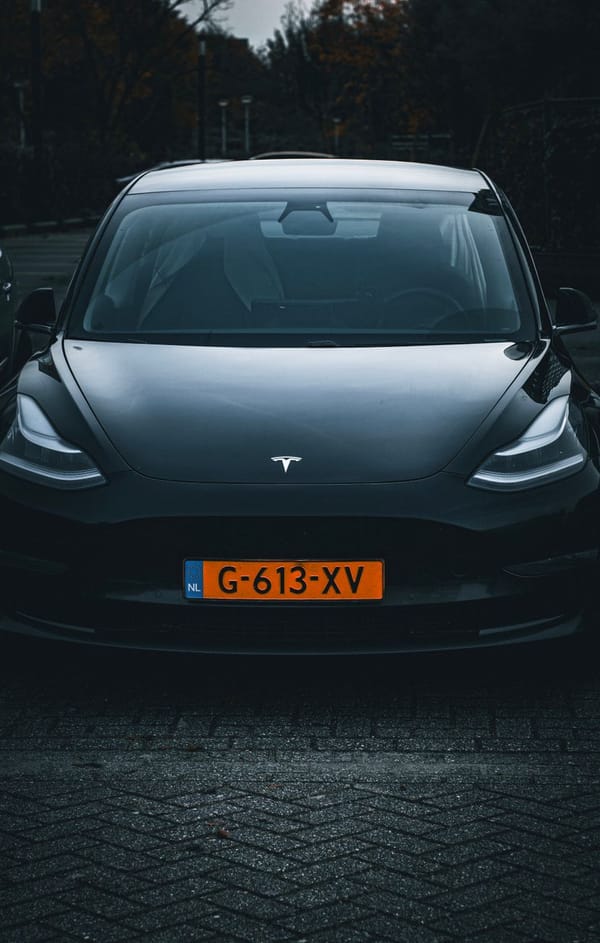
Space Tech
Tesla Driver Charged in Fatal Crash After Overriding Autopilot: What the Data Reveals About Your Responsibility Behind the Wheel
A case unfolding in Harris County, Texas, is forcing a hard look at how we use advanced driver assistance systems. Michael Butler, a 34-year-old DoorDash driver, now faces manslaughter charges after his Tesla crashed into a home on June 5, 2026, killing 47-year-old Maria Avila.…
Read More...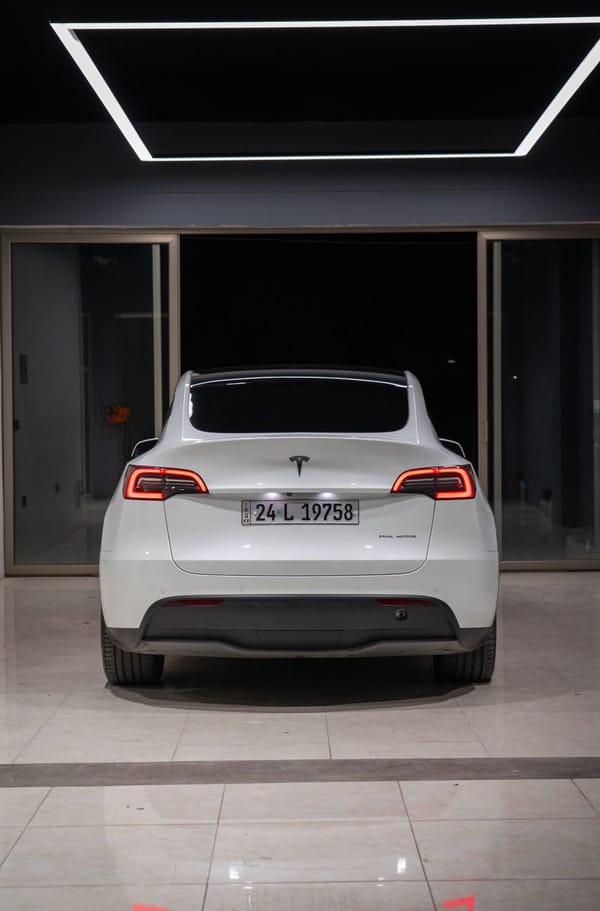
Space Tech
Tesla Model Y L Launch Series Hits U.S. Market: 325 Miles, 4.4 Seconds, and a Surprise for Families
Tesla just dropped something big in the U.S. and Puerto Rico, and it’s not another Cybertruck tease. The Model Y L Launch Series is here, priced at $61,990, and it’s already turning heads. Why? Because this isn’t just a stretched Model Y. It’s Tesla’s answer to everyone who’s be…
Read More...
Space Tech
Tesla’s Optimus Robot Factory Goes Live: 1 Million Humanoid Robots Per Year from Fremont Line
What happens when one of the world’s most iconic car factories stops building cars and starts building robots? You get a front-row seat to the next industrial revolution. Tesla just flipped the switch on its Optimus humanoid robot production line at the historic Fremont plant, a…
Read More...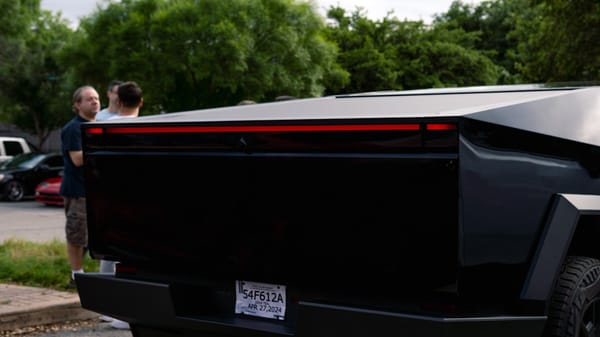
Space Tech
Tesla’s Cybercab Hits Austin Streets: No Steering Wheel, No Driver, Just AI
What happens when you remove the steering wheel, pedals, and driver from a car and let artificial intelligence take the wheel? Tesla is finding out right now on the streets of Austin, Texas. The company has quietly launched real world testing of its first production ready Cyberc…
Read More...
Space Tech
SpaceX’s Starmind: 1 Million AI Satellites and a $300 Billion T-Mobile Deal That Could Rewrite Global Connectivity
Elon Musk has never been one to follow the crowd. While the internet buzzes with rumors of a Tesla smartphone, the real story unfolding at SpaceX is far bigger and far stranger. It’s not about a device in your pocket. It’s about turning the sky itself into a thinking machine. Me…
Read More...