
Tesla’s European Comeback: 45% Registration Surge, a Life-Saving 300-Foot Cliff Fall, and FSD Now in 3 EU Countries

Berlin, Germany: Nishant Shrivastava What happens when a car company solves cabin overheating, survives a 300-foot cliff fall, and gets self-driving approval in three European countries all in the same month? You get a comeback story that’s rewriting the rules of the EV industry. Tesla is back in Europe, and the numbers are turning heads.
May 2026 brought a dramatic shift. After months of sliding market share and tough competition from local automakers, Tesla’s European registrations jumped more than 45% compared to April. Germany, France, and the Nordic countries led the charge. Analysts point to product refreshes, smarter software, and a wave of consumer confidence after some jaw-dropping safety demonstrations. The question is: how did Tesla flip the script so fast?
Part of the answer lies in a clever fix for a problem every EV owner knows too well. You know that moment when the sun beats down through a panoramic glass roof and your face feels like it’s baking while your feet are freezing? Tesla just patented a solution. It’s called “Airflow Optimization for Cabin Comfort,” and it’s surprisingly simple. Instead of trying to cool the whole cabin evenly, the system sucks hot air directly from the dashboard and headliner zones where heat pools. That warm air gets sent through a dedicated duct into the HVAC system, cooled efficiently, and recirculated. The result? Facial temperature variance drops from 21°C to just 12°C. That means less strain on the air conditioner, more uniform comfort, and crucially, less battery drain.
Why does this matter for range? Research from AAA shows that air conditioning can eat up to 17% of your driving range in extreme heat. Tesla’s new system directly tackles that. Sensors monitor sunlight and temperature in real time, activating the suction only where needed. And here’s the clever part: in winter, the same duct reverses to blow warm air onto the windshield for rapid defrosting. It’s a dual-purpose design that maximizes every component. Best of all, this could be rolled out to existing cars via over-the-air updates. No hardware changes needed. As European summers get hotter, this isn’t just a nice feature it’s becoming essential.
But thermal comfort is only half the story. On May 29, 2026, a Tesla Model 3 drove off Mulholland Highway in Malibu, California, and fell roughly 300 feet down a cliff. The terrain is notoriously treacherous. First responders from Malibu Search and Rescue and the Los Angeles County Fire Department had to rappel down and use a helicopter to airlift the victims. Both occupants survived with moderate injuries. That’s not luck. That’s engineering.
The Model 3 carries a 5-star NHTSA safety rating with the lowest injury probability ever recorded in U.S. New Car Assessment Program tests. The secret? No front engine means a longer crumple zone. The battery pack sits under the floor, lowering the center of gravity and stiffening the chassis. These design choices allow the car to absorb forces that would crush most traditional vehicles. This isn’t an isolated event either. In January 2023, a Model Y carrying a family of four survived a 250-foot fall with everyone walking away. Each incident reinforces a simple truth: Tesla builds cars that protect people, even in extreme scenarios.
Then there’s the autonomy front. On the same day as the Malibu crash, Estonia became the third EU country to approve Tesla’s Full Self-Driving (FSD) Supervised system. It joins the Netherlands and Lithuania. Estonia’s Transport Administration recognized the type certification already issued by the Dutch vehicle authority RDW under EU mutual recognition rules. That means no repeated local testing. The system remains Level 2, so drivers must stay attentive and keep hands on the wheel. But it handles automated lane changes, urban navigation, and traffic object detection with increasing polish.
Estonia’s decision fits a broader pattern. Baltic nations are digitally progressive and open to Tesla’s vision-based AI approach, which relies on cameras and neural networks instead of lidar or radar. FSD Supervised is now live in 11 countries worldwide, including the U.S., Canada, Australia, and South Korea. Each new market feeds millions of real-world driving miles into Tesla’s training data. That feedback loop is especially valuable in places like Estonia, where snow, low visibility, and sudden temperature shifts test the system in ways sunny California never could.
What does all this mean for Tesla’s future in Europe? The registration surge isn’t a fluke. It’s the result of years of investment in software, safety, and regulatory relationships. Each FSD approval opens new revenue streams through subscriptions and one-time purchases. Each safety story builds trust. Each thermal innovation makes the ownership experience better. Together, they form a strategy that’s not just about selling cars but about defining what an electric vehicle can be.
So when you see those registration numbers climbing, remember what’s underneath: a company that solved cabin heat, survived a cliff fall, and got self-driving approved in three countries all in the same month. That’s not a comeback. That’s a statement.
Related in Space Tech
Space Tech
Elon Musk Admits He Was Wrong About Anthropic, Tesla’s Self-Driving Nears an Inflection Point, and NASA’s Roman Telescope Prepares for Launch: Three Stories Defining 2026
On a Tuesday morning in June, Elon Musk did something rare in the world of tech billionaires. He admitted he was wrong. Not in a quiet, buried-in-a-footnote kind of way, but publicly, on his own platform X. The target of his reversal? Anthropic, the AI company he had dismissed j…
Read More...
Space Tech
Miami Now Has Driverless Taxis Operating Without Any Human Oversight: Here’s What Tesla’s Robotaxi Launch Means for You
Imagine hailing a taxi in Miami, climbing in, and realizing there’s no one behind the wheel. No safety driver. No remote monitor. Just you, the car, and the open road. That scenario is no longer a test or a demo. It’s live. Tesla has officially launched its Robotaxi service in M…
Read More...
Space Tech
Your Tesla Will Soon Learn Your Neighborhood by Voice: 3 Ways FSD Remembers Every Detail
Tesla is quietly rolling out a feature that could change how you think about your car. Instead of relying on GPS pins that sometimes point to the wrong house, your Full Self-Driving system will soon learn your street the way a local does. You speak. It remembers. No maps require…
Read More...
Space Tech
Tesla App Update 2026: How Owners Now Manage a Robotaxi Fleet from Their Phone
Imagine glancing at your phone and seeing your car driving itself across town, earning money while you sip coffee at home. That’s not a sci-fi fantasy anymore. A recent Tesla app update, quietly rolled out in late June 2026 as part of software version 4.58.5, has turned every ow…
Read More...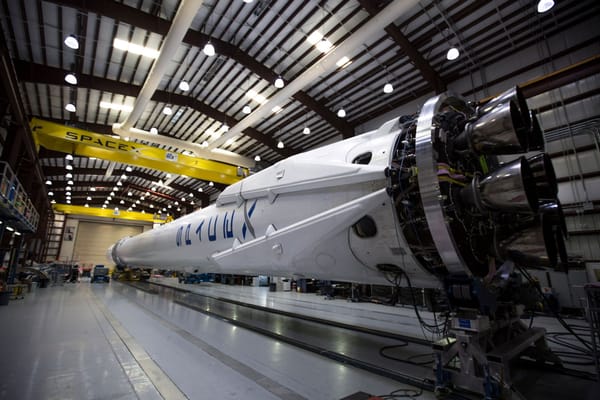
Space Tech
SpaceXAI Is Here: How a $1.25 Trillion Merger Is Building Orbital Data Centers for the Next AI Era
When Elon Musk announced in May 2026 that xAI would vanish as a standalone company, most people assumed it was just another corporate reshuffle. They were wrong. What actually happened was the quiet birth of something far bigger: SpaceXAI, a single entity that now controls rocke…
Read More...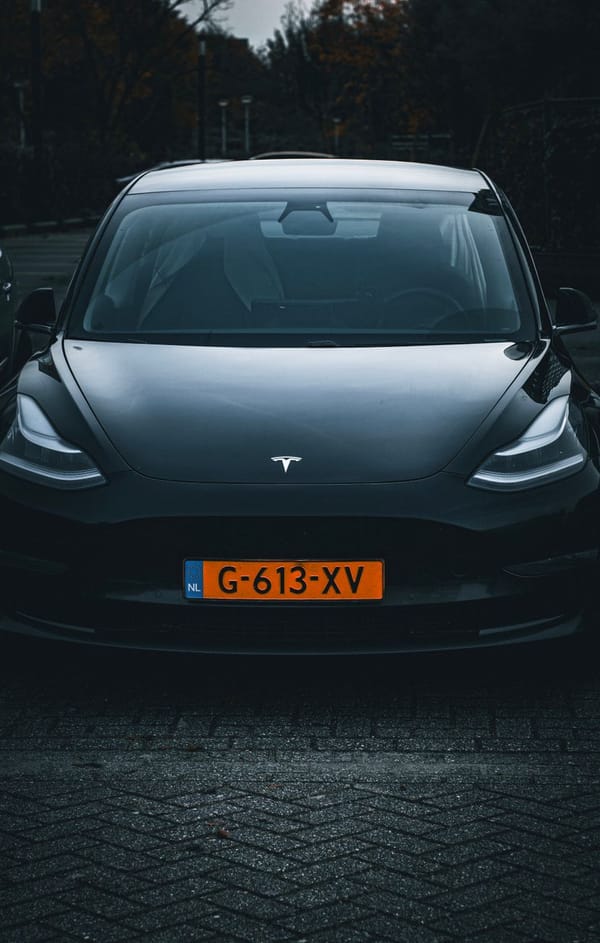
Space Tech
Tesla Driver Charged in Fatal Crash After Overriding Autopilot: What the Data Reveals About Your Responsibility Behind the Wheel
A case unfolding in Harris County, Texas, is forcing a hard look at how we use advanced driver assistance systems. Michael Butler, a 34-year-old DoorDash driver, now faces manslaughter charges after his Tesla crashed into a home on June 5, 2026, killing 47-year-old Maria Avila.…
Read More...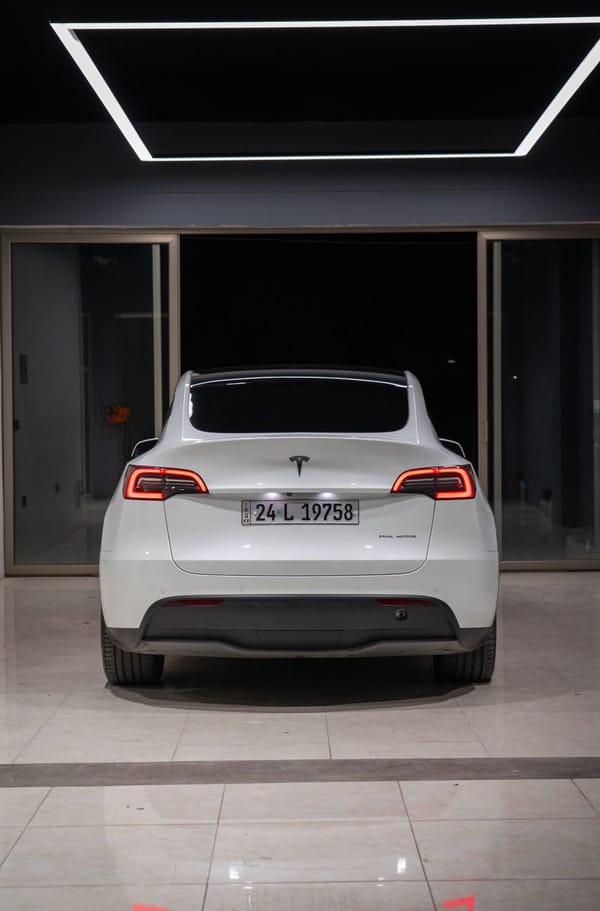
Space Tech
Tesla Model Y L Launch Series Hits U.S. Market: 325 Miles, 4.4 Seconds, and a Surprise for Families
Tesla just dropped something big in the U.S. and Puerto Rico, and it’s not another Cybertruck tease. The Model Y L Launch Series is here, priced at $61,990, and it’s already turning heads. Why? Because this isn’t just a stretched Model Y. It’s Tesla’s answer to everyone who’s be…
Read More...
Space Tech
Tesla’s Optimus Robot Factory Goes Live: 1 Million Humanoid Robots Per Year from Fremont Line
What happens when one of the world’s most iconic car factories stops building cars and starts building robots? You get a front-row seat to the next industrial revolution. Tesla just flipped the switch on its Optimus humanoid robot production line at the historic Fremont plant, a…
Read More...
Space Tech
Tesla’s Cybercab Hits Austin Streets: No Steering Wheel, No Driver, Just AI
What happens when you remove the steering wheel, pedals, and driver from a car and let artificial intelligence take the wheel? Tesla is finding out right now on the streets of Austin, Texas. The company has quietly launched real world testing of its first production ready Cyberc…
Read More...
Space Tech
SpaceX’s Starmind: 1 Million AI Satellites and a $300 Billion T-Mobile Deal That Could Rewrite Global Connectivity
Elon Musk has never been one to follow the crowd. While the internet buzzes with rumors of a Tesla smartphone, the real story unfolding at SpaceX is far bigger and far stranger. It’s not about a device in your pocket. It’s about turning the sky itself into a thinking machine. Me…
Read More...