
Tesla’s FSD Just Got Its Second European Nod in 48 Hours – Here’s Why Belgium Matters for Your Next Drive
Brussels, Belgium, MMN Correspondent: If you thought autonomous driving was still a distant dream, think again. Tesla just secured its second Full Self-Driving approval in Europe within two days, this time in Belgium. That follows a similar green light in the Netherlands. Two countries, two days, one clear signal: regulators are starting to trust AI behind the wheel.
What makes the Belgian certification stand out? It confirms that Tesla’s FSD software meets the European Union’s strict safety and operational standards for supervised autonomous driving. Yes, it’s still Level 2, meaning you have to stay alert. But here’s the twist: the system can now handle complex urban streets, highway merges, and unpredictable traffic with surprisingly little help from you. That’s a big leap from where we were just a year ago.
Analysts are taking notice. Alex Potter from Piper Sandler recently dropped a bombshell in a research note: Tesla has effectively reached Level 4 autonomy in most driving conditions across its entire lineup. How did he reach that conclusion? He crunched the numbers from Tesla’s own Safety Reports. The data shows that FSD-equipped vehicles in North America go over 5.5 million miles between accidents. Compare that to the average human driver, who gets into a crash every 1 million miles or so. In the Netherlands, early stats suggest FSD is more than 3.5 times safer than human drivers on local roads. That’s not just impressive. That’s a paradigm shift in road safety.
And here’s where it gets even more interesting. Tesla has started offering insurance discounts for vehicles using FSD. Think about that. Insurers, who are famously risk-averse, are now betting that autonomous features reduce accidents rather than cause them. That’s rare in the automotive world. Meanwhile, the Cybercab prototype has no steering wheel or pedals. That’s not a design quirk. It’s a statement: Tesla is preparing for a future where you won’t need to intervene at all. With over $1 billion reportedly allocated to FSD development, the company is all in.
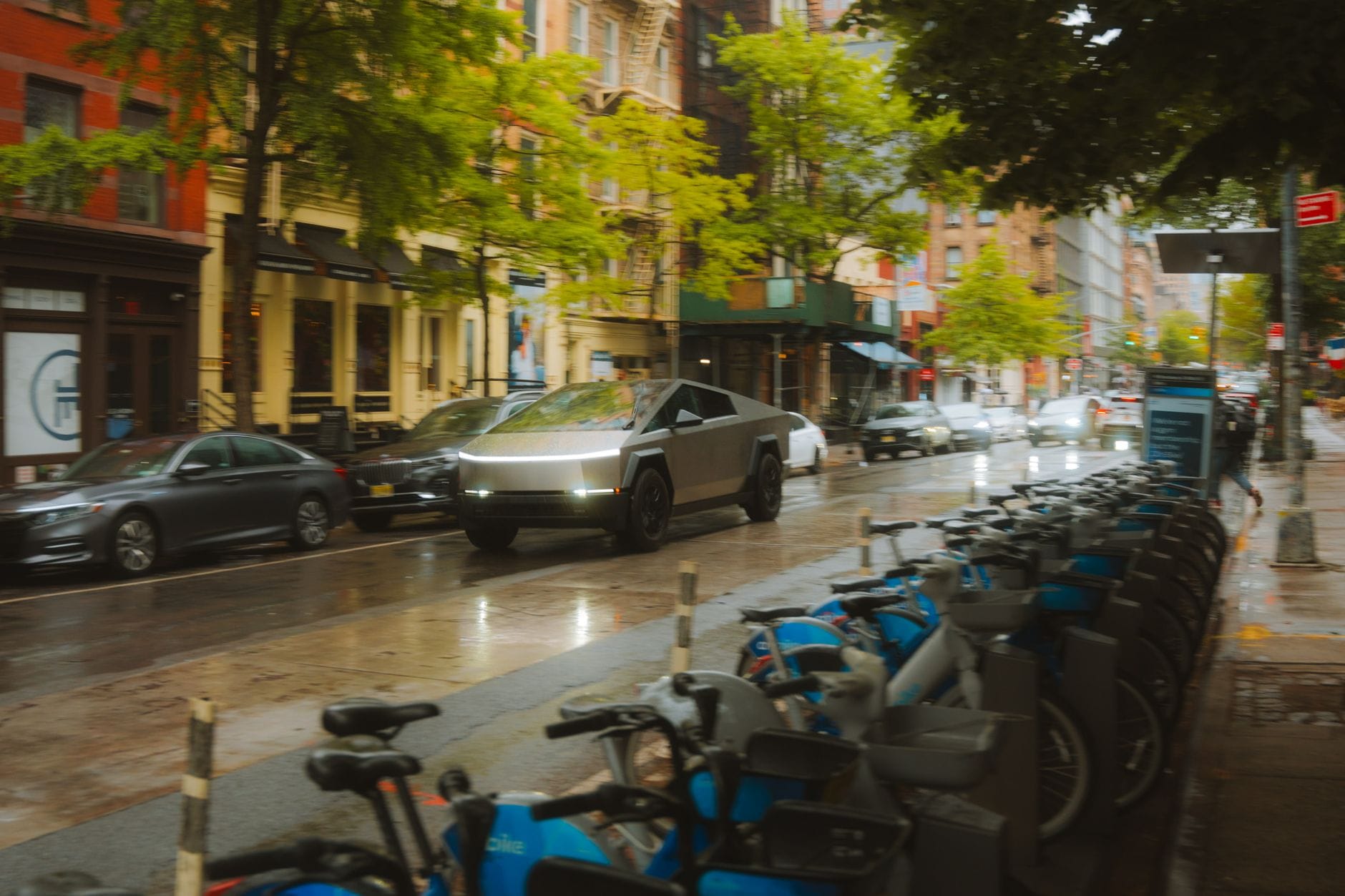
Speaking of the Cybertruck, owners finally got the feature they’ve been waiting for: Actually Smart Summon. After more than two years since deliveries began, the update is rolling out “shortly.” Imagine standing in a rainy parking lot and having your truck come to you. One user shared a story about using it to pick up his fiancée from a doctor’s office after a calf injury. She didn’t have to walk. That’s the kind of real-world utility that makes technology feel human.
Why did it take so long? The Cybertruck uses a steer-by-wire system, which means no mechanical connection between the steering wheel and the wheels. That forced Tesla to retrain its AI models specifically for low-speed maneuvers. Add in the truck’s massive size and unique braking dynamics, and you can see why safety testing took priority over speed. Better late than risky.
Now, let’s look up. Elon Musk is pushing a vision that sounds like science fiction: orbital data centers. The idea is to host AI-powered computing platforms in space, using SpaceX’s Starlink infrastructure. Critics worry about satellite overcrowding, but Musk’s response is simple: space is really big. Even with thousands of satellites, they’re invisible specks from Earth. SpaceX already operates nearly 10,000 Starlink satellites with proven collision avoidance and deorbiting protocols.
These orbital data centers would use Starlink V3 technology, featuring solar arrays with a 70-meter wingspan and radiative cooling that takes advantage of the vacuum of space. Each unit could deliver up to 150 kW of peak power. Laser links between satellites would enable near-instantaneous communication. Positioned in low Earth orbit, latency would be under a few milliseconds. That’s critical for next-generation AI training and real-time decision-making. By moving compute operations off-planet, SpaceX aims to bypass Earth’s limitations: grid constraints, water shortages for cooling, and land use conflicts.
Production is ramping up at a new “Gigasat” facility in Bastrop, Texas, with full output expected by late 2027. The goal is multiple launches per hour. Musk frames this as a step toward advancing humanity on the Kardashev Scale from a Type 0 civilization, reliant on planetary resources, to a Type 1, harnessing all available energy on Earth, and eventually a Type 2, using the energy of an entire star. Ambitious? Absolutely. Impossible? History suggests otherwise.
Together, Tesla’s FSD progress and SpaceX’s orbital computing vision point to a future where technology doesn’t just improve our daily lives. It redefines where and how we compute, drive, and connect. From autonomous cars navigating European cities to AI servers floating above Earth, the convergence of artificial intelligence, electric mobility, and space infrastructure is opening doors we’re only beginning to understand. The implications go beyond convenience. They touch transportation, computing, and even our relationship with the cosmos.
Related in Space Tech
Space Tech
Elon Musk Admits He Was Wrong About Anthropic, Tesla’s Self-Driving Nears an Inflection Point, and NASA’s Roman Telescope Prepares for Launch: Three Stories Defining 2026
On a Tuesday morning in June, Elon Musk did something rare in the world of tech billionaires. He admitted he was wrong. Not in a quiet, buried-in-a-footnote kind of way, but publicly, on his own platform X. The target of his reversal? Anthropic, the AI company he had dismissed j…
Read More...
Space Tech
Miami Now Has Driverless Taxis Operating Without Any Human Oversight: Here’s What Tesla’s Robotaxi Launch Means for You
Imagine hailing a taxi in Miami, climbing in, and realizing there’s no one behind the wheel. No safety driver. No remote monitor. Just you, the car, and the open road. That scenario is no longer a test or a demo. It’s live. Tesla has officially launched its Robotaxi service in M…
Read More...
Space Tech
Your Tesla Will Soon Learn Your Neighborhood by Voice: 3 Ways FSD Remembers Every Detail
Tesla is quietly rolling out a feature that could change how you think about your car. Instead of relying on GPS pins that sometimes point to the wrong house, your Full Self-Driving system will soon learn your street the way a local does. You speak. It remembers. No maps require…
Read More...
Space Tech
Tesla App Update 2026: How Owners Now Manage a Robotaxi Fleet from Their Phone
Imagine glancing at your phone and seeing your car driving itself across town, earning money while you sip coffee at home. That’s not a sci-fi fantasy anymore. A recent Tesla app update, quietly rolled out in late June 2026 as part of software version 4.58.5, has turned every ow…
Read More...
Space Tech
SpaceXAI Is Here: How a $1.25 Trillion Merger Is Building Orbital Data Centers for the Next AI Era
When Elon Musk announced in May 2026 that xAI would vanish as a standalone company, most people assumed it was just another corporate reshuffle. They were wrong. What actually happened was the quiet birth of something far bigger: SpaceXAI, a single entity that now controls rocke…
Read More...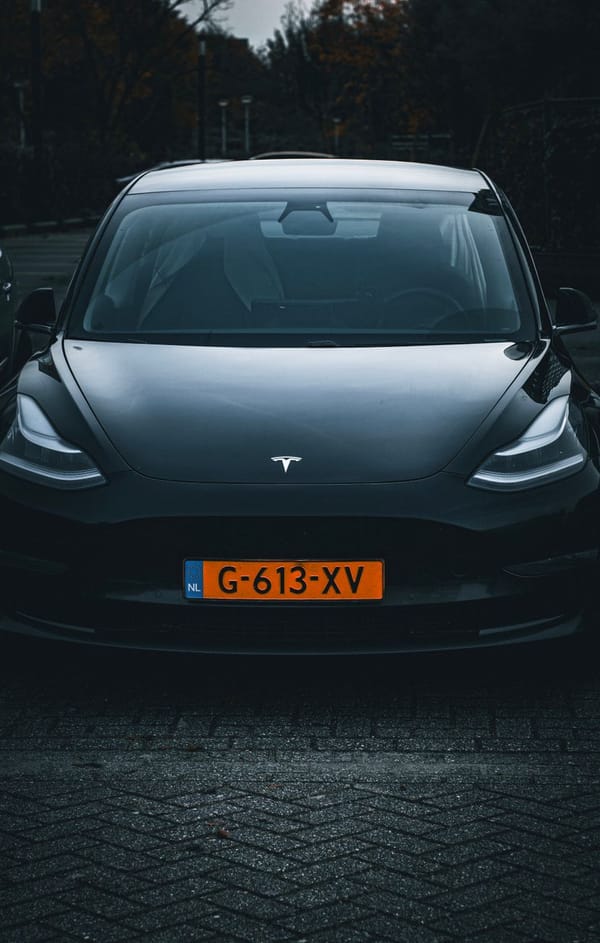
Space Tech
Tesla Driver Charged in Fatal Crash After Overriding Autopilot: What the Data Reveals About Your Responsibility Behind the Wheel
A case unfolding in Harris County, Texas, is forcing a hard look at how we use advanced driver assistance systems. Michael Butler, a 34-year-old DoorDash driver, now faces manslaughter charges after his Tesla crashed into a home on June 5, 2026, killing 47-year-old Maria Avila.…
Read More...
Space Tech
Tesla Model Y L Launch Series Hits U.S. Market: 325 Miles, 4.4 Seconds, and a Surprise for Families
Tesla just dropped something big in the U.S. and Puerto Rico, and it’s not another Cybertruck tease. The Model Y L Launch Series is here, priced at $61,990, and it’s already turning heads. Why? Because this isn’t just a stretched Model Y. It’s Tesla’s answer to everyone who’s be…
Read More...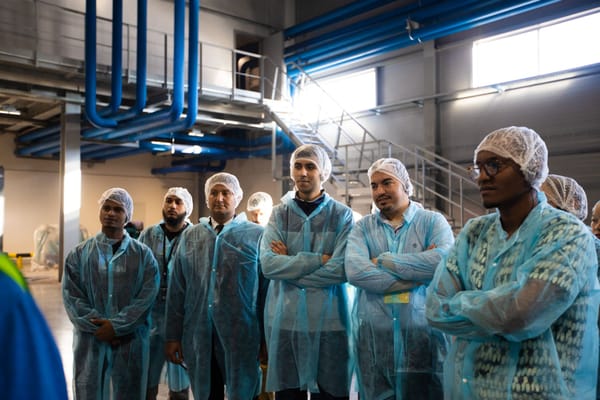
Space Tech
Tesla’s Optimus Robot Factory Goes Live: 1 Million Humanoid Robots Per Year from Fremont Line
What happens when one of the world’s most iconic car factories stops building cars and starts building robots? You get a front-row seat to the next industrial revolution. Tesla just flipped the switch on its Optimus humanoid robot production line at the historic Fremont plant, a…
Read More...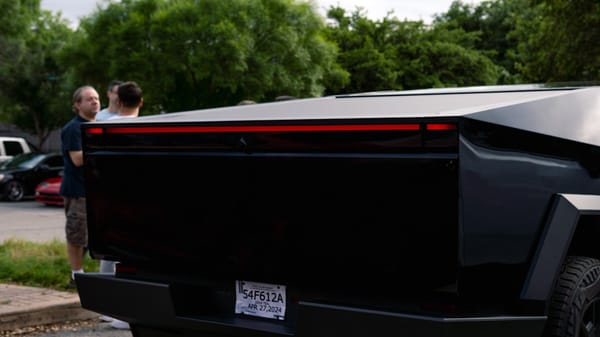
Space Tech
Tesla’s Cybercab Hits Austin Streets: No Steering Wheel, No Driver, Just AI
What happens when you remove the steering wheel, pedals, and driver from a car and let artificial intelligence take the wheel? Tesla is finding out right now on the streets of Austin, Texas. The company has quietly launched real world testing of its first production ready Cyberc…
Read More...
Space Tech
SpaceX’s Starmind: 1 Million AI Satellites and a $300 Billion T-Mobile Deal That Could Rewrite Global Connectivity
Elon Musk has never been one to follow the crowd. While the internet buzzes with rumors of a Tesla smartphone, the real story unfolding at SpaceX is far bigger and far stranger. It’s not about a device in your pocket. It’s about turning the sky itself into a thinking machine. Me…
Read More...