
Tesla’s FSD v14.3.3 Now Watches You Differently: 80 Seconds of Screen Time in Standard Mode vs. Instant Alerts in Mad Max – Here’s What Changed

Austin, Texas, Nishant Shrivastava: Tesla just dropped a triple update that changes how you think about autonomous driving. On June 3, 2026, the company rolled out a smarter driver monitoring system inside Full Self-Driving v14.3.3, expanded its unsupervised Robotaxi service across the entire Austin metro area, and launched a web based dashcam viewer that finally lets you grab your clips without the app hassle. Each piece fits into a bigger picture: Tesla is no longer just testing autonomy. It is building a complete ecosystem around it.
Let’s start with the driver monitoring upgrade because it is the one you will feel every time you drive. The new system in Software Version 2026.14.6.7 tracks your eyes with better accuracy, even if you wear sunglasses or prescription lenses. It handles low light conditions more reliably. But the real story is how the system changes its behavior based on the Speed Profile you select. In Standard mode, you can interact with the center touchscreen for up to 80 seconds without any alerts. That is a lot of freedom. Switch to Hurry Mode, and the system cuts that window to about 31 seconds. Mad Max Mode? You get multiple alerts within seconds of touching the screen to change music or navigation. Why does this matter? Because Tesla is essentially saying: the faster you want to go, the more attention you need to give the road. It is a data driven approach that matches safety protocols to driving intensity, not a one size fits all rule.
This tiered monitoring is especially interesting given the ongoing conversations around distracted driving. Instead of a blanket restriction, Tesla is letting the system adapt to your driving style. It feels less like a nanny and more like a co pilot that adjusts its expectations based on the situation. For a system that is still officially classified as Supervised, this kind of intelligent feedback loop builds trust. It also sets the stage for when the supervision requirement eventually drops.
Now let’s talk about the Robotaxi expansion. Tesla has opened up unsupervised rides across the entire Austin metropolitan area. That includes suburbs like Pflugerville and Manor, major highways like I 35, the Gigafactory Texas site, and Austin Bergstrom International Airport. This is not a small pilot anymore. It is a citywide commercial service. The timing is notable because it comes right after media reports questioned whether the service was viable due to limited availability and low ride frequency. Tesla’s response was not to pull back. It was to expand. That is a strong signal of confidence in the technology.
What does this mean for you? If you live in Austin, you can now hail a Tesla Robotaxi to take you across town without a driver behind the wheel. For Tesla, every mile driven under unsupervised conditions feeds real world data back into the neural networks. That data helps the system learn edge cases faster and improve handling in complex scenarios. Compared to competitors like Waymo and Cruise, Tesla’s fleet is smaller but its geographic coverage is already matching or exceeding theirs. The vertical integration of hardware and software gives Tesla a unique advantage in scaling quickly.
And then there is the dashcam upgrade. Tesla launched a new web based Dashcam Clip Viewer at dashcam.tesla.com. Once your vehicle gets the 2026.20 software update, you can access, review, and manage recorded clips directly from a browser. The footage is automatically encrypted with a unique key tied to your account, so privacy is built in. Previously, you had to use the smartphone app and deal with screen recordings to extract metadata like speed, turn signals, or self driving activation times. Now you can download clips to your laptop, desktop, external drive, or cloud storage with full telemetry attached. It is a small change that makes a big difference for insurance claims, legal situations, or just keeping a personal archive.
Together, these updates show a clear direction. Tesla is not just adding features. It is connecting them into a seamless experience. The driver monitoring system keeps you safe. The Robotaxi expansion validates the technology at scale. The dashcam viewer gives you control over your data. Each piece supports the others. As more cities get Robotaxi coverage and more vehicles receive the software updates, the ecosystem will only get stronger. For anyone watching the autonomous driving space, this is the moment where the pieces start to click into place.
Related in Space Tech
Space Tech
Elon Musk Admits He Was Wrong About Anthropic, Tesla’s Self-Driving Nears an Inflection Point, and NASA’s Roman Telescope Prepares for Launch: Three Stories Defining 2026
On a Tuesday morning in June, Elon Musk did something rare in the world of tech billionaires. He admitted he was wrong. Not in a quiet, buried-in-a-footnote kind of way, but publicly, on his own platform X. The target of his reversal? Anthropic, the AI company he had dismissed j…
Read More...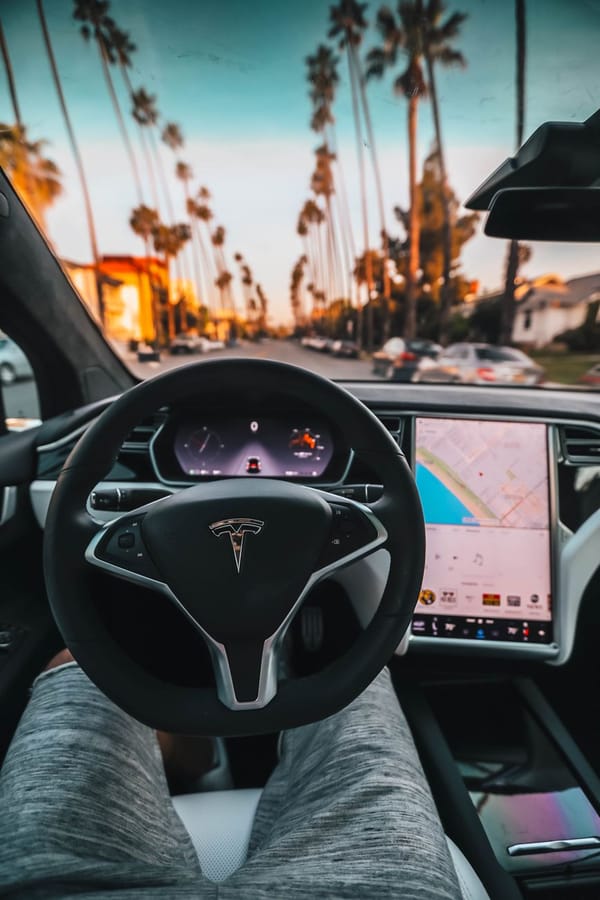
Space Tech
Miami Now Has Driverless Taxis Operating Without Any Human Oversight: Here’s What Tesla’s Robotaxi Launch Means for You
Imagine hailing a taxi in Miami, climbing in, and realizing there’s no one behind the wheel. No safety driver. No remote monitor. Just you, the car, and the open road. That scenario is no longer a test or a demo. It’s live. Tesla has officially launched its Robotaxi service in M…
Read More...
Space Tech
Your Tesla Will Soon Learn Your Neighborhood by Voice: 3 Ways FSD Remembers Every Detail
Tesla is quietly rolling out a feature that could change how you think about your car. Instead of relying on GPS pins that sometimes point to the wrong house, your Full Self-Driving system will soon learn your street the way a local does. You speak. It remembers. No maps require…
Read More...
Space Tech
Tesla App Update 2026: How Owners Now Manage a Robotaxi Fleet from Their Phone
Imagine glancing at your phone and seeing your car driving itself across town, earning money while you sip coffee at home. That’s not a sci-fi fantasy anymore. A recent Tesla app update, quietly rolled out in late June 2026 as part of software version 4.58.5, has turned every ow…
Read More...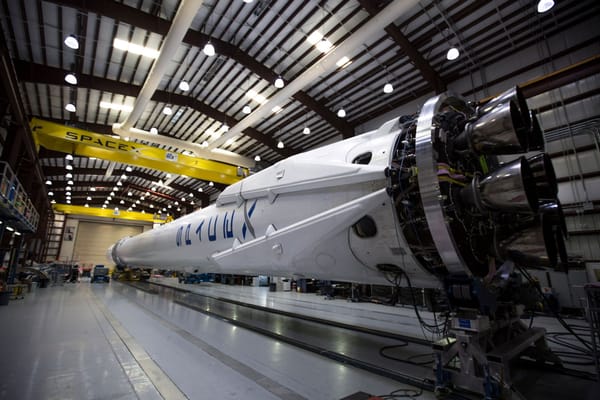
Space Tech
SpaceXAI Is Here: How a $1.25 Trillion Merger Is Building Orbital Data Centers for the Next AI Era
When Elon Musk announced in May 2026 that xAI would vanish as a standalone company, most people assumed it was just another corporate reshuffle. They were wrong. What actually happened was the quiet birth of something far bigger: SpaceXAI, a single entity that now controls rocke…
Read More...
Space Tech
Tesla Driver Charged in Fatal Crash After Overriding Autopilot: What the Data Reveals About Your Responsibility Behind the Wheel
A case unfolding in Harris County, Texas, is forcing a hard look at how we use advanced driver assistance systems. Michael Butler, a 34-year-old DoorDash driver, now faces manslaughter charges after his Tesla crashed into a home on June 5, 2026, killing 47-year-old Maria Avila.…
Read More...
Space Tech
Tesla Model Y L Launch Series Hits U.S. Market: 325 Miles, 4.4 Seconds, and a Surprise for Families
Tesla just dropped something big in the U.S. and Puerto Rico, and it’s not another Cybertruck tease. The Model Y L Launch Series is here, priced at $61,990, and it’s already turning heads. Why? Because this isn’t just a stretched Model Y. It’s Tesla’s answer to everyone who’s be…
Read More...
Space Tech
Tesla’s Optimus Robot Factory Goes Live: 1 Million Humanoid Robots Per Year from Fremont Line
What happens when one of the world’s most iconic car factories stops building cars and starts building robots? You get a front-row seat to the next industrial revolution. Tesla just flipped the switch on its Optimus humanoid robot production line at the historic Fremont plant, a…
Read More...
Space Tech
Tesla’s Cybercab Hits Austin Streets: No Steering Wheel, No Driver, Just AI
What happens when you remove the steering wheel, pedals, and driver from a car and let artificial intelligence take the wheel? Tesla is finding out right now on the streets of Austin, Texas. The company has quietly launched real world testing of its first production ready Cyberc…
Read More...
Space Tech
SpaceX’s Starmind: 1 Million AI Satellites and a $300 Billion T-Mobile Deal That Could Rewrite Global Connectivity
Elon Musk has never been one to follow the crowd. While the internet buzzes with rumors of a Tesla smartphone, the real story unfolding at SpaceX is far bigger and far stranger. It’s not about a device in your pocket. It’s about turning the sky itself into a thinking machine. Me…
Read More...