
73 UN Staff Held in Yemen: What Happens When Aid Workers Become Targets in a Forgotten War?

Sana'a, Yemen: Nishant Shrivastava: Imagine being a humanitarian worker, someone who left comfort behind to deliver food and medicine to millions on the brink of starvation. Now imagine waking up one morning to armed men at your door, no warrant, no explanation, just a blindfold and a secret cell. This is the reality for over 70 Yemeni nationals working for the United Nations and civil society organizations in northern Yemen. Since May 2024, the Huthi authorities have swept through areas under their control, arresting dozens in coordinated raids. On May 31 alone, 13 UN staff and at least 50 employees from local and international groups were taken. The numbers have only grown since then.
What drives a de facto government to imprison the very people trying to save lives? The answer lies in a pattern of control that has been building for years. Since 2015, the Huthi movement has used national security rhetoric to silence anyone who might challenge their narrative. Activists, journalists, and now aid workers are labeled as spies or conspirators. The charges are vague, the evidence is fabricated, and the confessions are often coerced on video. These videos are then broadcast publicly, not just to punish the individual but to send a chilling message to anyone considering humanitarian or civic work.
The human cost is staggering. On February 11, 2025, a World Food Programme employee died while in Huthi custody. His death was not an isolated incident. In October 2023, a safety director from Save the Children also died after being detained. These are not statistics; they are people who dedicated their lives to helping others. Those still held include individuals with chronic illnesses, mental health conditions worsened by prolonged isolation, and no access to medical care. Only seven detainees have been released since the crackdown began, leaving over 70 in limbo, cut off from their families and legal representation.
Human Rights Watch documented these conditions in January 2026. Their investigation found that even after three UN employees’ cases were transferred to a Specialized Criminal Court in December 2025, none of the detainees had seen a lawyer. This lack of due process is not a oversight; it is a deliberate strategy. By keeping detainees in secret locations and denying them legal recourse, the Huthi authorities create a system of impunity where no one is held accountable. The international community has voiced concern, but words have not translated into action.
The ripple effects on humanitarian operations are profound. As aid workers are targeted, the delivery of food, medicine, and other essentials becomes increasingly difficult. The World Food Programme and the UN Food and Agriculture Organization project that acute food insecurity in Yemen will escalate dramatically between November 2025 and May 2026. Four districts under Huthi control are expected to face catastrophic hunger levels, where populations experience extreme food shortages, widespread malnutrition, and high mortality rates. This is not a distant possibility; it is a forecast based on current trends.
Donor contributions have declined sharply, especially from major Western nations like the United States. This funding shortfall has crippled the operational capacity of local and international NGOs. The irony is stark: the very workers who are most needed to address the crisis are being systematically removed from the equation. Instead of protecting humanitarian staff, the Huthi authorities are dismantling the mechanisms that keep millions alive.
Historical precedents show this is not a new tactic. In 2021 and 2023, four Yemeni staff members from the Office of the UN High Commissioner for Human Rights and UNESCO were arrested and remain detained incommunicado. Each case follows the same script: arbitrary arrest, enforced disappearance, and a slow erosion of hope. The international community has repeatedly called for their release, but the Huthis have shown no willingness to comply. Regional powers like Iran and Saudi Arabia, who have influence over the Huthis, have yet to exert meaningful pressure. The UN leadership faces the delicate task of maintaining impartiality while advocating for its own staff in a conflict zone where multiple actors hold sway.
Experts from Amnesty International, Human Rights Watch, and the Cairo Institute for Human Rights Studies have called for immediate and unconditional release of all detained humanitarian workers. They emphasize that detainees must be protected from torture and ill-treatment, granted access to healthcare and legal counsel, and allowed regular contact with family members. These are basic human rights, yet they remain out of reach for those in Huthi custody.
The broader implications extend beyond individual fates. The suppression of civic space in northern Yemen represents a deepening authoritarian trend. By arresting human rights defenders, journalists, and activists, the Huthi regime is dismantling independent oversight and accountability. This erosion of civil society weakens the foundations of democratic resilience and fuels long-term instability. The question is not just whether these detainees will be freed, but whether the international community will allow this pattern to continue.
As the humanitarian crisis intensifies, so too does the moral imperative for global action. The survival of millions depends not only on the flow of food and medicine but also on the ability of aid workers to operate freely and safely. Every day that detainees remain in captivity increases the risk of further deaths and deepens the trauma inflicted on already suffering communities. The international community must move beyond diplomatic statements and adopt concrete measures: diplomatic pressure, targeted sanctions, and coordinated advocacy. Only through sustained, unified engagement can the world uphold its commitment to human dignity, humanitarian principles, and the rule of law in one of the most neglected conflicts of the 21st century.
The fate of these aid workers is not just a matter of justice. It is a litmus test for global solidarity in times of crisis. Will the world act, or will it watch as another silent tragedy unfolds?
Related in Social Justice

Social Justice
Africa’s Albinism Crisis: 2025 Court Ruling That Could Save 100,000 Lives
Imagine being hunted for your body parts. Not because of a crime you committed, but because of a condition you were born with. For tens of thousands of people across Africa, this is not a horror movie. It is daily life. But in February 2025, a single court decision changed every…
Read More...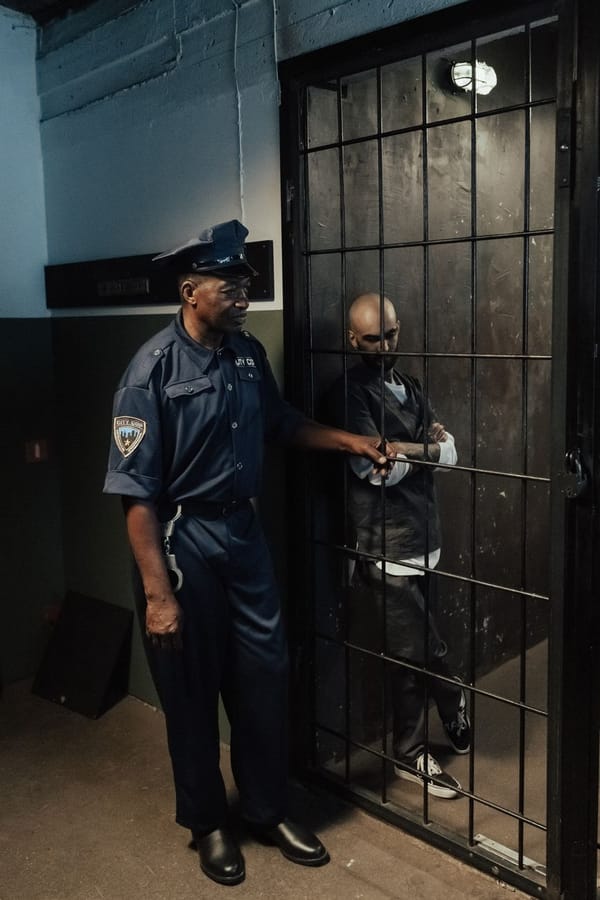
Social Justice
What Happened After 28 Died in Sri Lanka’s Prison Riots? Two More Inmates Dead in Transfer – Demands for Answers Grow
Just days after a brutal two day clash inside Negombo Prison left at least 28 people dead and over 100 injured, two more inmates have died. Not from the violence inside the walls, but shortly after being moved to other facilities. The question now is: what really happened during…
Read More...
Social Justice
What 50 Years of Civil Rights Battles in North Carolina Can Teach Us About the Future of Voting Access
What does it take to keep fighting for justice when the rules keep changing? On July 21, 2026, two of North Carolina’s most influential civil rights figures will sit down together in Durham to answer that question. Leslie Winner and Angela Bryant have spent decades on the front…
Read More...
Social Justice
What North Carolina’s Civil Rights Icons Reveal About Voting Rights in 2026: A Fireside Chat You Can’t Miss
Imagine sitting just a few feet away from the people who literally rewrote the rules of American democracy. That’s the kind of evening the Southern Coalition for Social Justice is offering on July 21, 2026. They’re hosting a fireside conversation called *North Carolina Icons: Th…
Read More...
Social Justice
What Happens When a Peaceful Protest Against a Coal Mine Leads to a 2-Year Prison Sentence? The Esra Işık Case in Turkey
Imagine standing up for a forest you love, a place where your neighbors grow food and your children play. Now imagine that act of peaceful protest lands you in court, facing prison time. That is exactly what happened to Esra Işık, a Turkish environmental activist whose recent co…
Read More...
Social Justice
3 Sahel Nations Exit ICC: What This Means for Justice in West Africa
In a move that has captured global attention, Burkina Faso, Mali, and Niger have officially notified the United Nations of their decision to withdraw from the Rome Statute, the treaty that created the International Criminal Court (ICC). The UN Secretary General confirmed this de…
Read More...
Social Justice
450 Years for a Fireworks Protest? What the Prairieland ICE Case Means for Your Right to Speak Out
Imagine planning a Fourth of July celebration to lift the spirits of people held in immigration detention. You bring fireworks, music, and a few legally carried firearms. After thirty minutes, you pack up and go home. Now imagine being told that those thirty minutes will cost yo…
Read More...
Social Justice
What Happens When a Country Silences Its Media? Uganda’s Crackdown on Journalists and Activists Explained
On a single day in late June, Uganda’s media landscape changed dramatically. Six major news outlets were shut down. Journalists were locked out of their offices. Equipment was seized. No court order was shown. No public explanation was given. The question on many minds is simple…
Read More...
Social Justice
What Happens When a NATO Host City Bans All Protests for 13 Days? Turkey’s Move Raises Questions
Imagine your city suddenly goes silent. Not the quiet of a holiday, but the kind of silence that comes when the right to gather, to speak, to hold a sign, is taken away. That is exactly what is happening in Ankara right now. As Turkey prepares to host the 36th NATO Summit, autho…
Read More...
Social Justice
6.8 Magnitude Earthquake Hits Venezuela: What the Disaster Response Reveals About Human Rights
On the afternoon of June 24, 2026, the ground shook across Venezuela. A 6.8 magnitude earthquake struck multiple regions, from the northern coastal states to the central highlands. Within hours, neighborhoods in Maracaibo, Valencia, and Barquisimeto were reduced to rubble. Thous…
Read More...